 Lynden Siding
 Exterior Contracting for Everson Homes
Everson sits along the Nooksack River in Whatcom County, close enough to Lynden that most homeowners here already know our trucks. We treat Everson the way we treat every community in our service area: as a place with its own weather habits, its own housing stock, and its own reasons a siding, roofing, window, or deck job can go wrong if it's done by someone unfamiliar with the region. This page covers what we see on Everson homes, how our process works, and why the products we install are chosen specifically for this corner of Washington.
Whatcom County's climate is deceptively hard on a house. It's not dramatic weather — no hurricanes, no hailstorms most years — but it's relentless. Long stretches of damp, overcast days. Salt-tinged air pushing in off the Strait of Georgia and Bellingham Bay. Rain that doesn't fall so much as hang in the air for weeks at a time. And a moss season that, if we're honest, is closer to eight or nine months than four. None of that is exotic. It's just constant, and constant is what wears down building materials that weren't built for it.
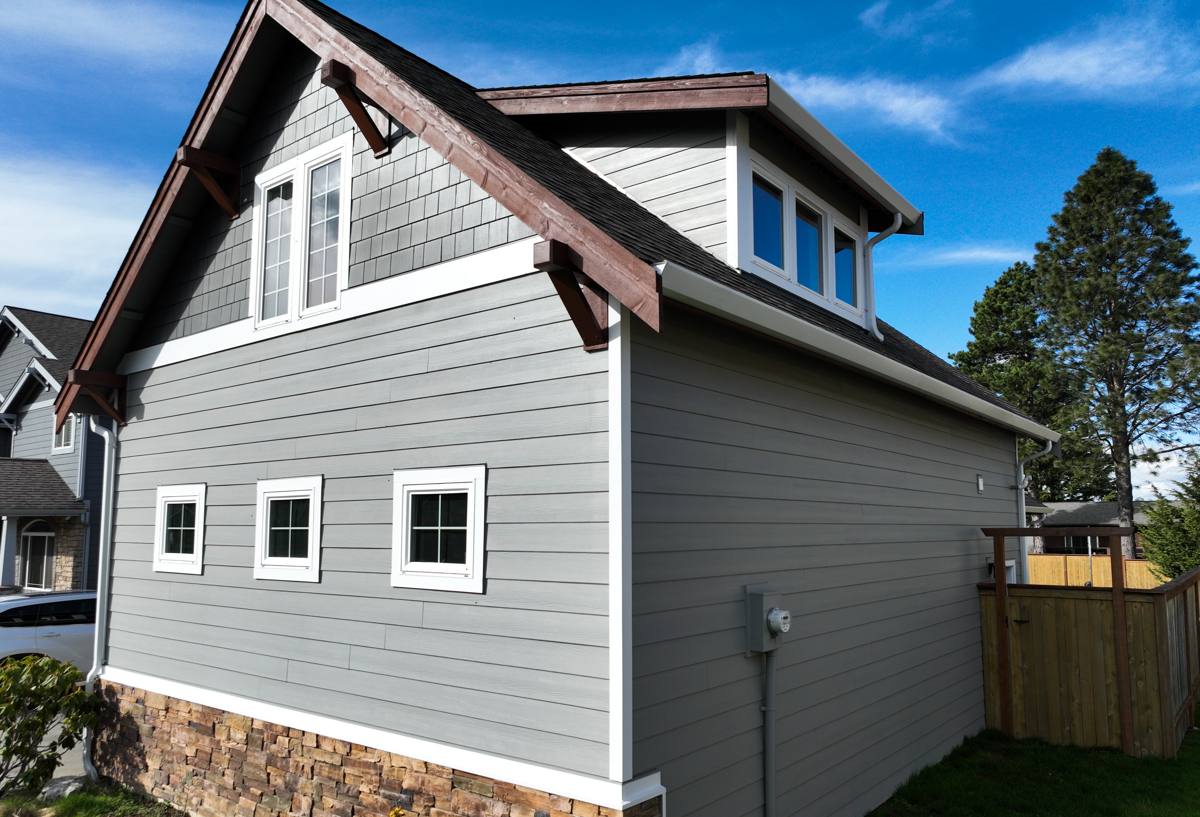
What Everson's Climate Does to a House
Moisture That Never Fully Leaves
The single biggest factor in exterior durability out here isn't a single big storm — it's how long a surface stays wet. Wood-based siding products, engineered wood panels, and even some fiber cement competitors are rated for moisture resistance, but "resistance" and "indifference" are different things. When siding stays damp for days at a stretch, especially at butt joints, corners, and anywhere caulk has started to fail, that's where swelling, delamination, and rot get their foothold.
Salt Air and Metal Fatigue
Homes closer to the bay deal with a slow corrosive effect on fasteners, flashing, and unprotected metal trim. It's not as aggressive as a beachfront property, but over 15-20 years it adds up — rust streaks on siding, weakened fastener heads, and flashing that fails quietly behind the wall before anyone notices.
Moss, Algae, and North-Facing Walls
Everson's tree cover and persistent humidity mean moss and algae aren't a roof-only problem. North-facing and shaded siding walls develop the same green-black staining, and on porous or textured materials it can work into the surface rather than just sitting on top of it. A roof with poor moss control also sheds spores and organic debris onto the siding and gutters below it, so we treat roofing and siding as one connected moisture system, not two separate jobs.
Why We Only Install James Hardie Fiber Cement
We get asked, fairly often, why we don't offer vinyl, LP SmartSide, or one of the other fiber cement brands. It's a fair question, and the honest answer is that we made a standard for ourselves based on what holds up in this climate over decades, not just through the first inspection.
Vinyl Siding
Vinyl is inexpensive and low-maintenance in mild, dry climates. In Whatcom County's wet-cold cycle, it becomes brittle over time, its seams and J-channels give moisture a path behind the panel, and it has no real fire resistance. We won't install a product whose long-term performance depends so heavily on a climate we don't have.
Engineered Wood (LP SmartSide) and Cedar
Engineered wood and real wood siding both look good going up, and both come with genuine upkeep obligations — recoating schedules, caulking vigilance, and vulnerability at cut edges and fastener penetrations. In an area with our rainfall totals and moss pressure, that maintenance burden is real, not theoretical, and it's the kind of thing that gets deferred until it becomes a repair job.
Other Fiber Cement Brands (Cemplank, Allura)
These are legitimate fiber cement products, and we don't claim otherwise. Our decision to standardize on James Hardie comes down to their ColorPlus factory finish (which resists the fading and touch-up mismatch that field-painted siding runs into), their HZ5 product engineering for Pacific Northwest moisture exposure, and a transferable warranty structure we're comfortable standing behind on every job we do.
What James Hardie Gets Right for Everson
- Non-combustible fiber cement core — doesn't feed a fire the way wood-based products can
- ColorPlus factory-baked finish holds color and resists the fade/streak pattern common on painted siding here
- HZ5 formulation engineered for high-moisture, freeze-variable climates like ours
- Dimensionally stable — resists the swelling and warping that damp cycles cause in wood-based siding
- Doesn't provide the organic surface that moss and algae root into as readily as wood fiber products
Roofing, Windows, and Decks — The Rest of the Envelope
Siding doesn't work in isolation. On an Everson home, the roof, windows, and siding all manage moisture together, and a weak point in one usually shows up as a problem in another.
Roofing
Roof condition drives a lot of what we see at the siding level — clogged or undersized gutters overflow onto walls below, and moss-heavy roofs shed organic matter that ends up staining and holding moisture against the siding underneath. When we're on-site for a siding estimate, we'll flag obvious roofing issues even if that's not the job we're there for.
Windows
Window flashing and trim integration is one of the most common failure points we find when we open up old siding. A window that wasn't flashed correctly in 2005 can be the hidden cause of rot a homeowner assumes is a "siding problem" twenty years later. When we replace siding around existing windows, we inspect and correct flashing details as part of the job, not as a change order surprise.
Decks
Decks in this climate face the same wet-dry cycling as siding, plus direct foot traffic and standing water risk at ledger boards and joist connections. We build and repair decks with the same moisture-management mindset we apply to the rest of the exterior — proper flashing at the house connection, appropriate fastener choice, and drainage that actually moves water away from structural members.
What a Siding Project Looks Like
Inspection and Assessment
We start by looking at the whole exterior, not just the siding surface — soffits, flashing, window trim, and any areas showing staining or soft spots. On older homes, this is where we often find the moisture issues that made the homeowner call in the first place.
Removal and Sheathing Check
Once old siding comes off, we check the sheathing and house wrap underneath. This is the point where hidden rot or inadequate weather barrier gets caught and corrected, before new siding goes over a compromised substrate.
Weather Barrier and Flashing
Correct water-resistive barrier installation and flashing details at every penetration — windows, doors, hose bibs, vents — matter more than the siding brand itself. This is the step that separates an installation that lasts 30-plus years from one that fails at year eight.
Installation to Manufacturer Spec
James Hardie's warranty is tied to installation being done to their specifications — proper fastener spacing, clearances, and caulking practices. We install to that standard as a baseline, not an upsell.
Cost Factors to Understand
| Factor | Why It Matters |
|---|---|
| Home size and wall complexity | More corners, gables, and dormers mean more cutting, trim work, and labor time |
| Existing siding removal and disposal | Tear-off adds labor and disposal cost versus new construction |
| Sheathing or rot repair discovered underneath | Hidden moisture damage found during removal needs to be fixed before new siding goes on |
| Siding profile and trim detail | Lap width, board-and-batten, and shingle-style panels vary in material and labor cost |
| Window and door count | Each opening requires flashing and trim work that adds time |
| Color and finish selection | Factory ColorPlus finishes vs. field-painted options affect material pricing |
We give homeowners a real number after walking the property, not a phone estimate. Too many variables here — access, existing damage, roofline complexity — to price accurately without seeing the house.
Why a Local Crew Matters
Whatcom County weather isn't hard to understand once you've worked in it for years, but it does have habits that matter to installation: when caulk actually cures given our humidity, how long you can leave sheathing exposed between tear-off and wrap before a rain system rolls in off the water, and where moss and algae pressure is heaviest based on tree cover and sun exposure. A crew that works Lynden, Everson, and the surrounding county regularly builds judgment around those details that a crew passing through on a one-off job doesn't have. It also means we're reachable if a warranty question or maintenance issue comes up five or ten years down the line — we're not a name from out of the area that did one job and left.
Signs It's Time to Call
- Visible warping, buckling, or gaps between siding boards
- Soft spots when you press on the siding, especially near the bottom courses
- Persistent moss or dark staining that pressure washing doesn't fully remove
- Paint that's peeling or bubbling repeatedly in the same spots
- Rising heating bills that suggest failing insulation or air sealing behind the siding
- Visible rot or discoloration around window and door trim
If you're seeing any of these signs on your Everson home, or you're just planning ahead for a siding, roofing, window, or deck project, we're happy to walk the property and give you a straight assessment. The estimate is free, there's no pressure, and you'll get a clear answer about what your home actually needs.