 Lynden Siding
 Why Siding in Whatcom County Works Harder Than It Should
Siding has one real job: keep water out of the wall assembly. In most of the country that's a seasonal concern. In Lynden and the rest of Whatcom County, it's closer to a year-round assignment. We sit close enough to the Salish Sea and Bellingham Bay that salt-laden air reaches inland neighborhoods, driving rain off the Pacific pushes moisture sideways into wall surfaces rather than just down onto roofs, and our long, damp shoulder seasons keep exterior surfaces wet for days at a stretch. Add a moss and algae season that can run from early fall through late spring, and you have a climate that's genuinely tough on exterior materials.
None of that means siding is doomed to fail here. It means the margin for error is smaller. A detail that might go unnoticed for a decade in a drier climate can turn into a real problem in three or four wet seasons if it's not installed or maintained correctly.
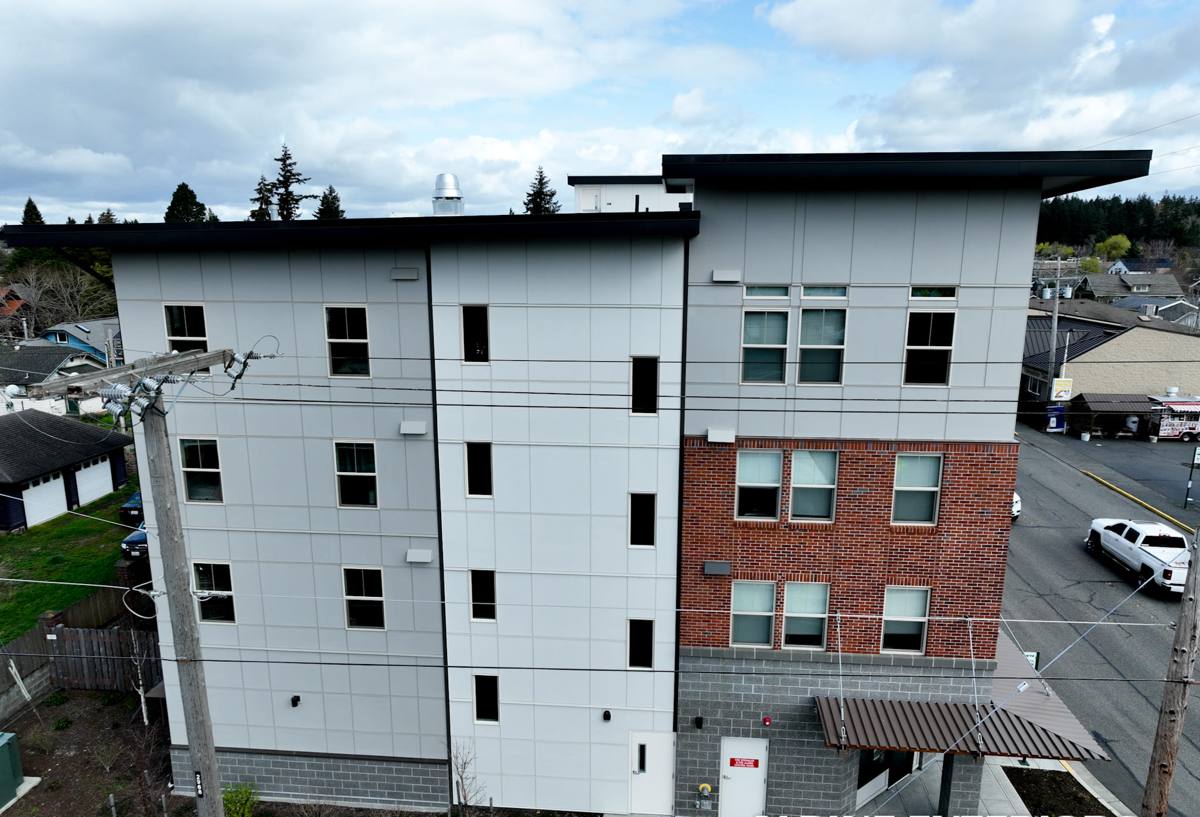
How Moisture Actually Gets Behind Siding
Most homeowners picture water damage as rain soaking straight through a wall. In practice, moisture usually finds its way in through much smaller, more specific paths:
- Capillary action — water wicks upward through tiny gaps where siding boards butt together or sit too close to grade, decking, or roofing.
- Failed or missing flashing — around windows, doors, and roof-to-wall intersections, where two materials meet and water is supposed to be directed away rather than absorbed.
- Nail and fastener penetrations — every hole in siding is a potential entry point if it isn't sealed or positioned correctly.
- Condensation — warm, moist indoor air meeting a cold wall cavity can deposit moisture on the back side of siding, with no rain involved at all.
- Caulk failure — sealant has a service life. Once it cracks or pulls away, it stops doing its job and often traps water instead of shedding it.
This is why two houses on the same street, built the same year, can age completely differently. The one with clean flashing details and a properly maintained water-resistive barrier holds up. The one with a few shortcuts at the trim and window returns starts showing problems years earlier — even though both got the same amount of rain.
The Rot Cycle: What Happens Once Moisture Gets In
Rot isn't an instant event. It's a slow biological process, and understanding the sequence helps explain why early detection matters so much.
Stage 1 — Saturation
Wood-based materials absorb water faster than they release it. Once moisture content in wood stays elevated for extended periods, conditions become favorable for wood-decay fungi.
Stage 2 — Fungal Growth
Decay fungi need moisture, oxygen, and a food source (the wood itself) to establish. This stage is often invisible from the outside — the surface paint or finish can look fine while decay is developing underneath or behind it.
Stage 3 — Structural Softening
As decay advances, wood fibers break down and lose strength. This is when boards start to feel soft, spongy, or crumbly when probed, and when paint or finish begins to bubble, peel, or telegraph the damage underneath.
Stage 4 — Spread
Left unaddressed, moisture and decay migrate to adjacent framing, sheathing, and trim. What started as a single damaged board can become a repair that involves structural framing, insulation, and interior finishes — a very different scope and cost than a siding-only fix.
The takeaway: the earlier a moisture problem is caught, the smaller and cheaper the fix. Waiting rarely saves money.
Warning Signs Worth Walking Your House For
Most rot problems give some warning before they become serious. A twice-a-year walk-around, especially after a wet Whatcom County winter, can catch issues while they're still simple repairs.
- Paint that's peeling, bubbling, or cracking in a localized area rather than evenly across the whole wall
- Siding boards that feel soft, spongy, or give when pressed with a thumb
- Dark staining or discoloration streaking down from seams, trim, or window corners
- A musty smell near an exterior wall, especially inside closets or along baseboards
- Visible gaps opening up at butt joints, corner boards, or trim
- Persistent moss or algae growth concentrated in one area rather than spread evenly
- Warping, buckling, or waviness in the siding profile
- Insect activity — carpenter ants and certain beetles are drawn to moisture-softened wood
Any one of these is worth a closer look. Several together, especially on a north-facing or shaded wall that stays damp longer, usually means it's time to get a professional opinion rather than wait for next season.
Why Some Siding Materials Handle Moisture Better Than Others
Not all siding responds to sustained moisture exposure the same way. The core material matters as much as the installation.
| Material | How It Responds to Moisture | Typical Failure Mode | Ongoing Maintenance |
|---|---|---|---|
| Solid wood / cedar | Absorbs water readily; natural material, no engineered moisture resistance | Cupping, splitting, rot at butt joints and lower courses | Regular refinishing and caulk upkeep required |
| Engineered wood (e.g. LP SmartSide) | Wood-strand core is more moisture-resistant than solid wood but still wood-based, so edges and cut ends need diligent sealing | Edge swelling, delamination if sealing is skipped or fails over time | Moderate — touch-up sealing at cuts and seams |
| Vinyl | Doesn't absorb or rot itself, but isn't a water barrier — moisture can travel behind panels and sit against the sheathing unnoticed | Hidden moisture damage behind panels, warping in heat, brittleness in cold | Low direct maintenance, but problems behind it can go undetected |
| Fiber cement (James Hardie) | Cement-based composition doesn't absorb water the way wood does and won't rot, warp, or support fungal growth | Failure almost always traces back to installation gaps (flashing, clearances) rather than the material itself | Low — factory-applied finish holds up without regular refinishing |
This is the core reason we standardized on James Hardie fiber cement and don't install engineered wood, vinyl, or unfinished wood siding. It isn't that those products can't perform — it's that in a climate like ours, with driving rain and a long wet season, we'd rather put a material on a home that doesn't rely on a perfect maintenance schedule to keep moisture from becoming rot.
Moss and Algae: More Than a Cosmetic Problem
Whatcom County's moss season is long enough that most homeowners treat green or black streaking as a purely visual issue. It's worth taking more seriously than that. Moss and algae hold moisture directly against the siding surface, extending the amount of time that surface stays wet after a rain event. On wood and wood-based products, that extended wetness is exactly what accelerates decay. On any siding, heavy growth can also trap debris in seams and joints, which interferes with proper water shedding.
Keeping gutters clear, trimming back vegetation that shades and dampens a wall, and cleaning heavy moss buildup (with a soft wash approach, not a pressure washer aimed directly at siding) all help reduce how long moisture sits against your walls.
What Correct Installation Looks Like
A siding material's moisture resistance only matters if the installation respects it. The details that make or break long-term performance include:
- Proper flashing at every window, door, and roof-to-wall transition
- A continuous, correctly lapped water-resistive barrier behind the siding
- Correct clearance between the bottom of the siding and grade, decks, patios, and roof surfaces
- Fasteners placed and set to manufacturer specification — not overdriven, not underdriven
- Butt joints and seams caulked with a quality sealant rated for exterior exposure
- Kick-out flashing at roof-to-wall intersections to direct water away from the wall rather than behind it
These details apply regardless of what siding material goes on the wall. A premium material installed with sloppy flashing will still fail early. A more modest material installed correctly will outperform expectations. Installation quality is the variable most homeowners can't see when comparing bids, which is why it's worth asking specific questions rather than just comparing price per square foot.
If You've Already Found Rot
Finding a soft spot doesn't mean the whole house needs new siding. The right next step is assessment, not panic:
- Identify how far the damage extends — surface only, into the sheathing, or into framing
- Find and correct the moisture source, not just the damaged material — replacing rotted boards without fixing the flashing or clearance issue that caused it just resets the clock
- Replace affected material with something that won't repeat the failure mode
- Confirm the water-resistive barrier and flashing are intact before new siding goes back on
Sometimes this is a contained repair. Sometimes, especially on an older home where multiple areas show the same pattern of damage, it makes more sense to address the whole elevation or the whole house at once rather than patching the same problem repeatedly over several years.
Get a Second Set of Eyes on It
If you're seeing any of the warning signs above, or you just want an honest read on how your current siding is holding up after another Whatcom County winter, we're happy to take a look. We offer free, no-pressure estimates and can tell you plainly whether you're looking at a small repair, a maintenance issue, or something worth planning a full replacement around.