 Lynden Siding
 Exterior Work Built Around Laurel's Climate
Laurel sits in the part of Whatcom County where marine air off the Salish Sea meets the foothill weather rolling down from the Cascades. That combination means homes here deal with a longer wet season than most of the country, occasional wind-driven rain that comes in sideways, and enough shade and moisture in the cooler months to keep moss and algae comfortable on almost any exterior surface that will let them take hold. It's not dramatic weather, most of the time. It's just relentless, and relentless is what wears out a house.
We work throughout the Lynden area, including Laurel, and we've built our whole approach around what actually holds up out here versus what looks good on a spec sheet in a showroom. That's true for siding, and it's just as true for the roofing, windows, and decks we install on the same homes.
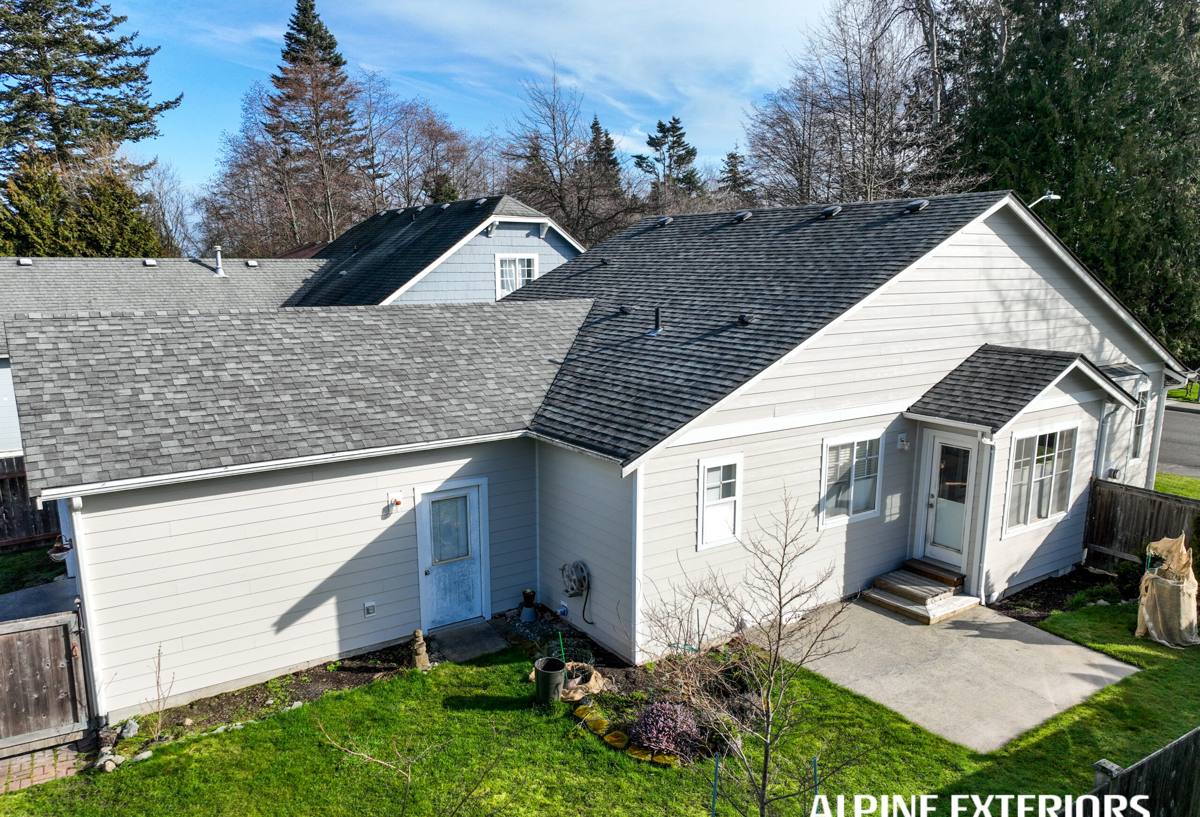
What Laurel Homes Actually Face
Moisture That Doesn't Let Up
Whatcom County gets a lot of its annual rainfall as long, low-intensity systems rather than short downpours. That's actually harder on siding than a hard summer storm, because it means exterior surfaces stay damp for days at a stretch instead of getting wet and drying quickly. Any siding material that absorbs water, swells, or gives moisture a path behind the surface is going to have a rough time here over the years.
Salt-Influenced Air
Proximity to the Sound means the air carrying that rain isn't purely fresh water — there's a salt component riding along with it, especially on windier days. Salt-laden moisture is harder on fasteners, trim, and any exposed wood or metal than plain rainwater, and it accelerates corrosion on anything that isn't rated for it.
Moss, Algae, and Shade
Between the tree cover common in this part of the county and the number of overcast, damp days each year, north-facing walls and shaded siding runs are prime real estate for moss and algae. On some materials that's a cosmetic nuisance you pressure-wash off. On others, it's an early sign of a surface that's starting to hold moisture it shouldn't.
Temperature Swings
It doesn't get brutally cold here most winters, but it does dip below freezing often enough that any siding material already holding moisture is at risk of freeze-thaw damage — expansion, cracking, and edge deterioration that gets worse every year it's ignored.
Why We Install Only James Hardie Fiber Cement
We get asked fairly often why we don't offer vinyl, LP SmartSide, cedar, or other fiber cement brands like Allura or Cemplank. The honest answer is that we standardized on James Hardie because it's the product we're willing to warranty and stand behind on homes in this specific climate, and we'd rather be straightforward about that than sell you something we have reservations about.
- It's non-combustible. Fiber cement doesn't feed a fire the way wood-based products can, which matters for insurance conversations and for peace of mind.
- It's engineered for wet climates. Hardie's HZ5 product line is formulated specifically for regions with heavy moisture exposure, which describes Whatcom County well.
- The factory finish holds up. ColorPlus finish is baked on in a controlled facility, not brushed or sprayed on site, which means better resistance to fading, chipping, and the kind of streaking that moss and algae leave behind.
- The warranty is real and transferable. That matters if you sell the house in ten or fifteen years — it's a selling point, not just a piece of paper.
None of this means other products are junk. Vinyl is inexpensive and low-maintenance in mild climates. Wood has a look some homeowners love and are willing to maintain for. LP SmartSide has its market. But we've made a professional call that in a climate that stays wet this long and this often, fiber cement engineered for moisture — installed correctly — gives homeowners fewer surprises down the road. That's the standard we hold our own work to.
A Quick Comparison
| Material | Moisture Behavior in Wet Climates | Maintenance | Fire Resistance |
|---|---|---|---|
| James Hardie Fiber Cement | Engineered for moisture exposure; doesn't rot | Occasional wash; repaint on a long cycle | Non-combustible |
| Vinyl Siding | Doesn't absorb water, but can trap moisture behind it if installed poorly | Low, but prone to cracking/fading over time | Combustible, can warp near heat |
| Cedar / Primed Spruce | Attractive but absorbs moisture; needs consistent sealing | High — regular refinishing required | Combustible |
| LP SmartSide | Engineered wood; performance depends heavily on correct installation and caulking maintenance | Moderate to high | Combustible |
Siding Installation Done to Spec
Fiber cement siding is only as good as its installation. Hardie's own warranty depends on following manufacturer specifications — proper clearances above grade and roofing, correct fastener patterns, flashing details around windows and penetrations, and gaps sealed the right way rather than caulked over and hoped for. Skipping these steps is how a good product ends up with a bad reputation. We install to spec because in a climate like this one, a shortcut on flashing or clearance shows up as a moisture problem in a few years, not immediately — which is exactly why it's easy for a corner-cutting installer to get away with it in the short term.
Roofing, Windows, and Decks — The Rest of the Building Envelope
Siding doesn't work in isolation. A roof that's shedding water poorly, windows that aren't flashed correctly, or a deck that's trapping moisture against the house all put stress on the siding around them, no matter how good that siding is. We handle all four because they're one connected system on a Whatcom County home:
- Roofing — proper underlayment and flashing matter as much as the shingle or metal itself in a region that sees this much sustained rain.
- Windows — correct flashing integration with the siding is one of the most common failure points we see on older homes in this area.
- Decks — built and maintained to shed water away from the house rather than back toward it.
When one crew handles the whole envelope, the details at the seams — where roof meets wall, where window meets siding, where deck meets house — get treated as connected problems instead of four separate jobs done by four separate companies that never talk to each other.
Why a Local Crew Matters Here
Whatcom County's microclimates vary more than people expect. What works on a home a few miles from the water is not automatically right for a home with more tree cover and more shade a bit further inland. A crew that works this area regularly knows which walls are going to fight moss, which sides catch the worst of the driving rain, and how local permitting and inspection actually work — not just what a manual says in general terms. That local knowledge shows up in decisions you don't see: how ventilation is planned, how flashing details are handled around trim, where the moisture problems tend to start on homes like yours.
What to Expect From a Siding Project
Typical Process
- On-site assessment of your current siding, framing, and any moisture or rot issues found during removal.
- A clear plan for the Hardie product line, plank style, and color that fits the home and your budget.
- Proper prep — house wrap or weather-resistive barrier check, flashing repair or replacement as needed.
- Installation to manufacturer spec, including fastener placement and clearances.
- Final walkthrough so you understand what was done and what maintenance, if any, to expect going forward.
Questions Worth Asking Any Contractor Before You Sign
- Do you install to the manufacturer's written specifications, and will you show me the clearance and flashing details?
- Is the warranty from the manufacturer, the installer, or both — and is it transferable if I sell the house?
- What happens if you find rot or moisture damage once the old siding comes off?
- Can you walk me through how you'll handle flashing where the siding meets my roofline and windows?
- Are you licensed and insured to work in Whatcom County, and can I see proof?
Cost Factors to Expect
Every home is different, but the main things that move the price on a siding project in this area are the same regardless of who does the work: the size and complexity of the home, how much of the existing siding and sheathing needs to be removed and possibly repaired, the Hardie product line and finish you choose, and how much trim and detail work the home has around windows, corners, and rooflines. We'll walk through all of that specifically once we've seen the house — broad guesses over the phone aren't useful to you.
If you're in Laurel or elsewhere around Lynden and want a straight answer on what your home needs — whether that's siding, roofing, windows, decks, or all four — we're happy to come take a look. The estimate is free, there's no pressure, and you'll get a plain explanation of what we see and what we'd recommend.