 Lynden Siding
 Deming's Climate Puts Real Stress on Exterior Siding
Deming sits in the foothill country east of Lynden, along the Nooksack River corridor where the valley starts climbing toward Mount Baker. It's a different microclimate than the open farmland closer to town. Tree cover is heavier, lots tend to be larger and more wooded, and the terrain traps moisture longer than it does out on the flats. Add in the marine-influenced weather that moves through all of Whatcom County — long stretches of driving rain, heavy fall and winter dew, and short winter days that don't give siding much chance to dry out — and you've got a climate that's genuinely hard on the outside of a house.
Homes here deal with a long moss season. Shaded rooflines and north-facing walls in particular stay damp for weeks at a stretch, which is exactly the environment moss, algae, and mildew need to take hold. Over years, that constant damp-dry cycling is what breaks down siding that isn't built to handle it — swelling seams, peeling paint, soft spots at the bottom courses, and trim that rots from the inside before it ever looks bad from the street.
Why Wooded, Low-Lying Lots Are Harder on a House
A home tucked under fir and cedar cover doesn't get the sun exposure that dries out siding after a storm the way an open-field property does. Gutters clog faster with needle debris, splashback off the ground stays wetter longer, and airflow around the building envelope is generally more restricted. None of that is a reason to avoid living somewhere like Deming — it's just a reason to be more deliberate about what material goes on the walls and how it's installed.
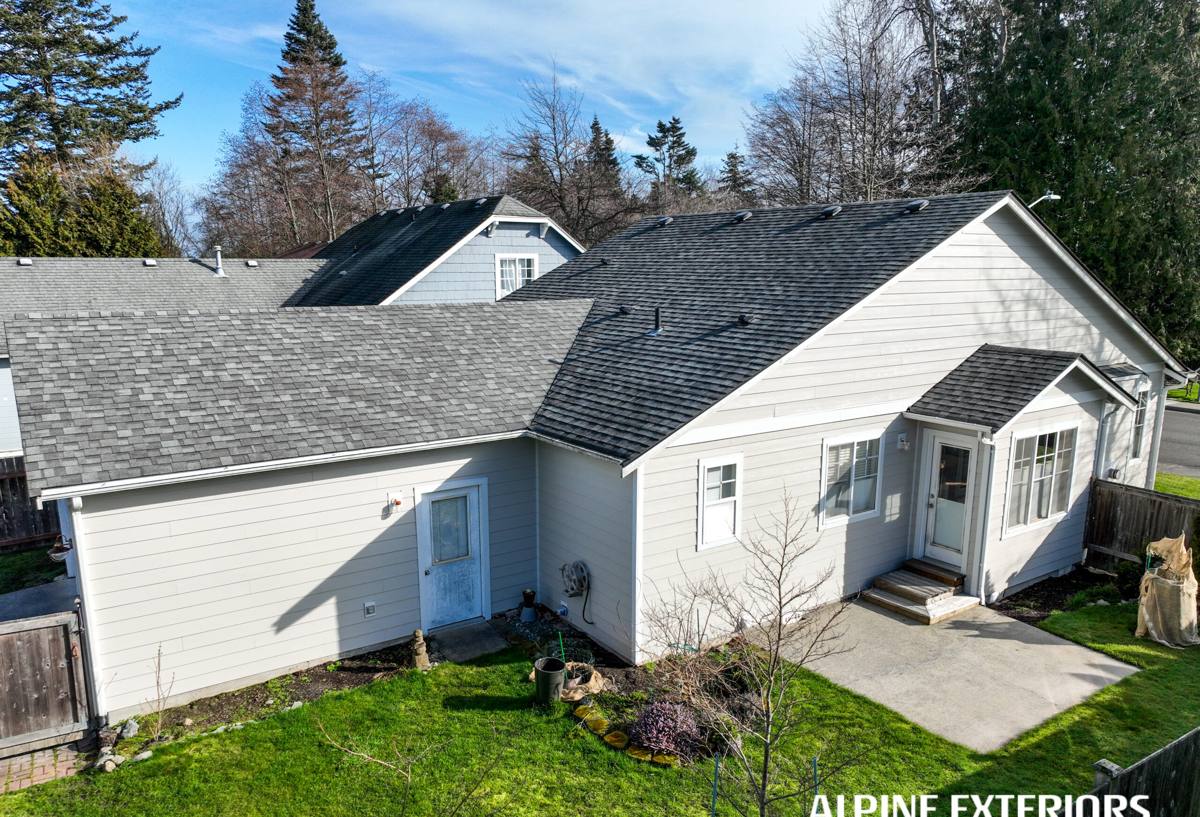
Why We Standardized on James Hardie Fiber Cement
We install James Hardie fiber cement siding exclusively. We don't install vinyl, LP SmartSide, Cemplank, Allura, primed spruce, or raw cedar — not because those products don't have a place in the market, but because after years of exterior work in this climate, Hardie is the material we're willing to warranty and stand behind on a home that's going to see forty or fifty more wet seasons.
Fiber cement is fundamentally a different material than wood-based or vinyl siding. It's cement, sand, and cellulose fiber, pressed and cured — it doesn't absorb water into a wood substrate, it won't feed moss and algae the way organic material can, and it's non-combustible, which matters more every year given wildfire smoke and ember exposure moving through the Pacific Northwest. It moves less with temperature swings than vinyl, so it holds a tighter, straighter reveal line over time instead of rippling or bowing.
ColorPlus Factory Finish
Most of what we install carries Hardie's ColorPlus finish — baked on in a controlled factory environment rather than field-painted on site. That matters in a place like Deming where a job site can go days without a dry enough window to paint properly. A factory finish also holds color and resists fading, chalking, and peeling far better than a coat applied outdoors in variable humidity, and it comes with its own finish warranty separate from the substrate warranty.
HZ5 Engineering for the Northwest
Hardie engineers its siding by climate zone, and Whatcom County falls in the HZ5 zone, built for wetter, harsher weather patterns. That's a material formulated with this specific rain and moisture load in mind, not a one-size-fits-all product shipped the same way to every region of the country.
What a Correct Installation Looks Like Out Here
Fiber cement performs the way it's supposed to only when it's installed to spec. That's a bigger factor in a wet climate than in a dry one, because installation mistakes that might just look bad somewhere else can actually let water into the wall assembly here.
Site Assessment First
Before we talk product or color, we look at the house itself — how much shade it sits in, where water tends to collect or run off, the condition of the existing weather barrier, and any spots where past work has trapped moisture behind the siding. A wooded Deming lot with heavy shade on one elevation gets treated differently than a more open, sun-exposed wall on the same house.
Moisture Management Behind the Siding
The siding itself is only part of the system. Proper flashing at windows, doors, and roof lines, a correctly lapped weather-resistive barrier, and rainscreen or drainage gap detailing where it's called for all matter as much as the panels on the wall. Skipping or shortcutting this layer is one of the most common reasons siding — any siding — fails early, and it's the layer homeowners never see once the job is done.
Fastening and Clearances
Hardie specifies fastener type, spacing, and minimum clearance from grade, decking, and roof lines for a reason — those details keep water from wicking up into the bottom of the boards and keep the material sitting flat and secure through wind events. We follow those specs as written, not as a suggestion.
Beyond Siding: The Rest of the Exterior
Siding doesn't work in isolation. Roofing, windows, and decks all interact with the same weather and the same water paths around a house, so we handle all four as one crew rather than farming pieces out to separate specialty companies. A window that's flashed wrong can undermine new siding around it just as easily as bad siding installation can. A deck built against the house without the right ledger flashing can send water straight into a wall cavity. Looking at the whole exterior together, rather than one component at a time, is part of how we avoid trading one problem for another.
Cost Factors on a Deming Project
Every home is different, but a few things consistently move the price on jobs in this area:
| Factor | Why It Matters |
|---|---|
| Existing siding removal | Tear-off, disposal, and dealing with any hidden rot or moisture damage found underneath |
| House access and tree cover | Wooded Deming lots can mean more staging work, ladder limitations, and debris cleanup near the work area |
| Wall complexity | Gables, dormers, multiple stories, and trim detail all add labor time |
| Product line and profile | HardiePlank lap siding, HardiePanel vertical siding, and shingle-style profiles carry different material and labor costs |
| Color | Factory ColorPlus finishes versus standard primed-for-paint options affect material pricing |
| Underlying moisture repair | Rot or water damage found during tear-off has to be fixed before new siding goes on, not covered over |
We walk every property and give a written estimate based on the actual condition of the house rather than a generic square-footage number, since two homes of the same size in Deming can need very different amounts of work depending on age, sun exposure, and how the last siding job held up.
What to Look for in a Local Exterior Contractor
A crew that works regularly in this part of Whatcom County knows what moss and moisture damage actually look like before it's obvious, and knows how the local weather affects scheduling and cure times. A few things worth checking before you hire anyone for siding, roofing, window, or deck work:
- Washington contractor license and current liability insurance, verifiable through the state
- Manufacturer training or certification specific to the siding product being installed
- A written estimate that spells out product line, underlayment/barrier details, and warranty terms — not just a lump-sum number
- Willingness to explain how they'll handle flashing and moisture management, not just the visible siding
- References or past work in the local area, so you're not the test case for a climate the crew doesn't usually work in
- A clear answer on who is responsible for the labor warranty versus the manufacturer's material warranty
A Local Crew That Knows This Ground
We work this stretch of Whatcom County regularly, which means we've seen how a Deming lot's shade pattern, tree cover, and rain exposure play out on a house over years, not just on the day the siding goes up. That local knowledge shapes decisions on-site — where extra flashing attention is worth the time, which walls need more drying consideration during installation, and how a home's setting should factor into the product and detailing choices we make.
If your siding is showing moss buildup, soft spots, peeling paint, or gaps at the seams, or if you're planning ahead for a home in Deming, we're happy to take a look and give you a straightforward, no-pressure estimate — no obligation, just an honest read on where your house stands and what it would take to fix it right.