 Lynden Siding
 Exterior Homes Built for the Sumas & Lynden Climate
Homes around Sumas and Lynden sit in one of the wetter, greener corners of Whatcom County. That's part of what makes the area beautiful — the farmland, the tree lines, the Nooksack valley backdrop — but it's also what makes exterior materials work harder here than almost anywhere else in the state. Long stretches of driving rain, humid air moving in off the Sound, and a moss season that can run most of the year all add up to real wear on a home's siding, trim, and roofline. We work on homes throughout this stretch of Whatcom County, and the patterns repeat from property to property: north-facing walls that never fully dry out, trim that swells and cracks at the joints, and paint that starts failing years before it should.
None of that is unusual for this region. It's just what siding, roofing, and trim have to stand up to. The question is whether the materials on your home were actually built for it.
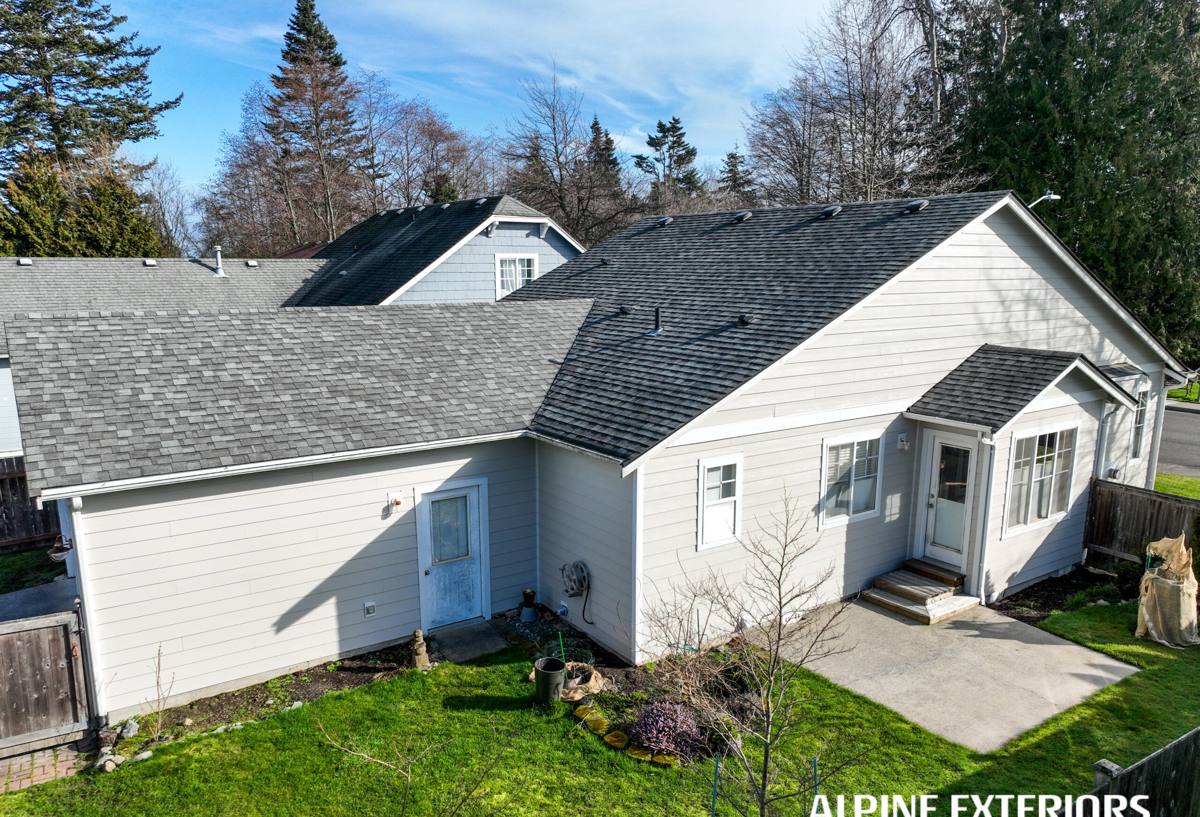
What Local Homes Face Year-Round
Persistent Moisture
Whatcom County doesn't get dramatic storms as often as it gets weeks of steady, low-intensity rain. That kind of weather is harder on siding than a single heavy downpour, because it keeps wall surfaces damp for days at a time. Wood-based products absorb that moisture at the edges and seams, and once water gets behind a panel or into a cut end, it doesn't leave quickly.
Moss and Organic Growth
Shaded, north- and east-facing walls in this area — especially on properties near trees or windbreaks — stay damp long enough for moss, algae, and mildew to take hold. On porous or wood-based siding, that growth isn't just cosmetic. It holds moisture against the surface and accelerates the exact deterioration you're trying to avoid.
Wind-Driven Rain
Open farmland and exposed lots around Sumas and Lynden mean wind-driven rain hits siding at an angle, not just straight down. That pushes water into laps, seams, and trim joints that a calmer climate wouldn't stress nearly as hard. Flashing details and installation quality matter more here than in a drier part of the state — a marginal install that would hold up in Spokane can fail in a few seasons here.
Why We Only Install James Hardie Fiber Cement
We made a deliberate call as a company: we install James Hardie fiber cement siding, and nothing else. Not vinyl, not LP SmartSide, not primed spruce or cedar, not other fiber cement brands. That's not a marketing angle — it's because of exactly the conditions described above.
Fiber cement is a blend of cement, sand, and cellulose fiber. It doesn't have the wood content that gives moisture a foothold, and it's manufactured to a consistent standard that holds its shape and finish through repeated wet-dry cycles. James Hardie engineers its HZ5 product line specifically for the Pacific Northwest's rain and humidity profile, which is the version we install throughout Whatcom County. The factory-applied ColorPlus finish is baked on under controlled conditions rather than field-painted, so it resists the fading and peeling that shows up fastest on north-facing walls and shaded elevations — exactly the walls that give local homes the most trouble.
We're not going to tell you every other siding product is unusable — plenty of homes around the country wear vinyl or wood siding without major issues. But we've seen enough of what this specific climate does to siding over ten, fifteen, twenty years that we don't want our name on anything less durable than Hardie. If a product needs more maintenance, drains moisture less predictably, or comes with a thinner warranty, we'd rather not install it — even if a homeowner would accept the trade-off. That standard is why we stopped offering alternatives.
What This Looks Like for a Sumas or Lynden Home
Every property is different, but the exterior work we do in this area generally follows the same logic: address the sources of moisture first, then put a durable, correctly installed exterior system on top.
- Siding replacement — full tear-off and James Hardie installation, sized to the home with proper flashing at windows, doors, and trim transitions
- Roofing — since roof and siding failures are often connected (a bad roof edge or gutter overflow is a common cause of siding damage below it)
- Windows — replacement and flashing integration, since window openings are one of the most common water-entry points behind siding
- Decks — built and finished to handle the same rain and moss exposure as the rest of the exterior
We handle these as connected systems rather than separate jobs, because on a home in this climate, they usually are connected. A roofline that dumps water onto a wall, or a window that wasn't flashed correctly, will undermine even the best siding installation.
Signs Your Current Siding Is Losing the Battle
Most siding failures in this area don't happen suddenly — they show up gradually, and homeowners often assume it's normal wear rather than a sign of moisture getting where it shouldn't. Worth checking for:
- Soft, spongy, or visibly swollen spots, especially near the bottom of walls or around window trim
- Persistent moss or dark staining that comes back within a season of cleaning
- Paint that's peeling, bubbling, or chalking faster on shaded or north-facing walls than the rest of the house
- Visible gaps, cracking, or separation at seams and corner trim
- A musty smell near exterior walls inside the home, which can point to moisture intrusion behind the siding
If more than one of these shows up on the same wall, it's worth having someone look at it before it turns into a larger repair.
Comparing What's Actually Out There
Homeowners in this area are often choosing between a few common options when it's time to re-side. Here's how they generally compare on the specific pressures Whatcom County weather puts on a wall:
| Material | Moisture Resistance | Moss/Algae Behavior | Finish Longevity |
|---|---|---|---|
| James Hardie fiber cement | High — cement-based, engineered for wet climates | Doesn't feed growth; cleans without damaging the surface | Factory ColorPlus finish, long warranty |
| Vinyl siding | Sheds surface water but seams and gaps can trap moisture | Can host growth in shaded, damp areas | Color is baked into the material but can fade and become brittle over decades |
| LP SmartSide / engineered wood | Treated but wood-based — vulnerable at cut edges and seams | More susceptible where finish is compromised | Field-applied or factory finish, shorter track record in constant-moisture climates |
| Primed cedar or spruce | Natural wood — absorbs moisture readily without diligent upkeep | Most susceptible of the group in shaded, damp conditions | Requires regular repainting and sealing |
This isn't a claim that the other materials are unusable everywhere — it's specific to what this region's rain and moss season do to a wall over the long haul, and it's the reason we don't offer anything but Hardie.
Why a Local Crew Matters Here
Installation quality determines how well any siding product performs, and that's especially true in a climate like this one. Flashing at windows and doors, the gap left at the bottom of the siding for drainage, how seams and corners are treated, how trim ties into the roofline — these details are what actually keep water out, and they're the details that get rushed by crews unfamiliar with local wind and rain patterns.
A crew that works Whatcom County regularly knows which walls take the worst of the wind-driven rain, where moss tends to build first, and how the local moisture cycle behaves through the year. That's not something a national installer parachuting in for a job typically has, and it shows up in how the job holds up five and ten years later — not just on install day.
What to Expect When You Work With Us
- An on-site inspection that looks at your current siding, trim, flashing, and any related roof or window issues — not just the siding in isolation
- A straightforward explanation of what's driving any damage we find, in plain terms
- A James Hardie installation done to manufacturer spec, including proper flashing and drainage details
- A clear, transferable warranty on both the product and our labor
Maintenance: What Hardie Actually Requires
One advantage of fiber cement in this climate is how little upkeep it asks for compared to wood-based alternatives. It doesn't need repainting on a regular cycle the way primed wood does, and it isn't porous in the way that invites moss to take hold. Realistic maintenance for a Hardie exterior in this area:
- Periodic rinsing to clear pollen, dust, and light organic buildup — a garden hose is usually enough
- Visual check of caulking at trim joints and penetrations every year or two
- Keeping gutters clear so overflow isn't running down the wall face
- Trimming back vegetation that keeps a wall shaded and damp longer than necessary
That's a meaningfully lighter workload than repainting cycles or edge-sealing that wood-based sidings ask for, and it's a big part of why the long-term cost of Hardie tends to compare well even though the upfront installation isn't the cheapest option on the table.
Getting Started
If you're seeing early signs of trouble on your siding, planning ahead for a home you're keeping long-term, or just want an honest read on where your exterior stands, we're happy to take a look. We'll walk the property, tell you what we actually see, and give you a straightforward estimate — no pressure, no inflated urgency. Reach out using the form below to schedule a free estimate for your Sumas or Lynden home.