 Lynden Siding
 Siding Repair in Sumas: What Local Homes Are Up Against
Sumas sits at the edge of Whatcom County, in the Nooksack River valley near the Canadian border, and it gets the full range of what Northwest Washington weather can throw at a house. Homes here deal with the same marine-influenced climate that shapes siding performance across the county — salt-tinged air moving inland off the Sound and the Strait, long stretches of driving rain, and a moss and mildew season that can run eight or nine months out of the year. Add in valley fog that settles low and lingers into the morning, and you have conditions that are hard on any exterior wall covering, but especially hard on siding that wasn't built for sustained moisture exposure.
We do siding repair work throughout Whatcom County, and Sumas calls follow a pattern we recognize quickly: moisture that got behind the siding months or years before anyone noticed, moss and algae holding water against low, shaded, or north-facing walls, and older siding materials — cedar, primed wood, or vinyl — that were never designed to shrug off this kind of year-round dampness. Understanding that pattern is the first step to fixing it correctly instead of just patching the symptom.
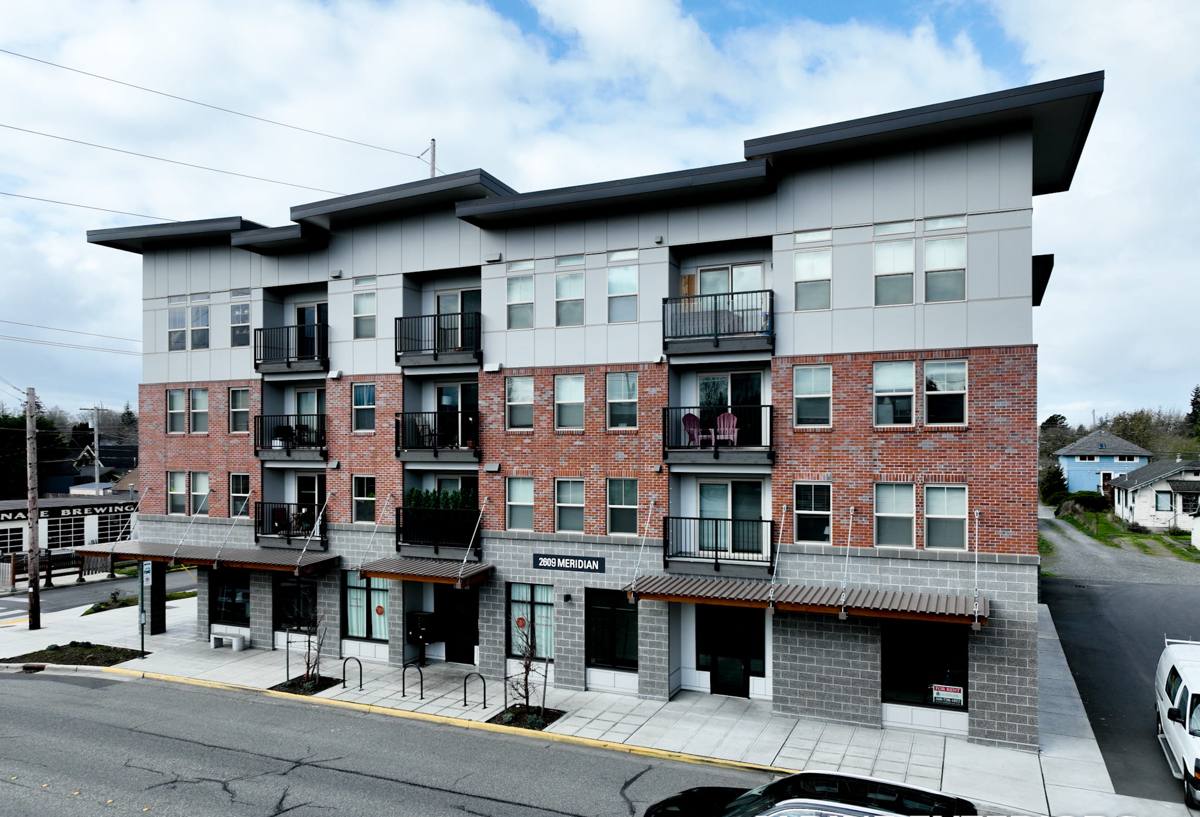
Signs Your Sumas Home Needs Siding Repair, Not Just a Patch
Some siding damage is obvious — a cracked panel after a windstorm, a section knocked loose by a fallen branch. Other damage builds slowly and shows up as something else entirely: a musty smell in a back bedroom, a soft spot near a window trim, paint that keeps peeling in the same spot no matter how many times it's repainted. In our experience working this part of the county, the following are the most common signs a repair call is overdue:
- Soft, spongy, or crumbling siding when you press on it, especially near the bottom courses or around window and door trim
- Visible moss, algae, or dark streaking that keeps returning even after cleaning
- Paint or finish that's bubbling, peeling, or failing faster than it should on one section of the house
- Gaps, warping, or cupping in individual boards or panels
- Musty odors, visible mold, or discoloration on interior walls that back up to exterior siding
- Rust streaks or corrosion around fasteners and trim hardware
- Siding that flexes or feels hollow when tapped, a sign the substrate underneath has already broken down
Any one of these on its own might be minor. Several together, especially on the same wall, usually mean water has been getting behind the siding for a while — and that changes what the repair needs to accomplish.
What a Correct Siding Repair Job Actually Involves
Finding the Real Cause, Not Just the Visible Damage
The single biggest difference between a repair that lasts and one that fails again in two years is whether anyone bothered to find out why the damage happened in the first place. A cracked or rotted section of siding is a symptom. The cause is almost always one of a handful of things: a flashing detail that was never installed or was installed wrong, a gap in the water-resistive barrier behind the siding, a downspout or gutter dumping water onto a wall it shouldn't touch, or moss and debris holding moisture against the surface long enough for it to work its way in. If we replace the visible panel and leave the underlying cause untouched, the same failure comes back — often worse, because now it's hidden behind new material.
Opening Up the Wall When It's Warranted
When there's evidence of moisture behind the siding — soft substrate, staining, or a musty smell — a proper repair means opening up the affected section far enough to see the sheathing, the house wrap or building paper, and the framing underneath. That's the only way to know whether the damage is cosmetic or structural, and whether the repair is a section of siding or something more involved like sheathing replacement. We'd rather find that out during the repair than have the homeowner find out later.
Correcting Flashing and Drainage Details
Most of the repeat failures we see in this climate trace back to flashing — around windows, doors, deck ledgers, and wherever a roofline meets a wall. Water that should be directed out and away gets trapped instead. A repair that doesn't correct the flashing detail is a repair that's setting up the next failure. This is also where a lot of do-it-yourself and lower-bid patch jobs fall short — the new siding looks fine on day one, but the water path underneath was never fixed.
Matching Materials and Finish
Once the cause is addressed, the visible repair needs to match the surrounding siding in profile, reveal, and color as closely as possible. With factory-finished fiber cement this is far more consistent than trying to match a field-painted or weathered wood or vinyl product, which is one of the practical advantages of working with a single, standardized material system.
Repair vs. Replace: How We Make the Call
Not every damaged section needs a full re-side, and not every repair is worth doing on its own. We look at scope, cause, and the condition of the material around the damaged area before recommending either path.
| Factor | Points Toward Repair | Points Toward Replacement |
|---|---|---|
| Extent of damage | Isolated to one or two wall sections | Recurring on multiple walls or elevations |
| Underlying cause | Identifiable and fixable (flashing, drainage, impact damage) | Systemic moisture issue behind large sections of the wall assembly |
| Material condition nearby | Surrounding siding is sound and stable | Surrounding siding is also aging out or was never installed to spec |
| Original material | Existing material is fiber cement or otherwise sound | Existing material is cedar, primed wood, or vinyl showing widespread wear |
| Age of siding | Well within expected service life | Nearing or past the material's realistic lifespan |
Sumas homes that come in for a repair quote often fall into that right-hand column once we get a wall open — not because we're looking for a reason to sell a bigger job, but because moisture damage in this climate rarely stays contained to the spot where it first showed itself. When repair is the honest answer, that's what we recommend. When it isn't, we'll explain exactly why before any work starts.
Why We Repair Exclusively With James Hardie Fiber Cement
We install and repair with James Hardie fiber cement siding only. We don't carry LP SmartSide, vinyl, Cemplank, Allura, primed spruce, or cedar, and for repair work specifically, that standardization matters in a practical way: it means the material we're patching in behaves the same way, weathers the same way, and holds a factory ColorPlus finish the same way as what's likely already on a well-maintained Hardie home, and it's what we recommend when a repair reveals that the existing siding material itself is the problem.
Fiber cement doesn't absorb water the way wood does, and it doesn't trap moisture against the substrate the way vinyl can when it's failed or gapped. It's non-combustible, which matters in a region where wildfire smoke and ember exposure are a growing summer concern even this far north. Hardie's HZ product lines are engineered for specific climate zones, and the factory-applied ColorPlus finish resists the fading and peeling that plagues field-painted wood siding in a climate that barely dries out between rain events. We didn't pick one product line to simplify our own operation — we picked it because, installed correctly, it holds up to exactly the conditions Sumas homes deal with every year.
Our Process for Sumas Siding Repair Calls
1. On-Site Assessment
We walk the exterior with you, check the areas you've flagged, and look at drainage paths, flashing, and moss or moisture patterns across the whole house — not just the spot you called about. Repair problems are rarely isolated to one wall.
2. Diagnosis and Honest Scope
If we suspect moisture behind the siding, we'll tell you before opening anything up, and we'll open only what's needed to confirm it. You get a clear explanation of what we found and why it happened, in plain language, before we quote anything.
3. Written Estimate
You get a scope and price in writing, including what happens if we find additional damage once the wall is open. No surprise change orders sprung on you mid-project.
4. The Repair Itself
This includes correcting the underlying cause — flashing, drainage, or barrier issues — not just swapping panels. Damaged sheathing or framing, if present, gets addressed before any new siding goes back on.
5. Finish and Walkthrough
We match reveal, trim, and finish as closely as the existing siding allows, clean up the site, and walk the repair with you before calling the job done.
What Homeowners Can Do Between Now and Your Repair
If you've spotted a problem area but a full repair is a few weeks out, there are a few things that can limit how much worse it gets in the meantime:
- Clear gutters and downspouts so water isn't overflowing onto siding below the roofline
- Trim back vegetation and tree limbs that keep a wall shaded and damp, which accelerates moss growth
- Avoid pressure-washing the damaged area directly — it can force water further behind loose or cracked siding
- Note when and where you first noticed the issue and whether it changes with rain, which helps us diagnose the cause faster
- Don't caulk over cracks or gaps as a stopgap — sealing the surface can trap moisture that's already inside
Why a Crew That Already Works Sumas Matters
A siding repair crew that regularly works this part of Whatcom County has already seen how moisture moves through homes in this valley — which elevations take the worst of the driving rain, where moss builds up fastest, and which older flashing details tend to fail first in a marine climate that barely lets a wall dry out between storms. That familiarity shortens the diagnosis part of the job and means fewer surprises once a wall is opened. It also means we're not guessing at what "normal" wear looks like here versus somewhere with a drier climate — we're comparing it against dozens of similar homes we've already worked on nearby.
We stand behind repair work the same way we stand behind full installations, with the same James Hardie materials and the same attention to the details — flashing, drainage, fastening — that determine whether a repair holds up through the next several wet seasons or needs to be redone.
Get a Free, No-Pressure Estimate
If you've got a section of siding on your Sumas home that's cracking, staining, holding moss, or just doesn't look right anymore, we're happy to take a look and give you an honest read on what's going on and what it'll take to fix it — no pressure, no obligation. Fill out the form below and we'll get in touch to schedule a time.