 Lynden Siding
 Decks Built for Custer's Weather, Not a Catalog Photo
Custer sits in the part of Whatcom County where the weather off the Strait and the Sound shows up in everything outdoors — deck boards included. Salt-tinged air, driving rain that comes in sideways more often than straight down, and a moss season that can stretch from October through April all put real stress on a structure that's supposed to hold up a barbecue, a dinner table, and a few dozen footsteps a day. A deck built to a generic national spec will survive here. A deck built for this specific climate will look and perform the way it should for a lot longer, with a lot less upkeep.
This page is about one job in one place: custom deck construction for homes in and around Custer. Not a general "we build decks" pitch — the specific choices that matter when the ground is damp more months than it's dry and the air carries enough moisture and salt to matter for fasteners, finishes, and framing.
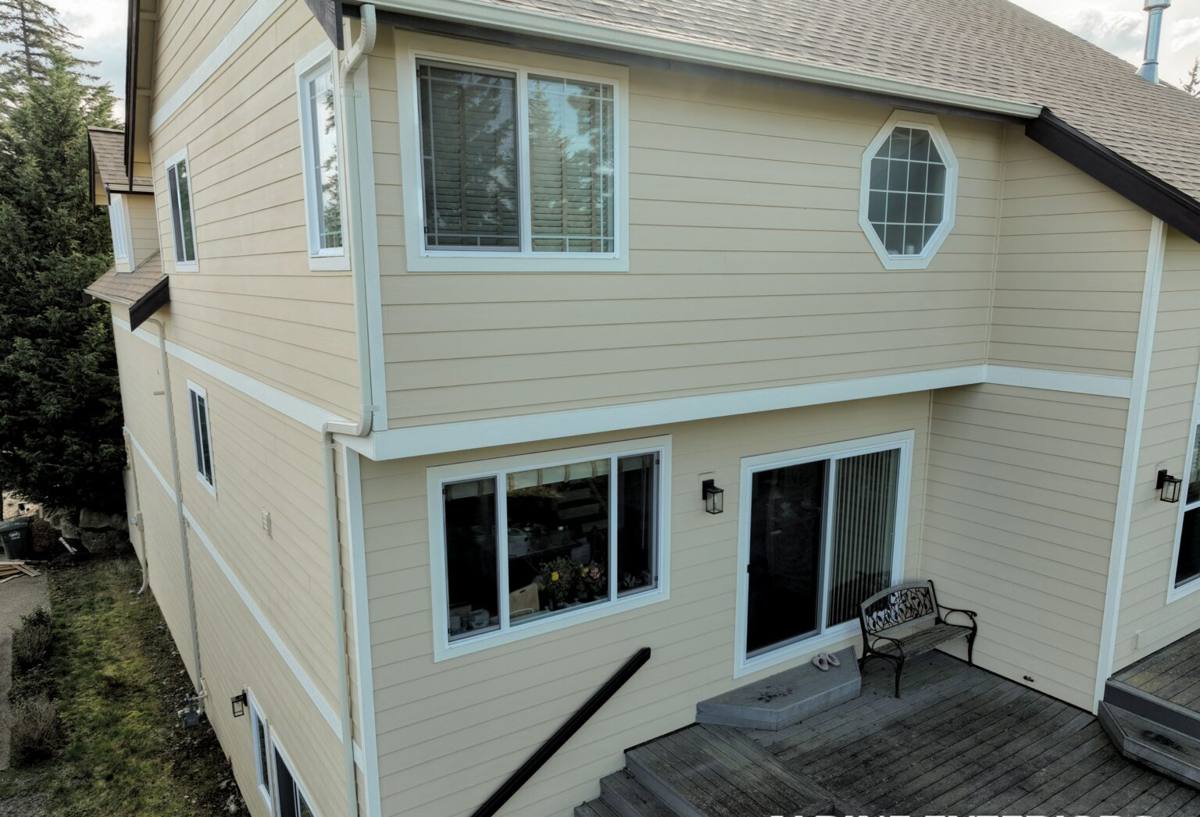
What Custer Properties Actually Need From a Deck
Every deck we build starts with a walk of the actual site, not a template. A few things come up again and again on Custer properties:
Drainage and Grade
Lots in this area vary from flat cleared parcels to gently sloped ground backing up to trees or fields. Either way, water needs somewhere to go that isn't pooling under the deck or against the house foundation. We grade and set footings with runoff in mind before a single board goes down — fixing drainage after the fact means tearing into a finished structure.
Sun, Shade, and Tree Cover
A deck tucked under fir or cedar cover stays damp longer after every rain, which is exactly the environment moss and algae like best. A deck in open sun dries faster but takes more direct weathering. We factor in your specific exposure when recommending decking material and finish — a shaded north-facing deck and a south-facing open one aren't the same project even on the same street.
Wind and Salt Exposure
Homes with more open exposure toward the water pick up more salt-laden air over time. That doesn't mean every fastener and connector needs to be marine-grade, but it does mean we don't cut corners on hardware coatings just to save a few dollars on a bid — corrosion at a joist hanger or ledger bolt is a structural problem, not a cosmetic one.
Choosing the Right Decking Material
There's no single "best" decking material — there's the right material for your budget, your maintenance appetite, and how exposed the deck is to Custer's rain and moss cycle. Here's how the common options actually compare in this climate:
| Material | Moisture & Moss Behavior | Maintenance | Typical Lifespan Here |
|---|---|---|---|
| Pressure-treated wood | Absorbs moisture, prone to surface mildew/moss if not sealed regularly | Annual cleaning and re-sealing recommended | 15-20 years with upkeep |
| Cedar | Naturally rot-resistant but still needs finish to fight moss and graying | Periodic cleaning, refinishing every few years | 20-25 years with upkeep |
| Composite decking | Sheds water well, but low-quality caps can still host surface algae in shaded, damp spots | Occasional wash-down, no sealing or staining | 25-30+ years, manufacturer-warrantied |
| PVC/capped polymer | Fully sealed surface, best moisture and moss resistance of the group | Lowest maintenance, occasional wash-down | 25-30+ years, manufacturer-warrantied |
We install all of the above and will give you an honest read on which fits your project. Composite and PVC cost more up front but make sense for shaded or hard-to-reach decks where you don't want to be out there scrubbing and resealing every year. Cedar and treated wood still make sense for homeowners who want a natural look and are willing to keep up with a finish schedule.
What's Underneath Matters More Than What's On Top
The decking boards are what you see. The framing underneath is what determines whether the deck is still solid in fifteen years. In a climate that stays damp as long as Whatcom County's does, a few details are non-negotiable on every deck we build:
- Footings sized and set below frost depth, on solid bearing soil — not just poured onto whatever was already there
- Ledger board flashed properly where the deck attaches to the house, so water is directed away from the wall assembly instead of into it
- Joist tape or another moisture barrier on top of the framing lumber to slow rot at the fastener points, which is where most deck framing failures actually start
- Corrosion-resistant, code-rated hardware for every joist hanger, post base, and structural fastener — not mixed-and-matched leftover hardware
- Proper airflow underneath the deck so the framing can dry out between rain events instead of staying wet for weeks
None of this is visible once the deck is finished, which is exactly why it's worth asking any contractor how they handle it before they start.
Railings, Stairs, and Code Requirements
Any deck of meaningful height needs a code-compliant railing and stair system, and Whatcom County follows the state building code for guardrail height, baluster spacing, and stair rise/run. We handle the permit and inspection process as part of the job — that includes pulling permits when the project requires one, scheduling inspections, and building to pass the first time rather than guessing and hoping.
Railing material choices matter here too. Wood railings need the same finish discipline as wood decking. Metal or cable railing systems need hardware rated for outdoor, damp-climate exposure so they don't develop rust streaks down the deck boards within a couple of seasons.
How the Project Actually Runs
1. Site Visit and Design
We walk the property, talk through how you actually want to use the space, and look at drainage, sun exposure, and how the deck ties into the house. You get a clear scope and a straightforward estimate — no vague allowances that turn into surprise costs later.
2. Permitting
If the project requires a permit, we handle the paperwork and coordinate inspections so you're not the one chasing down the county.
3. Build
Footings and framing first, inspected before anything gets covered up. Then decking, railings, and stairs. We keep the site reasonably clean and protected through the build — a deck project shouldn't tear up the rest of your yard in the process.
4. Final Walkthrough
We walk the finished deck with you, cover basic care for whatever material you chose, and make sure everything is solid before we call it done.
Living With a Deck Through Whatcom County's Moss Season
Even a well-built deck needs some seasonal attention in a climate this wet. A little consistency goes a long way toward keeping moss and algae from ever getting established:
- Sweep leaves and needles off the surface regularly in fall — trapped debris holds moisture right where you don't want it
- Keep gutters and downspouts near the deck clear so runoff isn't dumping directly onto it
- Rinse the deck surface a few times a year, more often in shaded spots, to clear early moss growth before it takes hold
- Check railing posts and stair stringers annually for any soft spots or discoloration, especially where wood meets concrete or soil
- Re-seal or re-stain wood decking on the schedule your finish product recommends — skipping a year is when moss and rot get a foothold
- Keep shrubs and low branches trimmed back from the deck edge to improve airflow and sun exposure
Why a Crew That Already Works Custer and Lynden Matters
Deck-building fundamentals don't change from one town to the next, but the details that keep a deck performing well over time — how much shade a lot typically gets, how fast water needs to move off a given slope, which hardware holds up over years of this specific weather — are learned by working in this area, not by reading a spec sheet. We're based in Lynden and already do work throughout Custer and the surrounding Whatcom County communities. That means we're not learning the local conditions on your project; we already know what this climate does to a deck over a decade, and we build accordingly from the first footing.
It also means we're a known local shop if you ever need a warranty question answered or a small adjustment down the road — not a crew that finished the job and left the county.
Get a Straightforward Estimate
If you're planning a new deck or replacing one that's had enough of Whatcom County's weather, we're happy to come take a look and talk through what makes sense for your property. The estimate is free, there's no pressure, and you'll get a straight answer about materials, timeline, and cost. Use the form below to get started.