 Lynden Siding
 Custer's Climate Is Harder on Siding Than Most People Realize
Custer sits in the northwest corner of Whatcom County, close enough to Semiahmoo Bay and the Strait of Georgia that salt-laden air is a regular fact of life, not an occasional nuisance. Add in the rainfall totals typical of this part of the county, long stretches of overcast humidity, and tree cover that keeps siding shaded and damp for days after a storm passes, and you have a climate that is genuinely tough on exterior building materials. Homes here don't fail because owners neglect them. They fail because the siding wasn't built for this specific combination of salt, moisture, and shade.
We work throughout Lynden and the surrounding Whatcom County communities, and Custer comes with its own set of conditions worth understanding before you pick a replacement siding product. This page walks through what local homes are up against and how we approach siding, roofing, windows, and decks for houses in this area.
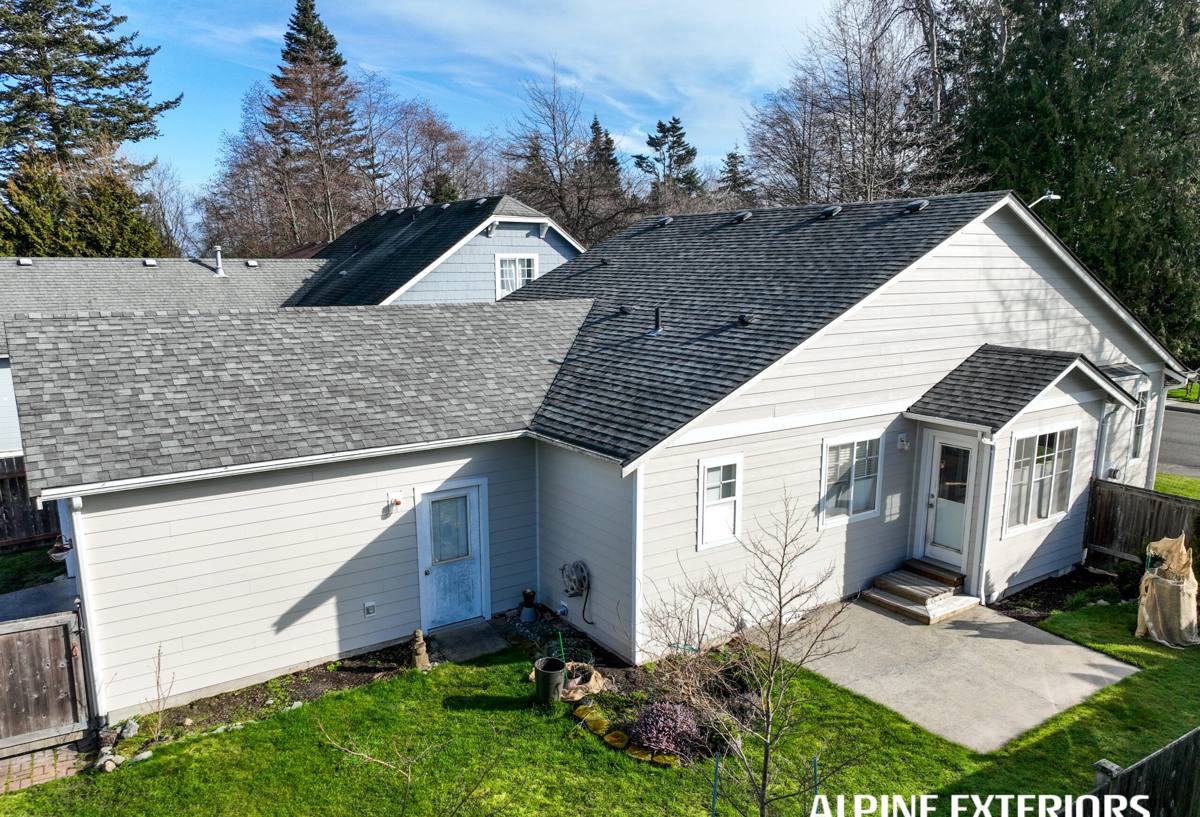
What Custer Homes Are Actually Fighting
Salt Air
Proximity to saltwater doesn't just mean occasional salty fog. Airborne salt is corrosive to fasteners, trim metal, and paint film, and it accelerates the breakdown of materials that aren't formulated to resist it. Over years, salt exposure shows up as pitting on metal components, chalky or degraded paint film, and faster-than-expected wear on anything with a thin factory finish.
Driving Rain
Whatcom County gets a lot of rain, and in Custer's more open, wind-exposed spots that rain often comes in sideways rather than straight down. Driving rain finds every weak seam, every under-caulked joint, and every place where siding wasn't lapped or flashed correctly. Products that rely heavily on paint film or sealant to stay watertight are the ones that suffer most under this kind of repeated wind-driven exposure.
Moss Season
Shaded lots, tree-lined properties, and the county's long wet season combine to give this area an extended moss and algae season — not just on roofs, but on siding, especially on north-facing walls and anywhere airflow is limited. Moss and algae hold moisture directly against a wall surface for extended periods, which is exactly the kind of sustained dampness that wood-based and poorly sealed siding products struggle to tolerate.
Why We Standardized on James Hardie Fiber Cement
We install James Hardie siding exclusively. We don't install vinyl, LP SmartSide, Cemplank, Allura, primed spruce, or cedar. That's a deliberate professional standard, not a sales preference, and it comes from watching how different siding materials actually perform in Whatcom County conditions over the long run — not just in a showroom or a spec sheet.
Non-Combustible Core
James Hardie siding is fiber cement — it does not contribute fuel to a fire the way wood-based products can. That's a meaningful difference in wildfire-adjacent regions of Washington, and it's simply a sound, non-negotiable baseline for exterior cladding regardless of where a home sits.
Built for Wet, Coastal Conditions
Hardie's HZ5 product line is engineered specifically for climates with significant moisture exposure, including coastal and marine-influenced regions like ours. The material itself resists moisture absorption far better than wood-based composite sidings, which matters enormously when a wall is going to sit damp and shaded for days at a time during moss season.
ColorPlus Factory Finish
Rather than relying on job-site paint that has to cure correctly and hold up against salt air and UV, Hardie's ColorPlus finish is baked on in a factory-controlled process. It resists fading and chipping far better than field-applied paint, and it comes backed by its own finish warranty separate from the substrate warranty.
A Warranty That Actually Transfers
Hardie backs its siding with a substantial, transferable limited warranty. That matters if you ever sell the home — a documented, manufacturer-backed warranty on the siding is a real selling point, not paperwork nobody checks.
Why We Don't Install the Alternatives
Every siding product on the market gets something right, and we're not going to pretend otherwise. Here's the honest trade-off analysis behind our standard.
Vinyl
Vinyl is inexpensive and low-maintenance in mild climates, and it installs quickly. But it's a thin material that can warp or become brittle over time, its seams and laps are more vulnerable to wind-driven rain intrusion than a properly installed fiber cement system, and it doesn't hold up as well cosmetically in direct salt air exposure over a long ownership period.
LP SmartSide
LP SmartSide is an engineered wood product with real strengths — it's lighter than fiber cement and easier to work with on certain details. But it is still wood at its core, treated with a resin binder, and wood-based products are inherently more sensitive to sustained moisture exposure than cement-based ones. In a moss-heavy, high-rainfall area like Custer, that's the exact vulnerability we try to design around.
Cemplank and Allura
Both are legitimate fiber cement competitors to Hardie, and the raw material category is sound. Our reasoning for standardizing on one manufacturer comes down to consistency of factory finish quality, warranty structure, and the depth of product engineering across specific climate zones (like Hardie's HZ5 designation) — not a claim that competing fiber cement is defective.
Primed Spruce and Cedar
Real wood siding has genuine aesthetic appeal, and cedar in particular has a long history in the Pacific Northwest. But solid wood siding requires the most diligent, ongoing maintenance of any option on this list — repainting or resealing on a strict cycle, careful caulking, and vigilant moisture monitoring. In a climate with this much rain and this long a moss season, wood siding punishes any lapse in that maintenance schedule.
Siding Material Comparison
| Material | Moisture Resistance | Maintenance | Finish Durability |
|---|---|---|---|
| James Hardie Fiber Cement | Excellent (HZ5 engineered) | Low | Factory-baked ColorPlus finish |
| Vinyl | Fair (seam-dependent) | Low | Can fade, warp, become brittle |
| LP SmartSide | Fair to Good | Moderate | Field or factory paint, resin core |
| Cemplank / Allura | Good (fiber cement) | Low | Varies by finish line |
| Primed Spruce / Cedar | Poor to Fair | High | Requires regular repainting/sealing |
What Correct Installation Actually Involves
Fiber cement performs the way it's engineered to only when it's installed correctly. In a wind- and rain-exposed area like Custer, the details matter as much as the material choice itself.
- Proper clearance between siding and grade, decks, or roof lines to prevent wicking moisture
- Correct fastener spacing and type to avoid premature corrosion in salt-air conditions
- Rainscreen or drainage plane installation where conditions call for it, to let walls dry out between rain events
- Properly lapped and caulked joints, sealed with products rated for the intended exposure
- Flashing details at windows, doors, and trim that direct water away from the wall assembly, not into it
- Factory-cut edges sealed per manufacturer specification wherever field cuts expose raw material
We've seen fiber cement installed poorly by crews unfamiliar with these details, and it can develop problems just like any other product installed wrong. The material is only half the equation — installation discipline is the other half.
Beyond Siding: Roofing, Windows, and Decks
The same conditions that stress siding in Custer — driving rain, salt air, moss — put equal pressure on the rest of a home's exterior envelope. We handle roofing, windows, and decks alongside siding because these systems all interact. A roof shedding water improperly can soak siding from above. Poorly flashed windows can feed moisture directly into a wall assembly regardless of how good the siding is. And decks attached to the house need flashing and clearance details that respect the same moisture principles as the siding itself.
Addressing these as one connected exterior system, rather than as separate unrelated projects, is how you actually solve a moisture problem instead of moving it somewhere else on the house.
Why a Local Crew Matters Here
Custer isn't a generic climate zone on a spec sheet — it's a specific combination of coastal exposure, tree cover, rainfall, and wind pattern that a crew working across Whatcom County day in and day out learns to read. Knowing which walls on a given lot are going to stay shaded and damp longest, which sides take the worst of the driving rain, and how much moss pressure a particular property is realistically going to see all shape decisions about flashing, drainage details, and even which Hardie product line and finish make the most sense for that specific home. That's local knowledge, built from working these conditions repeatedly, not something you get from a national installer passing through once.
Getting Started
If you're noticing moss buildup, paint failure, soft spots, or general wear on your Custer home's siding, roofing, windows, or decking, we're happy to take a look and give you an honest read on what's actually going on and what your options are. We'll walk the property, explain what we see, and give you a straightforward estimate — no pressure, no hard sell. Use the form below to request your free estimate.