 Lynden Siding
 What LP SmartSide Actually Is
LP SmartSide is an engineered wood siding product built from strand-based wood fiber, resin, and wax, pressed into panels or lap boards and coated with a proprietary treatment called SmartGuard. The idea is straightforward: take wood's workability and warm appearance, then engineer it to resist the moisture, fungal decay, and termite damage that plague traditional cedar and primed spruce siding. LP sells several product lines — lap siding, panel siding, trim, and soffit — and most come factory-primed, ready for a homeowner's or contractor's choice of paint color.
We get asked about LP SmartSide often, especially from homeowners comparing quotes across Whatcom County. This page explains what the product does well, where it runs into trouble in our specific climate, and why our crews only install James Hardie fiber cement siding on the homes we work on.
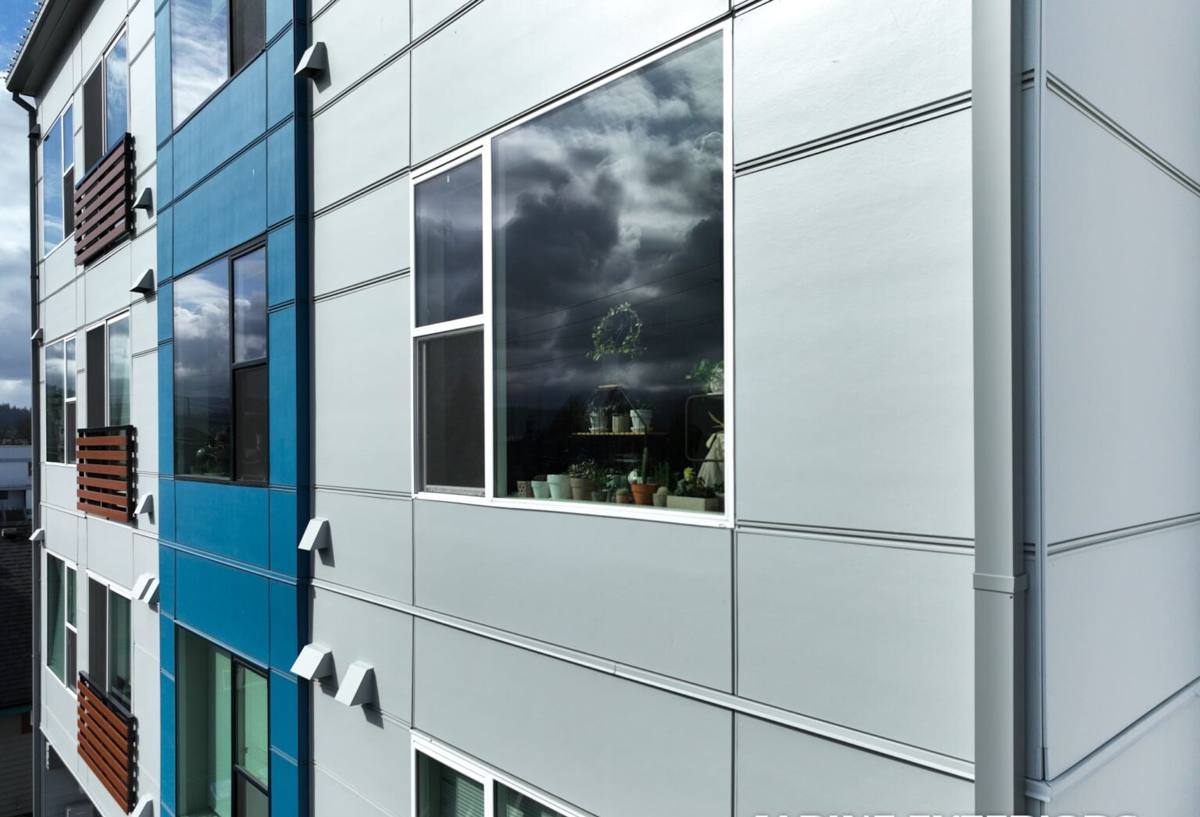
Where LP SmartSide Gets It Right
To be fair to the product, LP SmartSide solved real problems with older wood siding. It's worth naming what it does well before explaining why we don't install it.
- Impact resistance: Strand-based construction holds up well against hail, thrown debris, and the occasional errant baseball better than solid wood.
- Workability: It cuts, nails, and installs using standard wood-framing tools and techniques, which keeps labor costs down for contractors who don't specialize in fiber cement.
- Weight: It's lighter than fiber cement, which can simplify handling on multi-story installs.
- Upfront material cost: It typically runs cheaper per square than premium fiber cement siding, which matters on tight remodel budgets.
Those are legitimate advantages, and there are plenty of homes across the country where LP SmartSide performs adequately for its warranty period. Our concern isn't that the product is a scam or poorly engineered — it's that it's a wood-based product in a climate that is genuinely unkind to wood-based products, and Lynden sits in one of the tougher pockets of that climate.
Why Lynden's Climate Is a Tough Test for Engineered Wood
Salt Air Off the Sound
Lynden isn't beachfront, but Whatcom County's proximity to the Salish Sea and Puget Sound means salt-laden marine air moves inland regularly, especially with prevailing westerly weather patterns. Salt air accelerates the breakdown of paint films and factory finishes, and once a finish starts to chalk or crack, whatever's underneath it is exposed to moisture far sooner than the product's engineers intended.
Driving Rain, Not Just Rain
Whatcom County doesn't just get a lot of rainfall — it gets wind-driven rain, particularly during fall and winter frontal systems rolling off the Pacific. Driving rain doesn't fall straight down where gravity and good flashing handle it easily; it gets pushed sideways into panel seams, butt joints, and cut edges. Those seams and edges are exactly where engineered wood products are most vulnerable, because that's where the wood fiber substrate is most exposed if the factory coating or field-applied sealant isn't perfect and doesn't stay perfect.
A Long Moss Season
Between the persistent cloud cover, cool temperatures, and dampness that defines a Whatcom County fall through spring, moss and algae have a long growing season here — longer than most of the country. Moss holds moisture directly against a siding surface for extended periods rather than letting it run off and dry. On a material with a wood-fiber core, prolonged surface moisture retention is one of the conditions that most directly threatens the product's long-term integrity.
The Core Trade-off: A Wood Substrate Under a Coating
Every engineered wood siding product, no matter how good the treatment, is still fundamentally a wood-fiber product protected by a surface coating. That coating is doing all the work of keeping moisture out. As long as it's intact, the product performs close to its engineered specification. The trade-off shows up when that coating is compromised — through age, impact, poor field-cutting practices, or simply years of UV and moisture cycling — because the material underneath doesn't have the same moisture tolerance as the coating protecting it.
The most common real-world failure mode we hear about with strand-based wood siding isn't dramatic collapse — it's slow edge swelling, where cut ends or panel joints that weren't fully sealed (or where the sealant has since failed) start to absorb water, swell, and eventually delaminate or crumble at the edges. In a climate with Lynden's rainfall and humidity profile, that clock runs faster than it does in drier regions of the country.
Installation Sensitivity Matters More Here
LP SmartSide's own installation instructions are specific for a reason: every cut edge must be primed or sealed in the field, panels need correct clearance from grade and roof lines, caulking has to be maintained at every joint, and flashing details have to be precise. That's true of any siding product, but the margin for error is smaller with a wood-based substrate. A missed cut-edge seal or a caulk joint that fails five years in doesn't cause a visible problem immediately — it causes a slow, hidden one, and hidden moisture problems are exactly the kind that are expensive to catch early and expensive to fix once they're found.
The Maintenance Commitment Homeowners Don't Always Hear About
Because the coating is what's protecting the wood fiber underneath, LP SmartSide siding needs an ongoing maintenance rhythm to perform for its expected lifespan:
| Maintenance Task | Typical Interval | Why It Matters in Lynden |
|---|---|---|
| Repainting / recoating | Every 7-10 years | Marine air and UV exposure break down paint film faster than inland climates |
| Caulk joint inspection | Annually | Driving rain finds any gap at seams, trim, and penetrations |
| Moss and algae removal | 1-2x per year | Extended moss season means growth returns quickly if not kept ahead of |
| Cut-edge and touch-up sealing | As damage occurs | Any nick or scrape exposes the wood substrate directly to moisture |
None of that maintenance is unreasonable to ask of a homeowner in the abstract. But when we're standing in front of a family deciding what to put on their home for the next 20-30 years, we'd rather install something that doesn't put that maintenance burden — and the risk of what happens if it slips — on their shoulders.
Warranty Structure: What It Covers and What It Doesn't
LP SmartSide's warranty is meaningful, but like most manufactured siding warranties, it's prorated after an initial period, and coverage for finish and substrate issues can depend heavily on documented proper installation and maintenance. If a homeowner can't produce evidence of the maintenance schedule the warranty assumes, claims related to moisture damage can be harder to get honored. That's not unique to LP — it's common across the engineered wood siding category — but it's a real factor in a climate where moisture exposure is a constant rather than an occasional event.
Why We Standardized on James Hardie Instead
We made a deliberate decision to install only James Hardie fiber cement siding, and it comes down to matching the material to the climate rather than matching the material to the lowest bid.
- Non-combustible core: Hardie's fiber cement composition is cement, sand, and cellulose fiber — there's no wood substrate to swell, rot, or delaminate.
- Climate-engineered product lines: Hardie's HZ5 formulation is specifically engineered for cold, wet, freeze-prone climates like the Pacific Northwest, addressing moisture behavior differently than their formulations for hot, dry regions.
- ColorPlus factory finish: A baked-on, UV-cured finish that's far more resistant to the fading and chalking that marine air accelerates, and it doesn't rely on field-painted protection of a moisture-sensitive core.
- Strong transferable warranty: Hardie's warranty structure is built around a non-combustible, non-organic substrate, which changes the entire risk profile compared to a wood-fiber product.
- Track record in this exact climate: Fiber cement has been the go-to standard for coastal and marine-exposed Pacific Northwest homes for good reason — it was built to handle exactly what Lynden's weather delivers.
Cost Comparison, Honestly
We won't pretend Hardie is the cheaper option upfront — it isn't, and any contractor who tells you otherwise isn't being straight with you. Here's how the two compare on the factors that actually matter over the life of the siding:
| Factor | LP SmartSide (Engineered Wood) | James Hardie (Fiber Cement) |
|---|---|---|
| Upfront installed cost | Lower | Higher |
| Core material moisture risk | Wood fiber substrate, coating-dependent | Cement-based, not organic |
| Repaint / recoat cycle | ~7-10 years | 15-20+ years (ColorPlus finish) |
| Fire rating | Combustible | Non-combustible |
| Moss/algae resistance | Moderate, coating-dependent | Higher, cement surface |
| Long-term maintenance burden | Higher | Lower |
Over a typical ownership period, the gap in upfront cost narrows considerably once you account for the repaint cycle and the ongoing maintenance that engineered wood requires to stay under warranty and looking good.
What to Ask Any Siding Contractor Before You Decide
Whatever material you're considering, and whoever you hire, these are worth asking directly:
- What does the manufacturer's warranty require in terms of documented maintenance, and what voids it?
- How are cut edges and panel joints sealed in the field, and who's responsible if that sealing fails?
- What's the expected repaint or recoat interval for this specific product in a marine, high-rainfall climate?
- Is the contractor a manufacturer-certified installer, and can they explain why they chose the products they offer?
- What does the material do at 15, 20, and 30 years if maintenance is missed for a season or two?
A contractor who can answer those questions clearly — including for products they don't install — is one who's thought seriously about your climate, not just their price sheet.
Our Bottom Line
LP SmartSide isn't a bad product. It's an engineered wood siding that performs reasonably well in a lot of climates, and there are legitimate reasons a homeowner or contractor might choose it, especially on a tighter budget. Our decision not to install it isn't about disparaging LP as a company — it's about the specific combination of salt air, driving rain, and a long moss season that defines exterior conditions in Lynden and the rest of Whatcom County. In that combination, we don't think a wood-fiber substrate protected primarily by a surface coating is the right long-term bet for a homeowner's largest exterior investment. James Hardie's fiber cement gives us a non-combustible, climate-engineered product with a finish and warranty structure built for exactly these conditions, and that's what we stand behind on every home we side.
If you're weighing siding options for a home in Lynden or anywhere else in Whatcom County, we're happy to walk your property, look at your current siding's condition, and give you a straightforward, no-pressure estimate on what a James Hardie installation would look like for your home.