 Lynden Siding
 Primed spruce siding has a real appeal. It's solid wood, it takes paint beautifully, and it gives a home the kind of traditional, clean-lapped look that a lot of Lynden homeowners grew up with. We understand why people ask for it. But after years of tear-offs and repair calls on wood siding across Whatcom County, we made a decision: we don't install primed spruce siding on the homes we work on. This page explains the honest reasons why, not to talk down the product, but so you understand the trade-off before you commit a home's exterior to it.
What Primed Spruce Siding Actually Is
Primed spruce siding is solid or finger-jointed spruce lumber, milled into lap boards or panels and coated at the factory with a coat of primer. The primer is meant to seal the wood before it leaves the mill and give painters a head start once it's installed. It is not a finished product on its own — it still needs a field-applied topcoat of exterior paint, plus caulking at every joint, corner, and penetration, before it's actually weather-ready.
That distinction matters. A lot of the failures we get called out to inspect trace back to that gap between "primed" and "finished." A board can sit primed-only through a wet stretch of construction, or get painted with one coat instead of two, and the wood underneath never really gets the protection it was designed to have.
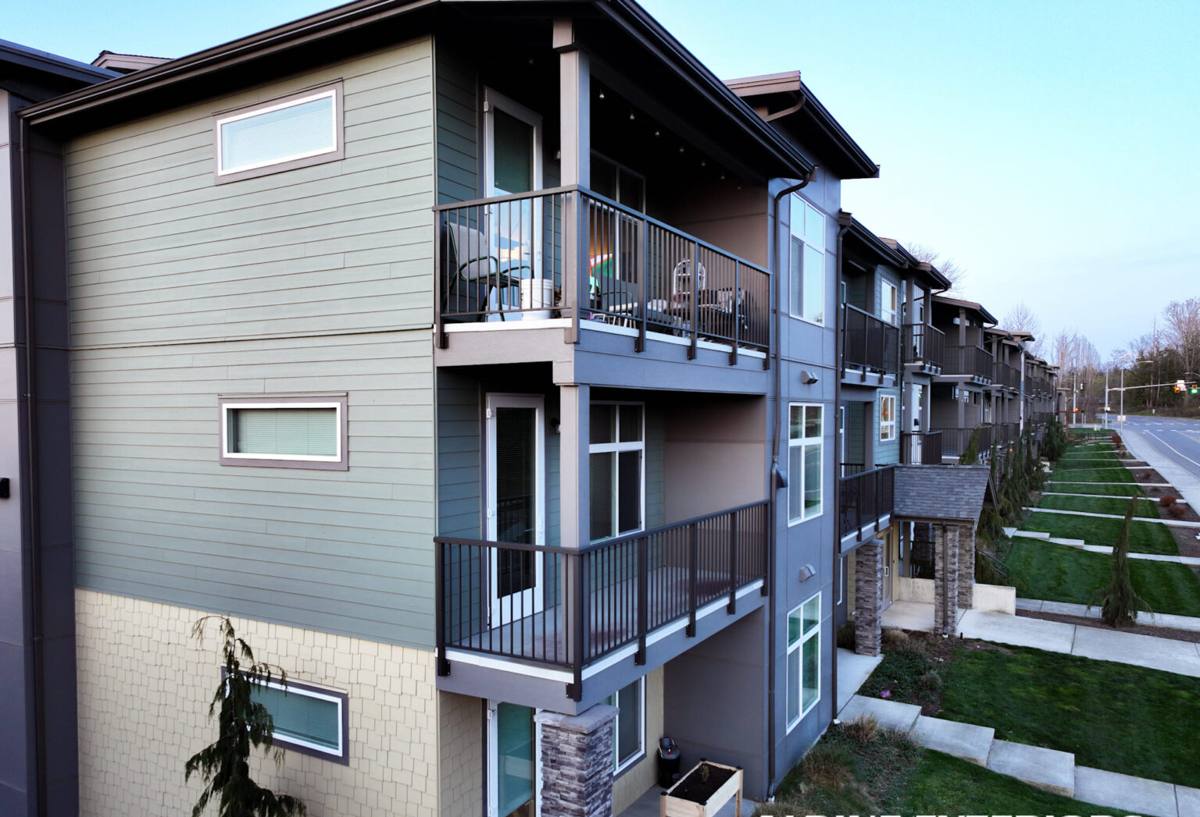
Why Wood Siding Struggles in This Climate
Whatcom County isn't a dry climate, and Lynden sits close enough to the water that homes here deal with salt-laden air, long stretches of driving rain off the Pacific, and a moss season that can run from fall through spring. Wood siding is hygroscopic — it absorbs and releases moisture with the weather, swelling and shrinking through every wet-dry cycle. Over enough seasons, that movement works joints loose, cracks paint film, and opens tiny gaps where water gets behind the board.
Once moisture gets behind primed spruce, it doesn't dry out quickly in our climate. Overcast, humid stretches are the norm here for months at a time, not the exception. Wood that stays damp for extended periods is exactly what invites rot, especially at butt joints, board ends, and anywhere caulking has started to fail. End grain is the most vulnerable spot on any wood board, and a standard lap-siding installation has dozens of exposed board ends per elevation.
Moss, Mildew, and North-Facing Walls
North- and west-facing walls that stay shaded through our wet season are prone to moss and mildew growth on painted wood siding. It's not a defect in the product — it's just what happens when organic material sits in a damp, low-sun environment for months. Left alone, that growth holds moisture against the wood surface and accelerates paint breakdown underneath it.
The Maintenance Reality Homeowners Don't Always Hear Upfront
Primed spruce siding is a maintain-it-or-lose-it product. The factory primer is a base coat, not a shield, and once it's installed the long-term performance of the whole wall depends on the paint film staying intact. In our climate, that typically means:
- A full inspection and caulk touch-up every year or two, especially after a hard winter
- Repainting the entire exterior on a 4-7 year cycle, sooner on sun- and rain-exposed elevations
- Prompt repair of any cracked, peeling, or blistered paint before it turns into a moisture entry point
- Watching board ends, corners, and trim joints specifically, since that's where failure starts
None of that is unreasonable for wood siding — it's just what wood siding requires. The problem is that most homeowners don't budget for it as an ongoing cost when they're comparing sticker prices at the time of installation. A full repaint of a house every several years adds up to real money over a 20- or 30-year ownership window, and it's labor that has to happen on a ladder, on a schedule, whether or not it's convenient.
Where Primed Spruce Actually Falls Apart
We're not going to tell you primed spruce siding is a bad product across the board — used correctly, painted and maintained on schedule, it can last a long time. The trouble is how much of its performance depends on things outside the manufacturer's control: the quality of the field paint job, the diligence of caulking at every seam, and the homeowner keeping up a maintenance schedule for decades. Fiber cement removes most of that dependency from the equation.
The most common failure points we see on primed wood siding in this area are:
- Butt joints between boards — end grain soaks up water fastest, and this is where paint cracks first
- Bottom courses near grade or hardscape — splash-back moisture and reduced airflow
- Window and door trim intersections — caulk joints that were never maintained
- North-facing elevations — slow-drying, moss-prone, paint fails faster in shade
- Nail heads and fastener patterns — points where the primer coat is thinnest
Primed Spruce vs. James Hardie Fiber Cement
| Factor | Primed Spruce Siding | James Hardie Fiber Cement |
|---|---|---|
| Base material | Solid or finger-jointed wood | Cement, sand, and cellulose fiber |
| Moisture behavior | Absorbs, swells, shrinks with weather | Engineered to resist moisture-driven warping |
| Finish | Factory primer only; field paint required | Factory-baked ColorPlus finish (or field-painted) |
| Repaint cycle | Roughly every 4-7 years | ColorPlus typically holds 15+ years before repaint |
| Rot risk | Real, especially at joints and end grain | Not organic material — doesn't rot |
| Fire behavior | Combustible | Non-combustible core material |
| Warranty structure | Varies by manufacturer, often limited | Long-term transferable product warranty |
Why We Standardized on James Hardie Instead
We install James Hardie fiber cement siding exclusively, and the climate here is a big part of why. Hardie's HZ product lines are engineered specifically for regions like ours — wet, moderate, coastal-influenced — rather than being a one-size-fits-all board. The material itself doesn't absorb and swell the way wood does, so it holds paint lines and joints far more consistently through wet-dry cycles. It's also non-combustible, which matters more every year as wildfire smoke seasons stretch further into the Pacific Northwest's calendar.
The factory ColorPlus finish is the other piece. Instead of relying on a field paint crew to get full, even coverage on every board on a ladder, the color is baked on at the factory under controlled conditions, backed by its own finish warranty. That doesn't mean zero maintenance forever — no exterior product is maintenance-free — but it moves the repaint clock out from years to decades, and it removes the single biggest variable in how long a paint job actually lasts: how well it was applied in the field.
We also like that Hardie backs the product with a real, transferable warranty on both the substrate and the finish. That gives homeowners something concrete if a problem does show up, rather than a maintenance requirement with no real backstop if it isn't followed to the letter.
What to Ask Before Choosing Wood Siding
If you're set on a real-wood look regardless, or you're getting quotes from more than one contractor, these are worth asking before you sign anything:
- Who is responsible for the field-applied topcoat, and how many coats will actually go on?
- What caulking schedule does the manufacturer recommend, and who's doing that maintenance long-term?
- Does the warranty cover rot, or only manufacturing defects in the board itself?
- How is end grain treated at every cut and butt joint on site — not just at the factory edge?
- What's the realistic repaint interval for this specific climate and this home's sun exposure?
If a contractor can't give you straight answers on those five points, that's worth noticing.
Our Honest Take
Primed spruce siding isn't a scam product or a bad piece of lumber — it's a traditional material that performs the way wood always has, which means it needs consistent upkeep to hold up in a wet coastal climate. We made the call not to install it because we'd rather stand behind a product that performs consistently on every home we touch, regardless of how diligent a future homeowner is about repainting on schedule. James Hardie fiber cement gives us that consistency, backed by engineering built for exactly the weather Lynden gets.
If you're planning a siding project and want a straight comparison for your specific home, we're happy to walk the property with you and talk through what actually makes sense. Reach out for a free, no-pressure estimate using the form below.