 Lynden Siding
 Siding Built for Birch Bay's Waterfront Climate
Birch Bay sits right on the water, and that changes what a house needs from its exterior. Homes here don't just deal with the general wet-and-gray Pacific Northwest weather that the rest of Whatcom County gets — they take it a step further with salt-laden air coming off the bay, wind-driven rain that hits siding at an angle instead of falling straight down, and a shaded, moisture-heavy environment that keeps moss and algae going strong for most of the year. If you own a home in Birch Bay, you've probably already noticed how much harder the north and west-facing walls work compared to a similar house a few miles inland in Lynden.
We're a Whatcom County siding, roofing, window, and deck contractor, and Birch Bay is part of our regular service area. This page walks through what that coastal exposure actually does to a house over time, how we approach siding work differently for waterfront and near-waterfront properties, and why we've standardized on one siding product instead of offering the full lineup you'll see at big box stores.
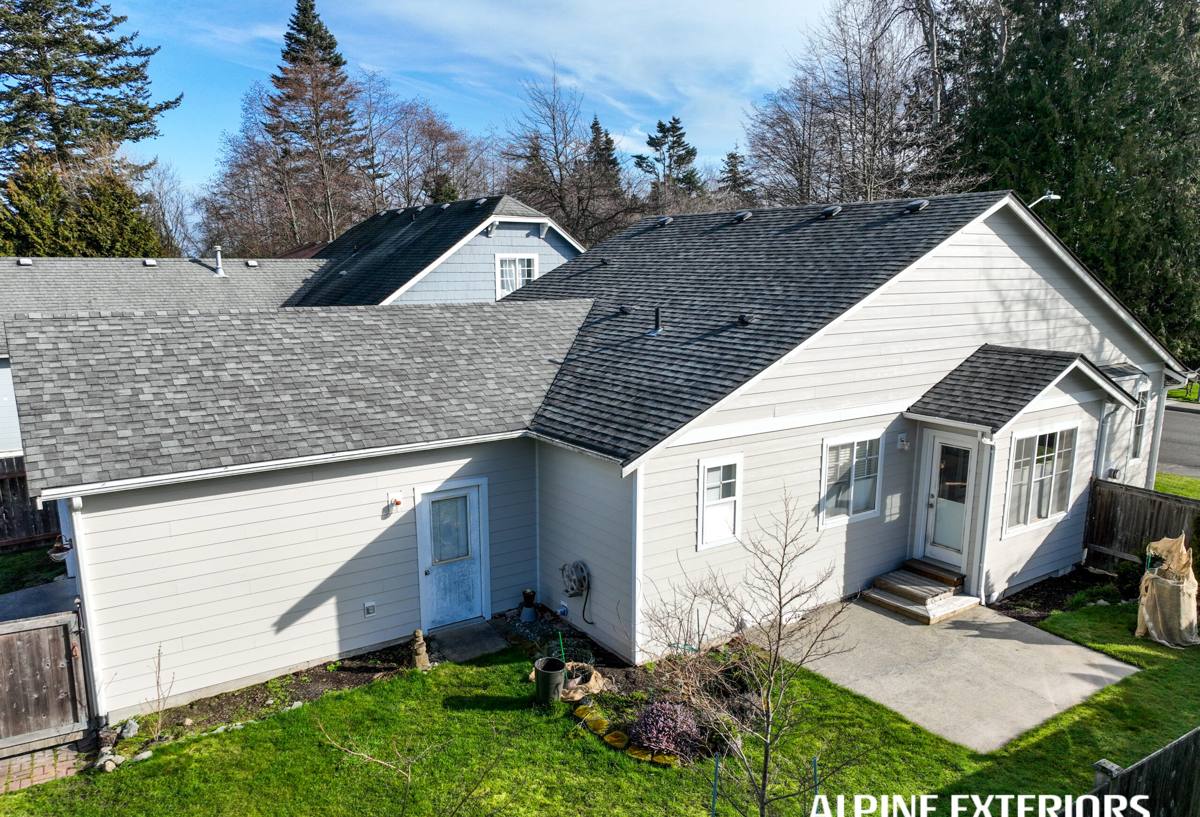
What Salt Air and Driving Rain Do to a House Over Time
Salt air isn't just a minor irritant — it's a slow, steady corrosive and moisture-holding agent. A few of the ways it shows up on Birch Bay homes:
- Metal fasteners and flashing corrode faster. Nails, screws, and trim flashing that would last decades inland can start showing rust and pitting years sooner this close to the water.
- Paint and caulk break down quicker. Salt residue combined with UV exposure and constant damp-dry cycling shortens the useful life of exterior coatings.
- Wood-based siding absorbs and holds more moisture. Salt air keeps humidity elevated even on days it isn't actively raining, which matters a lot for any siding material that relies on paint film to keep water out.
- Wind-driven rain finds gaps that vertical rain never would. Birch Bay's exposure to wind off the water means rain hits siding, trim, and window flashing at angles that push water into seams a standard installation might not be detailed for.
None of this means a house near the water is doomed to constant repairs. It means the materials and the installation details matter more here than they do on a sheltered lot in town — and that's the whole reason we approach Birch Bay jobs the way we do.
The Moss Problem
Whatcom County has a long moss season generally, but Birch Bay's combination of shade from mature trees, persistent moisture, and cooler coastal temperatures stretches that season out even further on many lots. Moss and algae growth on siding isn't just cosmetic — sustained organic growth holds moisture against the wall surface, which accelerates rot in wood substrates and can stain or degrade lesser paint finishes over time.
The fix isn't a special siding "treatment." It's choosing a material that doesn't feed moss growth the way wood fiber does, keeping the factory finish intact so water sheds instead of soaking in, and making sure the installation includes proper drainage and ventilation behind the siding so moisture doesn't get trapped in the first place.
Why We Only Install James Hardie Fiber Cement
We get asked regularly why we don't offer vinyl, LP SmartSide, or a primed wood product alongside Hardie. The honest answer is that we looked at how each of those materials performs in exactly the kind of environment Birch Bay presents — salt air, driving rain, long wet seasons — and decided we didn't want to install products we knew would need more maintenance or carry more risk on these specific homes.
Vinyl siding is affordable and low-maintenance in a general sense, but it's a thin material that can warp or distort in temperature swings and doesn't hold paint if a homeowner ever wants to change the color. LP SmartSide and other engineered wood products use a wood-strand core, which means their long-term performance depends heavily on the caulking and flashing detail staying perfect — any breach lets moisture into a wood-based core, and that's a harder risk to accept on a lot with elevated ambient humidity. Primed wood and cedar are beautiful materials, but they demand a repainting and caulking maintenance cycle that most homeowners don't want to keep up with, especially somewhere that already fights moss and mildew more than average.
James Hardie fiber cement is cement, sand, and cellulose fiber — it doesn't have an organic wood core for moisture to compromise, and it's non-combustible. Hardie's ColorPlus factory finish is baked on under controlled conditions rather than field-applied, which gives a harder, more consistent, longer-lasting finish than job-site painting can match, and it comes with a real transferable warranty. For a coastal-exposure area like Birch Bay, that combination — moisture-resistant core material plus a finish that isn't relying on a painter's weather window to cure right — is why we standardized on it and don't install the alternatives.
How We Handle Salt-Air and Wind-Exposed Installations
Material choice is half the equation. The other half is installation detail, and it's where a lot of exterior problems near the water actually originate — not from bad siding, but from standard installation practices applied to a non-standard exposure. On Birch Bay jobs we pay particular attention to:
- House wrap and drainage plane continuity — making sure the water-resistive barrier behind the siding is lapped correctly and unbroken, since wind-driven rain will find any gap over time.
- Flashing at windows, doors, and roof-to-wall intersections — these are the highest-risk points for wind-driven water intrusion, and they get extra attention on wind-exposed walls.
- Proper fastener selection — using fasteners rated for the exposure rather than defaulting to standard-grade hardware.
- Rainscreen or adequate drainage gap — giving the wall assembly a way to dry out between wet cycles instead of holding moisture against the back of the siding.
- Caulking only where Hardie's install guidelines call for it — over-caulking is a common mistake that traps moisture instead of shedding it.
None of this is exotic — it's disciplined, by-the-book installation. But "by the book" matters more in a place where the weather doesn't give a poorly detailed wall much room for error.
Beyond Siding: Roofing, Windows, and Decks in a Coastal Environment
Salt air and driving rain don't stop at the siding — they affect the whole exterior envelope, which is why we handle roofing, windows, and decks as well, not just siding in isolation.
Roofing
Roof-to-wall flashing is one of the most common failure points on any home, and it's a shared responsibility between the roofing and siding trades. We coordinate these details rather than treating them as separate jobs, which matters most on complex rooflines common around the bay.
Windows
Window flashing integration with siding is critical near the water — a window that's watertight on its own can still leak if the surrounding wall flashing wasn't tied in correctly during a siding replacement. We handle window and siding work together specifically to avoid that gap.
Decks
Outdoor structures near the bay face the same salt exposure as siding, with the added stress of direct weather and foot traffic. Fastener corrosion and moisture-related wood issues show up faster on coastal decks, which is worth planning for with material and hardware choices up front.
What This Means for Your Project Timeline and Cost
Every Birch Bay estimate factors in the site-specific exposure — how close to the water, how much wind exposure, how much shade and moss pressure — because those variables affect both the scope of prep work and the installation details needed.
| Factor | Why It Matters in Birch Bay |
|---|---|
| Distance from waterline | Closer lots see more direct salt exposure and wind-driven rain |
| Existing moss/algae buildup | May indicate underlying moisture issues that need addressing before new siding goes on |
| Tree cover and shade | Affects drying time and long-term moss/mildew risk on north and west walls |
| Condition of existing sheathing | Rot or moisture damage found during tear-off adds repair scope |
| Wall complexity | More windows, corners, and rooflines mean more flashing detail work |
We walk every property and give a written estimate before any work starts — there's no way to responsibly price a coastal-exposure job without seeing the actual walls, flashing, and substrate condition first.
A Practical Checklist for Birch Bay Homeowners
If you're trying to figure out whether your siding needs attention, a few things worth checking:
- Persistent moss or dark streaking on north or west-facing walls that doesn't wash off easily
- Soft or spongy spots when you press on wood or engineered wood siding
- Paint that's peeling, bubbling, or chalking faster than it should for its age
- Visible gaps or separation at seams, corners, or around window and door trim
- Rust staining running down from nail heads or metal flashing
- Any interior signs of moisture — musty smell, staining on interior walls near exterior corners
Any of these are worth a professional look, especially on a home that's been standing through several Birch Bay winters without an exterior update.
Why a Local Crew Matters Here
Birch Bay isn't a generic "Pacific Northwest" job site — it's a specific microclimate within Whatcom County, and the right approach to a house three blocks from the water can be different from the right approach to a house on the same street layout in downtown Lynden. A crew that works this area regularly knows which walls typically take the worst of the wind, where moss tends to build up fastest, and how to detail flashing for wind-driven rain rather than just vertical rain. That local, repeated experience is worth more than a generic install — it's the difference between siding that looks right on install day and siding that's still performing well ten and twenty years out.
Get an Estimate
If you're dealing with aging siding, persistent moss, or you're just planning ahead for a Birch Bay home, we're happy to take a look and give you an honest, no-pressure estimate. Fill out the form below and we'll get in touch to schedule a time to walk the property.