 Lynden Siding
 Blaine's Climate Is Harder on a House Than It Looks
Blaine sits right up against the water in the northwest corner of Whatcom County, and that location shapes everything about how a home ages here. Marine air moves through constantly, rain is a near year-round fact of life rather than a season, and the combination of moisture and salt exposure works on exterior materials in ways that inland Whatcom County homes never have to deal with. A siding product that performs fine in Lynden or Everson can behave differently a few miles away in Blaine, where the air itself carries salt and the humidity rarely lets a wall dry out completely between storms.
We work across Whatcom County, but we don't treat every job the same. A home's exposure to wind-driven rain, its distance from the water, and how much shade and moisture collect around it all change what we recommend and how we detail the installation. Blaine homes, especially those with direct or partial water exposure, need exterior work that's been thought through for that environment specifically.
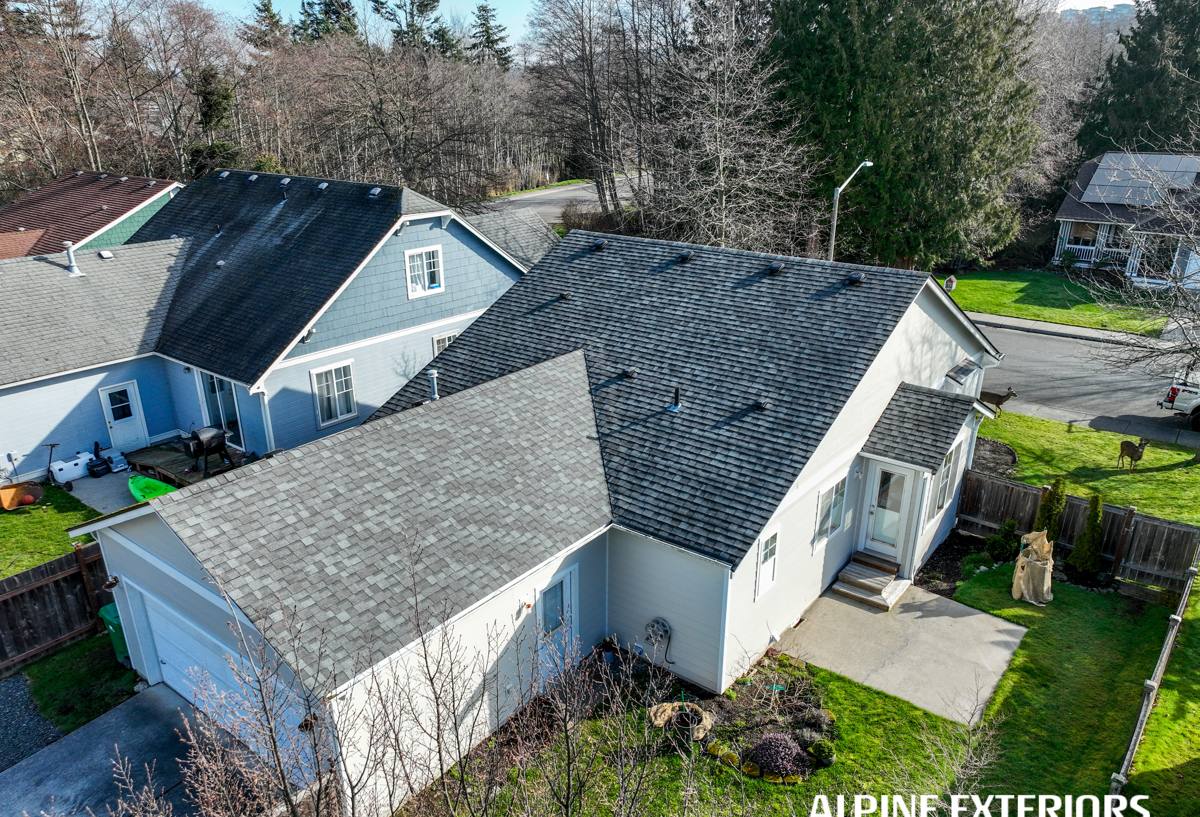
What Salt Air Actually Does to Exterior Materials
Salt air isn't just a coastal cliché. Airborne salt is corrosive to metal fasteners and trim, and it accelerates the breakdown of finishes that aren't built to resist it. On siding, the practical effects show up as faster fading, chalking, and finish failure on lower-grade products, along with accelerated corrosion on fasteners and flashing that weren't rated for the exposure. It's a slow process, but it's a steady one, and it's the reason we pay close attention to fastener spec and finish quality on every coastal job, not just the siding material itself.
This is also why we don't treat "siding" as a single decision. The fasteners, the flashing details around windows and doors, the caulking, and the paint or factory finish all have to hold up to the same conditions as the siding panel. A strong material installed with the wrong hardware or sealed with the wrong products will still fail early in a place like Blaine.
Driving Rain and Wall Assemblies
Wind off the water pushes rain sideways into walls far more than a calm inland rain does. That means water management — how a wall sheds water, how flashing directs it away from seams and openings, and how the assembly behind the siding is allowed to dry — matters as much as the siding product itself. We install with rainscreen principles and correct flashing details specifically because wind-driven rain is a real, recurring load on Blaine homes, not an occasional event.
Moss Season Is Longer Here
Anyone who's owned a home in this part of Washington knows moss season isn't really a season — it's most of the year. Cool temperatures, near-constant moisture, and limited direct sun on north- and shade-facing walls create ideal conditions for moss, algae, and mildew to take hold on exterior surfaces. On siding, that growth isn't just cosmetic. Moisture-holding growth on a wall surface keeps the material wetter longer, which accelerates deterioration on products that aren't dimensionally stable or that absorb water into their core.
This is one of the clearest places where material choice shows its long-term cost. Fiber cement doesn't feed moss growth the way wood-based products can, and it doesn't swell or lose structural integrity from repeated wetting the way engineered wood products are prone to at cut edges and seams. Homeowners still need to keep gutters clear and vegetation trimmed back from walls, but the siding itself isn't working against them.
Why We Install Only James Hardie Fiber Cement
We made a deliberate decision as a company: we install James Hardie fiber cement siding, and nothing else. Not vinyl, not LP SmartSide or other engineered wood products, not Cemplank or Allura, not primed spruce or cedar. That's not a marketing angle — it's a standard we hold to because of what we've seen happen to exterior siding in exactly this kind of climate over time.
Engineered wood siding products have real strengths — they're lighter, easier to install quickly, and often less expensive up front. But their core is still wood-based, and wood-based cores are vulnerable at cut edges, fastener penetrations, and seams where moisture can get in and isn't always visible until damage has already progressed. In a climate with this much sustained moisture and salt exposure, that vulnerability matters more than it would somewhere drier. Cedar and primed spruce carry similar exposure risk, plus an ongoing maintenance burden — refinishing, caulking, and monitoring — that most homeowners don't want to sign up for indefinitely. Vinyl is low-maintenance and inexpensive, but it's a thin material that can warp, crack in cold snaps, and fade under UV exposure, and it doesn't offer the fire resistance or impact durability of fiber cement.
James Hardie fiber cement is non-combustible, holds its factory-applied ColorPlus finish far longer than field-applied paint, and is manufactured in climate-specific HZ formulations engineered for regions with exactly this moisture profile. It resists moss and mildew growth better than wood-based alternatives, holds up to salt-air exposure, and comes with a strong transferable warranty when installed to Hardie's specifications. That last part matters — a warranty is only as good as the installation behind it, which is why correct installation practice is as much a part of what we sell as the product itself.
How James Hardie Compares to What We Don't Install
| Factor | James Hardie Fiber Cement | Engineered Wood / Cedar | Vinyl |
|---|---|---|---|
| Moisture & moss resistance | Strong — cement-based core | Vulnerable at cut edges and seams | Doesn't rot, but traps moisture behind panels if installed poorly |
| Salt air / coastal durability | Formulated HZ lines for marine climates | Finish and core degrade faster near water | Fades and becomes brittle over time |
| Fire resistance | Non-combustible | Combustible | Can melt or warp under heat exposure |
| Ongoing maintenance | Low — factory finish holds color | Higher — refinishing, caulking, monitoring | Low, but limited repair options if damaged |
| Typical lifespan when installed to spec | Decades, with strong transferable warranty | Shorter, warranty often more limited | Variable, thinner material |
Beyond Siding: Roofing, Windows, and Decks in a Marine Climate
Siding is only part of a home's defense against a wet, salt-exposed climate. We also handle roofing, windows, and decks, because all four systems have to work together to keep water out and keep a home performing over time.
Roofing
A roof in Blaine deals with the same driving rain and moss pressure as the walls below it, plus wind exposure off the water. Proper underlayment, flashing at every penetration and valley, and attention to ventilation all matter more here than in drier parts of the state, where a roofing mistake might not show up as damage for years.
Windows
Window flashing and sealing are one of the most common failure points on coastal homes, because wind-driven rain finds gaps that would never leak in calmer conditions. When we replace siding, window flashing integration is part of the job, not an afterthought — a new window installed with poor flashing detail will leak regardless of how good the siding around it is.
Decks
Outdoor living structures take the most direct hit from moisture, sun exposure variation, and salt air of anything on the property. Material choice and proper fastening matter just as much here as they do on siding, since a deck that's constantly wet and rarely fully dries is working against itself from day one.
What Working With a Local Crew Looks Like
A contractor based in this region and familiar with Whatcom County's coastal conditions makes decisions differently than a crew that mostly works inland or in a different climate zone. We know what wind-driven rain does to a wall assembly here, we know how long moss season really runs, and we detail flashing and fastening accordingly rather than following a generic installation checklist. That local knowledge shows up in the details — the flashing at a window head, the fastener spacing on a coastal-facing wall, the decision to prioritize drying capacity in a wall assembly that's going to stay damp longer than most.
Every project generally follows the same practical arc:
- An on-site assessment of your home's current siding, roofing, windows, or deck condition, with particular attention to moisture damage and exposure direction
- A straightforward conversation about what's actually needed versus what can wait, with no pressure to over-scope the job
- A written estimate that spells out materials, scope, and timeline before any work begins
- Installation following manufacturer specifications — for Hardie siding, that means correct fastener type, spacing, clearances, and flashing integration, not shortcuts that void the warranty
- A final walkthrough so you understand what was done and what maintenance, if any, is needed going forward
What Affects Cost on a Coastal Job
Every home is different, but a few factors consistently move the price on siding, roofing, window, and deck projects in a marine climate like Blaine's:
| Factor | Why It Matters |
|---|---|
| Extent of moisture damage found during tear-off | Rotted sheathing or framing behind old siding has to be repaired before new material goes on |
| Home size and wall complexity | More corners, dormers, and trim details mean more labor and material cuts |
| Water exposure of the specific lot | Homes with more direct wind and rain exposure may need additional flashing or rainscreen detailing |
| Existing siding removal | Full tear-off versus building over an existing surface changes labor scope |
| Trim and accessory choices | Corner boards, fascia, and color-matched trim add to material cost |
Questions Worth Asking Before You Hire
Whether you go with us or another contractor, a few questions will tell you a lot about who you're hiring:
- Are they licensed and insured to work in Washington, and can they show it without hesitation?
- Do they specify fastener type and flashing details in writing, or just "siding installation" as a line item?
- Do they have experience specifically with coastal or marine-exposure homes, not just general siding work?
- Is the warranty they're offering tied to correct manufacturer-spec installation, or is it vague about what voids it?
- Will they give you a straight answer about why they recommend one material over another, including the trade-offs?
If your home in Blaine is due for new siding, a roof, window replacement, or deck work, we're happy to take a look and give you a straightforward, no-pressure estimate — including an honest read on what your home's exposure actually calls for. Use the form below to get started.