 Lynden Siding
 Siding for Homes Around Wiser Lake
Wiser Lake sits in the rural country northwest of downtown Lynden, where farmland, timber, and lakefront lots blend together in a way that's typical of Whatcom County. Homes here aren't clustered into a dense subdivision — they're spread across acreage, tucked along the shoreline, or set back from the water behind a stand of fir and cedar. That spacing means every house takes on the weather a little differently, but the underlying climate story is the same one that shapes exterior work all across this part of the county.
Whatcom County sits close enough to the Georgia Strait and Puget Sound that marine air pushes inland through the lowlands for much of the year, carrying a faint salt load with it even well away from open water. Add the humidity that comes off Wiser Lake itself — fog sitting low over the water on cool mornings, condensation on north-facing walls, damp air lingering under tree cover — and you get a exterior environment that stays wet longer than it looks. That combination of regional marine air, lake-generated humidity, and the long, low-intensity rain systems that roll through fall to spring is exactly what wears down siding, trim, and roofing faster than homeowners expect.
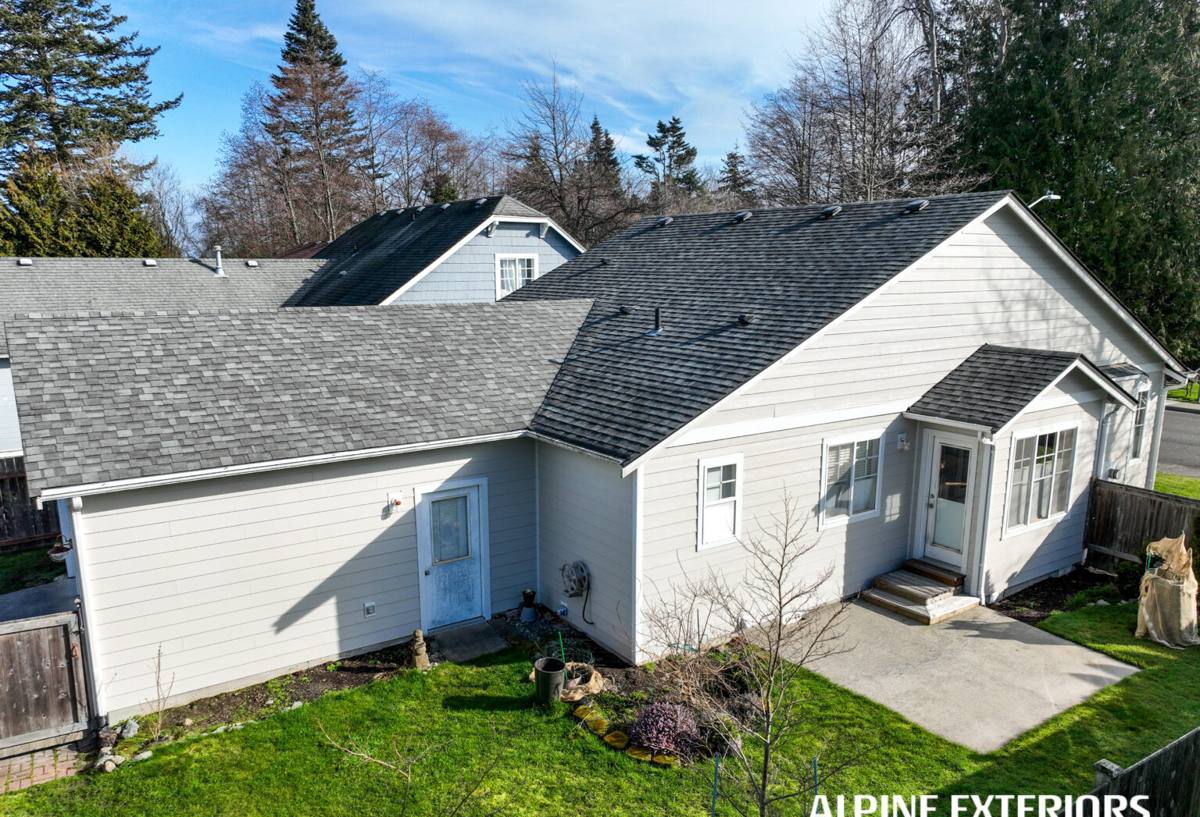
What This Climate Does to a House
Moss Season Runs Long
In and around Wiser Lake, shaded lots and lake-cooled air keep surfaces damp well past the point where moss and algae start taking hold elsewhere. North- and east-facing siding, roof valleys, and anything under tree canopy are the first places it shows up. Moss itself doesn't just look bad — it holds moisture against the surface underneath it, which is where the real damage starts.
Driving Rain Finds the Gaps
Pacific storms don't just drop rain straight down here — wind-driven rain angles into walls, especially on exposed or lake-facing elevations. Any weak point in the water-management system — a poor seam, a missing flashing detail, caulk standing in for proper design — becomes an entry point for moisture that has nowhere to dry out quickly in this climate.
Salt-Tinged Marine Air
Even away from the immediate coastline, the marine influence common to Whatcom County lowlands means a low but steady exposure to salt-laden air. Over years, that affects fasteners, flashing, and any exterior material that isn't built to handle it — it's a slow-motion problem rather than a dramatic one, which is exactly why it gets overlooked until repairs are already needed.
Why Material Choice Matters More Here Than in Drier Climates
A siding product that performs fine in a dry inland climate can struggle in a lake-adjacent, marine-influenced environment like Wiser Lake's. Wood-based products absorb moisture and are a constant maintenance commitment. Vinyl can warp and doesn't hold up structurally against sustained wind-driven rain the way a rigid material does. The products that hold up best here are the ones engineered specifically for high-moisture, high-humidity climates — not general-purpose siding adapted after the fact.
Why We Install Only James Hardie Fiber Cement
Lynden Siding Contractors installs James Hardie fiber cement siding exclusively. We don't offer LP SmartSide, vinyl, Cemplank, Allura, primed spruce, or cedar — not because those products don't have their place, but because after years of exterior work in this specific climate, we standardized on the one system that consistently holds up to what a property like this actually experiences:
- Non-combustible: Fiber cement won't ignite, sustain, or contribute fuel to a fire — a meaningful consideration for properties on larger, more rural lots where fire response can take longer.
- Engineered for Pacific Northwest moisture: Hardie's HZ5 product line is formulated for climates with significant moisture exposure, which fits the humidity profile around a body of water like Wiser Lake.
- ColorPlus factory finish: A baked-on finish applied under controlled conditions, built to resist the fading, mildew staining, and moss-related discoloration that hits field-painted surfaces harder in a damp climate.
- Doesn't rot or delaminate: Unlike wood-based siding, fiber cement doesn't feed on moisture — it holds its shape and structure over decades of the wet-dry cycling typical here.
- Strong transferable warranty: Backed by a manufacturer warranty that adds resale value, which matters on lakefront and rural properties where buyers scrutinize exterior condition closely.
We'd rather install one product exceptionally well, to spec, than offer five options and hope each one performs. On a property exposed to this much moisture over the years, that consistency matters more than flexibility.
How Material Choices Compare for This Climate
| Factor | James Hardie Fiber Cement | Vinyl | Wood / Primed Spruce |
|---|---|---|---|
| Moisture resistance | Engineered for wet climates | Moderate; can warp under stress | Absorbs moisture, prone to rot |
| Moss/mildew resistance (finish) | Factory-baked ColorPlus finish | Color molded in, but surface can stain | Field-painted, repaints needed regularly |
| Fire resistance | Non-combustible | Combustible | Combustible |
| Maintenance over 15+ years | Low, occasional wash and caulk check | Low, but replacement panels can be hard to match | High — recurring paint, sealing, rot repair |
| Typical lifespan when installed to spec | Multiple decades | 20-30 years, weather-dependent | Highly variable, moisture-dependent |
What Correct Installation Looks Like Around Wiser Lake
Fiber cement siding is only as good as the installation behind it, and in a high-moisture area that goes double. On the exterior work we do around Wiser Lake, that means:
- A properly detailed drainage plane and weather-resistant barrier behind the siding, so any incidental moisture has a path out instead of getting trapped.
- Correct flashing at windows, doors, and any roof-to-wall transitions — the most common failure points when driving rain is a regular occurrence.
- Manufacturer-specified fastening and clearances, including proper gap from grade and hard surfaces, since ground moisture and lake humidity both push dampness upward into the wall assembly.
- Sealed, correctly lapped joints designed to shed wind-driven rain rather than rely on caulk as the primary defense.
These aren't optional refinements — they're the difference between siding that performs for decades in this climate and siding that develops problems within a handful of years, regardless of the product on the wall.
Beyond Siding: Roofing, Windows, and Decks
A siding upgrade rarely solves a moisture problem in isolation. We also handle roofing, windows, and decks, because the exterior envelope works — or fails — as a system. A roof that's shedding moss-retained water onto a wall, a window that's not flashed correctly into new siding, or a deck ledger that's trapping moisture against the house can all undercut even a well-installed siding job. When we're on a Wiser Lake property, we look at the whole envelope, not just the walls, so the fixes actually hold.
Why a Local Crew Matters Here
Exterior work around Wiser Lake benefits from knowing the property types firsthand — the mix of open, wind-exposed lots and shaded, moss-prone ones; how lake fog settles differently than fog a few miles inland; which elevations take the worst of the driving rain in a typical Whatcom County storm pattern. A crew that works this area regularly brings that knowledge to the job instead of treating every property the same way a national installer might. It also means someone accountable and reachable if a warranty question or a follow-up comes up years down the line, not a call center in another state.
A Homeowner's Checklist Before Hiring
- Ask what siding material is being proposed and why it's suited to a lake-humidity, marine-influenced climate specifically — not just "why it's popular."
- Confirm the crew will detail flashing and drainage planes, not just fasten panels to the existing wall.
- Check whether the manufacturer warranty is transferable if you sell the property.
- Ask how the contractor handles moss and moisture at trim, roof lines, and ground-level clearances specifically.
- Get a written scope that names the exact product line, not a generic "fiber cement siding" placeholder.
Living With Moss Season: Realistic Maintenance
No siding product eliminates moss and algae growth entirely in this climate — the goal is a surface that resists staining, doesn't feed the growth, and cleans up easily. A factory finish like ColorPlus holds color and repels surface grime better than field-applied paint, which means periodic gentle washing keeps a Hardie-sided home looking clean without the repaint cycle wood siding demands. Keeping gutters clear, trimming back vegetation that shades walls, and addressing any moss buildup before it compounds season over season are the practical habits that matter most, regardless of material.
If you're planning siding, roofing, window, or deck work on a property near Wiser Lake, we're happy to walk the exterior with you and talk through what your specific lot and exposure actually need. Reach out for a free, no-pressure estimate using the form below.