 Lynden Siding
 Window Installation for Abbotsford Homes, From a Crew Just Down the Road
Abbotsford sits close enough to Lynden that we treat it as part of our regular service area, not a special trip. That matters more than it sounds like it should. A window installer who only shows up in your area once or twice a year doesn't build the local habits that keep a job tight — knowing which older Fraser Valley homes have settled framing, which subdivisions were built with thinner original window units, or how a given block tends to catch wind-driven rain off a west-facing wall. We're in and out of Whatcom County and the lower Fraser Valley regularly, and Abbotsford window replacement is a normal part of that work, not an add-on.
This page is specifically about window installation — not siding, not roofing. If you're comparing bids or just trying to understand what a correct window job looks like before someone's crew shows up at your door, this is written for that.
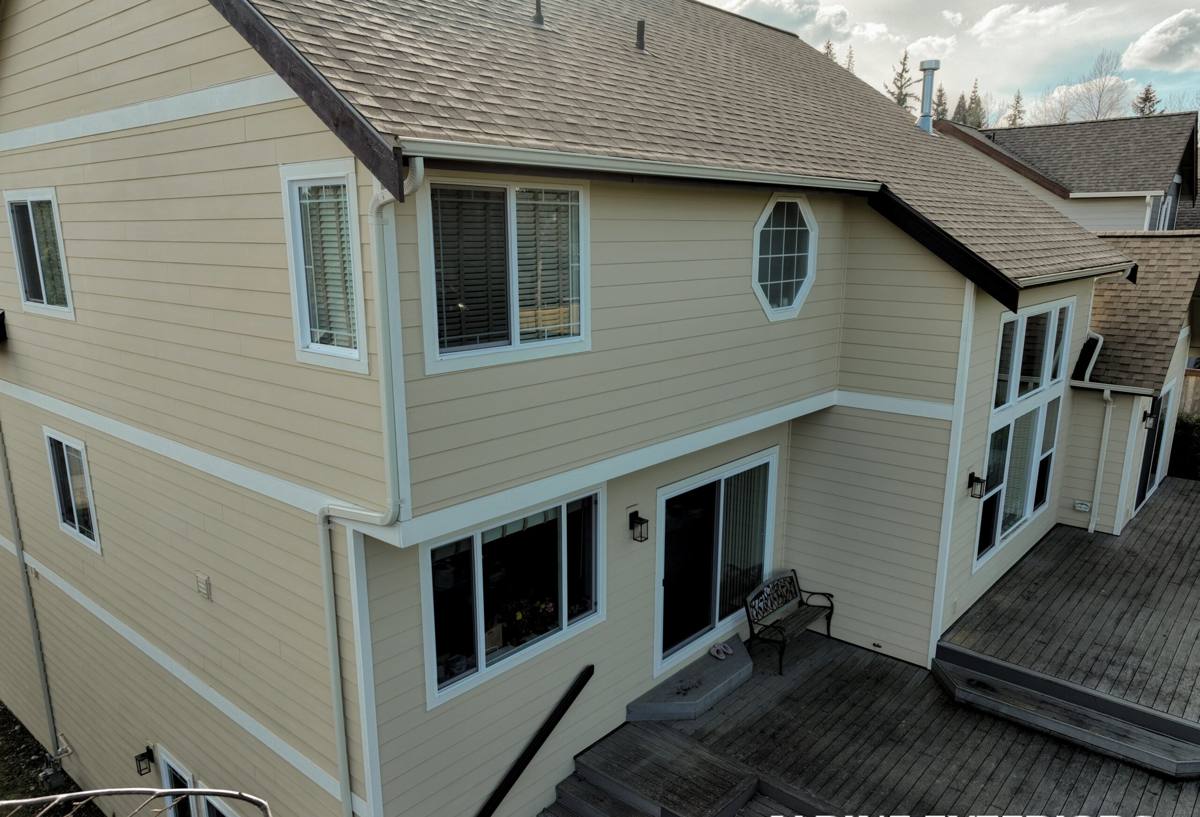
What This Climate Actually Does to Windows
The Pacific Northwest gives window installations a longer list of ways to fail than drier climates do. Around Abbotsford and the broader Fraser Valley, the pattern that matters most is sustained damp: long stretches of driving rain, humid air that doesn't fully dry out between storms, and a moss season that runs longer here than most homeowners moving from other regions expect. Add in periods of wind-driven moisture pushing rain sideways into wall assemblies, and you get a climate that punishes any gap in the flashing or sealant detail around a window opening — even a small one.
None of that shows up right away. A window installed with a shortcut in the flashing might look fine for two or three winters before water finds its way behind the trim and into the framing. By the time you see staining on interior drywall or soft wood at the sill, the damage has usually been building for a while. That's the real argument for doing the installation right the first time, not for buying a more expensive window — the product matters less than the install.
Why Older Homes Need Extra Attention
A lot of homes in this region were built before current flashing and moisture-barrier standards were common. When we replace a window in an older house, we're not just swapping the unit — we're often correcting decades-old assumptions about how water was supposed to be managed around that opening. Skipping that step to save time is exactly how a "simple" window swap turns into a callback two years later.
What a Correct Window Installation Actually Involves
A window installation is judged almost entirely on things you can't see once the trim is back on. Here's what should happen, in order, on every job:
- Remove the old window and inspect the framing, sill, and sheathing underneath for rot, soft wood, or prior water damage — this gets fixed before anything new goes in
- Confirm the rough opening is square, level, and sized correctly for the new unit rather than forcing a window to fit
- Install proper flashing tape and a sloped sill pan so any water that reaches the opening drains outward instead of pooling
- Set the window with correct shimming so it isn't relying on fasteners alone to stay square over time
- Seal and insulate the gap between the window frame and the rough opening with the right materials — not just a bead of caulk around the outside
- Finish exterior trim and weatherproofing so the whole assembly sheds water the way it's supposed to
- Test operation (open, close, lock) before calling the job done
Every one of those steps takes time. When a bid comes in dramatically cheaper than others, this is usually where the corners get cut — not in the window unit itself.
Choosing the Right Window for a Fraser Valley Home
We install vinyl and fiberglass-frame windows with dual or triple-pane insulated glass, matched to the exposure of each wall. A window on a wind-exposed or west-facing elevation deserves a better seal and frame material than one tucked under a covered porch on the sheltered side of the house. We're straightforward with clients about trade-offs rather than pushing the most expensive option by default — the goal is the right window for that specific wall, not the biggest number on the invoice.
Frame Material, Honestly
Vinyl frames handle this climate well, resist moisture, and don't need repainting — for most Abbotsford-area homes, vinyl is the practical, cost-effective choice. Fiberglass costs more but holds its shape better across temperature swings and takes paint if you want to match a specific trim color down the road. We steer clients away from wood-frame replacement windows in this climate unless there's a strong historical or aesthetic reason to keep them — wood needs consistent upkeep to resist the rot risk that comes with this much sustained moisture, and that's a maintenance commitment we want homeowners to walk in with eyes open about, not one we spring on them later.
| Factor | What to Consider | Why It Matters Here |
|---|---|---|
| Frame material | Vinyl vs. fiberglass | Vinyl resists moisture at lower cost; fiberglass holds shape and takes paint |
| Glass package | Dual-pane vs. triple-pane | Triple-pane adds comfort and sound damping; dual-pane is often sufficient for sheltered walls |
| Wall exposure | Windward vs. sheltered | Exposed walls need stronger seals and flashing detail regardless of window brand |
| Existing damage | Rot, soft framing, prior leaks | Must be repaired before install — new windows won't fix bad framing underneath |
| Install timing | Dry-season vs. wet-season scheduling | Drier windows give better sealant cure conditions, though we work year-round |
Cross-Border Logistics: What's Different About an Abbotsford Job
Being a Lynden-based crew serving Abbotsford means we plan around the border as a normal part of scheduling — not something that adds guesswork or delay to your project. Materials, tools, and crew all cross routinely, and we build that into the timeline when we quote a job rather than treating it as an afterthought. What that means for you: a straightforward quote, a realistic install date, and no surprise scheduling gaps because someone forgot logistics take a little more planning across the line.
Our Process, Start to Finish
- On-site assessment: we look at every window opening in question, check framing condition, and measure for exact fit — not estimated fit
- Straight quote: a clear breakdown of window units, labor, and any framing repair the assessment turned up, before work starts
- Scheduling: a realistic date range that accounts for weather and material lead times
- Removal and inspection: old windows come out, framing gets checked and repaired if needed
- Installation: flashing, shimming, sealing, and trim done to the standard above, on every opening
- Walkthrough: we test each window with you and answer questions before we consider the job finished
Signs It's Time to Replace, Not Patch
Not every window problem means full replacement. But a few signs are reliable indicators that patching is just delaying the inevitable:
- Visible fogging or moisture between panes — the seal has failed and can't be repaired
- Soft, discolored, or spongy wood at the sill or frame
- Drafts you can feel even with the window fully closed and locked
- Difficulty opening, closing, or locking that's gotten worse over a year or two
- Visible daylight or gaps around the frame from outside
If you're only seeing one of these on one window, a targeted repair or single-unit replacement may be all you need. If you're seeing several across the house, especially in a home that hasn't had its original windows replaced, it's worth an honest assessment before winter rather than after a leak shows up on the drywall.
What to Ask Before You Hire Anyone
Whether you call us or someone else, these are the questions that separate a careful contractor from one who'll cut corners you won't see for a couple of years:
- Do you inspect and repair framing before installing, or just swap the window into whatever's there?
- What flashing and sill pan method do you use, specifically?
- Is the quote itemized, or one lump number with no breakdown?
- What's covered under warranty — the window manufacturer's coverage, your installation labor, or both?
- Can you walk me through what happens if you find rot once the old window is out?
A contractor who answers these clearly and without hesitation has probably done this correctly many times before. One who gets vague about flashing or framing inspection is telling you something too.
If you're weighing a window replacement on an Abbotsford home, we're glad to come take a look and give you a straight answer — no pressure, no inflated urgency, just an honest read on what your windows need. Use the form below to request a free estimate.