 Lynden Siding
 Exterior Work Built for Kendall's Corner of Whatcom County
Kendall sits in the rural stretch of Whatcom County north and east of Lynden, closer to the foothills and the Canadian border than to the open water of Bellingham Bay. That location gives homes here a particular mix of weather to deal with: marine air pushed inland off Puget Sound and the Strait of Georgia, wrapped around by cooler, wetter conditions as the land starts to rise toward the Cascades foothills. Homeowners out this way often deal with more standing moisture, more shade from tree cover, and longer stretches of damp weather between dry spells than homes closer to town.
We're a Lynden-based crew that works siding, roofing, windows, and decks across this whole service area, and Kendall is part of our regular route — not a stretch assignment we send an unfamiliar crew to once a year. That matters more than people expect. A crew that works the same rural roads, the same tree-lined lots, and the same drainage patterns week after week starts to recognize the early signs of trouble before they become expensive repairs.
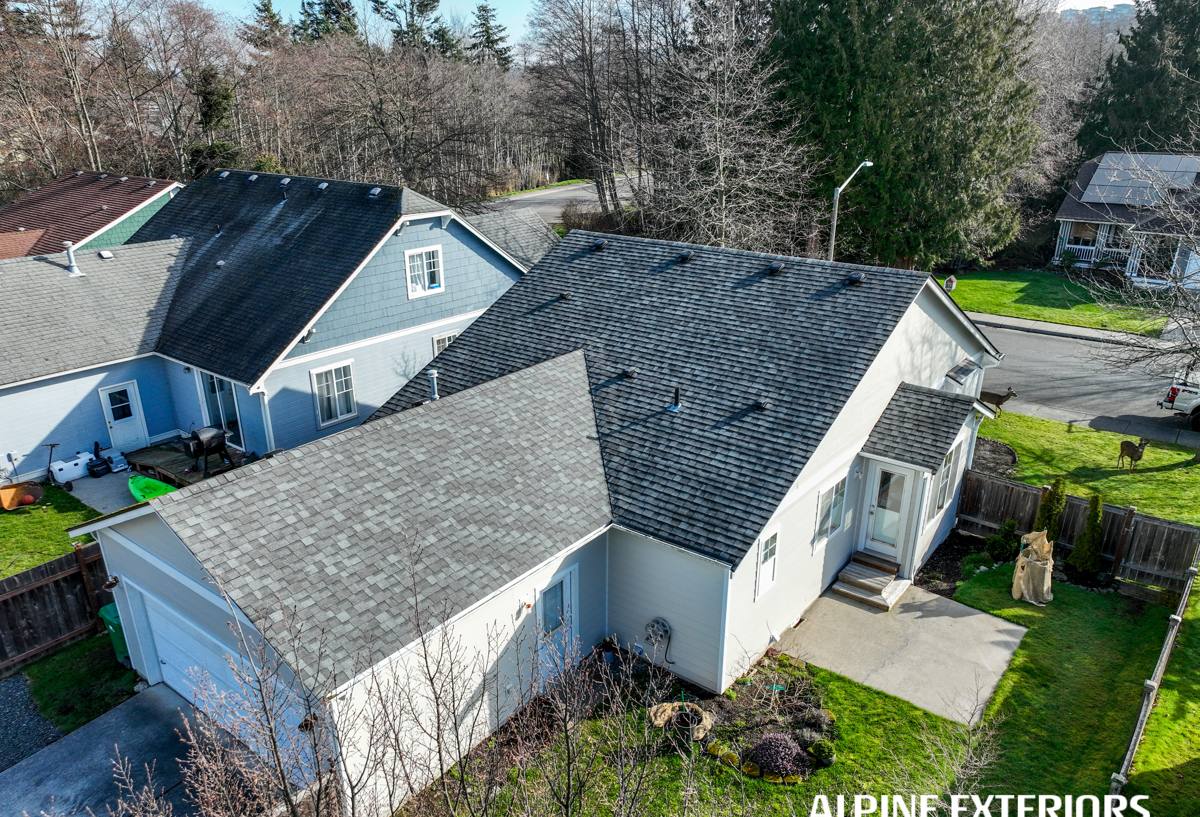
What the Climate Actually Does to a Kendall Home
The phrase "Pacific Northwest weather" undersells what a house in this part of Whatcom County actually experiences over a decade. Three things do most of the damage:
Salt Air, Even This Far Inland
Kendall isn't waterfront, but Whatcom County's proximity to Puget Sound and the Georgia Strait means marine air moves through the whole region, not just the immediate coastline. Salt-laden moisture in the air accelerates corrosion on fasteners, flashing, and any metal trim that isn't rated for it. Over years, that's the difference between hardware that holds and hardware that has to be replaced early.
Driving Rain
This region doesn't just get rain — it gets rain pushed sideways by wind, especially during fall and winter storm systems that funnel through the lowlands. Driving rain finds every gap in flashing, every under-caulked seam, and every place where siding wasn't lapped correctly. It's a much tougher test of an exterior envelope than straight-down rain, and it's the reason installation detail work (not just the material) determines how a house performs.
A Long Moss Season
Shade, moisture, and moderate temperatures are exactly what moss wants, and Kendall's tree cover and rural lot sizes give it plenty of room to grow. Moss on a roof holds water against shingles and underlayment far longer than open sky and sun would allow. Moss creeping up the base of siding does the same thing at ground level, trapping dampness against the wall assembly instead of letting it dry.
How These Conditions Show Up on a House
None of these climate factors cause instant damage. They cause slow, compounding wear — which is exactly why so many problems go unnoticed until they're serious. Common patterns we see on homes in this area include:
- Soft or discolored siding near the bottom courses, where splash-back and standing moisture linger longest
- Moss buildup along the north-facing and shaded sides of roofs and walls
- Rusting or staining around nail heads and metal flashing after repeated wet seasons
- Paint failure and swelling on wood-based siding products, especially at butt joints and corners
- Window frames and trim that hold moisture longer than they should because of poor drainage planes behind the cladding
Individually, these look like cosmetic issues. Left alone through a few more wet seasons, they turn into rot, structural repairs, and full re-siding jobs that could have been avoided with the right material and the right install.
Why We Standardized on James Hardie Fiber Cement
We install James Hardie fiber cement siding exclusively. We don't offer vinyl, LP SmartSide, Cemplank, Allura, primed spruce, or cedar as alternatives, and that's a deliberate standard, not a limitation in what we're capable of installing. Here's the reasoning, plain:
It Doesn't Feed the Moisture Problem
Fiber cement is not an organic wood product, so it doesn't provide the same food source for rot and fungal growth that wood-based sidings do. In a climate where dampness sits against exterior walls for extended stretches, that difference matters more here than it would in a drier region.
It's Non-Combustible
James Hardie siding is a fiber cement product, which means it doesn't burn the way wood siding or wood-based composite panels can. That's a meaningful consideration for rural properties near tree lines and brush, where wildfire risk planning is increasingly part of how homeowners think about their exterior.
The Factory Finish Holds Up
Hardie's ColorPlus finish is baked on at the factory under controlled conditions, rather than field-painted after installation. That finish is engineered to resist fading and hold its color through repeated wet-dry cycles far longer than a job-site paint job typically manages, which reduces how often a homeowner needs to repaint.
The Product Lines Are Climate-Engineered
Hardie makes region-specific formulations (their HZ5 line, for example) designed around the moisture and temperature patterns of different U.S. climate zones. That's a meaningfully different approach than a one-size-fits-all siding product.
The Warranty Backs It Up
James Hardie's warranty is transferable and backed by a large, established manufacturer — not a fine-print program that quietly weakens once ownership changes hands. For homeowners thinking about resale, that's worth something concrete.
Comparing the Common Alternatives
| Material | Moisture Behavior in This Climate | Long-Term Maintenance | Fire Resistance |
|---|---|---|---|
| James Hardie Fiber Cement | Does not rot; handles wet-dry cycling well | Low — factory finish, occasional cleaning | Non-combustible |
| Vinyl Siding | Doesn't rot itself, but can trap moisture behind it if installed poorly; prone to warping in temperature swings | Low upfront, but cracks and fades over time and can't be spot-repaired invisibly | Melts and can contribute to fire spread |
| LP SmartSide / Engineered Wood | Treated to resist rot but still wood-based; vulnerable at cut edges and joints if sealed imperfectly | Moderate — needs attentive caulking and paint upkeep | Combustible (wood-based) |
| Cedar / Primed Spruce | Natural wood; absorbs moisture and is a direct food source for rot and fungus in wet climates | High — regular staining, sealing, and repair | Combustible |
This isn't a claim that every alternative product fails — plenty of them perform reasonably when installed and maintained well. It's why, given a choice, we've standardized our own installs on the material that gives Whatcom County homeowners the least maintenance burden over the life of the house.
How We Approach a Kendall Job
Every property in this area is a little different — some are open pasture-adjacent lots with full sun exposure, others are tucked under mature tree cover with heavy shade most of the day. Before we talk siding, roofing, windows, or decks, we walk the property and look at:
- Which sides of the house take the most driving rain and prevailing wind
- Where moss and algae are already established, and why (shade, drainage, gutter overflow)
- The condition of existing flashing, trim, and any transitions between materials
- Whether the current siding or roofing shows early signs of moisture intrusion versus just surface weathering
- How the property's drainage — gutters, grading, downspout placement — is affecting the walls and roof edges
That assessment shapes the actual work plan, whether it's a full re-side, a roofing replacement, window upgrades, or deck work that needs to hold up to the same wet conditions everything else on the house does.
Roofing, Windows, and Decks Face the Same Climate
Siding gets a lot of attention because it's the most visible surface on a house, but roofing, windows, and decks in this area are fighting the identical battle against moss, driving rain, and salt-tinged air. A roof with poor moss control loses years off its service life. Windows with failing seals let moisture into wall cavities behind otherwise sound siding. Decks built with the wrong fasteners or without proper ledger flashing rot from the connection point outward. We treat these as one connected exterior system rather than four separate trades, because on a house in this climate, they behave like one.
What a Kendall Homeowner Should Ask Before Hiring Any Exterior Contractor
Whether you go with us or someone else, a few questions separate a contractor who understands this climate from one who's just installing whatever's on the truck:
- Do you have current licensing and insurance specific to exterior work in Washington?
- How do you handle flashing and moisture barrier detail at windows, doors, and roof transitions — not just the siding material itself?
- Can you explain, in plain terms, why you recommend one siding material over another for this specific property?
- What does your warranty actually cover, and is it transferable if the home sells?
- Will the same crew that gives the estimate be the one doing the install?
A contractor who can answer these clearly, without dodging or over-promising, is worth far more than the lowest bid on paper.
Getting Started
If you're noticing moss creeping up a wall, soft spots near the bottom of your siding, or you're just planning ahead for a roof, window, or deck project, we're glad to take a look. We offer free, no-pressure estimates for homeowners in the Kendall area, and there's no obligation attached to having us walk the property with you.