 Lynden Siding
 Building Decks for Sumas-Area Homes Near Lynden
Sumas sits out toward the eastern edge of Whatcom County, close enough to Lynden that a lot of homeowners out that way call our crew because we're already working the area regularly. A deck built for this part of Washington needs to do more than look good for the first summer. It needs to shed water fast, resist moss and mildew through a long wet season, and hold its fasteners and framing tight through repeated freeze-thaw swings in the colder months. That's a different design conversation than a deck built for a dry climate, and it's one we have with every Sumas customer before we ever cut a board.
This page is about one thing: custom deck construction for homes in and around Sumas. Not a general overview of every service we offer — just what a deck needs to be built right in this specific part of Whatcom County, and how we go about it.
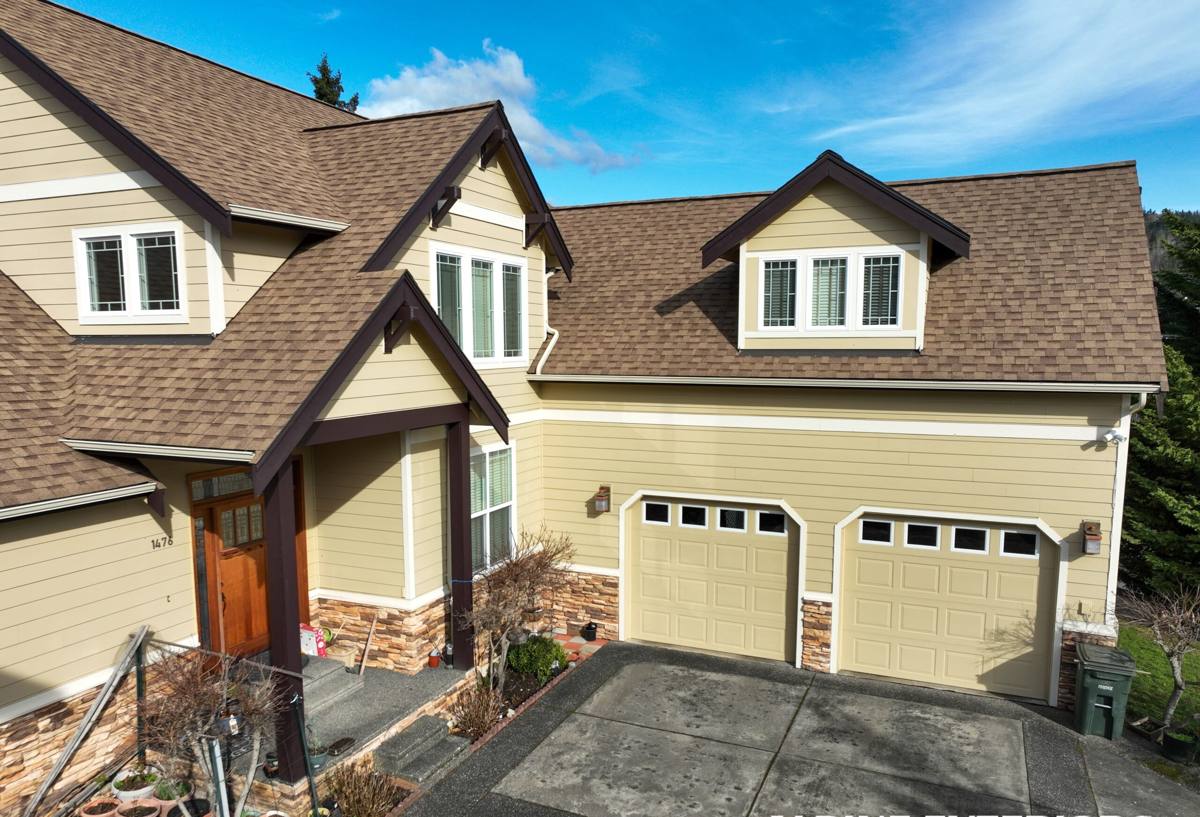
What This Climate Actually Does to a Deck
Whatcom County gets a long stretch of overcast, wet weather every year, and Sumas is no exception. That moisture doesn't just sit on the surface of a deck — it works its way into anything that isn't detailed correctly, and it does it slowly enough that homeowners often don't notice until the damage is structural.
Moss and Surface Buildup
Any horizontal wood or composite surface that stays shaded or doesn't drain well will grow moss and algae here, usually starting in the fall and building through winter. Moss holds moisture against the decking surface, which accelerates rot in wood and can make some composite and PVC surfaces slick and slippery underfoot. Deck orientation, gaps between boards, and airflow underneath all affect how bad this gets.
Driving Rain and Wind-Driven Moisture
Rain here doesn't always fall straight down. Wind-driven rain gets pushed sideways into ledger connections, under railings, and into any gap where flashing wasn't installed correctly. A deck that looks fine from the yard can be taking on water at the house connection for years before anyone sees a stain on the siding above it.
Freeze-Thaw Cycling
Whatcom County doesn't get brutal winters, but it does get repeated cycles of freezing and thawing, especially in the colder pockets further from the water. Water that's found its way into a crack, a fastener hole, or a post base will expand when it freezes. Over several seasons, that cycle opens up small problems into big ones — split lumber, loosened hardware, heaving footings.
None of this means a deck can't last decades in Sumas. It means the build has to account for all three of these from the start, not get patched for them later.
Choosing the Right Decking Material for This Climate
There's no single "best" decking material — there's a best material for your budget, your maintenance appetite, and how much shade and moisture your particular lot holds onto. Here's how the common options actually perform out here.
| Material | How It Handles Our Wet Season | Maintenance | Typical Lifespan |
|---|---|---|---|
| Pressure-treated wood | Prone to moss and graying without upkeep; performs fine if sealed and cleaned regularly | Annual cleaning, periodic staining/sealing | 15-25 years with upkeep |
| Cedar | Naturally moisture and insect resistant, but still needs sealing to prevent graying and moss in shaded spots | Sealing every 1-2 years | 20-25 years with upkeep |
| Composite decking | Very good moisture resistance; capped composites resist moss better than uncapped boards | Periodic washing, no staining/sealing | 25-30+ years |
| PVC decking | Best moisture and rot resistance of the common options; low absorption means less moss adhesion | Occasional washing | 30+ years |
We don't push one product on every customer. Composite and PVC cost more up front but ask almost nothing of you afterward, which matters a lot in a climate that punishes neglected wood. Cedar and pressure-treated wood are legitimate choices too, especially if you like the natural look and are willing to stay on top of sealing — we'll tell you honestly what that commitment looks like before you decide.
Framing and Foundation: Where Most Deck Failures Start
Almost every deck failure we get called out to inspect traces back to the framing or foundation, not the decking surface. The boards on top are the part everyone sees, but the structure underneath is what determines whether the deck is still safe in fifteen years.
Ledger Attachment
The ledger board — where the deck attaches to the house — is the single most common failure point in residential deck construction nationwide, and it's especially unforgiving in a wet climate. It needs proper flashing to keep water from tracking behind the siding and into the rim joist, and it needs to be through-bolted, not just lag-screwed, to meet current structural standards.
Footings and Post Bases
Footings need to be set below frost depth and sized for the load and soil conditions on your specific lot. Post bases should hold posts up off the concrete, not embedded directly in it, so water doesn't wick up into the end grain and sit there through winter.
Joist Protection
Joist tape or an equivalent moisture barrier on top of every joist keeps water from soaking into the end grain through fastener holes — a small detail that meaningfully extends framing life in a climate that stays wet for months at a stretch.
Railings, Stairs, and Code Requirements
Any deck more than 30 inches off grade needs a code-compliant guardrail, and stairs need graspable handrails per the adopted building code. Whatcom County permitting follows the Washington State Building Code, and decks typically require a permit and inspection depending on size and height — we handle that process as part of the job rather than leaving it on the homeowner.
Railing material matters here too. Untreated or unsealed wood railings take the brunt of wind-driven rain since they're vertical and exposed on all sides. Metal railing components should be corrosion-resistant hardware, not just standard fasteners, since they're the components most exposed to moisture cycling.
Our Process, Start to Finish
- On-site assessment — we look at your yard's drainage, sun exposure, and how the deck will tie into the house before we talk materials.
- Design and material selection — honest pros and cons on wood versus composite versus PVC for your specific site conditions and budget.
- Permit handling — we pull the necessary Whatcom County permits and schedule inspections so you don't have to navigate that process.
- Demolition and site prep — removal of any existing structure and grading as needed for proper drainage away from the house.
- Footings and framing — built to current code with proper flashing, joist protection, and corrosion-resistant fasteners throughout.
- Decking, railings, and stairs — installed per manufacturer spec for whichever material you've chosen.
- Final walkthrough — we go over the finished deck with you, including what maintenance it will and won't need going forward.
Maintenance Checklist for a Long-Lasting Deck
What you do after the build matters almost as much as how it's built. This is the baseline routine we recommend for decks in the Sumas area, regardless of which material you chose:
- Clear leaves and debris out of board gaps before they compost in place and hold moisture through winter
- Wash the deck surface at least once a year to knock back algae and moss before it establishes
- Check railing and stair fasteners annually for looseness caused by freeze-thaw cycling
- Reseal wood decking on the schedule your material requires — don't wait until it's visibly gray and dry
- Keep gutters and downspouts near the deck clear so runoff isn't dumping extra water onto or under the structure
- Trim back overhanging vegetation that keeps sections of the deck shaded and slow to dry
Why a Crew That Already Works This Area Matters
Deck-building advice that works in a dry climate can be actively wrong here. A crew that mostly builds decks somewhere with a shorter, drier rainy season may not think twice about joist tape, ledger flashing detail, or footing depth the way it needs to be thought about in Whatcom County. Because we're already working jobs around Lynden and Sumas regularly, we're not guessing at how this region's rain, moss, and freeze-thaw cycles behave over a full year — we're building around what we actually see happen to decks out here.
That also means faster response if something needs a look after the fact, and a crew that isn't driving in blind on drainage patterns, soil conditions, or how a particular lot handles winter runoff.
Get a Straightforward Estimate
If you're planning a new deck or replacing one that's past its prime, we're happy to come take a look and walk you through your options — materials, framing approach, and what it'll take to get it permitted and built right for this climate. No pressure, no obligation. Use the form below to request a free estimate.