 Lynden Siding
 Why Blaine's Coastal Climate Is Hard on Decks
Blaine sits right up against the water, and that proximity to Semiahmoo Bay and the Strait of Georgia shapes everything about how a deck ages here. Salt-laden air corrodes exposed metal faster than it does even a few miles inland. Driving rain off the water pushes moisture into every seam, gap, and fastener hole a builder leaves unsealed. And the long stretch of gray, damp months that defines a Whatcom County winter keeps deck surfaces wet for days at a time, which is exactly the condition moss and algae need to take hold.
A deck built without that context in mind — using materials or details that work fine in a drier climate — tends to show problems within a few seasons: swollen fascia boards, rusted-through fasteners, slick green film on the walking surface, and rot creeping in at ledger connections. None of that is inevitable. It's a product and installation problem, and it's solvable with the right choices from the start.
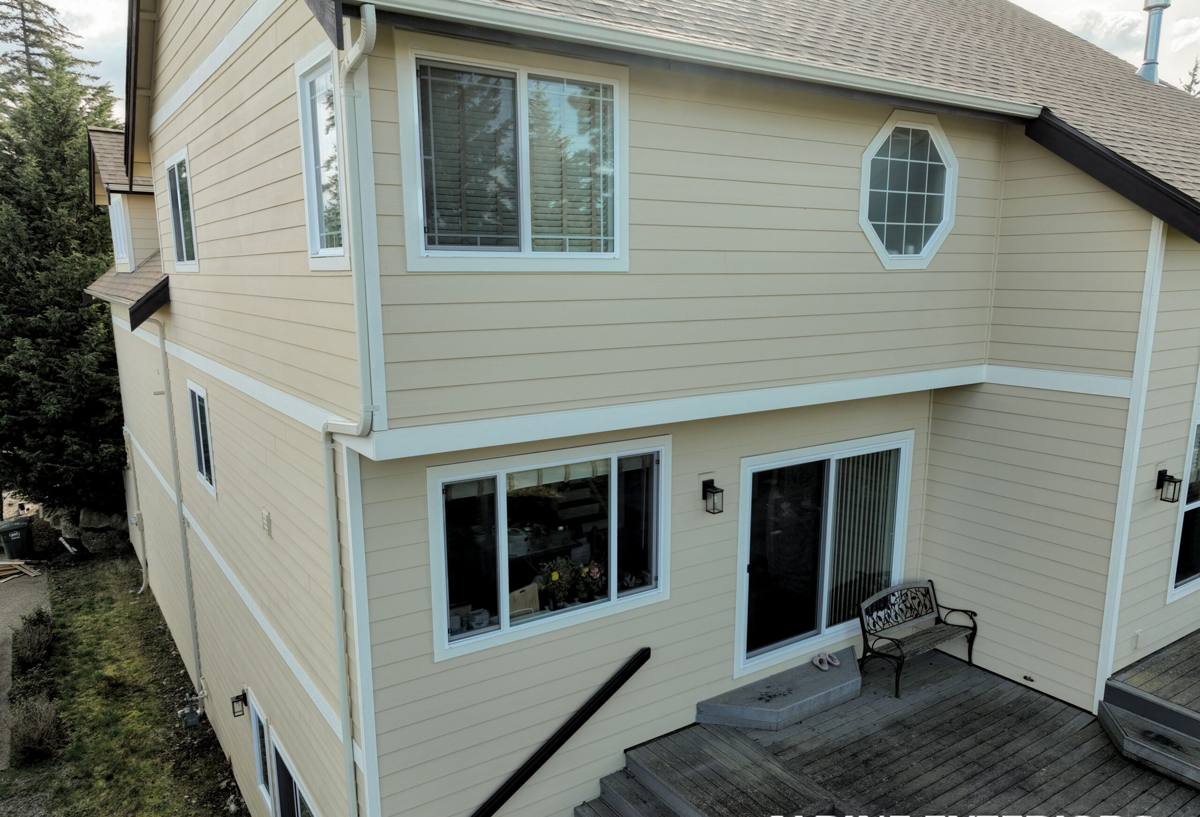
What Composite Decking Offers Blaine Homeowners
Moisture Resistance Where It Matters Most
Composite decking is engineered from a blend of wood fiber and plastic, and quality boards are capped on all sides with a protective polymer shell. That cap is the part that matters in a place like Blaine — it keeps standing water, salt spray, and driving rain from soaking into the board's core the way it would with solid wood. Uncapped or lower-grade composite still has some vulnerability at cut ends, which is why detailing those cuts correctly during install is as important as the product itself.
Standing Up to Salt Air
Salt air doesn't just affect decking boards — it's harder on hardware, railings, and any exposed metal than most homeowners expect. Composite decking itself doesn't corrode, but a deck is only as good as its fasteners, brackets, and structural connectors. Choosing corrosion-resistant hardware throughout, not just on the visible surface, is what actually protects a deck near the water long-term.
Lower Maintenance Through a Long Moss Season
Composite doesn't need staining, sealing, or sanding the way wood does, which matters a lot when your moss season stretches from fall through spring. That said, "low maintenance" doesn't mean "no maintenance" — composite still needs periodic cleaning to stay ahead of algae and organic buildup, especially in shaded or low-airflow areas of a Blaine yard.
What a Correct Composite Deck Install Involves
The decking board itself is often the least of what determines whether a deck holds up here. The structure underneath and the details around it do most of the work.
Ledger Board and House Connection
Where the deck attaches to the house is the single most common failure point we see on older decks in this region. Proper flashing — installed so water sheds away from the house rather than behind the ledger board — is non-negotiable. This is also where a lot of rot starts on decks that were built without that flashing detail done right the first time.
Substructure and Framing
Joists, beams, and posts should be rated for ground contact or fully protected from moisture exposure, with hardware sized and spaced to manufacturer specification. In a wet climate, undersized or improperly spaced joists lead to a bouncy deck and premature board fatigue, regardless of how good the surface decking is.
Drainage and Airflow Underneath
A deck that traps moisture underneath — because of poor grading, no gap between the ground and framing, or landscaping that blocks airflow — will fight mold and rot no matter what's on top. Gapping between boards and clearance beneath the structure both need to be sized to let air move and water drain, not pool.
Fastener Selection
Hidden fastener systems, screws, and clips should all be rated for coastal or marine-grade exposure. This is a small line item that gets skipped on budget jobs and is exactly the kind of detail that determines whether hardware is still sound in ten years or rusting through in three.
Composite vs. Other Decking Materials for a Blaine Property
There's no single right answer for every home — it depends on budget, how the deck will be used, and how much upkeep you want to take on. Here's how the common options compare for a coastal Whatcom County property specifically.
| Material | Moisture/Salt Air Performance | Maintenance | Typical Lifespan Here |
|---|---|---|---|
| Capped Composite | Strong — sealed core resists water and salt intrusion | Occasional cleaning, no staining or sealing | Long, with correct install and hardware |
| Pressure-Treated Wood | Moderate — needs consistent sealing to hold up to driving rain | Regular staining/sealing, more frequent board replacement | Shorter without diligent upkeep |
| Cedar | Naturally moisture-resistant but still absorbs water over time | Regular sealing to prevent graying and moss growth | Moderate, varies with care |
| PVC/Vinyl Decking | Very strong moisture resistance, no wood fiber to retain water | Low, similar to composite | Long, but appearance and feel differ from wood-look composite |
Composite tends to hit the balance most Blaine homeowners are after: strong performance against the moisture and salt exposure this area sees, without the ongoing sealing schedule that wood demands.
Our Process From Estimate to Finished Deck
1. On-Site Assessment
We walk the site, look at how the deck will tie into the house, check grading and drainage around the proposed footprint, and talk through how you actually use the space.
2. Product and Layout Discussion
We go over composite board tiers, color and finish options, railing systems, and layout — helping you land on a spec that fits your budget without cutting corners on the structural details that matter here.
3. Structural Build-Out
Framing, ledger flashing, and substructure work happen first, built to hold up under this region's rain load and to allow proper drainage and airflow underneath.
4. Decking, Fasteners, and Finish Work
Boards are installed with corrosion-resistant fastening systems, correct gapping, and clean-cut edges sealed or capped as needed. Railings and any final trim go on last.
5. Walkthrough
We walk the finished deck with you, cover basic care, and answer questions before we consider the job done.
Common Deck Problems We See Around Blaine
- Ledger boards rotting from missing or poorly installed flashing at the house connection
- Rusted or corroding fasteners on decks built with standard, non-marine-grade hardware
- Persistent moss and algae film on boards with poor drainage or airflow underneath
- Warped or swollen fascia and trim boards from years of standing moisture exposure
- Soft or spongy framing where joists weren't rated for the moisture exposure they've seen
Most of these trace back to the same root cause: details that get skipped because they're invisible once the deck is finished. They're also the details that matter most once the driving rain and salt air have a few years to work on a structure.
Maintenance Checklist for Composite Decks in a Coastal Climate
Composite cuts down on maintenance significantly, but a little seasonal attention goes a long way in a climate like this one.
- Sweep debris and standing leaves off the surface regularly, especially heading into the wetter months
- Rinse or lightly scrub boards periodically to stay ahead of algae and moss buildup, particularly in shaded areas
- Check that drainage gaps between boards and clearance underneath the deck haven't become blocked by landscaping or debris
- Inspect visible fasteners, brackets, and railing hardware annually for any signs of corrosion
- Confirm the ledger board area and flashing look intact where the deck meets the house
Why Hiring a Crew That Already Works Blaine Matters
A lot of what separates a deck that holds up here from one that doesn't isn't visible on a spec sheet — it's judgment calls made during framing, flashing, and fastener selection based on what actually happens to a structure exposed to salt air and sustained rain year after year. A crew that works this stretch of Whatcom County regularly has already seen which details fail first in this specific environment, and builds around them by default rather than learning it the hard way on your project.
That local experience also means realistic expectations set up front — honest talk about what maintenance composite decking actually needs here, what hardware is worth the extra cost, and where corners genuinely shouldn't be cut, versus where a lower-tier choice is a reasonable trade-off for your budget.
Get a Straightforward Estimate
If you're weighing a composite deck for your Blaine property, we're glad to come take a look, talk through your options honestly, and put together a free, no-pressure estimate. There's a form below to get that started whenever you're ready.