 Lynden Siding
 Ferndale sits close enough to the water that salt air is part of daily life, and close enough to the foothills that the region's long, wet moss season never really lets up. For a home's siding, that combination is unforgiving. Salt-laden air accelerates corrosion on fasteners and trim, driving rain off the Strait finds every gap in a weak installation, and months of shade and moisture each winter give algae and moss a running start on anything porous enough to hold onto them. Homeowners in Ferndale don't need siding that looks good in a showroom — they need siding that's engineered for this specific climate and installed by a crew that has actually worked in it.
We're based in Lynden and have installed siding throughout Whatcom County, including plenty of jobs in and around Ferndale. This page walks through what Ferndale homes need from a siding installation, what correct work actually involves, and why the crew you hire matters as much as the product on the wall.
Why Ferndale's Climate Is Harder on Siding Than It Looks
Ferndale doesn't get hurricanes or extreme heat, and that lulls a lot of homeowners into thinking siding is a low-stakes decision here. It isn't. The challenge in this part of Whatcom County isn't dramatic weather — it's relentless, moderate weather that never gives siding a break.
- Salt air: Proximity to Bellingham Bay and the Strait of Georgia means airborne salt reaches homes well inland from the immediate shoreline. Salt accelerates corrosion on metal fasteners, flashing, and trim, and it can degrade some coatings faster than inland climates would.
- Driving rain: Wind off the water pushes rain sideways during storms, forcing water into laps, seams, and penetrations that would stay dry in a calmer climate. Siding here needs a drainage plane and installation details that assume water WILL reach the wall, not just hope it won't.
- Extended moss and algae season: Overcast, damp conditions run from fall through spring, and shaded north- and east-facing walls barely dry out during that stretch. Porous or poorly sealed siding surfaces become a growing medium for moss, mold, and algae well before most homeowners notice.
None of these factors are unique to Ferndale specifically — they're regional, shared across Lynden, Bellingham, and the rest of Whatcom County. But Ferndale's closer proximity to open water tends to put it on the higher end of the salt exposure and wind-driven rain spectrum within the area.
What "Correct" Siding Installation Actually Means Here
A siding job can look identical from the curb and perform completely differently depending on what's underneath and how it was fastened. In a climate like this, the details that don't show up in a walk-around are the ones that determine whether the siding lasts 10 years or 40.
Water Management Comes First
Before a single piece of siding goes up, the wall needs a continuous water-resistive barrier, properly lapped and taped, with flashing integrated at every window, door, and penetration so water is directed out and down, never trapped behind the cladding. This is the step that gets rushed on cut-rate jobs and the one that causes the most expensive damage when it's skipped.
Fastening Has to Account for Salt Exposure
Fastener choice and placement matter more here than in a dry inland climate. Corrosion-resistant fasteners, correct nailing patterns, and proper blind- or face-nailing per the manufacturer's specification all reduce the chance of rust streaks, loosening boards, or premature fastener failure driven by salt air.
Clearances and Drainage Prevent Moss From Getting a Foothold
Siding installed tight to grade, decks, or roof lines traps moisture against the material and gives moss and algae a head start. Correct ground clearance, kickout flashing at roof-to-wall intersections, and a rainscreen gap where appropriate all keep water moving instead of sitting.
Caulking and Sealant Placement
Sealant belongs at specific joints, not everywhere. Over-caulking traps water behind siding; under-caulking lets it in. Knowing which joints should seal and which need to breathe is a detail experience teaches, not a detail a spec sheet fully covers.
Why We Install Only James Hardie Fiber Cement
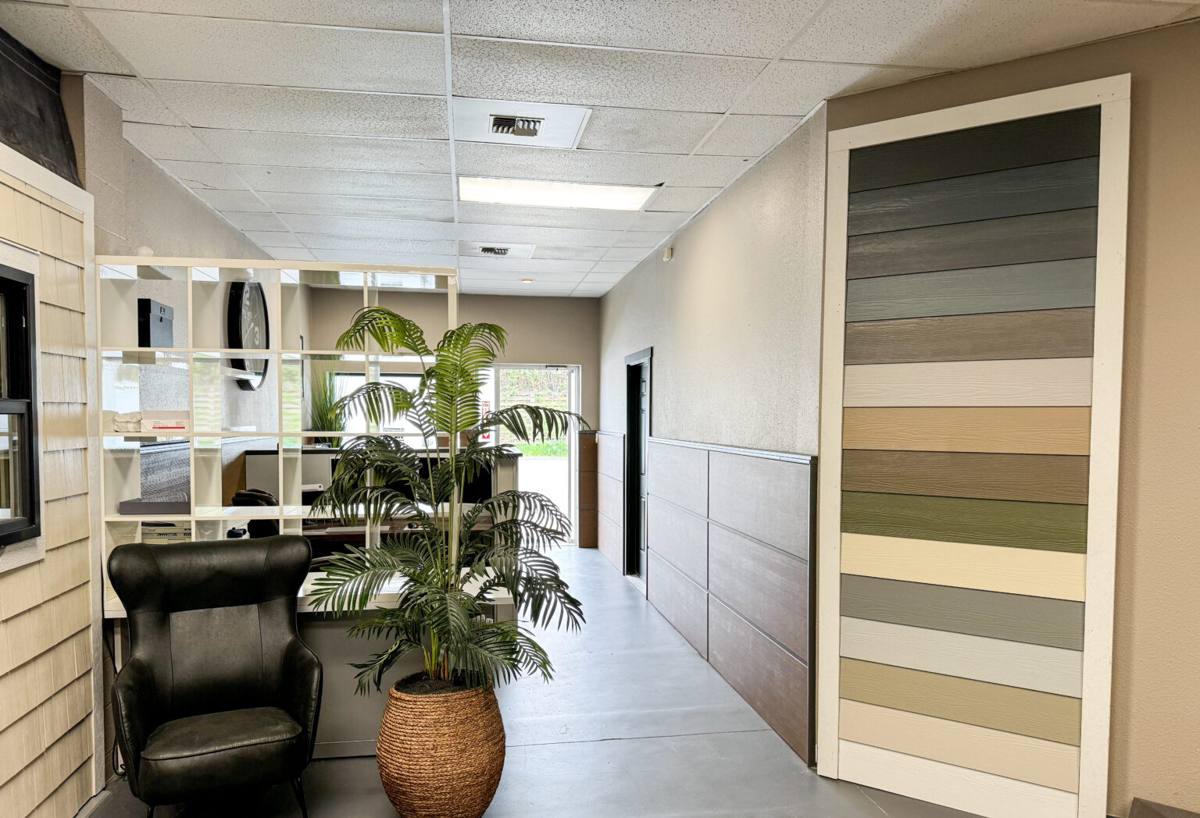
We standardized on James Hardie fiber cement siding for every home we work on, including in Ferndale, and we don't install vinyl, LP SmartSide, or cedar. That's a deliberate professional standard, not a sales pitch, and it's rooted in how those products actually perform in this climate over time.
- Non-combustible core: Fiber cement doesn't feed a fire the way wood-based products can, which matters for insurance considerations and long-term peace of mind.
- Moisture stability: Hardie's fiber cement doesn't swell, rot, or delaminate the way wood-based composite siding can when it stays damp for extended periods — a real concern given how long this region's wet season runs.
- Factory-applied ColorPlus finish: The finish is baked on at the factory under controlled conditions, giving more consistent coverage and better fade and chip resistance than field-applied paint, which matters when a wall spends months under salt air and rain.
- Climate-engineered product lines: Hardie makes region-specific formulations (HZ5 for this climate zone) rather than one generic board for the whole country.
Vinyl siding is inexpensive and low-maintenance in mild conditions, but it can become brittle and crack over time in cold snaps, and it doesn't hold up structurally the way fiber cement does. Wood and wood-composite products like cedar or LP SmartSide can look excellent, but they demand more diligent maintenance and are more vulnerable to moisture intrusion in a climate that stays damp for months at a stretch. We'd rather put one product on every home and know exactly how it performs than offer a menu of options with different long-term risk profiles.
Comparing Siding Options for a Ferndale Home
| Factor | Vinyl | Wood / Wood-Composite | James Hardie Fiber Cement |
|---|---|---|---|
| Moisture resistance | Good, but seams can allow intrusion | Vulnerable if maintenance lapses | Engineered for wet climates |
| Salt air durability | Can become brittle over time | Coatings degrade faster near salt air | Factory finish holds up well |
| Fire resistance | Combustible | Combustible | Non-combustible core |
| Maintenance | Low, but limited repair options | Regular painting/sealing required | Periodic caulk/paint touch-up only |
| Typical lifespan (installed to spec) | 20-30 years | Varies widely with upkeep | 30+ years, often longer |
Our Ferndale Installation Process
We approach every Ferndale project the same disciplined way, adjusted for the specific home's exposure and existing wall condition.
- On-site assessment: We look at the home's orientation, exposure to prevailing wind and rain, existing sheathing condition, and any trouble spots like roof-to-wall intersections or ground clearance issues.
- Tear-off and substrate check: Old siding comes off and we inspect the sheathing underneath for rot or water damage before anything new goes up — a step that gets skipped on lower-bid jobs and causes problems years later.
- Water-resistive barrier and flashing: A continuous, properly lapped barrier goes on with flashing integrated at every penetration, sized for this climate's rain load.
- Hardie installation to manufacturer spec: Correct fastener type, spacing, clearances, and joint treatment, following James Hardie's published installation requirements for this region.
- Final detailing and walkthrough: Caulking at the correct joints, trim and paint touch-up, and a walkthrough so the homeowner understands basic upkeep going forward.
Why a Crew That Already Works Ferndale Matters
Siding installation isn't a one-size-fits-all trade. A crew that mostly works drier, inland climates can do a technically fine job and still miss the details that matter most near the water — clearance choices, flashing at roof intersections exposed to driving rain, or fastener selection for salt exposure. Working across Lynden, Ferndale, and the rest of Whatcom County repeatedly means we've seen how homes in this specific environment age, where moss actually takes hold first, and which installation shortcuts show up as problems five or ten years down the road instead of five months.
Being local also means faster response if something needs a look after the job is done, and a crew that isn't guessing at how the coastal weather here behaves.
Signs Your Ferndale Home's Siding Needs Attention
- Visible moss or algae growth, especially on shaded north- or east-facing walls
- Soft spots, warping, or bubbling, which often indicate moisture has reached the substrate
- Rust streaking around fasteners or trim
- Cracked, brittle, or loose panels after cold snaps
- Peeling or chalking paint that keeps returning within a year or two of repainting
- Gaps or separation at seams, corners, or window and door trim
Any of these are worth a look before they turn into sheathing or framing damage, which costs far more to fix than the siding itself.
What Ferndale Homeowners Should Ask Before Hiring
Not every contractor who says they "do siding" installs it the same way. Before hiring anyone for a Ferndale project, it's worth asking directly what water-resistive barrier they use, how they handle flashing at roof-to-wall intersections, what fastener spec they follow, and whether they're a manufacturer-certified installer for the product they're proposing. A contractor confident in their process will answer those questions without hesitation.
If your Ferndale home is due for new siding or you want a second opinion on a quote you already have, we're happy to take a look and walk you through what we'd recommend. Reach out for a free, no-pressure estimate using the form below.