 Lynden Siding
 Siding Replacement for Everson and the Lynden Area
Everson sits in the Nooksack River valley just east of Lynden, in a stretch of Whatcom County where marine air off the Salish Sea, frequent rain, and shaded, tree-lined lots combine to put real stress on exterior siding. Homes here don't fail because owners neglect them — they fail because the siding material wasn't built for this specific mix of salt-tinged air, driving rain, and a moss season that can stretch from October well into spring. If you're researching siding replacement for a home in Everson or the surrounding Lynden area, the material and the installation details matter more than they would in a drier climate.
This page covers what local homes actually need from a siding replacement, what a correct installation involves, and why we've standardized on one product system for every job we do in this region.
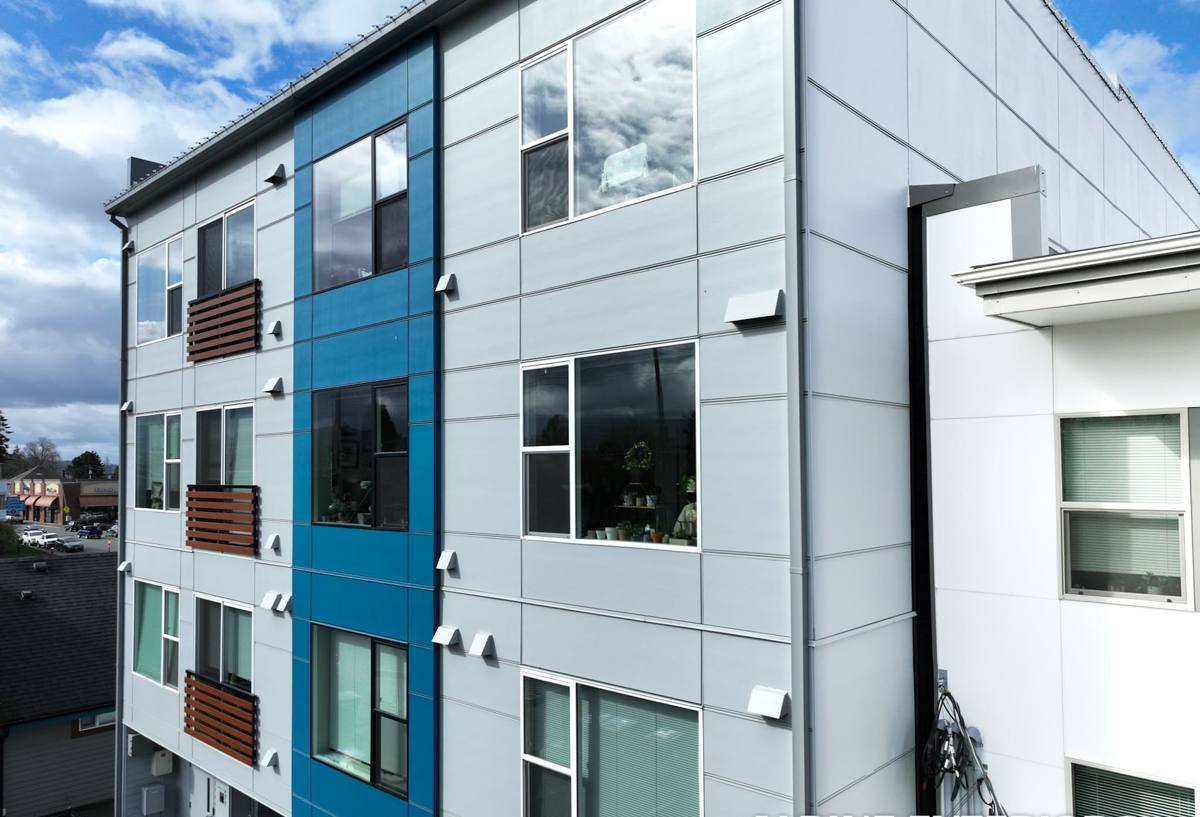
What Whatcom County's Climate Does to Siding
Three conditions drive most of the siding failures we get called out to inspect in the Lynden and Everson area:
- Salt-influenced marine air. Moisture-laden air moving inland off the Salish Sea accelerates corrosion of fasteners and metal trim, and keeps wood-based and composite siding products damp longer between dry spells.
- Driving rain. Wind-driven rain doesn't just wet the surface of siding — it pushes water sideways into laps, joints, and butt seams. Siding and flashing details that work fine in a light, vertical rain climate can leak here.
- Extended moss and algae season. Shaded lots, filtered sun, and long stretches of damp weather let moss, algae, and mildew colonize siding surfaces for much of the year. That growth holds moisture against the siding face, which is where slower-drying materials get into trouble.
None of these three conditions are unusual for Whatcom County — they're simply the baseline. The question for a homeowner isn't whether siding will face them, it's whether the product and the installation are built to shrug them off for decades or slowly lose that fight.
Signs an Everson Home Needs Siding Replacement
Siding problems in this climate tend to show up gradually, which is why they're often missed until they're expensive. Watch for:
- Soft, spongy, or crumbling siding when pressed, especially near the bottom courses and around windows and doors
- Persistent moss, algae, or black streaking that returns quickly after cleaning
- Paint that's peeling, bubbling, or failing faster than a normal repaint cycle would explain
- Visible warping, cupping, or delamination of panels or lap boards
- Gaps opening up at seams, corners, or trim where caulk has failed
- Rising energy bills that point to a compromised weather barrier behind the siding
- Interior signs — musty smells, staining, or soft drywall near exterior walls — that suggest moisture is already getting past the siding
Any one of these can be a minor repair. Several at once, especially on a home more than 15–20 years old, usually means the siding system as a whole is past the point where patching makes sense.
What a Correct Siding Replacement Actually Involves
Siding replacement is not just swapping old panels for new ones. In a climate like ours, most of what determines whether the job lasts happens underneath the visible surface.
Tear-off and inspection
Removing the old siding is also the only chance to find out what's really going on behind it — rot in sheathing, compromised framing, or a water barrier that's already failed. A crew that rushes this step is gambling with your next 30 years of siding performance.
Water-resistive barrier and flashing
Given how much driving rain this area sees, the house wrap and flashing details around windows, doors, and penetrations matter as much as the siding itself. Water needs a planned path down and out, not just a surface that looks sealed.
Proper fastening and clearances
Siding needs correct nailing patterns, proper gaps at butt joints, and adequate clearance from grade, decks, and roof lines so water can drain and materials can dry. Skipping these details is one of the most common causes of premature failure we see on homes in this region.
Trim, caulking, and paint or factory finish
The finish system — whether it's field-applied paint or a factory-cured finish — is what stands between the material and daily exposure to rain and damp air. This is also where product choice starts to matter a great deal, which brings us to the material itself.
Why We Install Only James Hardie Fiber Cement
We install James Hardie fiber cement siding exclusively. We don't install vinyl, LP SmartSide, primed spruce, cedar, or other fiber cement brands, and that's a deliberate standard, not a sales pitch.
Vinyl siding is affordable and low-maintenance in mild conditions, but it can warp or become brittle with temperature swings, and its seams and J-channels give wind-driven rain more opportunities to work behind the panel over time. Wood-based siding — cedar, primed spruce, engineered wood products like LP SmartSide — can look excellent, but wood-based cores are inherently more vulnerable to the moisture and moss exposure that defines a Whatcom County exterior; keeping them performing well long-term means a more demanding maintenance schedule than most homeowners plan for. Other fiber cement brands exist, but we've standardized on James Hardie specifically for its HZ5 product engineering (built for climates with real moisture and temperature cycling), its factory-applied ColorPlus finish, and the strength of its transferable warranty.
James Hardie fiber cement is non-combustible, resists moisture-driven swelling and rot because it isn't wood-based, and holds its factory finish far longer than field-applied paint typically does. In a climate that runs damp for much of the year and grows moss on anything that stays wet, that combination is what actually protects a home over a 30-plus-year horizon — not just at the time of installation.
Our Siding Replacement Process
- On-site evaluation. We walk the home, assess the existing siding and any moisture or rot issues, and talk through what's driving the need for replacement.
- Written estimate. You get a clear scope and price before any work starts — no surprise change orders for things we could have identified up front.
- Tear-off and substrate check. Old siding comes off, and we inspect sheathing and framing before anything new goes up.
- Water management first. House wrap, flashing at windows, doors, and penetrations, and drainage details are installed or corrected before siding.
- James Hardie installation to spec. Panels or lap siding are installed following manufacturer fastening, clearance, and joint requirements — the details that determine whether the warranty actually holds and the siding performs as designed.
- Final walkthrough. We review the finished work with you and address anything before calling the job complete.
What Drives Siding Replacement Cost
| Factor | Why It Matters |
|---|---|
| Home size and wall complexity | More square footage, corners, and dormers mean more material and labor time |
| Condition behind the old siding | Rotted sheathing or framing found during tear-off adds repair scope before new siding can go on |
| Siding profile chosen | Lap siding, panel siding, and shingle-style Hardie products vary in material and labor cost |
| Trim and accessory work | New trim boards, corner treatments, and detailing around windows affect both cost and final appearance |
| Access and site conditions | Multi-story walls, tight lot lines, and landscaping obstacles change how efficiently a crew can work |
| Color and finish selection | Factory ColorPlus finishes vs. field painting affect both upfront cost and long-term maintenance |
Every home is different, which is why we walk each property in person rather than quoting off square footage alone.
Why Hiring a Crew That Already Works in the Lynden Area Matters
Siding installation guidance from the manufacturer is written for a national market. A contractor who works regularly in Whatcom County brings judgment that guidance alone doesn't cover — how much clearance to leave near grade on a lot that stays damp longer, where moss pressure is worst on a given orientation, and which flashing details actually hold up against the driving rain this area gets in the fall and winter. That local pattern recognition, built job after job in this specific climate, is part of what you're paying for when you hire a crew that already works Everson and Lynden rather than one passing through the area for a single project.
Protecting Your Investment After Installation
James Hardie siding is low-maintenance compared to wood-based alternatives, but "low-maintenance" isn't "no-maintenance" — especially with this region's moss season. A simple annual routine keeps it performing at its best:
- Rinse siding gently once or twice a year to clear pollen, dust, and early moss or algae growth
- Keep gutters clear so overflow doesn't run down the siding face repeatedly
- Trim back vegetation and tree limbs that shade siding and keep it damp longer than it should be
- Recaulk or touch up any trim joints that show gaps opening over time
- Watch for any staining or soft spots near grade, decks, or downspouts and address them early
Done consistently, that routine is most of what it takes to get the full service life out of a correctly installed James Hardie system.
Get a Free Estimate for Your Everson Home
If you're weighing siding replacement for a home in Everson, Lynden, or anywhere nearby in Whatcom County, we're glad to take a look and give you an honest read on what your siding needs and what it would cost to do right. There's no pressure and no obligation — just fill out the form below to get started.