 Lynden Siding
 Building Decks That Actually Hold Up Near Nooksack
Homes in the Nooksack area deal with a specific combination of weather that a lot of deck materials and building practices simply aren't designed for. You've got long stretches of driving rain, damp maritime air moving through the valley off the Sound, and a moss season that can run from fall through spring. A deck that looks great the day it's finished but wasn't built with that combination in mind will show problems within a couple of years — cupped boards, soft spots at the ledger, green film on every horizontal surface, fasteners bleeding rust streaks down the face boards. We build decks for this area specifically, not decks that happen to be installed here.
This page covers what a deck built for Nooksack conditions actually needs, what a correct build involves start to finish, and how we approach the job differently than a crew that mostly works drier inland regions.
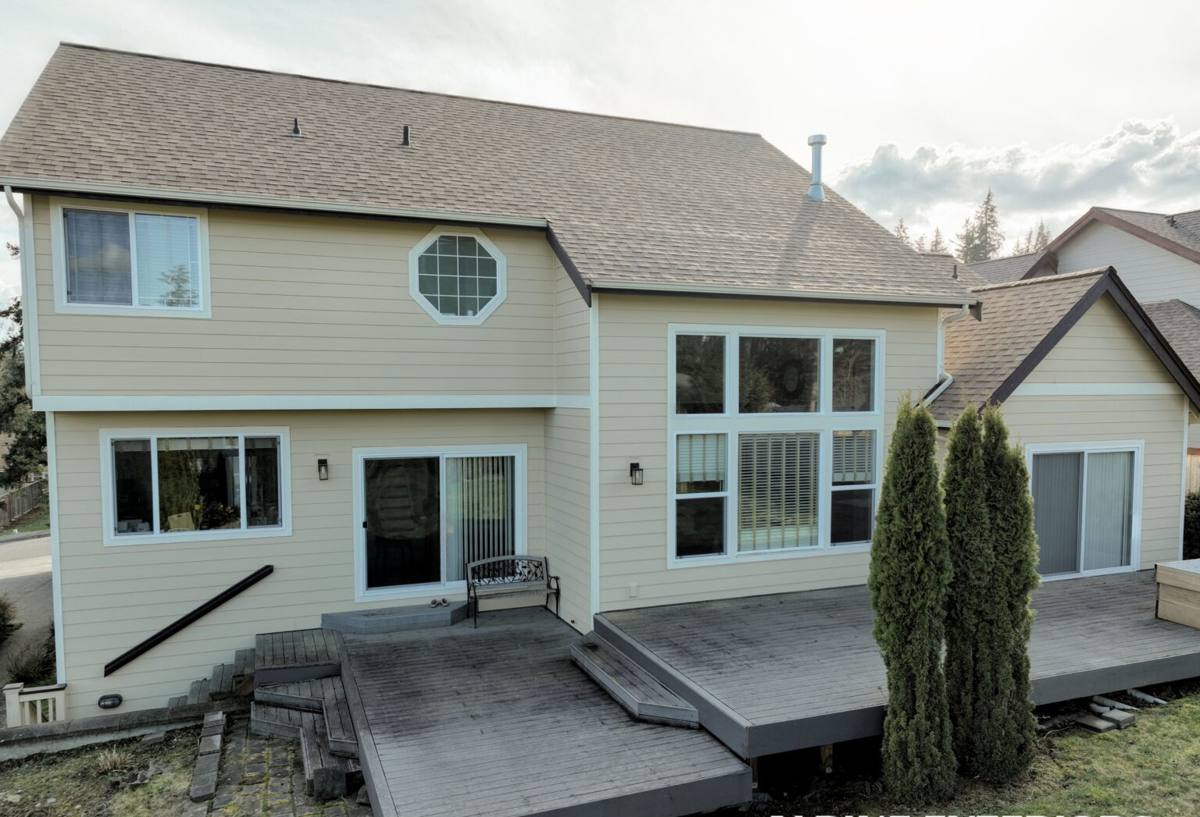
What Nooksack's Climate Does to a Deck Over Time
Whatcom County's weather isn't dramatic, but it's relentless, and relentless is what wears out a deck. A few specific mechanisms matter most for custom decks in this area:
- Moisture that never fully dries out. Long rainy stretches mean wood and composite surfaces stay damp for days at a time, not hours. Anything that traps water against a structural member — poor flashing, tight board spacing, debris in gaps — accelerates rot and mildew.
- Moss and algae growth. Shaded decks, decks under tree cover, and north-facing surfaces stay damp long enough for moss to establish. Once moss takes hold on decking or stair treads, it holds even more moisture against the surface and becomes a slip hazard.
- Salt-tinged air moving inland. Damp coastal air reaches well into Whatcom County, and it accelerates corrosion on fasteners, brackets, and any exposed metal hardware that isn't rated for it.
- Freeze-thaw cycling at footings. Winters here aren't brutally cold, but repeated freeze-thaw at shallow or poorly-drained footings can shift posts over several seasons if the foundation work was rushed.
None of this means a deck can't last — it means the details have to account for water, from the framing up through the surface finish.
Where We See Problems Most Often on Older Decks
When we get called to look at an existing deck in the Nooksack area that's failing early, it's almost always one of the same handful of issues: a ledger board attached without proper flashing, decking boards installed with no gap for drainage, standard hardware instead of corrosion-resistant fasteners, or footings that were poured too shallow for the site's drainage. Every one of those is preventable at the build stage and expensive to fix afterward.
Choosing Decking Material for This Climate
There's no single "best" decking material — there's a best material for this climate and how you plan to use and maintain the deck. Here's how the common options actually perform under Nooksack's conditions:
| Material | How it handles rain & damp | Moss/algae resistance | Maintenance |
|---|---|---|---|
| Pressure-treated fir/hem-fir | Good if sealed and detailed properly; absorbs water if finish lapses | Needs regular cleaning to stay ahead of growth | Annual cleaning, re-stain/seal every 2-3 years |
| Cedar | Naturally moisture- and rot-resistant; still needs finish maintenance | Better than PT fir but not immune | Cleaning plus periodic finish renewal |
| Composite (capped) | Excellent — doesn't absorb water or rot | Can still grow surface algae/moss if never cleaned, but doesn't feed the growth | Occasional washing, no sealing or staining |
| PVC decking | Excellent — fully synthetic, no rot risk | Similar to composite, cleans off easily | Low — periodic washing |
For a lot of Nooksack-area homeowners, capped composite or PVC decking makes sense simply because it removes the rot risk entirely and cuts the maintenance burden way down. That said, plenty of homeowners want the look and feel of real wood, and a well-detailed cedar or properly maintained PT deck can absolutely last for decades here — it just requires an honest commitment to periodic cleaning and refinishing. We'll walk you through the real trade-offs for your specific deck rather than pushing one material across the board.
What a Correctly Built Deck Requires in This Region
Framing and Fasteners
Every structural connection matters more here than in a drier climate. That means corrosion-resistant or stainless fasteners throughout, joist tape or similar protection on top of framing members to keep water from wicking into cut ends and fastener holes, and hardware rated for ground contact and coastal-influenced air where it's used.
Ledger Attachment and Flashing
The ledger board — where the deck attaches to the house — is the single most common failure point on decks in wet climates. Proper flashing that directs water away from the house sheathing, correct fastener spacing and type, and a positive-slope detail at the ledger are non-negotiable. This is also the connection point most likely to hide a problem for years before it shows up as rot in the rim joist or sheathing.
Footings and Drainage
Footing depth and drainage need to match the actual soil and site conditions, not a generic minimum. Poor drainage around footings is what leads to the freeze-thaw movement we mentioned earlier. On sites with heavier or slower-draining soil, that often means additional gravel drainage at the footing or adjusted footing design.
Decking Layout and Gaps
Board spacing needs to allow water and debris to actually clear the surface rather than sitting and encouraging moss growth. This is a small detail that gets skipped constantly on rushed installs, and it's one of the easiest things to get right the first time.
Quick Checklist: What to Ask Any Contractor Building a Deck in This Area
- What fastener and hardware grade are you using, and is it rated for this climate?
- How is the ledger board flashed against the house?
- What's the footing depth and drainage plan for my specific site?
- What decking gap and layout are you using for water clearance?
- What's the realistic maintenance schedule for the material we choose?
- Is the design accounting for shade/moss-prone areas of the yard differently than sunnier areas?
Design Considerations Specific to Nooksack Properties
Beyond materials and structure, a few site-level decisions make a real difference in how a deck performs over time in this area. Decks placed under heavy tree cover or on north-facing sides of a house will stay damp longer and need either more aggressive drainage detailing, a material choice that tolerates that (composite/PVC), or a maintenance plan the homeowner is genuinely willing to keep up with. Stair treads and any surface near entry points deserve extra attention to slip resistance given how often those areas stay damp or mossy through the wetter months. Railing and post hardware exposed to the open air take the brunt of the damp, salt-influenced conditions and are worth upgrading to better-rated hardware even if it costs a little more upfront.
Our Process for a Custom Deck Build
- Site visit and assessment. We look at drainage, sun/shade exposure, soil conditions, and how the deck ties into the existing structure before recommending anything.
- Design and material selection. We walk through the honest trade-offs between wood and composite/PVC options based on your budget, maintenance preference, and the specific conditions of your yard.
- Permitting. We handle the permit process for the build, including footing and structural requirements that apply in Whatcom County.
- Framing and structural work. Proper footings, ledger flashing, corrosion-resistant hardware, and correctly spaced framing — the parts that don't show but determine how long the deck actually lasts.
- Decking, railing, and finish work. Installed with drainage-conscious spacing and detailing appropriate to the material chosen.
- Walkthrough and maintenance guidance. We tell you plainly what upkeep your specific deck will need — no surprises a year or two down the road.
Why Local Experience on This Specific Job Matters
A deck built by a crew that mostly works in drier, low-moisture regions can still look fine on installation day. The difference shows up two, three, five winters later — at the ledger, at the footings, in how fast moss takes over a shaded corner. Working regularly in Lynden and the surrounding Whatcom County communities, including the Nooksack area, means we're not guessing at how a design will hold up against this specific rain pattern and damp season — we've already seen how these details perform here over time, and we build accordingly from the start.
If you're planning a new deck or replacing one that's showing its age, we're happy to take a look and talk through honest options for your property. Request a free, no-pressure estimate using the form below and we'll go from there.