 Lynden Siding
 Storm Damage Roof Repair, Built Around Abbotsford's Weather
Abbotsford sits in a stretch of the Fraser Valley that takes weather seriously. Winter storms roll in off the Pacific loaded with moisture, and the same weather pattern that waters Whatcom County farmland just south of the border does the same thing north of it. Add in occasional outflow wind events funneling through the valley, and Abbotsford roofs get tested every year in ways that drier inland climates never see. We work on both sides of that border, and the honest truth is a roof in Abbotsford needs the same close attention to wind-driven rain, moss, and freeze-thaw cycling that we build into every repair job in Lynden.
Storm damage repair is not one-size-fits-all work. A roof that took a wind gust to the ridge cap needs a different fix than one with wind-driven rain forcing its way under lifted shingle tabs, and both are different again from a roof where months of moss growth have already been quietly lifting shingles before the storm ever hit. This page walks through what we actually look for, what a correct repair involves, and why it matters to hire a crew that treats storm repair as a diagnostic job, not just a patch-and-go.
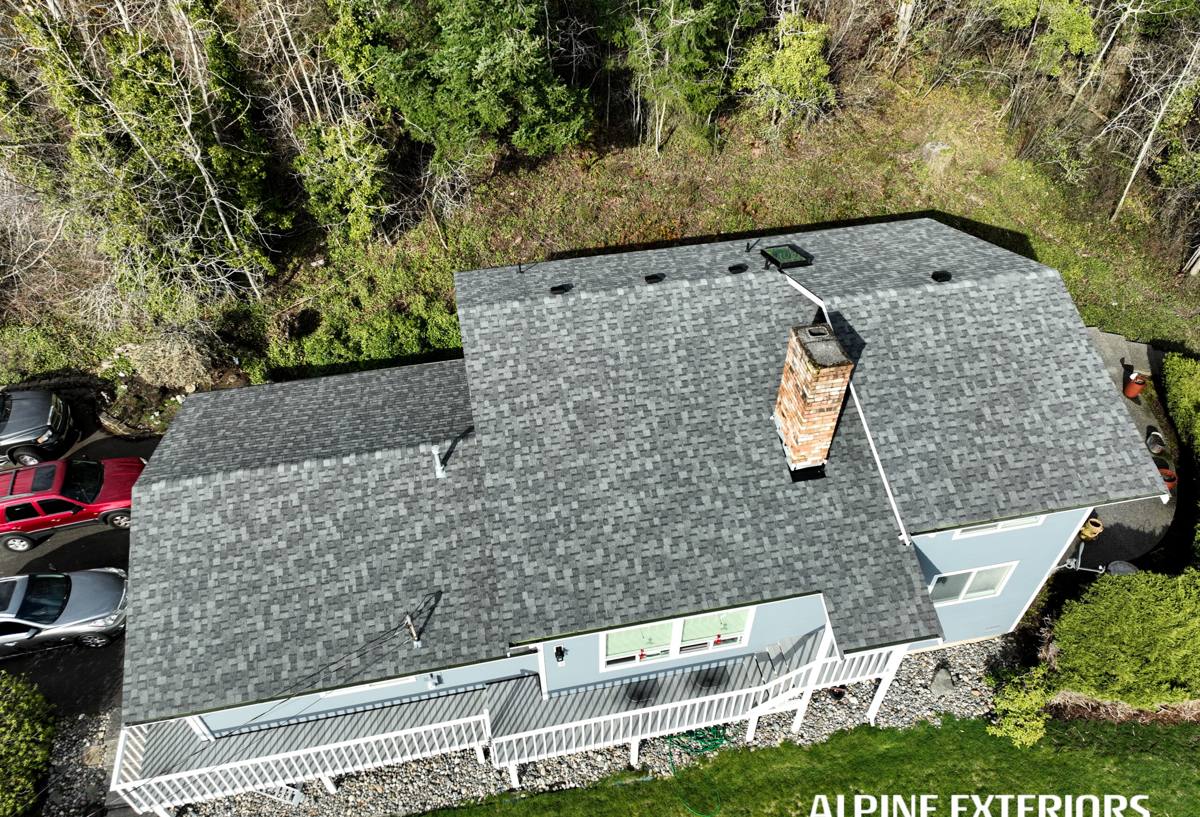
What Abbotsford's Climate Does to a Roof Over Time
Salt Air and Driving Rain
Proximity to the coast means salt-laden air is a real factor on metal flashing, fasteners, and any exposed hardware. Salt air speeds up corrosion on lower-grade fasteners and unprotected metal edges, which is exactly where storm damage tends to start — a corroded nail head or a rusted-through flashing seam gives wind and water a place to get a foothold. Driving rain, meanwhile, is less about total rainfall and more about angle and force. When rain is driven sideways by wind, it can be forced up and under shingle tabs, behind step flashing, and into valleys that would shed a normal vertical rain without issue.
The Long Moss Season
Abbotsford's moss season runs long — mild, damp winters combined with shaded rooflines (from tree cover or simply north-facing slopes) create ideal conditions for moss to establish and spread across most of the cooler months. Moss does two things to a roof: it holds moisture against the shingle surface far longer than the shingle was designed to tolerate, and its root structure physically lifts shingle edges and granules over time. A storm hitting a roof that already has moss establishing along the shingle laps is far more likely to see wind get under a tab and tear it, because the moss has already broken the shingle's seal.
Freeze-Thaw and Wind Exposure
The valley doesn't get the deep freezes of the interior, but it does get enough freeze-thaw cycling in a typical winter to stress any roof detail that's already compromised — a cracked pipe boot, a nail that's backed out slightly, a seam in the flashing. None of these are dramatic on their own, but they're exactly the small failures that a storm turns into a leak.
Recognizing Storm Damage: What to Look For
Not all storm damage announces itself with an obvious hole or a missing shingle. Some of the most costly damage is the kind that sits quietly for months before it shows up as a ceiling stain.
- Shingle tabs that look lifted, curled, or creased, even if nothing is missing
- Granules collecting in gutters or at the base of downspouts after a storm
- Bent, lifted, or missing sections of ridge cap or hip cap
- Flashing around chimneys, skylights, or wall intersections that looks separated or bent
- Any soft spots, sagging, or discoloration on interior ceilings after heavy rain
- Moss buildup concentrated along shingle laps, valleys, or the north-facing slope
- Debris, branches, or visible impact marks on the roof surface after high wind
If you notice any of these after a storm, the right move is a roof-level inspection before the next weather system comes through — not after a stain shows up inside.
What a Correct Storm Repair Actually Involves
Step 1: Full-Roof Inspection, Not Just the Obvious Spot
Storm damage rarely stays confined to one spot. Wind that tore a shingle on one slope often stressed fasteners and seals across the whole roof plane. We walk the entire roof, not just the area the homeowner points to, because the visible damage is frequently the smallest part of the problem.
Step 2: Identify the Cause, Not Just the Symptom
A lifted shingle can come from wind alone, or from wind acting on a shingle that was already compromised by moss, age, or a failed seal. Repairing the lifted shingle without addressing the underlying cause means the same spot fails again in the next storm. We look at what let the damage happen, not just what the damage looks like.
Step 3: Match the Repair to the Roof
Repairs need to match the existing roofing material in type, weight, and color as closely as possible, and be integrated into the existing shingle courses and flashing system correctly — not surface-patched over top. Flashing repairs in particular need to be tied back into the underlayment properly, not just caulked, since caulk is a temporary fix at best in this climate.
Step 4: Address Moss and Drainage While We're Up There
If moss is present or drainage is contributing to the problem, we address it as part of the repair — there's little point fixing storm damage while leaving the exact conditions in place that will cause the next round of it.
Our Process for Abbotsford Storm Repair Calls
- Contact and initial description: we ask what you observed — timing of the storm, location of any interior signs, visible exterior damage — to prioritize the inspection.
- On-site roof inspection: a full walk of the roof surface, flashing points, ridge and hip caps, and attic space if accessible, looking for both the reported damage and anything related to it.
- Written assessment: a clear explanation of what we found, what caused it, and what's actually needed — repair versus a larger issue that needs more attention.
- Repair scope and estimate: an honest quote before any work starts, with the reasoning behind it so you know what you're paying for.
- Repair and cleanup: the work itself, done to match the existing roof system, followed by full cleanup of debris and old material.
Cost Factors in Storm Damage Repair
Every storm repair is different, but the factors that drive cost are consistent. Here's what typically moves the price up or down:
| Factor | Why It Matters |
|---|---|
| Extent of damage | A few displaced shingles is a much smaller job than damage spread across multiple slopes or involving flashing systems |
| Roof access and pitch | Steeper roofs and harder-to-access areas take more time and safety setup |
| Underlying moss or drainage issues | Addressing root causes alongside the visible repair adds scope but prevents repeat calls |
| Material availability and match | Matching an older or discontinued shingle color/style can affect cost and timeline |
| Flashing versus shingle-only repair | Flashing work at chimneys, skylights, and walls generally requires more labor than shingle replacement alone |
| Interior damage | If water has reached the attic or ceiling, that's a separate scope beyond the roof itself |
Why It Matters to Hire a Crew That Already Works This Area
Abbotsford and Whatcom County share a climate pattern, and a crew that works both sides of the border sees the same storm systems affect roofs in both places every season. That matters for storm repair specifically because recognizing the difference between "this is isolated wind damage" and "this roof has months of moss-related wear that the storm just exposed" comes from having seen enough local roofs to know the pattern. A contractor unfamiliar with how moss season and salt air interact with roofing materials here is more likely to treat a symptom instead of the actual cause — which means a callback repair a few months later.
We also know that storm damage repair often needs to happen quickly, before the next weather system arrives and turns a manageable repair into a bigger interior water problem. Being local and already familiar with the area means a faster response and an inspection that doesn't start from zero.
Preventing the Next Storm from Doing the Same Damage
Once a storm repair is complete, a few ongoing habits go a long way toward keeping the next storm from causing a repeat problem:
- Keep an eye on moss growth through the wet season and address it before it spreads across shingle laps
- Clear gutters and downspouts regularly so storm water actually drains instead of backing up under roof edges
- Trim back tree branches that overhang the roof, which reduce debris impact and also reduce the shade that feeds moss growth
- Have the roof looked at after any major wind event, even if nothing looks obviously wrong from the ground
- Address small issues — a lifted shingle corner, a loose fastener — before they become storm-driven failures
Get an Honest Look at Your Roof
If a recent storm has you wondering whether your Abbotsford roof took damage, or you just want a second set of eyes before the next weather system rolls through, we're happy to take a look. The estimate is free, there's no pressure, and you'll get a straight answer about what's actually going on up there. Use the form below to get in touch and we'll set up a time to come take a look.