 Lynden Siding
 Why Bellingham Siding Takes More Punishment Than People Expect
Homes near Bellingham sit at the intersection of three things that are hard on exterior walls: salt-laden air off Bellingham Bay, long stretches of driving rain pushed in off the Sound, and a moss and algae season that can run most of the year in shaded, north-facing spots. None of these are dramatic on their own. What matters is that they don't let up. A siding product that handles an occasional storm just fine can still fail slowly under Whatcom County's version of normal weather — moisture that never fully dries out, salt that works into seams and fasteners, and organic growth that holds water against the wall long after the rain has stopped.
That combination is why we treat Bellingham-area homes as their own category, not just another stop on a general siding route. The material has to be right, and the installation details that keep water out have to be right too. Get either one wrong and the problems don't show up in month one — they show up in year three or four, after the damage is already behind the wall.
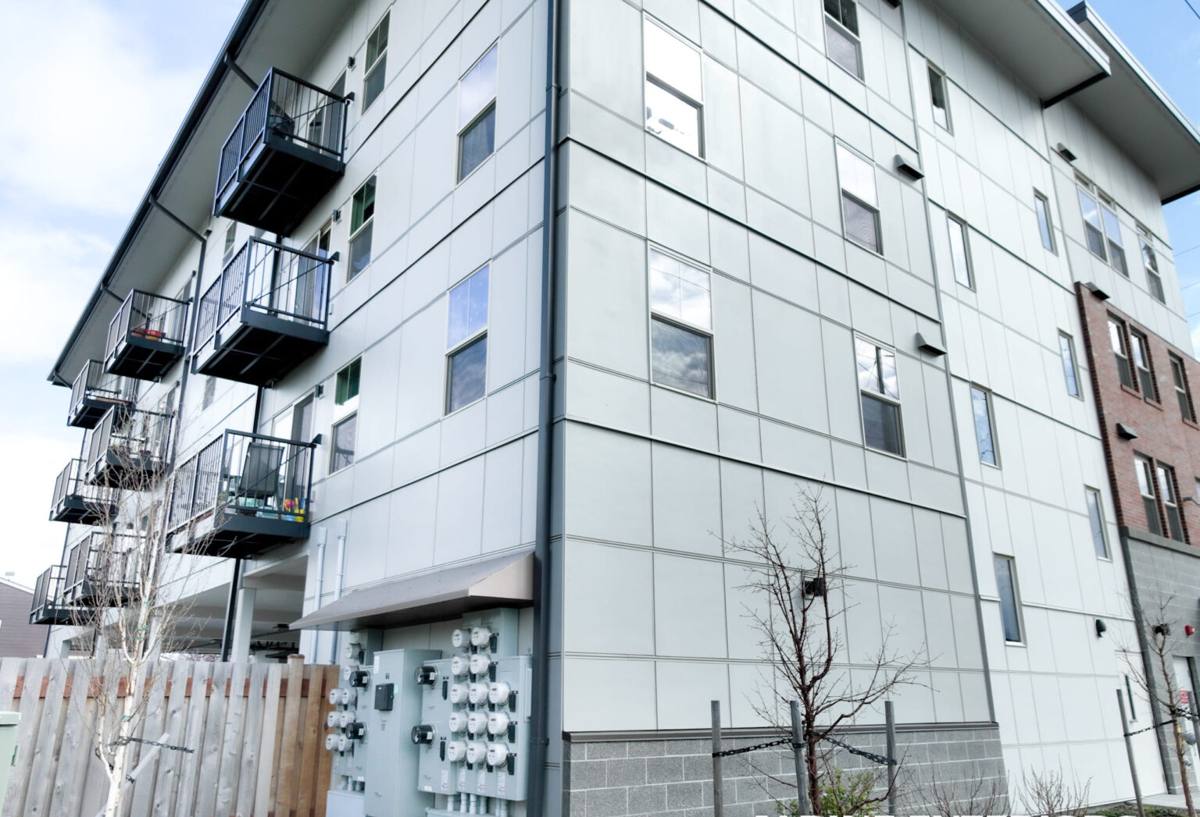
Why We Install Fiber Cement — and Only James Hardie — Here
We install James Hardie fiber cement siding exclusively. We don't install vinyl, LP SmartSide, Cemplank, Allura, primed spruce, or cedar, and that's a deliberate standard, not a lack of options. In a climate like this, the material choice determines how much of your maintenance budget and worry gets spent on the exterior of the house over the next twenty years.
Salt Air and Moisture
Salt-carried moisture is corrosive to fasteners and hard on any siding material that relies on paint film alone for weather protection. Fiber cement is inert to salt in a way wood-based products aren't — it doesn't absorb moisture the way wood fiber does, and it won't rot, delaminate, or feed rot fungus the way an engineered wood substrate can once water finds a way in. James Hardie's ColorPlus factory finish is also baked on and cured under controlled conditions, which holds up to salt air and UV exposure noticeably better than a field-applied coat over a job-site-primed board.
Moss, Algae, and the Shade Problem
Whatcom County's tree cover and marine-influenced humidity mean a lot of homes have at least one wall that rarely gets direct sun. Those walls grow moss and algae, and that growth holds moisture against whatever is underneath it. Fiber cement doesn't feed mold or rot the way wood-based siding can, so a mossy wall is a cleaning problem rather than a structural one. That's a meaningful difference over a 20- or 30-year ownership period, not a marketing point.
Fiber cement is also non-combustible, which matters increasingly in this region given wildfire smoke and ember exposure during dry summer stretches — it's not the primary reason we specify it here, but it's a real, permanent benefit of the material.
What a Correct Fiber Cement Installation Actually Involves
Fiber cement's reputation problems almost always trace back to installation, not the product itself. James Hardie publishes detailed installation specifications for a reason — this is a rigid material with real requirements around clearance, fastening, and flashing, and skipping steps is how a 30-year siding job turns into a 10-year problem.
Clearances and Drainage
Hardie board needs proper clearance from grade, roofing, decks, and walkways, plus a drainage gap behind the siding so any incidental moisture can escape instead of sitting against the wall. On a driving-rain climate like this one, that drainage plane is doing real work most of the year, not just during the occasional storm.
Fastening and Joints
Fasteners have to hit framing at the correct spacing and depth — overdriven nails crack the board's edge and create a path for water, while underdriven fasteners leave the board loose and prone to movement. Butt joints and seams need to be flashed or sealed per spec, not just butted together and caulked over as a finishing step.
Flashing at Penetrations
Windows, doors, hose bibs, vents, and any other wall penetration are where water intrusion actually starts in most siding failures. Correct step flashing, head flashing, and kick-out flashing at roof-to-wall intersections matter more than the siding material itself when it comes to keeping a wall assembly dry through a wet Whatcom County winter.
Factory Finish vs Field Painting
ColorPlus factory-finished Hardie board comes cured and color-matched with dedicated touch-up product and caulk, which holds color and adhesion better over time than job-site priming and painting. We install it factory-finished wherever possible for exactly that reason.
| Factor | James Hardie Fiber Cement | Wood-Based / Engineered Wood | Vinyl |
|---|---|---|---|
| Moisture behavior | Doesn't absorb or rot; tolerates sustained damp exposure | Can swell, rot, or delaminate if moisture gets past the coating | Doesn't rot, but seams and J-channels can trap water behind the panel |
| Salt air / coastal exposure | Inert to salt; factory finish holds up well | Coating and substrate both vulnerable over time | Generally stable, but can chalk and fade faster in UV/salt exposure |
| Moss and algae | Growth is cosmetic; doesn't feed rot | Growth can trap moisture against a rot-prone substrate | Growth is cosmetic; panels can warp under heat |
| Fire resistance | Non-combustible | Combustible | Combustible; can melt/deform near heat sources |
| Finish longevity | Factory-cured ColorPlus finish, long color retention | Field-applied paint, shorter repaint cycle | Color molded in, but fades and can't be easily repainted |
| Installation sensitivity | Rigid material; requires correct fastening, clearance, flashing | More forgiving to install, less forgiving over time if moisture gets in | Forgiving to install; less resilient to impact and heat |
Our Process for Bellingham-Area Homes
We keep the process straightforward and don't rush past the parts that determine whether the job holds up.
- On-site assessment. We look at existing siding, trim, moisture staining, and problem areas — especially shaded, north- or west-facing walls that see the most sustained dampness and moss.
- Substrate check. Before any new siding goes up, we check sheathing and framing for hidden rot or soft spots, particularly around old penetrations and butt joints where water tends to find its way in first.
- Weather barrier and drainage plane. We install or repair the water-resistive barrier and drainage gap so the wall assembly can shed and dry moisture correctly, not just resist it on the surface.
- Flashing first. Windows, doors, and roof-to-wall transitions get flashed correctly before siding goes on — this step gets rushed more than any other on jobs that fail early, and we don't rush it.
- Hardie installation to spec. Fastening, clearances, and joint treatment follow James Hardie's published installation requirements, which is also what keeps the manufacturer's warranty intact.
- Finish work and cleanup. Caulking, touch-up, and trim details are finished cleanly, and the site is cleared of debris and cutoffs before we call the job done.
Why Hiring a Crew That Already Works This Area Matters
A crew that regularly works Bellingham, Lynden, and the rest of Whatcom County has already seen which walls in this region take the worst of the weather and why. That's not a small thing — it means fewer surprises during the assessment, a better read on which parts of a house need extra flashing attention, and a realistic sense of how the local climate actually behaves through a full year, not just on the day of the estimate. It also means someone is around locally if a warranty question or a minor issue comes up down the road, rather than a crew that installed the siding and then moved on to a different region.
Signs Your Current Siding Is Already Losing the Battle
A few warning signs are worth acting on before they become bigger repairs:
- Soft or spongy spots when you press on the siding, especially near the bottom courses or around windows
- Persistent moss or dark streaking that keeps coming back within weeks of cleaning
- Visible gaps, warping, or buckling at seams and butt joints
- Paint that's peeling or bubbling rather than just fading evenly
- Interior signs like peeling paint, musty smell, or staining on walls that back up to exterior siding
Maintenance Checklist for Bellingham Homeowners
Fiber cement is low-maintenance compared to wood-based siding, but "low" isn't "none," especially in a climate this wet. A short seasonal routine goes a long way:
- Rinse siding annually to clear salt residue, pollen, and early moss growth before it takes hold
- Inspect caulking at trim, windows, and joints once a year and re-caulk any cracked or shrunken seams
- Keep gutters clear so overflow doesn't run down the siding face or pool at the base of a wall
- Trim back vegetation and tree cover that keeps a wall shaded and damp longer than it needs to be
- Touch up any chips or scrapes with matched ColorPlus touch-up product rather than leaving bare fiber cement exposed
What Affects the Cost of a Fiber Cement Job Here
| Cost Factor | Why It Matters |
|---|---|
| Substrate condition | Hidden rot or sheathing damage found during tear-off adds repair work before new siding can go on |
| Home size and wall complexity | More corners, penetrations, and trim detail mean more labor and flashing work |
| Siding profile and accessories | Lap, shingle, and panel profiles, plus trim and soffit work, price differently |
| Access and site conditions | Slopes, tight lot lines, and multi-story walls affect scaffolding and labor time |
| Existing siding removal | Full tear-off versus siding over an already-sound wall changes scope significantly |
We don't quote a number without seeing the house — anyone who does is guessing, and the substrate condition alone can shift a bid meaningfully once tear-off starts.
Ready to Talk About Your Bellingham-Area Home?
If your siding is showing moss it never used to, soft spots near grade, or seams that just don't look right anymore, it's worth having a local crew take a look before those problems spread further behind the wall. We're happy to walk the exterior with you, point out what we see, and give you a straightforward, no-pressure estimate for James Hardie fiber cement siding built for this stretch of Whatcom County. Use the form below to get started.