 Lynden Siding
 Building a Deck That Actually Holds Up in Everson
Everson sits in a part of Whatcom County where a deck doesn't just need to look good on a sunny afternoon — it needs to survive nine months of wet weather every year without rotting, warping, or turning into a slip hazard. We build and repair decks for homes throughout the Lynden and Everson area, and the decks that hold up longest here are the ones built with this climate in mind from the footings up, not decks designed for a drier region and shipped in with generic plans.
This page covers what a deck built for Everson conditions actually requires: the framing details that keep moisture out, the material tradeoffs worth understanding before you pick decking, how permitting typically works locally, and what our process looks like from first conversation to final walkthrough.
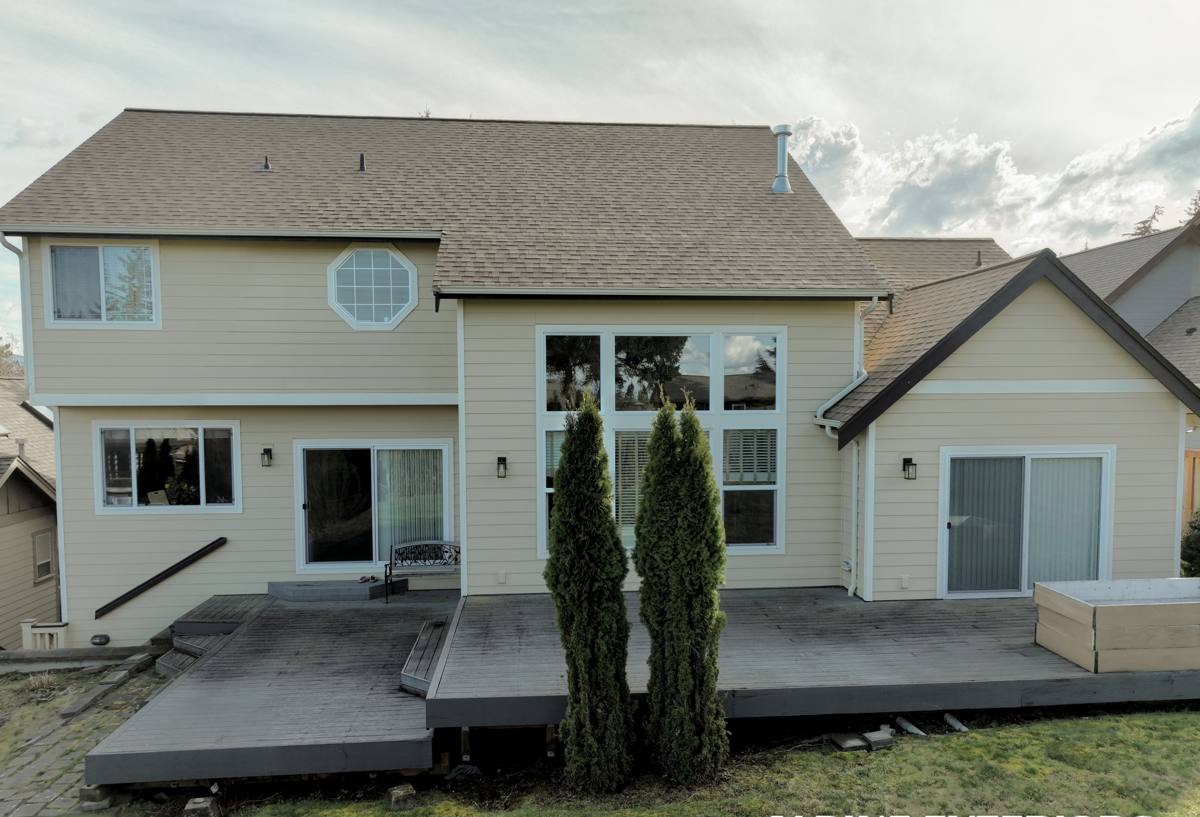
What Whatcom County Weather Does to a Deck
Everson's weather isn't dramatic, but it's relentless. Long stretches of low-intensity rain, short daylight in winter, heavy shade from mature trees on a lot of properties, and air that carries moisture inland from the Salish Sea all combine to create conditions that punish poorly built decks faster than homeowners expect.
Driving Rain and Standing Water
Rain here doesn't just fall straight down — wind-driven rain gets pushed sideways under railings, behind ledger boards, and into any gap that wasn't sealed correctly. A deck that sheds water fine in a light shower can still be feeding moisture into the framing every time a storm rolls through with any wind behind it.
Moss and Algae
Whatcom County's moss season runs long — shaded, damp decking surfaces can stay wet for days at a time in fall and winter, which is exactly what moss and algae need to take hold. Beyond looking bad, moss holds moisture against the decking surface and makes boards dangerously slick, especially on stairs.
Salt-Laden Air and Fasteners
Proximity to the Salish Sea means the air moving through this part of Whatcom County carries a measure of salt, even well inland. Over years, that air accelerates corrosion on the wrong grade of screws, nails, and structural hardware — which is why fastener selection matters as much as the decking material itself.
Choosing Decking Material for a Local Climate
There's no single "best" decking material — there's a best material for your budget, your maintenance tolerance, and how much sun or shade your deck actually gets. We walk every homeowner through the real tradeoffs rather than pushing one product.
Wood Decking
Cedar and pressure-treated lumber remain popular for good reason — lower upfront cost and a natural look that many homeowners prefer. The tradeoff in this climate is maintenance: wood decking needs regular cleaning, and periodic sealing or staining to keep moisture from working into the grain, especially on shaded sections that stay damp longer.
Composite and PVC Decking
Composite and PVC boards cost more upfront but resist moisture absorption, rot, and splintering far better than wood, and they don't need annual staining. They still need occasional cleaning to keep moss and algae from taking hold on the surface, but the maintenance burden is lighter over the life of the deck. Installation is less forgiving than wood, though — proper spacing and fastening matter more, because manufacturer warranties are often voided by incorrect installation.
| Material | Upfront Cost | Maintenance | Moisture/Moss Resistance | Typical Lifespan |
|---|---|---|---|---|
| Pressure-treated wood | Lowest | Annual cleaning + periodic sealing | Moderate — depends on upkeep | 10-15 years |
| Cedar | Moderate | Regular cleaning + staining | Moderate, naturally rot-resistant if maintained | 15-20 years |
| Composite | Higher | Occasional washing | Good | 25-30 years |
| PVC/capped composite | Highest | Minimal | Best | 30+ years |
Framing and Footings: Where Most Deck Problems Actually Start
A deck's surface material gets all the attention, but the framing underneath is what determines whether the deck is still solid in fifteen years. This is also where we see the most corner-cutting on decks we're asked to repair or replace in the Everson area.
Footings and Frost Depth
Footings need to be sized and set to local frost depth requirements so the deck doesn't heave or settle unevenly as the ground freezes and thaws through winter. Undersized or shallow footings are one of the most common causes of a deck that starts to feel bouncy or uneven within just a few years.
Ledger Board and Flashing
Where a deck attaches to the house, the ledger board connection is the single most common source of hidden rot on Pacific Northwest decks. Without correct flashing — installed in the right order, lapped correctly with the house's water-resistive barrier — rainwater tracks down behind the ledger and into the rim joist, rotting structural framing from the inside where nobody sees it until the deck starts to fail.
Fasteners and Hardware
Given the salt content in the air here, we use corrosion-resistant fasteners and structural hardware rated for exterior, coastal-influenced exposure rather than standard interior-grade hardware. It costs a little more upfront and saves you from rusted, weakened connections a decade down the road.
Permits and Code Basics for Deck Projects Here
Deck permitting depends on the size, height, and attachment method of the deck, and on whether your property falls under Everson city jurisdiction or unincorporated Whatcom County. As a general rule, most decks attached to a house, elevated above a certain height, or exceeding a certain footprint require a building permit — ground-level, freestanding decks below a certain size sometimes don't, but this varies and should always be confirmed with the local building department before work starts.
Guardrails and Stairs
Elevated decks generally require guardrails at a minimum height, with baluster spacing narrow enough to meet code safety requirements, along with proper stair rise and run if steps are involved. These aren't optional style choices — they're safety requirements that inspectors check.
We handle the permit application and inspection scheduling as part of the job, so you're not the one tracking down paperwork or coordinating inspector visits.
Our Process, Start to Finish
- On-site consultation — we look at your yard's grade, sun/shade exposure, existing structure (if replacing a deck), and talk through how you actually want to use the space.
- Design and material selection — we lay out size, layout, railing style, and decking material options with honest cost and maintenance tradeoffs for each.
- Permitting — we submit and manage the permit application where required, so the project is inspected and legal, not something that causes problems at resale.
- Footings and framing — footings set to proper depth, ledger flashing installed correctly, framing built to carry the load with corrosion-resistant hardware throughout.
- Decking and railing installation — boards and railing installed per manufacturer spec (for composite/PVC) or with proper spacing and fastening (for wood).
- Final walkthrough — we go over the finished deck with you, confirm everything meets code, and answer maintenance questions before we consider the job done.
Keeping a New Deck Looking Good Through Moss Season
A well-built deck still needs basic seasonal attention to stay safe and looking sharp through Whatcom County's wet months. None of this is complicated, but skipping it is how moss and moisture problems get a head start.
- Sweep debris and fallen leaves off the deck surface regularly in fall — trapped organic matter holds moisture and feeds moss growth
- Rinse or wash decking a couple of times a year, more often on heavily shaded sections
- Check that gaps between boards are clear and draining, not packed with dirt or needles
- Inspect railings and stair connections annually for any looseness
- Look at the ledger board area near the house once a year for any staining, soft spots, or gaps in flashing
- Reseal or restain wood decking on the manufacturer or trade-standard schedule — don't wait until it looks dry and gray
Why Hire a Crew That Already Works in Everson
A deck built by a crew unfamiliar with this specific climate tends to make the same mistakes over and over — undersized footings for local soil, missing or incorrect ledger flashing, fasteners that aren't rated for salt-influenced air, or a design that ignores how much shade and rain a particular yard actually gets. We build and repair decks throughout the Lynden and Everson area regularly, which means we already know how the local building departments handle permitting, what framing details actually hold up through a Whatcom County winter, and which materials are worth the extra cost here versus which ones aren't.
That local experience shows up in details a homeowner might not think to ask about — flashing sequencing, footing depth, fastener grade — but that make the difference between a deck that needs major work in eight years and one that's still solid in twenty-five.
If you're planning a new deck or need an honest look at whether an existing one is still sound, we're glad to come take a look. Reach out using the form below for a free, no-pressure estimate.