 Lynden Siding
 Deck Repair Built for Everson's Weather, Not a Generic Checklist
Decks in Everson take a beating that homeowners further inland or in drier climates rarely deal with. Between the long wet season, the moss that creeps across every north-facing surface, and the freeze-thaw swings that hit Whatcom County in winter, a deck here ages differently than one in a catalog photo. Repairing it correctly means understanding how those forces actually damage wood and hardware, not just replacing whatever board looks bad.
This page covers what deck repair actually involves for homes in and around Everson, what we look for during an inspection, and how to tell the difference between a deck that needs a repair and one that's quietly telling you it needs more.
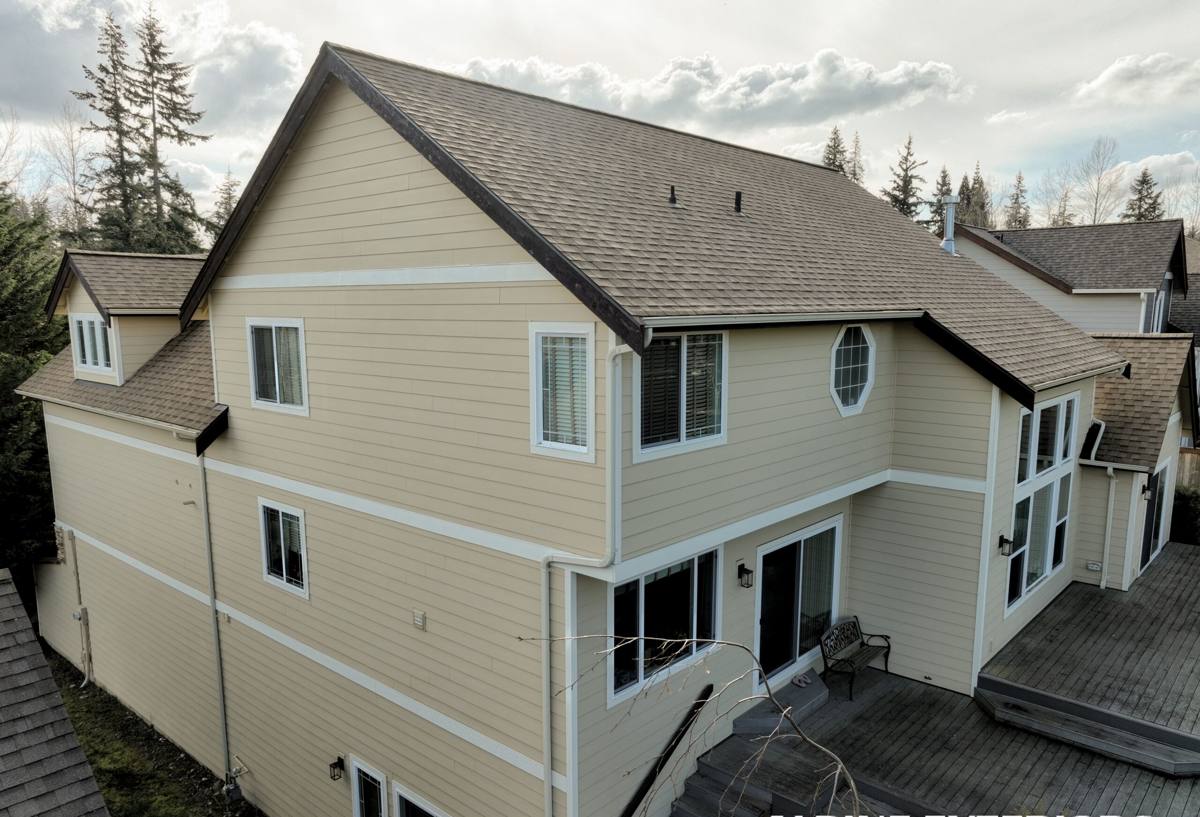
Why the Local Climate Is Hard on Decks
Everson sits in a part of Whatcom County that gets a steady diet of damp, marine-influenced air, driving rain that blows in sideways during winter storms, and long stretches of low sun angle that keep shaded deck areas wet for days at a time. That combination is what wears decks down faster than most homeowners expect.
Moss and Organic Growth
A long moss season isn't just cosmetic. Moss holds moisture directly against wood fibers and fasteners, which keeps the surface below it damp far longer than open, sun-exposed boards. Left unaddressed, that trapped moisture is one of the most common causes of soft, punky decking we find on repair calls.
Driving Rain and Water Intrusion
Wind-driven rain doesn't just fall straight down — it gets pushed sideways into ledger connections, under railing posts, and into any gap where flashing has failed or was never installed correctly. Once water gets behind a ledger board or into a post base, the damage happens out of sight until the structure starts to feel spongy or the deck develops a noticeable bounce.
Freeze-Thaw Cycling
Whatcom County winters aren't extreme, but they're consistent enough that water trapped in wood grain or hairline cracks freezes and expands repeatedly through the season. That cycle widens small cracks into big ones and loosens fasteners that were seated tight the year before.
Common Deck Problems We Find in This Area
Some issues are cosmetic and low-risk. Others affect the structure and need to be addressed before the deck sees regular use again. Knowing which is which matters more than the age of the deck.
| Symptom | Likely Cause | Urgency |
|---|---|---|
| Gray, weathered boards with tight grain | Normal UV and weather exposure | Low — cosmetic, refinish or replace on your timeline |
| Soft or spongy decking underfoot | Moisture trapped by moss, debris, or poor drainage | Moderate to high — wood rot may be spreading below the surface |
| Rust streaks around fasteners | Non-coated or undersized fasteners reacting with treated lumber | Moderate — fastener failure can lead to board or railing movement |
| Deck feels bouncy or moves when walked on | Compromised ledger connection, joists, or posts | High — structural, needs inspection before continued use |
| Railing wobbles or posts feel loose | Rotted post base or failed post-to-frame connection | High — safety issue, especially with kids or guests |
| Gaps opening between boards | Normal shrinkage, or early sign of framing movement | Low to moderate — worth monitoring |
Structure First, Surface Second
A deck that looks rough on top can be structurally sound, and a deck that looks fine on top can be failing underneath. That's why any repair worth doing starts with the framing, not the decking boards.
What We Check Below the Surface
- Ledger board attachment to the house, including flashing condition where the deck meets the wall
- Joist condition, especially at joist hangers and anywhere water collects
- Post bases and footings for rot, movement, or inadequate ground contact
- Beam-to-post connections and whether hardware is rated for the load
- Stair stringer condition, since stairs see concentrated foot traffic and water runoff
What We Check on the Surface
- Board condition — soft spots, splitting, cupping, or fastener pop
- Railing stability and code-relevant spacing on older builds
- Fastener type and condition, since mismatched or corroding hardware is a repeat offender
- Drainage — whether water actually sheds off the deck or pools in low spots
Repair, Reinforce, or Replace?
Not every problem calls for tearing out the whole deck, and not every deck is worth patching. The honest answer usually comes down to how much of the structure is still sound.
| Situation | Typical Approach | Why |
|---|---|---|
| Isolated rot in a few boards, framing solid | Board replacement | Framing is doing its job; only the wear layer needs attention |
| Rotted ledger or compromised joists | Targeted structural repair | Addresses the root cause instead of just replacing what's visible |
| Widespread rot across framing and decking | Full or near-full rebuild | Piecemeal repairs won't hold, and mixing old and new framing creates uneven support |
| Solid structure, dated or worn surface | Resurfacing or refinishing | No structural need to rebuild — a cosmetic update is enough |
We'll always tell you plainly which category your deck falls into, including when a repair is genuinely the right call and a rebuild isn't necessary yet.
How Our Repair Process Works
- On-site inspection. We walk the deck, check framing where accessible, and probe suspect areas for soft wood.
- Straight assessment. You get a clear explanation of what's failing, what's causing it, and what your realistic options are — no upselling into a rebuild you don't need.
- Scope and estimate. We put the repair plan and cost factors in writing before any work starts.
- Repair work. Structural issues get fixed first — ledger, framing, posts — followed by surface-level repairs like boards, railings, and fasteners.
- Final check. We confirm the deck is solid, connections are tight, and drainage is working the way it should.
Material and Hardware Choices That Actually Matter Here
In a climate like this, the materials and fasteners used in a repair matter as much as the workmanship. We favor hardware and connectors rated for exterior, coastal-influenced use, and we're selective about matching new lumber to the moisture behavior of what's already there. Mixing incompatible materials or using standard interior-grade fasteners on an exterior deck is a shortcut that shows up as rust streaks and loosening within a season or two — which is exactly the kind of repair we get called out for.
For decking material itself, both treated wood and composite have a place. Wood is often the more practical match for a targeted repair on an existing wood-framed deck, since it moves and weathers similarly to the surrounding boards. Composite can make sense for larger resurfacing jobs where lower long-term maintenance is the priority, but it comes with its own installation requirements around spacing and ventilation that matter more in a wet climate than a dry one. We'll walk through the trade-offs for your specific deck rather than defaulting to one material for every job.
Why a Crew That Already Works in Everson Makes a Difference
Deck repair isn't just carpentry — it's carpentry informed by what actually fails in this specific climate. A crew that regularly works Whatcom County homes already knows where moss tends to collect, which ledger details fail first in driving rain, and how freeze-thaw shows up in older fastener patterns. That local pattern recognition shortens the inspection, sharpens the diagnosis, and helps avoid repairs that look fine going into winter but fail by spring.
It also means we're not guessing at appropriate material and hardware choices for the exposure your deck actually sees. What holds up on a covered, south-facing deck is different from what holds up on an open, north-facing one a few miles away — and that distinction shapes how we scope the repair.
Simple Maintenance That Extends the Life of a Repair
A well-done repair still needs basic upkeep to get its full lifespan out of it, especially in a climate this wet. A little seasonal attention goes a long way.
- Sweep leaves and debris off the deck regularly, especially in shaded or low-airflow areas
- Treat or scrub off moss as soon as it appears rather than letting it establish
- Keep gutters and downspouts clear so runoff isn't dumping directly onto or under the deck
- Check railing posts and stair connections once a year for looseness
- Reapply stain or sealer on schedule for wood decking — don't wait until it's visibly failing
- Watch for standing water after storms, which points to a drainage or slope issue worth addressing
If your deck in Everson is showing soft spots, loose railings, or just feels like it's past due for an honest look, we're happy to walk it with you and tell you straight what it needs. Reach out for a free, no-pressure estimate using the form below.