 Lynden Siding
 Everson's Climate Is Harder on Siding Than It Looks
Everson sits in the Nooksack River valley, and like the rest of Whatcom County it deals with a long wet season, heavy fall and winter rain, and stretches of overcast, humid days that never quite let a house dry out. Add in the region's marine-influenced air — which brings a salt-tinged edge closer to the coast and damp, moisture-loaded conditions further inland — and you get a climate that is genuinely tough on exterior building materials. Siding here doesn't just get rained on. It gets rained on for months at a stretch, then sits under shade from mature trees and river-bottom humidity that keeps north-facing walls damp long after a storm passes.
That combination is exactly why moss and algae growth is such a persistent problem on homes in and around Everson. Any siding material that absorbs moisture, traps it behind panels, or gives moss a foothold in seams and laps is going to show it — peeling paint, soft spots, staining, and eventually rot. The right siding for this area isn't the cheapest option or the trendiest one. It's the one engineered to shed water, resist moisture intrusion, and hold its finish through a genuinely long wet season.
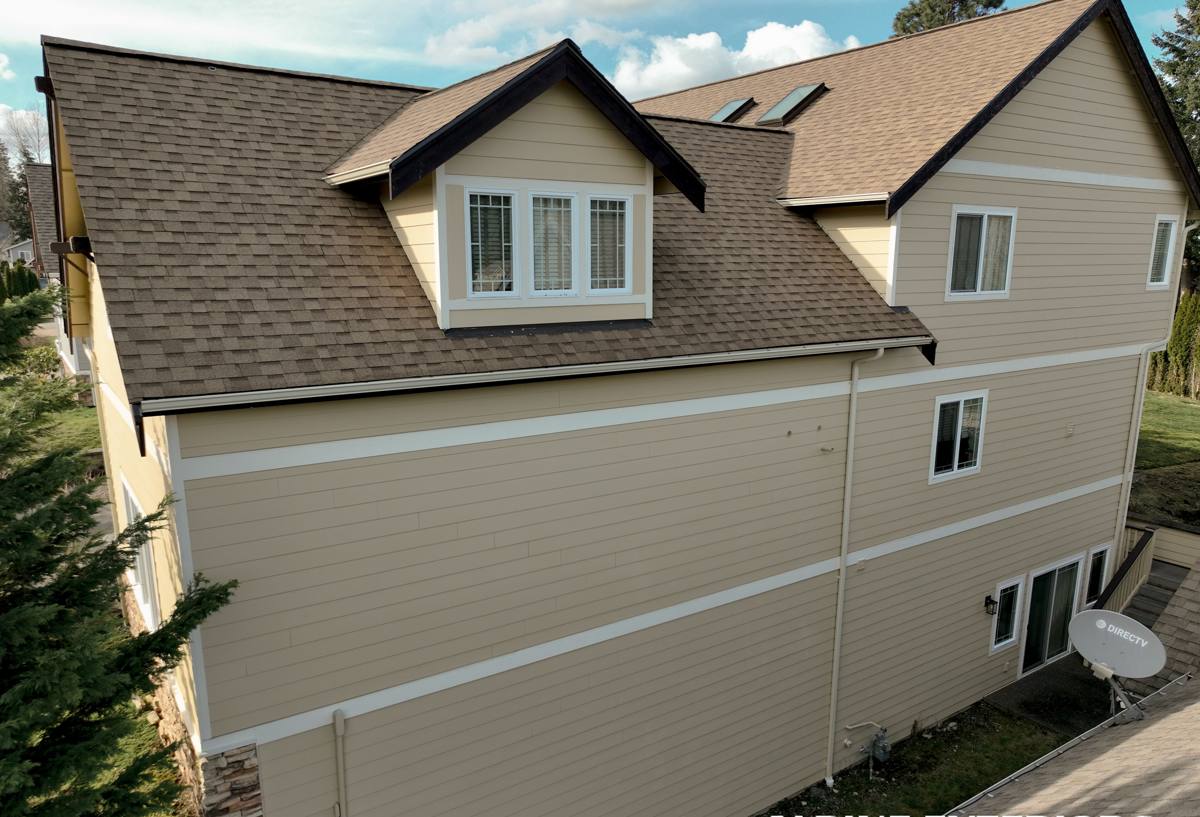
What "Correct" Fiber Cement Installation Actually Involves Here
Fiber cement siding is only as good as its installation. In a climate like Whatcom County's, a handful of details separate a job that lasts decades from one that starts failing in five years:
Water Management Behind the Siding
Proper installation means a weather-resistive barrier, correctly lapped flashing at every window, door, and penetration, and a rainscreen or drainage gap where conditions call for it. Siding is the last line of defense, not the only one — if the water management behind the panels is wrong, no siding material will save the wall.
Clearances and Gaps
Fiber cement needs proper clearance from grade, roof lines, decks, and other siding terminations — generally an inch or more depending on the detail. In a valley climate where standing moisture and splashback are common, skipping this clearance is one of the fastest ways to invite rot at the bottom edge of a wall.
Fastening and Joint Treatment
Panels have to be fastened per the manufacturer's specification — not just "close enough" — and butt joints need to be treated correctly to keep water from wicking in at the seams. This is where a lot of subpar installs go wrong, because it's invisible once the job looks finished.
Caulking and Sealant, Used Correctly
Fiber cement systems are designed to shed water at laps and overlaps rather than rely on caulk as the primary defense. Over-caulking or caulking the wrong joints can actually trap moisture instead of keeping it out.
Why We Install Only James Hardie Fiber Cement
We don't install LP SmartSide, vinyl, Cemplank, Allura, or unprimed wood siding, and that's a deliberate standard, not an oversight. Each of those products has legitimate uses, but none of them hold up the way we want a Whatcom County exterior to hold up over 30, 40, or 50 years without becoming a maintenance headache for the homeowner.
- Vinyl can warp, fade, and crack in temperature swings, and it doesn't offer the same fire resistance or rigidity as fiber cement.
- Engineered wood products like LP SmartSide use wood strand cores that, while treated, are still more vulnerable to moisture intrusion at damaged or unsealed edges than a true fiber cement product.
- Other fiber cement brands may compete on price but don't carry the same factory-finish system, product engineering for specific climates, or track record we've come to trust.
- Primed or bare wood siding requires far more frequent repainting and is the most vulnerable to the region's moss and rot pressure.
James Hardie is what's left when you weight all of that against a climate like ours. It's non-combustible, it's engineered specifically for moisture-heavy climates through its HZ5 product line (built for the Pacific Northwest), and its ColorPlus factory finish is baked on under controlled conditions rather than field-painted — which means better fade and moisture resistance than most job-site paint jobs. It also carries a strong transferable warranty, which matters to homeowners who plan to sell.
Signs Your Everson Home's Siding Is Losing the Fight
Homeowners in this area often live with early warning signs for years before addressing them, mostly because the damage is gradual. Watch for:
- Green or black staining that returns within weeks of being pressure-washed
- Paint that's peeling, bubbling, or chalking, especially on north- and west-facing walls
- Soft or spongy spots when you press on siding near the bottom courses
- Visible gaps or warping at panel seams and corner boards
- A musty smell near exterior walls inside the home, which can indicate moisture getting past the siding
None of these are emergencies the day you notice them, but they're all signs the siding system is losing its ability to shed water — and in a climate that gets as much sustained rain as ours, that gap only widens with time.
Our Process, Start to Finish
1. On-Site Assessment
We walk the exterior with you, check for moisture damage, sheathing condition, and existing flashing details, and talk through what your home actually needs — not just what looks good from the curb.
2. Detailed, Written Estimate
You get a clear scope of work: product line, color, trim details, and what's included, so there's no ambiguity about what you're paying for.
3. Tear-Off and Substrate Check
We remove the old siding and inspect the sheathing and framing underneath. Any rot or water damage gets addressed before new siding goes up — covering damaged substrate with new siding just hides the problem.
4. Weather Barrier and Flashing
This is the step that determines whether the job lasts. We install the water-resistive barrier and flash every penetration correctly before a single piece of Hardie siding goes on.
5. Installation to Manufacturer Spec
Panels are fastened, gapped, and finished according to James Hardie's installation requirements for our climate zone — not shortcuts that happen to look right at handoff.
6. Final Walkthrough
We go over the finished work with you, point out anything you should know for long-term care, and make sure you're satisfied before we call it done.
What Affects the Cost of a Fiber Cement Siding Project in Everson
| Factor | Why It Matters Locally |
|---|---|
| Home size and wall complexity | More corners, gables, and dormers mean more cutting, flashing, and labor time |
| Existing moisture or rot damage | Common on older Whatcom County homes; repair work is priced separately from siding install |
| Trim and accent detail | Board-and-batten sections, trim boards, and shakes-style accents add material and labor |
| Product line and color | HZ5 panels and premium ColorPlus finishes vary by product; darker colors may need specific formulations for UV stability |
| Access and site conditions | Tree cover, tight lot lines, and slope common in river-valley properties can affect staging and crew time |
We don't quote a job without seeing it. Anyone offering a firm number over the phone for a full siding replacement is skipping the assessment that actually determines the price.
Maintaining Fiber Cement Siding in This Climate
James Hardie siding is low-maintenance, not no-maintenance. In a climate with a long moss season and sustained rain, a small amount of upkeep goes a long way:
- Rinse siding with a garden hose once or twice a year to knock off pollen, dirt, and early moss growth
- Keep gutters clear so overflow doesn't run down the wall face
- Trim back vegetation and tree limbs that keep siding shaded and damp
- Inspect caulking at trim and penetrations annually and re-caulk as needed
- Address any paint chipping or damage promptly rather than letting bare edges sit exposed
Why It Matters to Hire a Crew That Already Works This Area
A lot of what makes a siding job hold up in Everson isn't in the product spec sheet — it's in the details a crew learns from working this specific climate over and over. Where water tends to collect on river-valley lots. Which wall orientations stay damp longest. How much clearance actually matters when a yard floods seasonally instead of just draining. A crew that's installed Hardie siding across Whatcom County brings that judgment to your job, not just a general contractor's checklist.
If you're weighing a siding replacement or repair in Everson, we're happy to take a look and give you a straightforward, no-pressure estimate — no obligation, just an honest read on what your home actually needs.