 Lynden Siding
 Why Everson Roofs Wear Out Differently
Everson sits in a part of Whatcom County that gets hit from more than one direction. Pacific frontal systems roll through with driving, sideways rain for days at a stretch. Cool, damp air off the Sound and the Strait carries a low but steady dose of salt that speeds up corrosion on fasteners, flashing, and exposed metal. And because the region stays shaded, wet, and mild for so much of the year, moss and algae get a running start on any roof that isn't actively maintained. None of these things show up as one dramatic event most of the time — they add up quietly, then a windstorm or a heavy rain event finds the weak spot they created and turns it into a leak.
That combination is different from what a roof deals with in a drier climate, and it changes what "storm damage repair" actually means here. It's rarely just about one blown-off shingle. It's usually a storm exposing damage that was already being built by the salt air, the rain, and the moss.
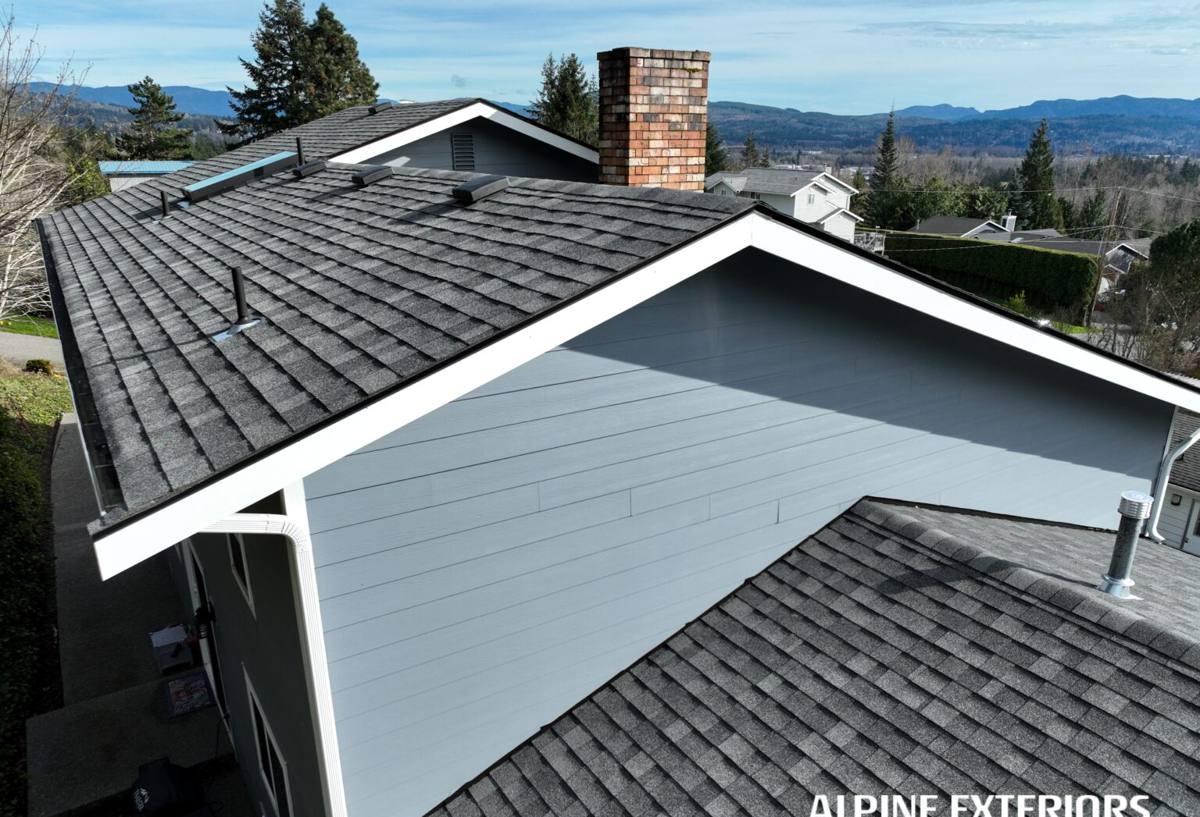
What Storm Damage Looks Like Once You're Up Close
Shingles and Underlayment
Wind doesn't need to remove a shingle to cause a leak — it just needs to break the seal and lift an edge enough for wind-driven rain to get underneath. From the ground this can look like nothing happened. Up close, you'll see creased, cupped, or loosened shingles, exposed nail heads, or granule loss where the surface has been scoured by wind and grit.
Flashing and Valleys
Flashing around chimneys, skylights, dormers, and roof valleys is where most storm-related leaks actually start. It's thin metal, mechanically fastened, and it moves slightly with every temperature swing and wind gust. Add corrosion from years of salt-tinged moisture and a hard storm can pop a seam or work a fastener loose that was already marginal.
Gutters and Roof Edges
Wind-loaded rain overwhelms gutters fast, and moss debris from nearby trees and the roof itself clogs downspouts at the worst possible time. Once water backs up at the edge of the roof, it can work its way under the drip edge and into the fascia and soffit — damage that's easy to miss until it's already rotted wood.
Decking and Interior Signs
If water gets past the shingles and underlayment, the next layer is the roof decking itself. Left wet, decking softens and delaminates, and you'll eventually see it as a stain on a ceiling, a soft spot underfoot in the attic, or a musty smell. By the time it shows up inside, it's usually been happening for a while.
Emergency Tarp-Down vs. Scheduled Repair
Not every storm-damaged roof needs the same urgency. If there's active water coming into the living space, exposed decking, or a section of roofing that's clearly missing, that's an emergency situation — the priority is getting a tarp on and stopping further water intrusion before the next rain, not scheduling a full repair right away. If the damage is cosmetic or contained to areas that aren't currently leaking, it can usually wait for a properly scheduled repair without making things worse. Knowing which situation you're in is the first real decision, and it's one we can usually make over the phone or with a quick look before committing to a bigger repair plan.
What a Correct Repair Actually Involves
A storm repair that's done right doesn't stop at replacing what's visibly missing. It follows the water. That means checking the underlayment and decking beneath damaged shingles, not just the shingles themselves, and making sure flashing is re-integrated correctly with the surrounding roofing material rather than just caulked over — caulk is a short-term patch, not a repair. It also means matching materials closely enough that the repaired section sheds water the same way the rest of the roof does, rather than creating a new weak point where old and new meet.
- Confirm the actual source of the leak, not just where water is showing up inside
- Check decking condition under and around the damaged area before covering it back up
- Re-flash properly at valleys, chimneys, and penetrations rather than sealing over old flashing
- Match shingle type, weight, and where possible color to the existing roof
- Clear gutters and downspouts near the repair so water has somewhere to go
- Check for moss or debris buildup that contributed to the damage in the first place
Our Process, Start to Finish
Inspection and Documentation
We start with a hands-on inspection, not a drive-by guess. That includes getting on the roof when conditions allow, checking the attic side if accessible, and photographing the damage clearly enough to support an insurance claim if you're filing one. We'll tell you plainly what's storm-related and what's pre-existing wear, because insurers make that distinction and you should know it too.
The Repair Itself
Once we've agreed on scope, we do the work in a single, focused visit whenever the damage allows for it, using materials that match what's already on your roof. If we find decking damage or additional wear once we open things up, we'll stop and talk it through with you before proceeding rather than making that call on our own.
Cleanup and Follow-Up
We clear debris, old materials, and stray fasteners from the roof and gutters before we leave, and we'll walk you through what we did and what to watch for. If a repair is tied to an insurance claim, we can provide documentation your adjuster will need.
Repair or Replace? What Drives the Decision
Most storm damage can be repaired without replacing the whole roof, but there's a point where repair stops being the smart move. These are the main factors that push the decision one way or the other.
| Factor | Favors Repair | Favors Replacement |
|---|---|---|
| Roof age | Under 12-15 years, otherwise sound | Near or past expected lifespan |
| Extent of damage | Localized to one area or slope | Spread across multiple sections |
| Decking condition | Dry and structurally sound | Soft, rotted, or repeatedly wet |
| Moss and wear history | Minor, manageable buildup | Long-term moss damage under shingles |
| Material availability | Close match still manufactured | Discontinued or badly weathered mismatch |
Costs vary a lot based on these factors — a small, localized shingle and flashing repair is a modest job, while a repair involving decking replacement or a large section of roof climbs from there. We'll give you a straight number after we've actually looked at it, not a guess based on square footage alone.
Moss, Algae, and Everson's Long Wet Season
Moss doesn't just look bad — it holds moisture directly against shingles for weeks at a time, which accelerates granule loss and can lift shingle edges enough for wind and rain to get underneath during the next storm. In a lot of storm damage calls we handle in this part of Whatcom County, the moss was quietly setting up the failure long before the wind finished the job. Keeping moss under control between storms — physical removal rather than aggressive pressure washing, which can strip granules itself — is one of the cheapest things a homeowner can do to reduce future storm damage. Where it makes sense, we'll also point out spots where trimming back overhanging branches or improving airflow across the roof would slow moss regrowth.
Why a Crew That Already Works Everson Matters
A repair crew that already works in and around Everson knows what these roofs are dealing with without having to be told — the wind exposure, the moss patterns on north-facing slopes, the way salt-tinged air chews through cheap fasteners faster than it should. That local familiarity shortens the inspection, sharpens the diagnosis, and means we're not learning the regional climate on your roof. It also means faster response after a widespread storm event, because we're not routing a crew in from somewhere else in the region while your roof sits exposed.
After the Storm: A Homeowner's Checklist
If you've just been through a wind or rain event and you're not sure how bad the damage is, here's what's worth checking from the ground before calling anyone out.
- Look for shingles, granules, or pieces of flashing in the yard or gutters
- Check ceilings and attic spaces for new stains, damp spots, or musty smells
- Note any sagging, uneven roof lines, or visibly lifted shingle edges
- Check that gutters and downspouts are draining freely, not backed up
- Photograph anything unusual before cleanup, in case you need it for an insurance claim
- Avoid getting on the roof yourself after a storm — wet, damaged roofing is not safe footing
If you're seeing any of these signs on your home in Everson, we're glad to take a look and tell you honestly what you're dealing with. Fill out the form below for a free, no-pressure estimate.