 Lynden Siding
 Storm Damage Roofing in Ferndale: What Local Homes Are Up Against
Ferndale sits close enough to Bellingham Bay and the Strait of Georgia that homes here take a different kind of beating than roofs further inland. It's not usually one dramatic event that wrecks a roof in this part of Whatcom County — it's the combination. Wind off the water loosens shingles and flashing over time, driving rain finds every weak seam, salt-laden air speeds up corrosion on fasteners and metal components, and a moss season that runs most of the year holds moisture against the roof deck longer than most manufacturers ever designed for. When a real windstorm or heavy rain event finally comes through, it's usually exploiting damage that was already building.
That's the piece homeowners in Ferndale and nearby Lynden often don't realize until we're up on the roof: what looks like "storm damage" from one bad night is frequently the last straw on a roof that was already compromised. A correct repair addresses both — the acute damage from the storm and the underlying wear that let it happen.
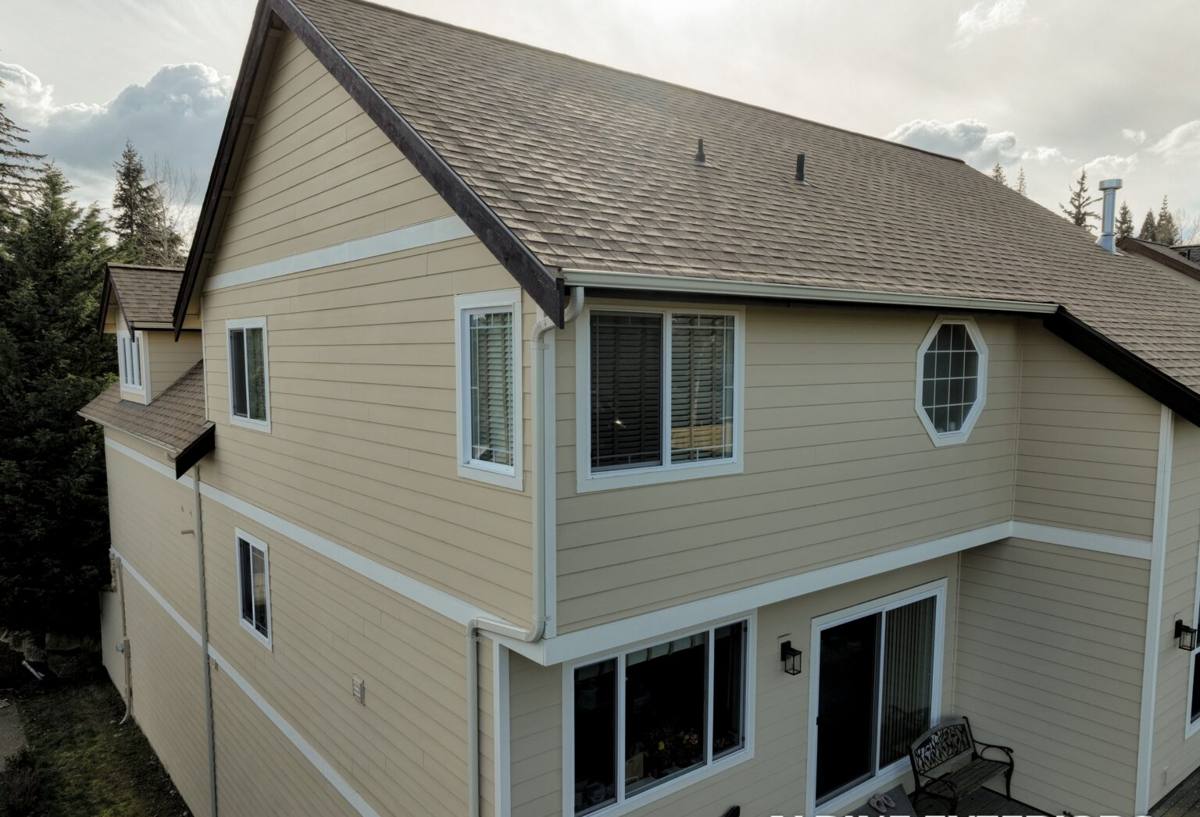
What Counts as Storm Damage on a Ferndale Roof
Wind
Sustained wind and gusts off the water can lift shingle tabs, crease them, or tear them off entirely, especially on roofs that were already loosened by age or a poor original nailing pattern. Wind-driven damage often shows up first at ridges, hips, and roof edges — the parts of the roof most exposed to lift.
Driving rain
Rain that comes in sideways doesn't behave like rain falling straight down. It gets pushed up under shingle tabs, around chimney and skylight flashing, and into any gap that a calmer rain would never reach. This is why interior leaks often appear during or right after a windstorm even when the shingles themselves look mostly intact from the ground.
Falling debris
Whatcom County has plenty of mature trees, and branches or whole limbs coming down in a storm can crack shingles, dent metal flashing, or punch through the decking itself. Debris damage is usually obvious, but it's worth having the whole roof checked, not just the spot where the branch landed — the impact can loosen shingles well beyond the point of contact.
Moss and trapped moisture
Moss doesn't cause storm damage directly, but it sets the stage for it. A moss-covered roof holds water against the shingle surface and works its way under tabs and around flashing, so a section that would have shed wind-driven rain cleanly on a healthy roof instead lets it through. Storm damage repair on a mossy roof almost always has to deal with the moss problem first, or the repair won't hold.
Common Storm Damage Types We Repair
| Damage Type | Typical Cause | What to Look For | Urgency |
|---|---|---|---|
| Lifted or torn shingle tabs | Wind gusts, aging adhesive strips | Shingles curling up, missing tabs, granules in gutters | Repair promptly — exposed decking degrades fast |
| Flashing separation | Wind flex, corrosion, poor original install | Gaps around chimneys, vents, skylights | High — a common leak source |
| Punctures or cracked shingles | Falling branches, debris impact | Visible holes, cracked or dented shingles | High if decking is exposed |
| Saturated or soft decking | Long-term moisture entry, often moss-related | Sagging, spongy feel, interior water stains | Urgent — structural concern |
| Corroded fasteners or metal | Salt air exposure over years | Rust streaks, loosening nails, pitted flashing | Moderate, but worsens with each storm |
| Interior leaks with no visible exterior damage | Wind-driven rain finding small gaps | Ceiling stains, damp attic insulation | Needs a full roof inspection, not a spot patch |
What a Correct Storm Damage Repair Actually Involves
A repair that just covers the visible hole is not the same as a repair that fixes the problem. Here's what we consider the minimum for doing it right.
Stop further water entry first
If there's active exposure — a missing section of shingles, a torn-back area, a hole from debris — the first job is temporary protection: tarping the area securely so wind can't get under it and cause more damage before the permanent repair happens. This isn't optional in a wet climate like Whatcom County's; a few days of exposed decking during a rainy stretch can turn a shingle repair into a decking replacement.
Assess beyond the obvious damage
We check the full roof plane, not just the area that looks damaged from the ground. Wind that tore one section often loosened shingles nearby that haven't failed yet. We also check the decking underneath any exposed area for soft spots, since a shingle repair over rotted decking won't last.
Match materials and proper technique
Replacement shingles should match the existing roof's style, color, and weight as closely as possible, and they need to be woven into the surrounding courses correctly rather than just laid over the damaged spot. Flashing repairs need to actually integrate with the roofing material's water path — a bead of sealant over a flashing gap is a temporary fix at best, not a repair.
Address the conditions that caused the failure
If moss contributed to the damage, that gets addressed as part of the job — not necessarily a full treatment on every repair, but at minimum clearing what's directly affecting the repaired area so the same spot doesn't fail again next season.
Our Process, Start to Finish
- Initial call and triage. We ask what's happening — active leak, visible damage, debris impact — and prioritize accordingly. Active leaks get scheduled fast.
- On-site inspection. We get on the roof (not just look from the ground) and document the damage, including anything beyond what prompted the call.
- Temporary protection if needed. Tarping or sealing any active exposure before the permanent repair is scheduled.
- Written estimate. A clear explanation of what's damaged, what needs to be done, and why — no guessing games.
- The repair itself. Matched materials, correct flashing integration, and decking replacement if the substrate was compromised.
- Final walkthrough. We show you what was done and flag anything else on the roof worth keeping an eye on.
Working With Your Insurance Company
Most storm damage claims in this area go through homeowner's insurance, and the process goes smoother when the documentation is solid. We can provide photos, a written damage assessment, and a clear scope of work that an adjuster can review. A few honest points worth knowing going in:
- Not all damage that looks storm-related will be covered — long-term wear (like moss damage that built up over years) is often treated differently than a single storm event, and adjusters know the difference.
- Getting an inspection soon after the storm, while the damage pattern is fresh and clearly tied to a specific date, makes the claims conversation easier.
- We work for you, not the insurance company — our job is an honest assessment of what's actually damaged and what it takes to fix it correctly.
- Keep your own photos and notes from right after the storm if you can safely get them, before any temporary repairs change what's visible.
The Whatcom County Climate Factor
It's worth being direct about why roofs in Ferndale and Lynden age differently than roofs in drier parts of the state. Salt air off the water accelerates corrosion on exposed metal — fasteners, flashing, gutter hardware — years ahead of schedule compared to an inland roof. Persistent moisture and a moss season that can run eight or nine months out of the year mean organic growth is a constant maintenance item, not an occasional one. And driving rain during winter storms tests every seam and penetration on the roof multiple times a season. None of this means storm damage repair is different in kind here — it means the margin for a small unaddressed issue turning into a real leak is smaller, and repairs need to account for a wetter, saltier environment than a generic repair manual assumes.
DIY vs. Calling a Professional
Some homeowners want to know what's reasonable to handle themselves versus when a professional repair is the right call. Here's an honest breakdown.
- Reasonable to do yourself: clearing debris from gutters and roof valleys, visually checking for obvious damage from the ground with binoculars, tarping a small leak temporarily if you can do it safely from a ladder without getting on the roof itself.
- Call a professional: any repair that requires walking the roof surface, flashing work of any kind, anything involving the decking, and any repair where the damage extends beyond a single small area.
- Never do yourself: roof access during or immediately after a storm when surfaces are wet and winds may still be gusting, structural assessment of soft or sagging decking, and any repair on a steep or high roof without proper fall protection.
- Always worth a second look: interior water stains with no obvious source — these often trace back to wind-driven rain entry points that aren't visible without a proper roof inspection.
Why It Matters That We Already Work in Ferndale
A crew that regularly works Ferndale and the surrounding Whatcom County area knows what this climate does to a roof over time, which matters when you're trying to tell storm damage apart from pre-existing wear. We're familiar with the typical roofing materials and ages found on homes in this area, we're not guessing at how salt air and moss have already affected a roof before the storm hit, and we can usually get out to assess active damage quickly rather than adding travel time from further away. Local knowledge doesn't replace a good inspection, but it means we're not learning the area's quirks on your roof.
Right After a Storm: A Quick Checklist
- Check the attic or top-floor ceilings for new stains, damp spots, or drips.
- Look at gutters and the ground around the house for shingle granules, torn shingle pieces, or fallen flashing.
- From the ground only, scan the roofline for obviously missing or lifted sections.
- Don't climb onto the roof yourself, especially if it's still wet or windy.
- If you see active water entry, place a container to catch it and call for an inspection rather than waiting to see if it gets worse.
- Take dated photos of any visible exterior damage if you can do so safely from the ground.
If your roof took a hit in the last storm — or you're just not sure whether what you're seeing is new damage or something that's been building for a while — we're happy to come take an honest look. The estimate is free, there's no pressure attached to it, and you'll get a straight answer either way. Use the form below to get started.