 Lynden Siding
 Custer's Weather Is Harder on Siding Than It Looks
Custer sits close enough to the water that homes here deal with a different set of pressures than siding further inland in Whatcom County. Salt-laden air moves in off the Strait and Bellingham Bay, driving rain comes sideways during fall and winter storms, and the wet, shaded stretches of the year keep siding damp for days at a time. Add tree cover and low winter sun angles on a lot of Custer properties, and you get a long moss and algae season that never really lets siding fully dry out between storms.
None of that is a reason to avoid board and batten siding — it's one of the best-looking vertical siding styles for the farmhouse and craftsman homes common in this part of the county. But it does mean the material and the installation details matter more here than they would in a drier climate. Loose battens, unsealed joints, or the wrong substrate turn into moisture problems fast when a house sits this close to salt air and standing damp.
What Board & Batten Siding Actually Is
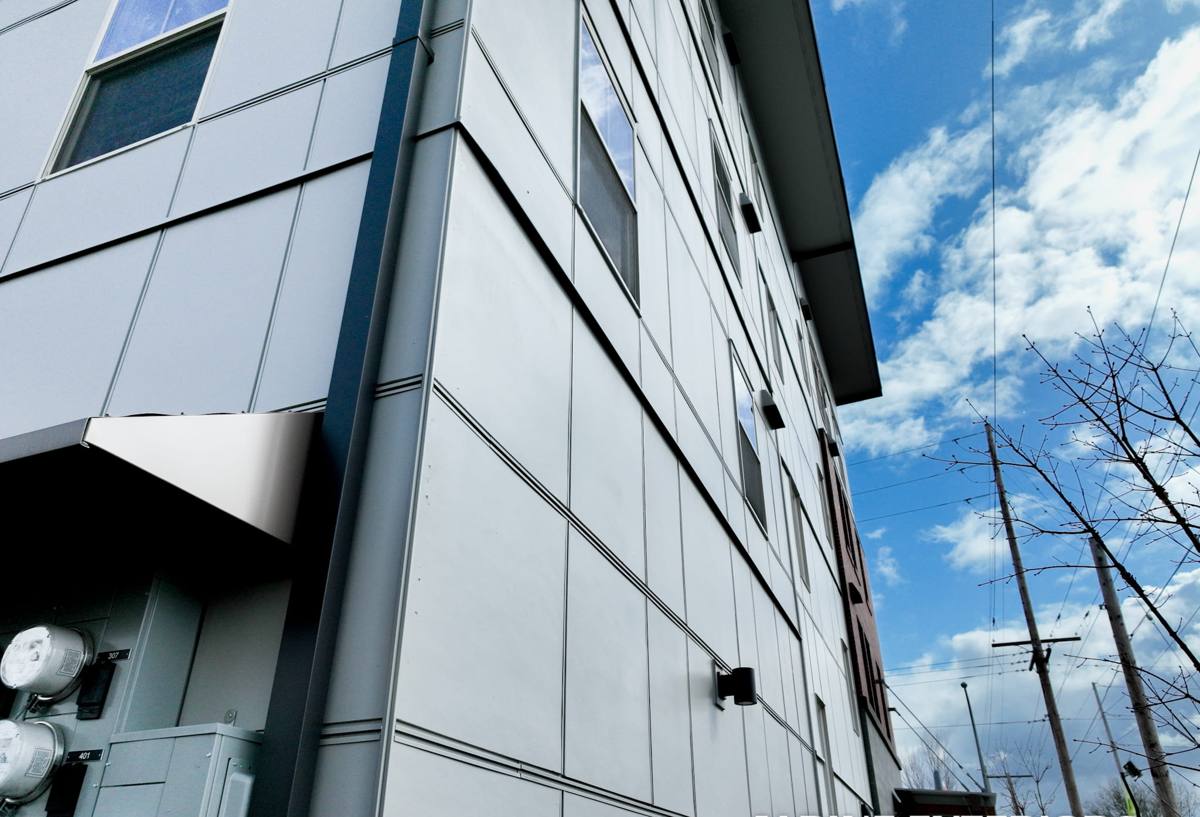
Board and batten is a vertical siding pattern: wide flat panels (the "boards") installed with narrow strips (the "battens") covering the seams between them. It's a look with deep roots in Pacific Northwest farm architecture, and it's still one of the most requested styles for new builds and full re-sides around Lynden and Custer — it reads as clean, tall, and a little more custom than standard lap siding.
The style works two ways with fiber cement: as true individual boards and battens fastened over a weather-resistant barrier, or as a factory-scored panel system that gives the same vertical-groove look with fewer field seams to manage. Both approaches can look identical from the curb. The difference that actually matters is what's happening behind the surface — how water that gets past the outer layer is supposed to drain, dry, and never sit against the sheathing.
Why the Vertical Pattern Needs More Attention Than Lap Siding
Horizontal lap siding is designed to shed water downward, board over board, by gravity alone. Board and batten runs vertically, so every batten joint and every horizontal cut — around windows, doors, and the transition to a foundation or roofline — is a point where water can find its way behind the siding if it isn't detailed correctly. In a low-moisture climate that's forgiving. In Custer, with driving rain and salt air working on that same joint for months at a time, sloppy detailing shows up as staining, soft trim, or streaking within a couple of seasons.
Why We Only Install James Hardie for This Style
We don't install vinyl board and batten, LP SmartSide, cedar, or primed spruce versions of this look, and it's not a marketing position — it's what we've settled on after weighing how each of those holds up in exactly the conditions Custer sees. Vinyl board and batten flexes and gaps at the battens as temperatures swing, which shows immediately on a pattern this linear. Cedar and primed wood need repainting and re-caulking on a schedule that most homeowners don't want to keep up with once the salt air and moss season start working on exposed grain. Engineered wood products handle moisture reasonably well when sealed edges stay intact, but any cut, gap, or missed touch-up becomes an entry point for swelling.
James Hardie fiber cement doesn't have those failure points. It's non-combustible, it doesn't expand and contract enough to open gaps at the battens, and it comes from the factory with ColorPlus finish already baked on — no field painting required, no repaint cycle to manage. For a vertical pattern with a lot of exposed seams sitting in a marine climate, that's the difference between siding you touch up every few years and siding you don't think about.
Getting Board & Batten Right: The Installation Details
The visible pattern is the easy part. What separates a board and batten job that lasts from one that causes problems is almost entirely hidden once the crew leaves:
- Weather-resistive barrier first. A continuous, properly lapped house wrap or building paper goes on before any siding, with special attention at every seam and penetration.
- Correct fastening. Hardie board and batten needs to be fastened per the manufacturer's schedule — through the boards into framing or proper sheathing, not just into the battens, and not overdriven.
- Batten spacing and reveal. Battens need consistent, code-compliant spacing over the board seams, with enough width to fully cover the joint under movement.
- Flashing at every horizontal break. Window heads, door heads, and the base of the wall all need proper flashing and drip edges — this is where vertical siding fails first if it's going to fail.
- Rain-screen gap where called for. A drainage gap behind the siding lets any moisture that does get through dry out instead of sitting against the sheathing — important given how long things stay damp here.
- Factory-cut edges kept sealed. Any field cut on fiber cement needs the cut edge sealed per Hardie's install guidelines before it closes up behind a batten.
Skip any one of these and the siding can still look right for a year or two. In a climate with this much sustained moisture and salt exposure, the shortcuts show up as callbacks — which is exactly what a full install spec is designed to prevent.
Our Process on a Custer Board & Batten Job
Assessment and Plan
We start by looking at what's actually on the wall now — old siding, existing trim, any moisture or rot already present around windows and the foundation line — and we don't quote a board and batten job without walking the whole exterior first. Custer lots vary a lot in exposure; a wall that catches direct weather off the water needs a different level of detailing than a sheltered side of the same house.
Tear-Off and Substrate Check
Old siding comes off down to the sheathing so we can actually see what's underneath. This is where hidden moisture damage from a previous install shows up, and it needs to be dealt with before anything new goes on — covering a wet substrate with new siding just delays the problem.
Barrier, Flashing, and Framing for the Battens
New weather-resistive barrier goes on with correct laps, then flashing at every window, door, and horizontal transition. This step takes longer on a vertical pattern than it does for lap siding, and it's the step we won't rush.
Board & Batten Installation
Hardie boards go up first, plumb and properly fastened, followed by the battens over each seam at the correct spacing. Corners, trim, and any transitions to other siding profiles get finished last.
Walkthrough and Cleanup
We walk the finished exterior with the homeowner before we consider the job done, and the site gets cleaned of old material and debris — this isn't a job that leaves a Custer property with a pile of torn-off siding sitting in the yard for a week.
Cost Factors for a Custer Board & Batten Project
Every quote is specific to the house, but the factors below are what actually move the price on a board and batten job in this area:
| Factor | Why It Matters | Custer-Specific Note |
|---|---|---|
| Tear-off scope | Removing old siding, trim, and any water-damaged sheathing adds labor before new siding starts | Homes near the water often have more hidden moisture damage to address first |
| Wall height and complexity | Taller walls, dormers, and multiple gables mean more cuts and more flashing detail | Farmhouse-style homes common here often have taller, simpler gable walls that suit this pattern well |
| Trim and corner detail | Board and batten's finished look depends heavily on corner and trim work | Matching existing trim on an older Custer home can add planning time |
| Accessibility | Tree cover, fencing, or tight lot lines slow staging and material handling | Wooded lots are common around Custer and Lynden |
| Color and finish | ColorPlus factory finishes vary slightly in cost by line and color depth | No added cost for field painting since the finish comes from the factory |
Living With Board & Batten in a Salt Air, Mossy Climate
Even correctly installed fiber cement siding benefits from a little seasonal attention in this climate. None of it is difficult, but skipping it lets moss and grime build up faster than they need to:
- Rinse siding down at least once a year, more often on shaded or north-facing walls where moss tends to establish first
- Keep gutters clear so overflow doesn't run down the face of the siding and feed moss growth at the top of walls
- Trim back vegetation that keeps siding shaded and damp — airflow is the simplest defense against moss in a climate this wet
- Check caulking at trim joints and penetrations every couple of years and have any cracked sections redone
- Have flashing at windows and the base of the wall looked at if you notice staining, since that's usually the first visible sign of a flashing issue rather than a siding issue
This is meaningfully less maintenance than cedar or primed wood board and batten would require in the same location, since there's no repaint cycle to manage on top of the cleaning.
Why It Matters That We Already Work in Custer
Board and batten siding is less forgiving of guesswork than standard lap siding, and a crew that's only worked in drier inland climates can miss details that matter here — rain-screen gaps, flashing at every horizontal break, batten spacing that accounts for real weather exposure rather than a textbook minimum. Working out of Lynden means we're already familiar with how Whatcom County's coastal-influenced weather behaves on a wall, what permitting looks like in this jurisdiction, and which details actually get tested by a Custer winter rather than just a spec sheet.
If you're weighing board and batten for a home in Custer, we're glad to walk the exterior with you, look at what's on the wall now, and put together a straightforward, no-pressure estimate — fill out the form below to get started.