 Lynden Siding
 Deck Building on the Aldergrove–Lynden Line
Aldergrove, BC sits just a few minutes from Lynden across the border crossing that connects Whatcom County to the Township of Langley. Homeowners on both sides of that line deal with the same weather: long wet winters, a marine-influenced air mass that carries salt and moisture well inland, and a moss season that can run eight months or more depending on the year. A deck built for this stretch of the Pacific Northwest has to survive that reality, not just look good on a dry afternoon in July.
We build and repair decks for homes in and around Aldergrove, BC and Lynden, WA, and we treat them as the same job with two different mailing addresses — same framing standards, same attention to drainage and fasteners, same crew that shows up knowing what this climate does to lumber over ten or twenty years.
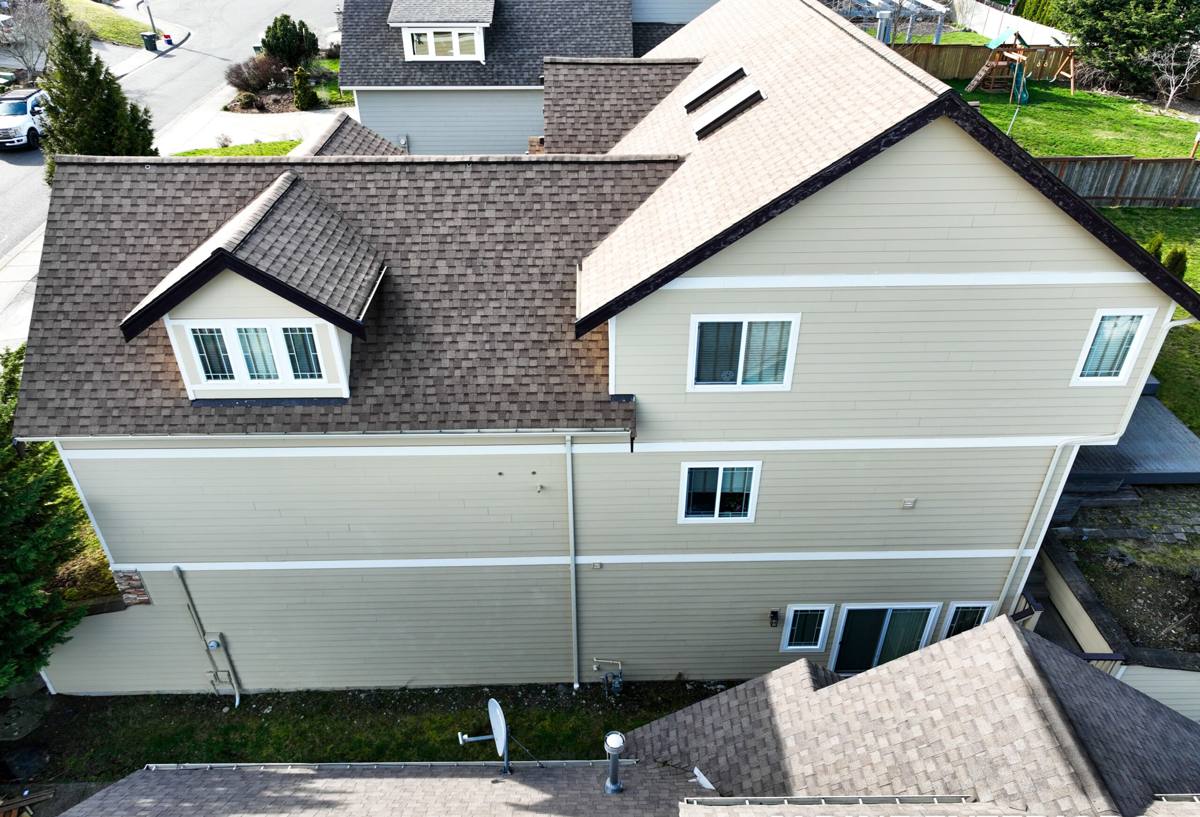
What This Climate Actually Does to a Deck
Driving Rain and Ledger Rot
Rain here doesn't fall straight down — wind off the Fraser Valley and Georgia Strait pushes it sideways, which means water gets driven up under flashing, behind ledger boards, and into any gap a builder left "close enough." The single most common deck failure we find on older homes in this area isn't the decking itself — it's a rotted ledger board or rim joist where the deck attaches to the house, because water worked its way behind flashing that was never properly lapped or sealed.
Salt Air and Fastener Corrosion
Even well inland from Puget Sound and the Strait of Georgia, homes here get enough salt-laden air over the years to accelerate corrosion on the wrong hardware. Cheap electroplated screws and joist hangers can start rusting and staining lumber within a few seasons. It's a slow failure — nobody notices until a hanger lets go or fastener heads snap off during a repair.
The Long Moss Season
Moss and algae thrive in the shaded, damp conditions common under trees and on north-facing decks from fall through spring. Beyond the cosmetic green film, moss holds moisture against the decking surface far longer than open air would, which speeds up wood decay and makes boards dangerously slick — a real slip hazard on stairs and low-traffic corners that don't get foot traffic to help them dry.
What a Correctly Built Deck Requires Here
Ledger Flashing and Water Management
The ledger-to-house connection gets a metal flashing lapped correctly with the house's water-resistive barrier, plus a capillary break so water can't wick between the ledger and the rim joist. This is the detail that separates a deck that lasts twenty-plus years from one that needs structural repair inside a decade — and it's invisible once the decking goes down, which is exactly why it gets skipped on rushed jobs.
Fasteners and Structural Hardware
We use stainless steel or heavy hot-dip galvanized fasteners and connectors rated for ground contact and coastal-adjacent exposure, matched to whatever decking material is chosen (some composite and PVC boards require specific coated fastener types to avoid galvanic staining or warranty voids). Mixing metals — say, an aluminum flashing detail against the wrong fastener alloy — sets up corrosion that shows up as staining or failure years later.
Footings Built for Wet, Variable Soil
Soil across this stretch of Whatcom County and the Fraser Valley ranges from well-drained glacial till to heavier, slower-draining clay loam, and it stays saturated for months at a time. Footings need to be sized and set to local frost depth and bearing requirements, with proper drainage around them so they're not sitting in a perpetual puddle. We don't guess at footing depth from a general rule of thumb — we check what the site and the local code actually call for.
Decking Material Trade-Offs
There's no single "right" decking material — it's a trade-off between upfront cost, maintenance commitment, and how the surface handles years of damp shade and moss pressure. Here's how the common options stack up for this climate specifically:
| Material | Upfront Cost | Moss/Moisture Behavior | Maintenance |
|---|---|---|---|
| Pressure-treated pine | $ | Absorbs moisture readily; needs sealing to resist rot and moss staining | Annual cleaning, periodic re-sealing |
| Cedar | $$ | Naturally rot-resistant but still needs cleaning to prevent moss buildup and graying | Cleaning + occasional oil or stain |
| Composite | $$$ | Won't rot, but moss and algae can still grow on the surface film in shaded spots | Periodic wash; no sealing/staining |
| PVC / capped polymer | $$$ | Fully moisture-resistant surface; easiest to keep moss from taking hold | Occasional wash only |
We don't push any one product line as the automatic answer. A pressure-treated frame under any of these decking types is standard; the decking surface choice comes down to how much upkeep a homeowner actually wants to do each fall when the rain sets back in.
Permits: Know Which Side of the Line You're On
This is one place where being right on the border actually matters. A property in Lynden falls under Whatcom County (or City of Lynden) permitting and the Washington building code, while a property in Aldergrove, BC falls under the Township of Langley and the BC Building Code — different permit processes, different inspection points, and different structural requirements for things like guardrail height and stair geometry. We don't assume; we confirm which jurisdiction a given property sits in and what that jurisdiction requires before design work starts, so there are no surprises at inspection.
Our Process
- Site visit and assessment — we look at grade, drainage, sun/shade exposure, and the existing ledger or foundation condition before we talk materials.
- Design and material selection — sizing, decking material, railing style, and stair layout, matched to budget and how the space will actually be used.
- Permitting — we identify the correct permitting authority for the property and handle the application and required drawings.
- Framing and structural work — ledger flashing, footings, joists, and hardware installed to the standard this climate demands, not just code minimums where it's worth exceeding them.
- Decking, railing, and finish work — surface installation, railing, stairs, and any lighting or built-in features.
- Inspection and walkthrough — final inspection sign-off where required, plus a walkthrough covering how to maintain the specific materials installed.
Maintaining a Deck Through a Pacific Northwest Winter
Whatever material is chosen, a few habits make the biggest difference in how long a deck lasts in this climate:
- Sweep leaves and debris off the deck surface and out of gaps between boards before fall rains set in — trapped organic matter is what feeds moss and speeds rot.
- Rinse or scrub visible moss and algae in early spring before it spreads, rather than waiting until it's established.
- Check that gaps between boards haven't closed up from swelling — restricted drainage under the decking accelerates every other problem.
- Inspect fasteners and hardware for rust staining or movement once a year, especially at the ledger and stair stringers.
- Keep gutters and downspouts near the deck clear so roof runoff isn't dumping extra water onto or under the structure.
- Re-seal or re-stain wood decking on the schedule the product calls for — skipping a cycle in a wet year costs more in repair later.
Cost Factors to Expect
Every deck is priced around a handful of variables rather than a flat rate per square foot. The table below covers what actually moves the number up or down:
| Factor | Why It Matters |
|---|---|
| Size and shape | Multi-level decks, curves, and cutouts add framing and labor beyond a simple rectangle. |
| Decking material | Pressure-treated, cedar, composite, and PVC span a wide cost range, as shown above. |
| Height and grade | A deck built well above grade needs taller footings, more bracing, and often stairs and additional railing. |
| Site access | Tight side yards or backyards without equipment access mean more hand-labor and time. |
| Permitting jurisdiction | Requirements and fees differ between Whatcom County/Lynden and the Township of Langley/BC side. |
| Existing structure condition | Rebuilds that uncover rotted ledger boards or undersized footings add scope once opened up. |
Why Local Experience on This Border Matters
A crew that only builds decks a couple hours away doesn't necessarily know that a north-facing deck under mature trees in this area will need a different moss strategy than one in full sun, or that ledger flashing done "by the book" in a drier climate still isn't enough for driving coastal rain. Working regularly in both Lynden and Aldergrove, BC also means we're used to sorting out which building department to call, what documentation each side wants, and how to keep a project moving when a permit question needs an answer from across the border. That's less guesswork and fewer delays for the homeowner.
If you're planning a new deck or need an old one assessed for rot, moss damage, or structural issues, we're happy to take a look and walk through honest options for your property and budget. Use the form below to request a free, no-pressure estimate.