 Lynden Siding
 Deck Repair for Laurel Homes Near Lynden
Laurel sits close enough to the water and low enough in the valley that decks here take a different kind of beating than decks on the dry side of the state. If you've noticed soft spots underfoot, black streaks running down your railing posts, or moss creeping across the boards no matter how often you sweep, that's not bad luck — it's just what a Whatcom County deck goes through year after year. We work on decks in this area regularly, and the failure patterns repeat themselves house to house.
This page is specifically about deck repair — not full rebuilds, not new construction — for homeowners in and around Laurel. If your deck is structurally sound but showing its age, this is the service that gets it back to solid and safe without the cost of tearing the whole thing out.
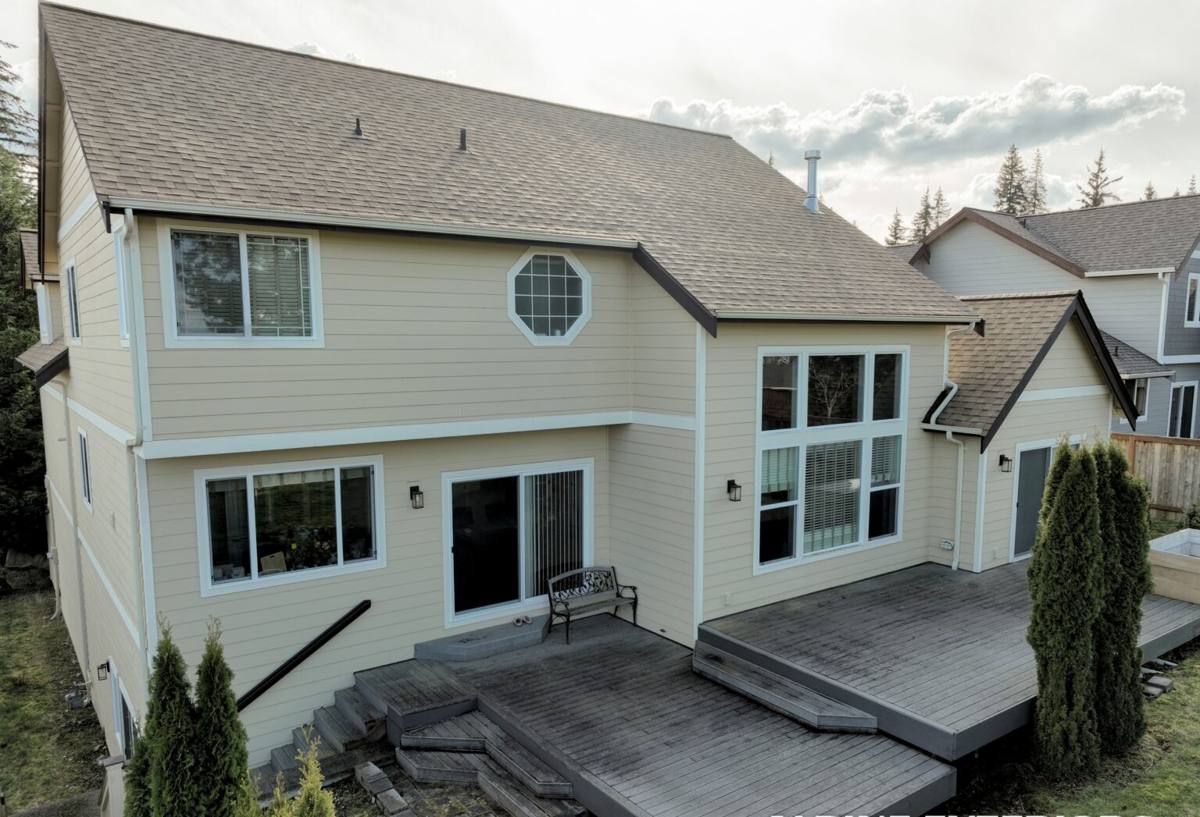
Why Laurel Decks Wear the Way They Do
A few things stack up against decks in this part of Whatcom County:
- Salt air: Being close enough to Puget Sound to catch salt-laden air means faster corrosion on fasteners, joist hangers, and any exposed metal hardware — often the real cause of a "wobbly" deck long before the wood itself fails.
- Driving rain: Wind-driven rain doesn't just fall straight down — it gets pushed sideways into ledger boards, under railing caps, and into end grain that was never sealed properly at install.
- Long moss season: Moss holds moisture against the wood far longer than plain rain does. On a deck that doesn't get much direct sun, moss can stay damp for weeks at a stretch, which is exactly the condition rot needs.
None of these are dramatic on their own. The problem is they run almost year-round here, so a deck that would age slowly in a drier climate ages a lot faster in Lynden and the surrounding areas.
What This Actually Looks Like on a Deck
In practice, we see the same handful of issues over and over on local repair calls:
- Soft, spongy decking boards, usually near the house or in shaded corners that don't dry out
- Rust staining or loose hardware at joist hangers and post bases
- Railing posts that flex or feel loose at the base, often from water sitting in the post-to-frame connection
- Moss and algae buildup that's made the surface slick, especially on the north or shaded side
- Ledger board separation or staining where the deck meets the house — one of the more serious issues we check for first
- Gaps opening up between boards or fasteners backing out as wood swells and shrinks with the seasons
What a Correct Deck Repair Actually Involves
Deck repair done right isn't just replacing whatever board looks worst. It starts with figuring out why that board failed, because if the cause is still there, the fix won't last.
1. Structural Inspection First
Before we touch a single board, we check the framing underneath — joists, beams, posts, and especially the ledger board connection to the house. This is the part of the deck you can't see from the top, and it's also the part most likely to hide moisture damage. A deck can look fine on the surface and still have a compromised ledger connection underneath.
2. Isolate Rot, Don't Just Patch Over It
Rot spreads along the grain of the wood, so a soft spot on the surface is often bigger underneath than it looks. We probe surrounding wood to find where sound material actually starts, rather than cutting exactly at the visible damage and hoping it doesn't come back next season.
3. Hardware Gets the Same Attention as Wood
Given the salt air factor, we always check fastener and hardware condition during a repair, not just the decking and framing. Rusted joist hangers, corroded lag bolts, and failing post anchors are a common reason a deck feels unstable even when the wood itself is in decent shape. Replacing wood without addressing corroded hardware is a short-term fix.
4. Match Materials to How the Deck Is Used
Whether we replace with like-for-like lumber or move to a composite board depends on the deck's exposure, how it's used, and what the homeowner wants to maintain going forward. There's no single right answer — it's a trade-off conversation, not a sales pitch.
Repair vs. Rebuild: How We Help You Decide
Not every deck with problems needs to be torn out. A lot of what looks like "the whole deck is failing" is actually isolated damage that can be repaired at a fraction of rebuild cost. Here's roughly how we think through it:
| Condition | Likely Path | Why |
|---|---|---|
| Framing and ledger are sound; a few boards are soft or split | Board-level repair | The structure is fine — only the wearing surface needs attention |
| Ledger board shows moisture staining or separation from the house | Targeted structural repair | This connection is safety-critical and needs to be corrected properly, but doesn't always mean rebuilding the whole deck |
| Multiple posts or joists show rot in different areas | Case-by-case — often partial rebuild | Widespread structural damage usually means the original build had a moisture problem worth solving fully |
| Deck is over 20 years old with recurring repairs | Rebuild discussion | At some point ongoing patch repairs cost more over time than starting fresh with better drainage and materials |
We'll always tell you honestly which category your deck falls into — including when a repair is the smarter, cheaper answer even if a rebuild would be a bigger job for us.
Our Process for Laurel Deck Repairs
- On-site assessment: We walk the deck, check the framing and ledger from underneath where possible, and identify every problem area — not just the one you called about.
- Honest scope and estimate: You get a clear breakdown of what needs repair now, what can wait, and what the cost ranges look like for each.
- Repair the cause, not just the symptom: Damaged wood and hardware get replaced, but we also address the moisture source — flashing, drainage, ventilation under the deck — so the same failure doesn't return in a year or two.
- Finish and seal: Repaired areas are finished to match the existing deck as closely as possible and properly sealed against the rain and moss conditions typical of this area.
- Walkthrough: We go over the repair with you and flag anything worth keeping an eye on going forward.
Simple Maintenance That Extends the Life of a Repair
A repair holds up much longer with a little seasonal attention, especially given how long moss season runs here:
- Sweep or brush off moss and debris regularly, especially in shaded areas that don't get direct sun or wind
- Keep gutters and downspouts clear so water isn't dumping directly onto the deck or against the house at the ledger connection
- Check railing posts and stair connections once a year for looseness — catching it early is a small fix, catching it late is a bigger one
- Re-seal or re-stain wood decking on the manufacturer's recommended schedule, not just when it looks faded
- Trim back vegetation that's shading the deck and keeping it damp longer than it needs to be
Why a Crew That Already Works Laurel Matters
Deck repair isn't just carpentry — it's knowing what's actually causing the damage in this specific climate. A crew that mostly works drier inland areas may default to fixes that make sense there but don't hold up against the salt air and near-constant moss season Laurel deals with. Working locally in Whatcom County means we're not guessing at exposure conditions — we see the same rain patterns, the same moss growth, and the same hardware corrosion on repair calls throughout the season, and we build the fix around what actually works here rather than a generic approach.
It also means we're not far away if something needs a follow-up look after the first wet season following a repair — which is often the real test of whether a fix was done right.
Get a Straight Answer About Your Deck
If your deck has soft spots, loose railings, or you're just not sure how serious the damage is, we're happy to take a look and give you a straightforward assessment — no pressure, no upsell to a full rebuild you don't need. Fill out the form below to schedule a free estimate for deck repair at your Laurel-area home.