 Lynden Siding
 A roof in Bellingham does a different job than a roof forty miles inland. Homes here sit close enough to Bellingham Bay and the Salish Sea to pick up salt-laden air, they take on driving, wind-pushed rain off the water for months at a stretch, and they spend a long stretch of the year shaded and damp enough to grow moss on anything that isn't shedding water fast. If you're planning a new roof installation for a Bellingham property, or a Lynden home in the same weather belt, the material and the install details matter more than they would somewhere drier.
Why Bellingham Roofs Wear Differently Than Roofs Inland
Three things shorten a roof's useful life here faster than almost anywhere else in Washington: moisture that doesn't fully dry out between storms, salt air that accelerates corrosion on fasteners and metal flashing, and moss that holds water against shingles long after a normal roof would have shed it. None of these are dramatic events — no single storm takes out a Whatcom County roof — but the cumulative effect shows up as granule loss, soft decking, rusted flashing, and shingles that curl or crack years before their rated lifespan.
A roof designed for a dry climate and simply installed here will underperform. A roof installed with the right underlayment, flashing details, and ventilation for this specific weather pattern will do what it's supposed to do for its full expected life.
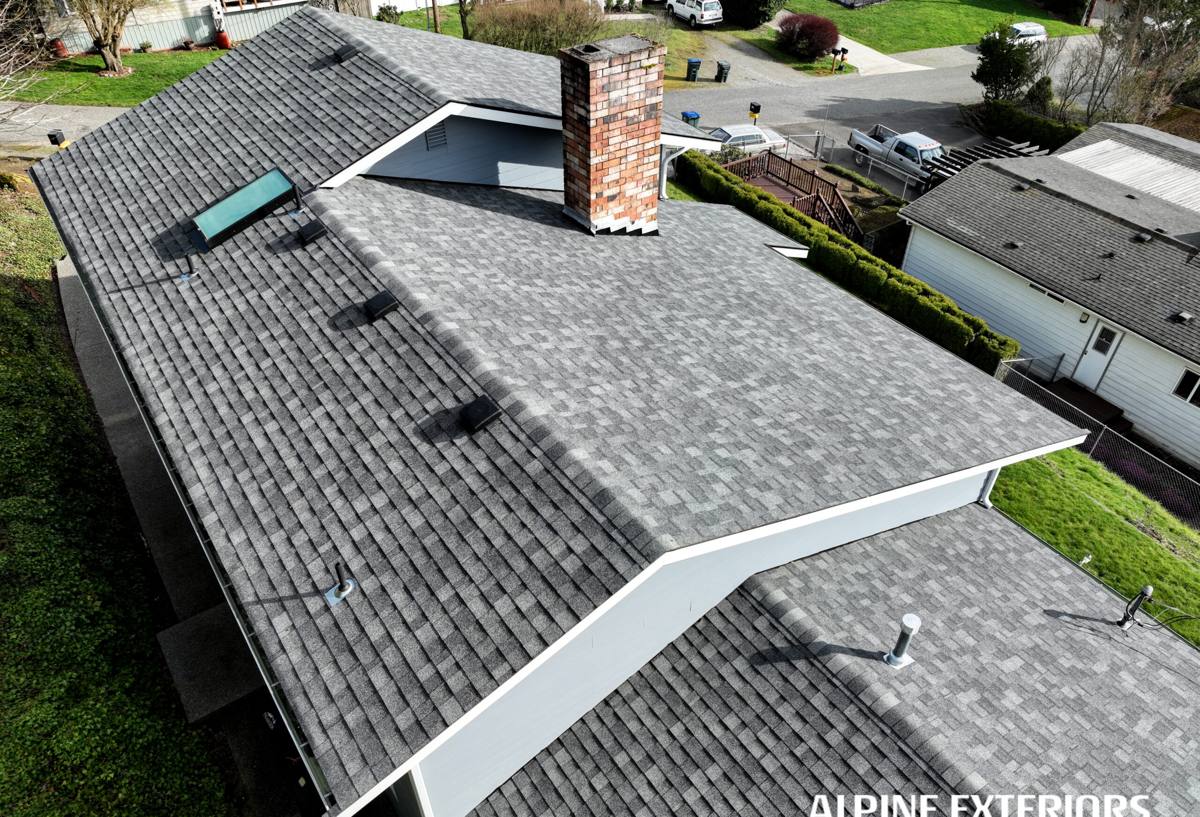
Signs It's Time for a New Roof, Not Another Repair
Repairs make sense when a roof is otherwise sound and the damage is isolated. A full replacement makes more sense once the problems are spread across the roof rather than confined to one spot. Common signs we look for on Bellingham-area homes include:
- Granules collecting in gutters or at downspout outlets, especially on south- and west-facing slopes that take the most weather
- Shingles that are cupping, curling, or cracking across multiple areas of the roof, not just one section
- Moss established thickly enough that it's lifting shingle edges rather than just sitting on the surface
- Soft or spongy decking felt underfoot during an inspection, which points to water intrusion below the shingle layer
- Daylight visible through the roof deck from inside the attic, or staining on attic sheathing
- A roof that's already had two or more rounds of patch repairs in different spots within a few years
If a roof is showing two or more of these at once, patching usually just delays the same conversation a year or two while spending money that won't count toward a full replacement.
Roofing Materials That Hold Up in Whatcom County
There's no single "best" roofing material — the right choice depends on the home's exposure, roof pitch, budget, and how much long-term maintenance the owner wants to take on. For this climate, the material has to handle sustained moisture and resist moss colonization, not just survive an occasional hard rain.
Architectural Asphalt Composition Shingles
This is the most common choice for good reason: reasonable upfront cost, a wide range of colors and profiles, and, in algae-resistant (AR) formulations, built-in copper or zinc granules that slow moss and algae growth. We don't recommend basic 3-tab shingles for this climate — the algae-resistant architectural versions cost only modestly more and hold up noticeably better under a long moss season.
Standing Seam Metal Roofing
Metal sheds water fast, doesn't give moss anything to grip onto the way a textured shingle surface does, and holds up well against wind-driven rain. It costs more upfront and requires careful, experienced installation — panel seams and flashing details have to be done correctly or the whole advantage of the system is lost. For homes with a lot of tree cover or a north-facing slope that never fully dries, it's often worth the premium.
Synthetic and Composite Shingles
These mimic the look of shake or slate while shedding water more consistently than natural wood. They're a reasonable middle option where a homeowner wants a specific appearance but doesn't want the moisture and maintenance issues that come with real wood shakes in a wet, moss-prone climate.
| Material | Typical Lifespan | Moss & Moisture Resistance | Relative Upfront Cost |
|---|---|---|---|
| Architectural asphalt (AR-rated) | 25–30 years | Good, with periodic moss treatment | $ |
| Standard 3-tab asphalt | 15–20 years | Fair; moss establishes faster | $ |
| Standing seam metal | 40–50+ years | Excellent | $$$ |
| Synthetic/composite shake | 30–40 years | Good | $$ |
What a Correct Installation Includes
The material on top matters, but most of what determines how a roof performs in this climate happens underneath it, where you can't see it once the job is done.
Underlayment and Water Barriers
A synthetic underlayment rated for extended exposure, rather than old-style felt, gives the deck a second line of defense if wind-driven rain gets under a shingle edge — which happens on exposed Bellingham lots more often than people expect. Ice-and-water shield belongs at eaves, valleys, and around every penetration, not just in areas that see hard freezes; here it's doing double duty against pooling rain, not just ice.
Flashing at Valleys, Walls, and Penetrations
Flashing is where most roof leaks in this region actually start, not in the field of the shingles. Step flashing at sidewalls, properly lapped valley flashing, and corrosion-resistant materials at chimneys and vent pipes matter more here because salt air speeds up corrosion on lower-grade metal. We treat flashing as a system, not an afterthought bent on-site from whatever's on the truck.
Ventilation
Balanced intake and exhaust ventilation keeps the attic close to outdoor temperature and humidity, which does two things: it protects the shingles from underside moisture damage and it helps prevent the kind of trapped condensation that rots decking from the inside. A roof can be installed perfectly on top and still fail early if the attic underneath is trapping moisture.
Our Installation Process
- Inspection and estimate. We look at the existing roof, decking condition, ventilation, and any problem areas specific to the home's exposure, then provide a written estimate with material options.
- Material selection. We walk through the trade-offs for your specific roof — pitch, tree cover, sun exposure — rather than pushing one product regardless of the home.
- Tear-off and deck inspection. Old roofing comes off down to the deck so we can actually see the sheathing, not guess at its condition from the attic side.
- Deck repair as needed. Any soft, delaminated, or water-damaged decking gets replaced before anything new goes down — this is not an area to skip to save time.
- Underlayment, flashing, and ventilation installed to spec. This is the part of the job that determines how the roof performs in year eight, not just how it looks in week one.
- Finish material installed according to manufacturer specifications, which is also what keeps the material warranty valid.
- Cleanup and magnetic sweep for nails and debris, and a final walkthrough so you know exactly what was done.
What Affects the Cost of a New Roof
Costs vary enough by property that we don't quote broad numbers without seeing the roof, but the factors that drive the estimate up or down are consistent:
| Factor | Why It Matters |
|---|---|
| Roof size and pitch | Steeper roofs take longer to work safely and use more material per square |
| Number of existing layers | Tear-off of multiple old layers adds labor and disposal cost |
| Decking condition | Rotted or soft sheathing found during tear-off has to be replaced before install continues |
| Material choice | Asphalt, metal, and composite systems have different material and labor costs |
| Roof complexity | Valleys, dormers, chimneys, and skylights all add flashing work and time |
| Access | Tight lots, tall trees, or difficult truck access can add setup time |
Protecting Your New Roof Through Moss Season
A correctly installed roof still needs basic upkeep in a climate like this one. None of this is complicated, but skipping it shortens the roof's life regardless of how good the installation was.
- Clean gutters and downspouts at least twice a year so water actually leaves the roof instead of backing up under the edge
- Have moss treated or gently removed before it thickens enough to lift shingle tabs — don't power-wash a shingle roof, which strips protective granules
- Trim back tree limbs that keep a section of roof shaded and damp longer than the rest
- Check attic ventilation isn't blocked by insulation, especially after any attic work
- Have flashing and penetrations checked every couple of years, since that's where small leaks start long before they're visible from inside
Why Local Experience in Bellingham Matters
A crew that only occasionally works this far north treats every roof the same way they would in a drier part of the state. A crew that regularly works Bellingham and the rest of Whatcom County already knows which slopes hold moss longest, which flashing details actually need upgrading versus which manufacturer specs are already sufficient, and what permitting and inspection expectations look like locally. That familiarity shows up in fewer callbacks and a roof that's actually built for the weather it will sit under, not a generic install that happens to be located here.
If your roof is showing its age or you're planning ahead rather than waiting for a leak, we're happy to take a look and put together a free, no-pressure estimate. There's no obligation — just an honest assessment of what your roof needs and what it would cost to do it right. Use the form below to get started.