 Lynden Siding
 Building Decks for Deming's Wet, Wooded Lots
Deming sits back from the coast, closer to the timber than the tide flats, and that changes what a deck has to survive. Where a deck on the water deals with salt air and wind-driven rain off the Sound, a deck in Deming deals with something just as hard on lumber: shade. Tree cover along the Nooksack River corridor keeps lots cool in July, but it also keeps decks damp long after the rain stops in October. Add Whatcom County's long moss season and driving winter rain, and you have a climate that punishes any deck built to a generic, one-size-fits-all spec.
We've built and repaired decks all over Whatcom County, and the ones that fail early almost always fail for the same reason: they were built like a deck in a dry climate, not a deck under a canopy. A correct deck for a Deming property accounts for slower drying time, more standing moisture, and heavier moss and algae growth than a deck out in the open would ever see.
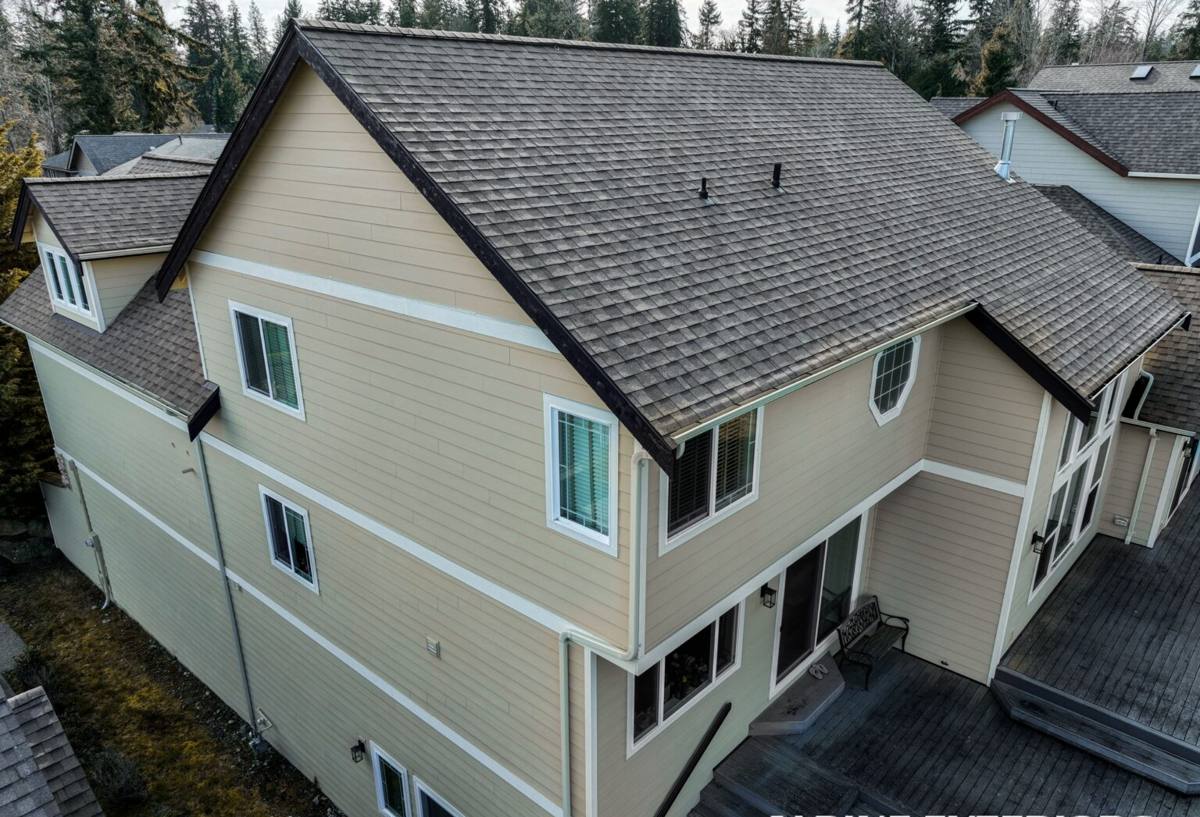
What Actually Wears Out a Deck Here
Most homeowners assume sun is the enemy of a deck. In Deming, the bigger threat is the opposite problem — surfaces that never fully dry out between rains. That shows up in a few predictable ways:
- Moss and algae film on boards and stair treads, which gets slick and hides rot developing underneath
- Trapped moisture at ledger boards where the deck meets the house, especially on the shaded side of a home
- Soft or swelling wood in joists and posts that stay wet for days after a storm passes
- Debris buildup — needles, leaves, and seed pods — that clogs gaps between boards and holds water against the surface
- Corroding fasteners where the wrong hardware was used for the moisture load
None of these are dramatic failures on day one. They're slow ones — a deck that looks fine for a couple of years and then needs boards replaced, a railing re-set, or worse, framing repair, well before it should.
Choosing Decking Material for a Shaded, Damp Lot
There's no single "best" decking material — there's a best material for your site, your budget, and how much upkeep you want to do. On a shaded Deming lot, moisture resistance and how a surface handles algae matter more than they would on an open, sunny site.
| Material | How it handles shade & moisture | Maintenance | Typical lifespan |
|---|---|---|---|
| Pressure-treated wood | Good if properly sealed; needs attention where it stays wet | Annual cleaning, re-seal every 1-2 years | 15-20 years with upkeep |
| Cedar | Naturally moisture- and insect-resistant, but greys and can stay damp in deep shade | Cleaning and periodic sealing to hold color and resist mildew | 15-25 years with care |
| Capped composite | Excellent moisture resistance; still needs cleaning where algae can form | Occasional washing, no sealing or staining | 25-30+ years |
| PVC decking | Fully synthetic core, handles standing moisture the best of the group | Lowest maintenance; periodic washing | Long-term, manufacturer-warrantied |
We won't push composite or PVC on every job — a lot of homeowners want the look and feel of real wood, and cedar or treated fir is a perfectly sound choice as long as it's detailed and maintained correctly for a shaded site. What we won't do is install any material without the ventilation gaps, flashing, and fastening it needs to actually perform in this climate. Skipping those details is the single biggest reason decks in Whatcom County fail early, regardless of what material is on top.
A note on lumber grade and moisture content
Framing lumber that's still wet when it's installed will shrink, twist, and open gaps as it dries — and on a shaded lot, it may never fully dry out at all. We check moisture content before we frame, not after a homeowner calls about a squeaking board.
What Correct Framing Looks Like Underneath
A deck is only as good as what's under the decking boards, and this is where corners get cut on rushed jobs. For a Deming property, the framing details that matter most are the ones dealing with water management:
- Footings set below frost depth and sized for the soil conditions on your lot, not just poured to a minimum
- Proper ledger flashing where the deck attaches to the house, so water is directed away from the wall assembly instead of into it
- Joist tape or flashing on top of every joist to keep fasteners from sitting in a wet pocket
- Correct board spacing so water and debris can pass through instead of collecting
- Stainless or coated fasteners rated for the decking material and the moisture exposure of a shaded site
- Airflow underneath — enough clearance and, where needed, venting so the underside of the deck can actually dry
These aren't upgrades. They're what a deck needs to hold up through a Whatcom County winter without turning into a repair job in three years.
Railings, Stairs, and Code Requirements
Deck railings and stairs carry real load and real liability, and they're inspected for a reason. Whatcom County permitting requires guardrails at a set height for any deck above a certain elevation, baluster spacing that keeps small children from slipping through, and stair stringers sized correctly for the run. On a sloped or wooded lot — common around Deming — getting the grading and footing layout right the first time avoids a redesign mid-project.
We pull permits and build to code as a matter of course, not as an upsell. A deck that isn't permitted correctly can complicate a home sale down the road, and a railing that isn't structurally sound is a liability nobody wants to discover after the fact.
How We Build a Deck, Start to Finish
- On-site walk and design conversation. We look at your lot's sun and shade pattern, drainage, tree cover, and how you actually plan to use the space, then talk through material options honestly.
- Design and permitting. We draw up the plan, size the footings and framing to your site conditions, and handle the Whatcom County permit process.
- Site prep and footings. We excavate and pour footings below frost depth, checking soil conditions rather than assuming a standard depth works everywhere.
- Framing. Joists, beams, and ledger go in with proper flashing and fastening — the part of the job that determines whether the deck lasts 10 years or 30.
- Decking, railing, and stairs. Boards are laid with correct spacing for drainage; railings and stairs are built to code and checked for solid footing.
- Final walkthrough. We go over care and maintenance specific to your site — what to expect in a shaded, wet-winter location, and how to keep the deck looking and performing the way it should.
Maintenance a Deming Deck Actually Needs
The right deck built the right way still needs some seasonal attention here — especially where tree cover keeps things damp. This is what we tell every homeowner:
- Sweep needles, leaves, and debris off the deck regularly, especially in fall
- Wash the surface at least once a year to remove moss and algae before it gets slick or stains the boards
- Check and clear the gaps between boards so water keeps draining instead of pooling
- Inspect fasteners and railing connections annually for looseness or corrosion
- Re-seal wood decking on the schedule it needs — don't wait until it's visibly grey and dry
- Keep nearby shrubs and low branches trimmed back so the deck surface gets what sun and airflow it can
None of this is a huge time commitment, but skipping it on a shaded lot shortens a deck's life faster than almost anywhere else in the county.
Why a Crew That Already Works in Deming Matters
A contractor who mostly builds in open, sunny subdivisions will design and detail a deck differently than one who's used to shaded, wooded lots along the Nooksack. We've done both, and we know that a Deming build needs more attention to drainage, airflow, and moisture-tolerant materials than a deck built out in the open. We also know the permitting process for unincorporated Whatcom County, which keeps your project from stalling on paperwork.
Hiring locally isn't just convenience — it means the crew showing up already understands how the driving rain, the long moss season, and the tree cover on your specific kind of lot affect what gets built. That's the difference between a deck that needs babying every year and one that just holds up.
Getting Started
If you're planning a new deck or replacing one that's showing its age, we're happy to come take a look at your property, talk through what makes sense for your site, and give you an honest read on material and design options — no pressure, no obligation. Reach out for a free estimate using the form below.