 Lynden Siding
 Roof Repair in Everson: Built for a Whatcom County Climate
Everson sits in the Nooksack River valley, close enough to the water and the coastal weather pattern moving in off Bird Rock and Bellingham Bay that roofs here take a specific kind of beating. It's not one big storm that wrecks a roof in this part of Whatcom County — it's the slow grind of a wet season that runs eight or nine months a year, salt-tinged air drifting in from the Sound, and moss that never really stops growing because the roof never really dries out. A roof repair here has to account for all of that, not just patch whatever's leaking today.
We've repaired roofs across Everson and the surrounding farmland long enough to know which failures show up first, which shortcuts cause repeat calls, and which materials actually hold up under this much sustained moisture. This page covers what a proper roof repair looks like for a home in this area, what we check before we ever touch a shingle, and how to tell a real fix from a temporary patch.
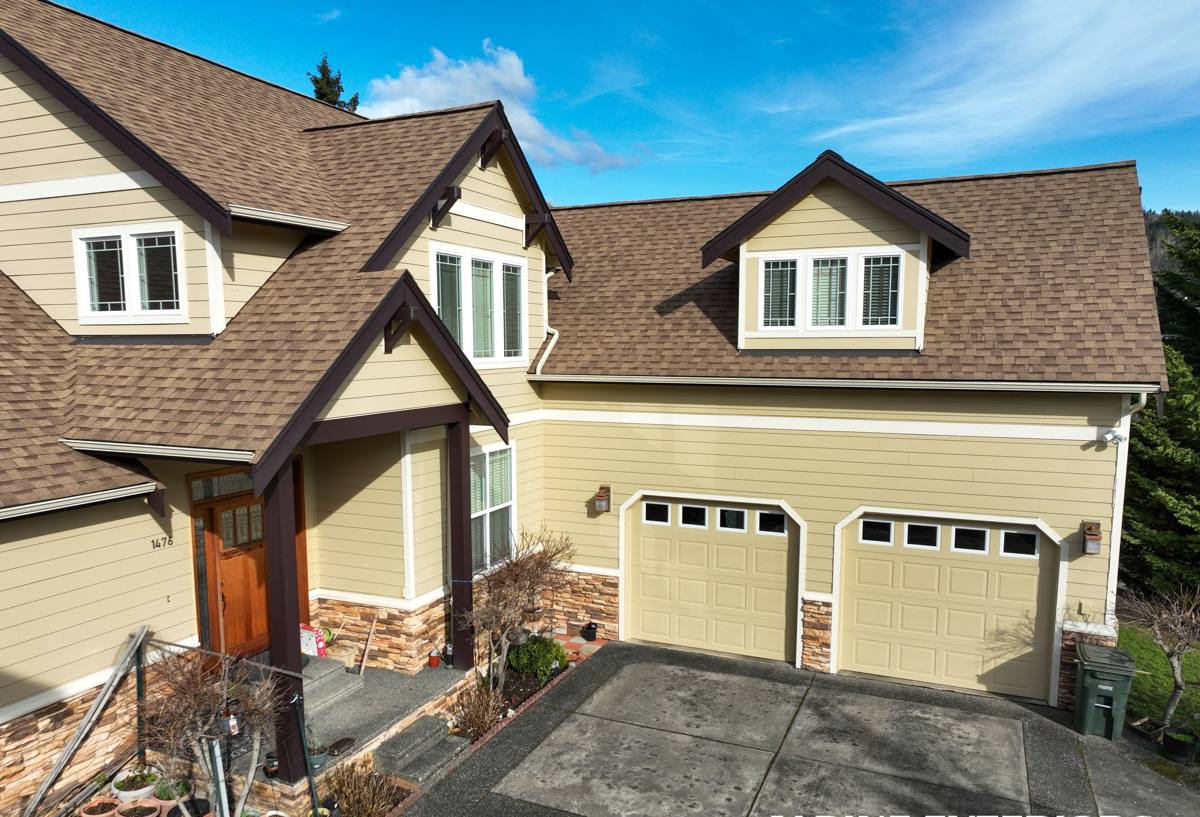
Why Everson Roofs Fail the Way They Do
Most of the roof repair calls we get in this area trace back to a handful of causes, and almost all of them are moisture-driven.
Moss and Organic Growth
Everson gets enough shade from surrounding trees and enough sustained dampness that moss can take hold on almost any roof surface, but it's especially aggressive on north-facing slopes and anywhere debris collects. Moss doesn't just look bad — it holds water against the roofing material, lifts shingle edges as it grows, and works its way under tabs and flashing over a season or two. By the time you can see it from the ground, it's usually already done some damage underneath.
Driving Rain and Wind-Driven Water
The wind here doesn't just rain straight down — it comes in at an angle often enough that water gets pushed up under shingle edges, around vents, and into any gap in flashing that wouldn't be a problem in a calmer climate. This is why so many "mystery leaks" in this area trace back to flashing and not the shingles themselves.
Salt Air and Metal Fatigue
Being close enough to the coast, homes in Everson see some of the same slow corrosion on exposed metal — flashing, fasteners, vent caps — that coastal Whatcom County properties deal with. It's not as severe as right on the water, but over 15-20 years it adds up, especially on lower-quality galvanized fasteners that weren't rated for the exposure.
Freeze-Thaw Cycling
Whatcom County doesn't get deep freezes often, but Everson does see enough cold snaps mixed with wet weather that water trapped in a compromised roof section can freeze, expand, and widen existing cracks or separations. It's a smaller factor than moss or wind-driven rain, but it's real, and it's why small problems tend to get worse fast once winter sets in.
What a Correct Roof Repair Actually Involves
A lot of "roof repairs" in this region amount to smearing sealant over a visible leak and calling it done. That buys a homeowner a few months, sometimes a year, before the same spot fails again — often worse, because trapped moisture had time to spread under the surrounding material. We approach it differently.
1. Find the Actual Source
Water travels. A stain on a ceiling inside the house is rarely directly below the point where water is entering the roof — it can travel along rafters or sheathing for several feet before it shows up as a visible spot. We trace the path back to the real entry point rather than patching where the damage happens to be visible.
2. Check the Decking, Not Just the Surface
If water has been getting in for any length of time, the plywood or OSB decking underneath may be soft, delaminated, or rotted. Shingling over compromised decking is one of the most common ways a "repair" fails within a year. We check decking condition at every repair site before doing surface work.
3. Address Flashing First
Given how much of our leak activity in this area traces back to flashing — around chimneys, valleys, vent pipes, skylights, and roof-to-wall transitions — we treat flashing as its own line item, not an afterthought to shingle work. Reused or re-caulked old flashing is a common shortcut that causes repeat leaks; in most cases it needs to be replaced, not resealed.
4. Match Materials and Method to the Existing Roof
A repair should blend into the surrounding roof system — same general shingle profile, proper nailing pattern, correct underlayment overlap — so it performs as one system rather than a visible patch that behaves differently in wind and rain than the roof around it.
5. Clear and Treat Moss Before Closing Up the Repair
There's no point sealing up a section of roof with moss still established nearby. We remove growth from the repair area and surrounding zones and talk through longer-term moss control options so the same section doesn't need to be reopened next year.
Common Roof Repair Scenarios We See in Everson
- Valley leaks — Valleys collect the most water volume on a roof and take the most wear; a failed valley is one of the most common repair calls in this area.
- Chimney and vent flashing failures — Especially on older homes where flashing was installed once and never revisited.
- Wind-lifted or missing shingles — After a storm event, isolated missing or curled shingles need prompt attention before the exposed underlayment fails.
- Moss-related shingle lift — Tabs pried up by growth, often on shaded north- or east-facing slopes.
- Soft or spongy decking near roof edges — Usually from long-term gutter overflow or ice-dam-adjacent moisture at eave lines.
- Skylight seal failures — Older skylight flashing kits degrade faster in this climate than most homeowners expect.
Our Roof Repair Process, Start to Finish
Inspection and Diagnosis
We start with a full inspection, not just a look at the spot you called about. That includes checking the attic or crawlspace where accessible, since interior signs of moisture often tell us more than what's visible from a ladder.
Honest Assessment
We'll tell you plainly whether this is a targeted repair, a repair plus a maintenance recommendation (like moss treatment or gutter work), or a case where the roof's overall age and condition mean a repair is just delaying a larger conversation about replacement. We're not going to talk you into a full roof when a repair will hold, and we're not going to sell you a patch on a roof that's genuinely near the end of its service life.
Written Scope Before Work Starts
You'll know what's being repaired, what materials are being used, and what the repair does and doesn't cover before anyone gets on the roof.
The Repair Itself
Depending on scope, this typically means removing damaged material back to sound decking, replacing or repairing decking as needed, installing correct underlayment and flashing, and matching the surrounding shingle pattern.
Cleanup and Walkthrough
We clear debris, including nails and old material from around the work area, and walk through what was done before we consider the job finished.
Repair vs. Replacement: How We Help You Decide
| Factor | Leans Toward Repair | Leans Toward Replacement |
|---|---|---|
| Roof age | Under 15-18 years (asphalt) | Approaching or past expected lifespan |
| Extent of damage | Isolated to one section or feature | Multiple areas failing independently |
| Decking condition | Sound, dry, minor localized issue | Widespread soft spots or rot |
| Moss/organic growth | Recent, surface-level | Long-established, embedded under shingles broadly |
| Prior repair history | First or second repair on the roof | Repeated repairs to the same or nearby areas |
None of these factors alone makes the decision — we look at the whole picture and give you a straight answer, including when a repair is genuinely the right call.
Maintenance Steps That Extend a Repair's Life
A repair is only as good as what happens to the roof afterward. A few habits make a real difference in this climate:
- Keep gutters clear so water doesn't back up under eave-line shingles, especially heading into fall.
- Trim back branches that shade roof sections and keep them from drying out between rain events.
- Have moss growth treated before it spreads across a full slope, not after.
- Get an inspection after any significant wind event, even if nothing looks obviously wrong from the ground.
- Address small leaks immediately — a small leak addressed early is a repair; the same leak ignored for a year is often a decking replacement.
Why Hire a Crew That Already Works in Everson
Roofing problems in this part of Whatcom County aren't generic. A crew that mostly works drier climates or different roof exposures doesn't always catch how aggressively moss establishes here, how far wind-driven rain can travel under a shingle edge, or which flashing details tend to fail first on homes built to older regional standards. We work in Everson and the surrounding Lynden-area communities regularly enough to recognize these patterns quickly, which usually means a faster, more accurate diagnosis and a repair that's built for what this roof will actually face next winter — not a generic patch.
If you've got a leak, missing shingles, or a section of roof that's been bothering you, we're happy to take a look and give you a straightforward, no-pressure estimate — no obligation, just an honest read on what your roof actually needs. The form below gets you started.