 Lynden Siding
 Composite Decking Built for Wiser Lake's Weather, Not Just Its Looks
Wiser Lake sits in a part of Whatcom County where the weather doesn't take a season off. Homes here deal with damp air coming off the lake itself, long stretches of driving rain through fall and winter, and a moss season that can start creeping across outdoor surfaces before most people have put their patio furniture away. A deck built for a dry climate, or built by a crew that's never worked lakeside property in this county, tends to show its age fast here. A deck built correctly for Wiser Lake's actual conditions holds its color, its footing, and its structure for decades instead of years.
This page is about one job, done right, in one place: composite decking for homes in and around Wiser Lake. Not a general decking overview — the specific decisions that matter when the deck you're building has to survive this particular climate.
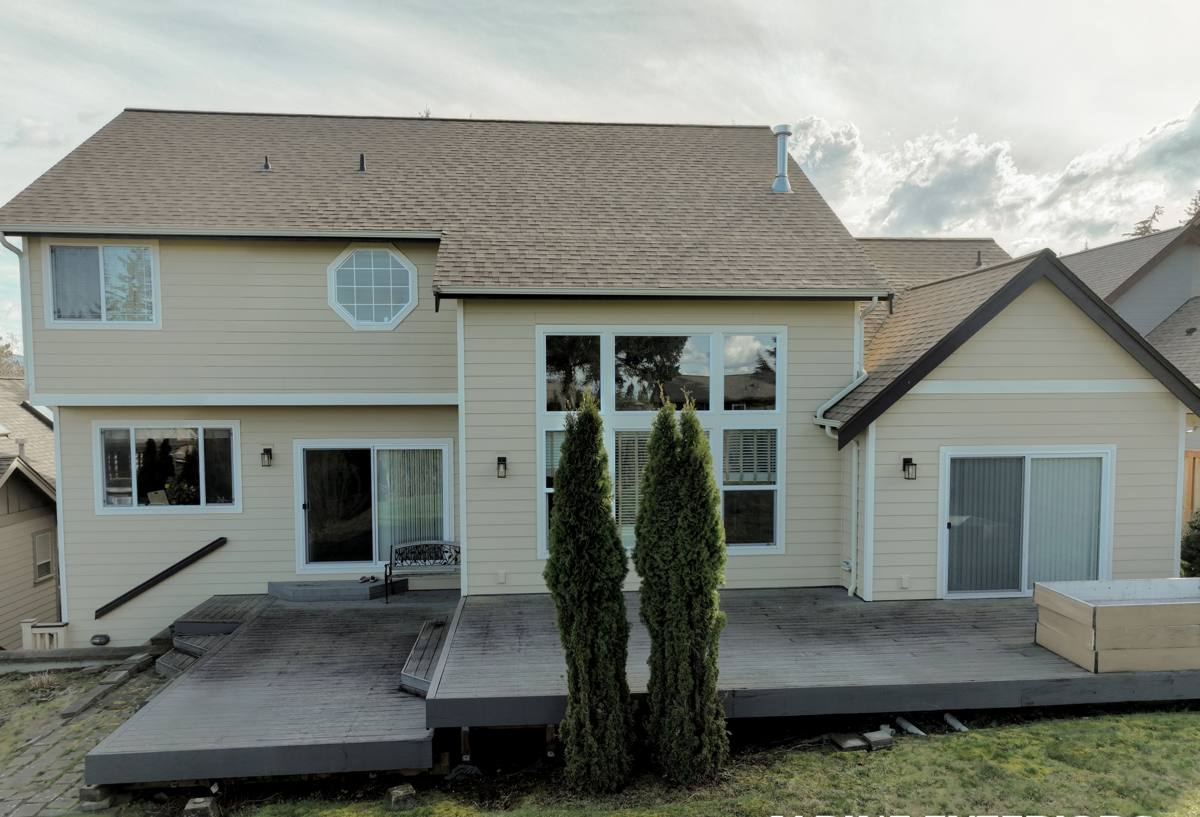
What Local Homes Are Actually Up Against
Moisture That Doesn't Let Up
Lynden and the surrounding Whatcom County lowlands get a lot of sustained rain, not just occasional downpours. That means wood-framed structures under a deck stay damp for long stretches, fasteners are exposed to moisture cycles for months at a time, and any gap in flashing or drainage becomes a slow, ongoing problem rather than a one-time leak.
Moss and Algae Growth
Wherever there's shade, moisture, and mild temperatures — which describes most of the year around here — moss and algae find a foothold. On a deck surface, that's not just cosmetic. Moss holds moisture against the material underneath it and turns a walking surface slick and genuinely dangerous, especially on stairs and near entry doors.
Salt and Mineral Air Near the Water
Properties near Wiser Lake and other water features in this area get airborne moisture and mineral content that ordinary inland homes don't deal with as much. Over years, that kind of exposure is harder on fasteners, connectors, and any exposed metal than most homeowners expect.
Freeze-Thaw Swings
Whatcom County winters aren't brutal, but they're not stable either — temperatures cross the freezing line repeatedly through the cold months. Any water trapped in a joint, a fastener hole, or a poorly sealed board end goes through repeated freeze-thaw cycling, which is one of the fastest ways to open up cracks and loosen connections in decking material.
Why Composite Makes Sense Here
Composite decking exists specifically to resist the things that wear wood down fastest: rot, splintering, moisture absorption, and UV fading. In a climate like Wiser Lake's, that's not a luxury upgrade — it's the practical choice. Modern composite boards don't need annual staining or sealing, don't develop the soft spots and splinters that damp wood eventually does, and they hold their surface texture even when moss or algae has to be cleaned off them repeatedly over the years.
That said, composite isn't magic, and it isn't maintenance-free. It's low-maintenance relative to wood, and it performs well here specifically when it's installed correctly for this climate — meaning the substructure, fastening, and drainage details underneath the boards matter just as much as the boards themselves.
What a Correct Installation Actually Involves
Framing and Substructure
The framing underneath a composite deck has to be built to handle sustained moisture exposure, since composite boards will outlast a standard wood frame if the frame isn't protected. That means using rated fasteners and connectors, and in many cases treated or protected framing lumber, joist tape over the tops of joists to keep water from soaking directly into end grain, and proper spacing so air can move underneath the whole structure.
Ventilation and Drainage
A deck that traps moisture underneath it stays wet longer after every rain, which speeds up everything from mold growth to fastener corrosion. Correct builds account for airflow under the deck, proper slope so water actually sheds instead of pooling, and clearance from grade so the underside isn't sitting in standing water after a heavy week of rain — which happens often enough here to plan for.
Hidden Fasteners and Board Spacing
Most quality composite systems use a hidden fastener clip system rather than face screws. Done right, this gives a cleaner surface and reduces the number of penetration points where water could otherwise work its way in. Board spacing also needs to account for composite's expansion and contraction with temperature — too tight, and boards can buckle; too loose, and debris and moss get a place to collect.
Flashing at the Ledger Board
Where the deck attaches to the house is the single most common source of long-term water damage on any deck, wood or composite. Proper ledger flashing, correctly integrated with the home's existing siding and weather barrier, keeps water from working its way behind the house's exterior wall — a detail that's easy to rush and expensive to fix later once rot has set into the rim joist or wall framing.
Railings, Stairs, and Fasteners
Railing posts need to be properly through-bolted into the structural frame, not just screwed to the rim board. Stair stringers need to be sized and supported for the actual run, and all exposed hardware should be rated for exterior, moisture-heavy use so it isn't the first thing to fail years down the road.
Composite vs. Other Decking Materials for This Climate
| Material | Moisture Resistance | Maintenance | Moss/Algae Behavior | Typical Lifespan Here |
|---|---|---|---|---|
| Composite decking | High — engineered to resist moisture absorption | Periodic cleaning; no staining or sealing | Sits on the surface; cleans off without damaging the board | Long-term, often decades with correct install |
| Pressure-treated wood | Moderate — treatment slows rot but doesn't stop it | Annual or biennial staining/sealing recommended | Moss can root into surface grain over time | Shorter; depends heavily on maintenance discipline |
| Cedar or other natural wood | Lower — attractive but more moisture-sensitive | Frequent sealing; sanding as it weathers | Prone to staining and softening under moss | Shortest without diligent upkeep |
| PVC decking | Very high — fully synthetic | Low; similar to composite | Sits on surface, cleans easily | Long-term, though appearance and feel differ from composite |
Every one of these materials can work if it's installed and maintained correctly. Composite tends to be the best balance of durability, low upkeep, and natural wood-like appearance for homeowners in this specific climate who don't want to be re-sealing a deck every year.
Our Process, Start to Finish
1. On-Site Assessment
We walk the property, look at grade, drainage, sun and shade exposure, and how the deck will tie into the house. For Wiser Lake properties, we pay particular attention to proximity to the water, existing moisture problems on the home's exterior, and how much shade the deck footprint will get — shade is the biggest driver of moss growth.
2. Honest Scope and Estimate
We walk you through material options, realistic cost ranges, and what's actually needed versus optional, before any work starts. No pressure, no upsell games.
3. Permitting
Most deck projects of meaningful size require a permit through the applicable local jurisdiction. We handle that process as part of the job so it's not left on the homeowner's plate.
4. Demolition and Site Prep (If Applicable)
If we're replacing an existing deck, we remove it and inspect the ledger, rim joist, and any framing that was hidden underneath — this is often where we catch moisture damage that wasn't visible from the surface.
5. Framing and Structural Work
We build or reinforce the substructure to current code and to the standards this climate actually demands, including joist protection, proper fastener selection, and correct ledger flashing.
6. Decking Installation
Boards go down with a hidden fastener system, correct spacing for expansion, and attention to drainage flow across the whole surface.
7. Railings, Stairs, and Finish Details
Railings, stair systems, and any trim or fascia are installed and checked for solid attachment to the structural frame — not just cosmetic fasteners.
8. Final Walkthrough
We walk the finished deck with you, cover basic care, and answer questions before we consider the job done.
Caring for a Composite Deck in a Wet, Mossy Climate
- Sweep off leaves, needles, and debris regularly — trapped organic matter is what moss and algae feed on first.
- Rinse the deck surface periodically with plain water, and use a soft-bristle brush with mild soap for buildup in shaded areas.
- Avoid pressure washing at close range or high pressure — it can damage the surface texture of most composite boards.
- Check gaps between boards seasonally and clear out any debris that's collected, especially before winter.
- Keep gutters and downspouts near the deck clear so runoff isn't dumping extra water directly onto or under the structure.
- Inspect railings and stair connections once a year for looseness, particularly after a hard winter.
- Trim back overhanging vegetation where possible to reduce the shade and moisture that encourage moss growth.
Cost Factors Worth Understanding Before You Get Quotes
Composite decking projects vary a lot in price depending on size, height off the ground, railing style, stair count, and site access. Rather than quote a number that won't apply to your property, here's what actually drives cost:
- Square footage and shape — more cuts and angles mean more labor and material waste.
- Substructure condition — replacing rotted framing costs more than building on solid ground.
- Height and stairs — elevated decks with multiple stair runs require more structural work and railing.
- Board tier and brand — composite lines vary in price, warranty length, and color/texture options.
- Site access — tight lots or difficult material access near the lake can add labor time.
- Removal of an existing deck — demo and haul-away adds to the scope if you're replacing an old structure.
We give a written estimate that breaks these factors down so you know exactly what you're paying for, not just a bottom-line number.
Why a Crew That Already Works Wiser Lake Matters
A lot of decking problems we get called to fix started with a builder who didn't account for the specific conditions of this area — insufficient ledger flashing for the rain volume, framing that wasn't protected against sustained dampness, or board spacing that didn't account for how much moss and moisture actually accumulate near shaded, lake-adjacent lots. A crew that regularly works Whatcom County properties, including homes near Wiser Lake specifically, already knows which details can't be skipped here and builds for them from day one rather than learning the hard way on your project.
Local familiarity also means a faster, more accurate estimate — we're not guessing at drainage patterns or typical soil conditions in the area, and we're not learning the local permitting process for the first time on your job.
Ready to Talk About Your Deck?
If you're planning a new composite deck or replacing one that hasn't held up near Wiser Lake, we're happy to walk the property, look at what you're working with, and give you a straightforward, no-pressure estimate. Use the form below to get started.