 Lynden Siding
 Siding Installation for Acme Homes, Built for Whatcom County Weather
Acme sits at the edge of Lynden's service area, close enough to the foothills and the wetter microclimates that come with them, but still inside the same weather pattern that defines all of Whatcom County: salt-laden air pushed in off the Salish Sea, long stretches of driving rain from fall through spring, and a moss season that can run eight months out of the year in shaded, north-facing spots. Siding here doesn't fail because homeowners neglect it. It fails because it was never matched to the conditions it has to live in. Our work in Acme focuses on one thing: putting siding on the wall correctly, with the right materials and the right sequence, so it holds up to what this specific area throws at it year after year.
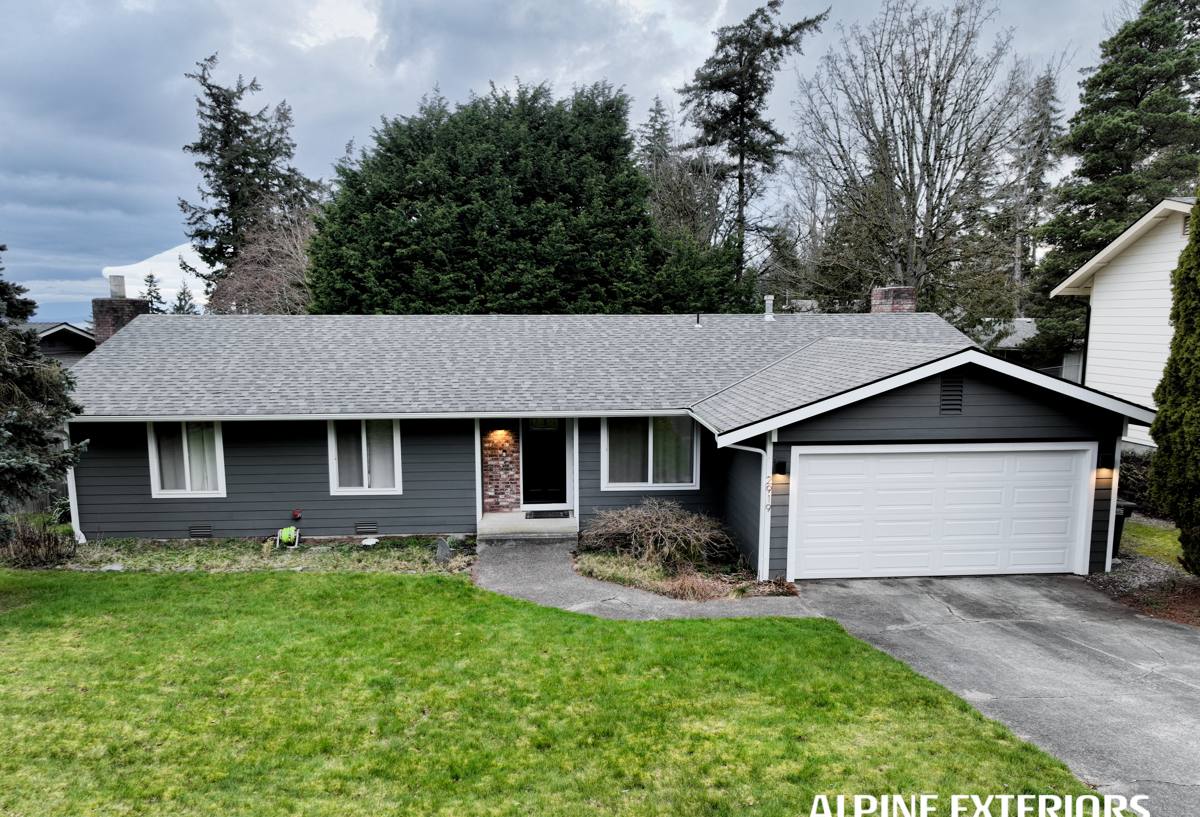
Why Acme Siding Ages Differently Than Siding Elsewhere
Every siding job in Whatcom County deals with rain. What makes Acme and the surrounding area a little different is the combination of tree cover, terrain, and airflow. Properties tucked against tree lines or set lower on a lot tend to hold moisture and shade longer after a storm passes, which is exactly the environment moss and mildew need to establish. At the same time, homes here still get enough exposure to marine air moving up from the coast that salt residue builds up on siding surfaces, especially on west- and south-facing walls that catch the prevailing weather.
That combination is hard on siding in a few specific ways:
- Prolonged dampness at the base of walls and behind trim accelerates rot in wood-based products and swelling in engineered wood.
- Shaded, low-airflow wall sections grow moss and algae faster than open, sun-exposed walls.
- Salt residue combined with rain cycles wears down paint film and factory finishes faster than inland climates.
- Freeze-thaw swings in the foothill-adjacent areas can stress caulked joints and fastener points over time.
None of this means siding can't last decades in Acme. It means the installation has to account for these conditions from the start, not patch around them after the fact.
What a Correct Siding Installation Actually Involves
Siding looks simple from the curb, but the parts you can't see are what determine whether it lasts 10 years or 40. A correct installation on an Acme home includes:
A Continuous Weather-Resistive Barrier
Before any siding goes up, the wall needs a properly lapped and taped weather-resistive barrier (WRB). Every seam, penetration, and window opening has to be flashed and integrated so water that gets behind the siding — and in a climate this wet, some always will — has a clear path down and out, not into the sheathing.
A Rainscreen Gap Where It Matters
On walls with heavy shade or limited airflow, a small furred-out gap behind the siding lets moisture that reaches the drainage plane dry out instead of sitting against the back of the panel. This is one of the details that separates a siding job built for this climate from one that just meets minimum code.
Manufacturer-Spec Fastening and Clearances
James Hardie siding has specific fastener patterns, nailing zones, and ground clearance requirements that change depending on the product line and exposure. Skipping these — over-driving nails, closing up clearance gaps, or fastening into the wrong zone — is one of the most common causes of premature siding failure, and it's not something you can fix without pulling boards.
Proper Caulking and Joint Treatment
Every butt joint, corner, and penetration needs the right sealant, applied correctly, or it becomes the entry point for the next fifteen years of rain. Over-caulking is almost as much of a problem as under-caulking — it traps moisture instead of letting it move.
The James Hardie Products We Install
We install James Hardie fiber cement exclusively. It's not the only siding product on the market, but it's the one we've chosen to stand behind, because it's engineered specifically for climates like this one — non-combustible, dimensionally stable in wet-dry cycles, and available in an HZ5 formulation built for the Pacific Northwest's moisture exposure.
| Product Line | Best Suited For | What It Offers |
|---|---|---|
| HardiePlank Lap Siding | Most Acme homes, traditional and modern styles | Classic lap profile, factory ColorPlus finish, strong track record in wet climates |
| HardiePanel Vertical Siding | Accent walls, gables, modern designs | Clean vertical lines, often paired with lap siding for contrast |
| HardieShingle | Craftsman-style homes, accent gables | Staggered or straight-edge shingle look without the maintenance of real wood shingles |
| HardieTrim | Corners, window and door surrounds, fascia | Matches the siding's finish and moisture resistance, avoids mismatched wood trim rot |
All of these are pre-finished with James Hardie's ColorPlus technology, a factory-baked finish that resists fading and holds up to UV and moisture exposure far better than field-applied paint — which matters in an area where sun exposure is inconsistent and paint has to survive long wet seasons between recoats.
Our Installation Process
Every Acme project follows the same sequence, because skipping steps is how siding fails early:
- Assessment and wall inspection. We check existing sheathing, framing, and any moisture damage before pricing the job — this determines whether repairs are needed underneath before new siding goes on.
- Tear-off and substrate prep. Old siding and trim come off, and the sheathing is inspected and repaired as needed.
- Weather-resistive barrier installation. A continuous, properly lapped barrier goes on with all seams taped and penetrations flashed.
- Rainscreen furring (where applicable). Shaded or low-airflow wall sections get a drainage gap behind the siding.
- Flashing at windows, doors, and roof lines. These are the highest-risk water entry points on any home and get the most attention.
- Siding installation to manufacturer spec. Correct fastener pattern, clearances, and overlap for the specific James Hardie product being installed.
- Trim, caulking, and joint treatment. Final sealing at every seam and transition.
- Final walkthrough. We review the finished job with the homeowner before calling it done.
Moss, Mildew, and Long-Term Maintenance
Moss and mildew are a fact of life in this part of Washington, and no siding product is immune to organic growth landing on its surface. The difference is how the material responds to it. Fiber cement doesn't feed mold or rot the way wood-based products can, and a factory finish resists staining better than field-applied paint. That said, homeowners in shaded Acme lots should still expect to rinse siding periodically, especially on north-facing walls and sections tucked under tree cover, to keep moss from taking hold. This is light maintenance, not repair — but it's worth planning for, since it extends the life of any finish, including ColorPlus.
Why We Only Install James Hardie
We get asked fairly often why we don't offer vinyl, LP SmartSide, or other fiber cement brands. The honest answer is that after years of installation and callback experience in this climate, James Hardie's combination of non-combustible material, factory-cured finish, and a product line specifically engineered for high-moisture regions (HZ5) held up better and required fewer callbacks than the alternatives. Other products have their own strengths — vinyl is inexpensive, engineered wood has a warmer look — but for a marine climate with sustained rain and moss exposure, we've standardized on what we've seen perform, and that's what we put on Acme homes.
Cost Factors for Acme Siding Projects
Every home is different, but the main variables that move the price on a siding installation in this area are consistent:
| Factor | Why It Matters |
|---|---|
| Home size and wall complexity | More corners, gables, and dormers mean more cutting, flashing, and labor time |
| Substrate condition | Rot or water damage found during tear-off requires repair before new siding goes on |
| Product line and profile | Lap, panel, and shingle styles carry different material and labor costs |
| Trim scope | Full trim replacement adds cost but avoids mismatched old wood trim failing early |
| Access and site conditions | Tree cover, slope, and setback affect scaffolding and staging time |
We provide a written estimate after walking the property, not a phone quote — siding pricing without seeing the wall condition first is a guess, not a number you can plan around.
Signs Your Acme Home May Need New Siding
- Soft or spongy spots when you press on the siding, especially near the bottom of walls
- Paint that's peeling, bubbling, or won't hold a fresh coat
- Persistent moss or dark staining that comes back shortly after cleaning
- Visible gaps, warping, or boards pulling away from the wall
- Rising energy bills that suggest the wall assembly is no longer performing
- Siding that's original to a home 25+ years old, regardless of visible condition
Why It Matters to Hire a Crew That Already Works in Acme
Siding installation isn't just about the product — it's about understanding how a specific area's weather behaves against a wall over years, not just during the install. A crew that regularly works Lynden and the Acme area already knows which wall orientations need extra flashing attention, which lots hold moisture longer, and how to sequence a job around this region's rain patterns instead of fighting them. That local pattern recognition is hard to replace with a crew that's never worked the area before.
If your Acme home needs new siding, or you're not sure whether what's on the wall now is holding up the way it should, we're happy to take a look. Reach out for a free, no-pressure estimate — we'll walk the property, tell you honestly what we see, and give you a straight answer on what it would take to do the job right.