 Lynden Siding
 Composite Decking in Abbotsford, BC
Abbotsford sits in the Fraser Valley, close enough to the coast that the same marine air pattern that soaks Whatcom County rolls through here too — long wet stretches, heavy dew, and a moss season that can run from fall through spring. A deck built with the wrong materials or the wrong details underneath it will show that within a few years: soft boards, black streaking, rot at the ledger, or a surface that's slick and green half the year. Composite decking, installed correctly, is a straightforward way to get ahead of all of that.
This page is specifically about composite decking work in Abbotsford — not a general decking overview. It covers what the local climate actually does to a deck, what a correct composite installation looks like underneath the boards (where most decking failures start), how we approach the job, and what drives cost up or down.
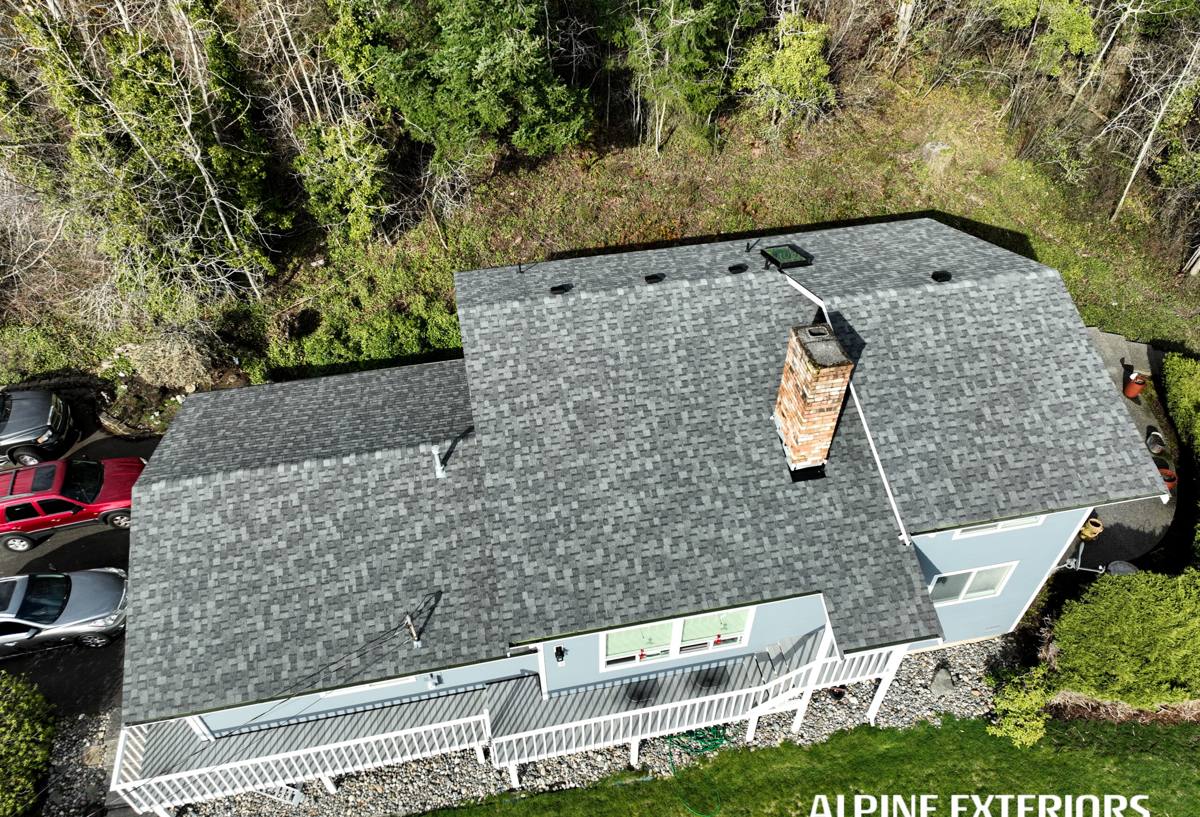
What Fraser Valley Weather Does to a Deck Over Time
Every material choice on a deck should be answering to the climate it sits in. Here's what that climate is doing, specifically:
Moss and Algae Growth
Shaded decks, decks under trees, and decks on the north side of a house stay damp for days at a time in the fall and winter. That constant moisture is exactly what moss and algae need. On wood, that growth holds water against the fibers and accelerates rot. On composite, moss and algae can still grow on the surface — composite isn't immune to it — but the board itself doesn't absorb and swell the way wood does, so the growth stays a surface cleaning issue rather than a structural one.
Rain and Moisture Cycling
It's not just the total rainfall — it's the cycling. Wet for days, then a dry stretch, then wet again. Wood decking expands and contracts with that cycle, which loosens fasteners, opens up checking and cracks, and gives water more places to get in. Composite boards are far more dimensionally stable through that cycling, but the framing underneath — the joists, ledger board, and any fasteners — is still wood on the vast majority of composite decks, and that structure needs to be protected from the same moisture cycle just as carefully as if the deck surface were wood.
Temperature Swings and UV
Abbotsford doesn't get brutal heat, but summer sun exposure combined with cooler nights still puts real stress on any exterior material through expansion and contraction. Composite boards need proper gapping at installation to handle that movement — too tight, and boards can buckle or crown; too loose, and you get an uneven, sloppy-looking deck.
Composite vs. Wood for This Climate
We install both, and wood decking still has a place — it's a legitimate, lower up-front-cost option for the right homeowner. But given the moisture and moss conditions specific to this region, here's the honest trade-off:
| Factor | Wood Decking | Composite Decking |
|---|---|---|
| Moisture absorption | Absorbs and swells; drives cracking, splintering, and rot over time | Minimal absorption on the board face; far more stable through wet-dry cycles |
| Moss and algae | Growth penetrates and weakens fibers | Growth stays on the surface; cleans off without damaging the board |
| Annual maintenance | Sanding, staining, or sealing on a recurring schedule | Periodic washing; no sanding, staining, or sealing required |
| Upfront material cost | Lower | Higher |
| Expected lifespan with proper install | Shorter without consistent upkeep | Longer, backed by manufacturer warranties on the board itself |
| Appearance consistency over time | Fades, grays, and weathers unevenly unless refinished | Holds color more consistently; capped boards resist staining and fading |
The trade-off is simple: composite costs more upfront and buys back the time and money you'd otherwise put into sanding, staining, and replacing boards every few years in a climate that doesn't give wood much of a break.
What a Correct Composite Deck Installation Involves
Most composite deck problems we get called out to fix aren't a failure of the composite board itself — they're a framing, drainage, or fastening mistake underneath it. The board is the easy part. Getting the structure right is what actually determines how the deck performs here.
Framing and Drainage
Joists need proper spacing for the specific composite product being used — composite generally requires tighter joist spacing than wood decking, and that spec varies by manufacturer and board profile. Ledger board flashing has to be done correctly where the deck attaches to the house, since that's the single most common point where water gets behind the siding and causes hidden rot. Framing lumber should be treated for ground or weather contact, and joists should be protected with joist tape so the composite board's stability doesn't just sit on top of a structure that's quietly rotting underneath it.
Fastening and Board Layout
Composite boards need the fastening system the manufacturer specifies — hidden clip systems, color-matched screws, or a combination, depending on the product. Gapping between boards has to account for thermal movement, and that gap changes with board length and expected temperature swing. Board layout should also account for drainage — boards should never be installed dead flat with no slope away from the house, or water will pond on the surface and behind rail posts.
Railings, Stairs, and Fascia
Rail posts are a common weak point because they're usually through-bolted into the rim joist, creating a penetration that has to be sealed correctly. Stair stringers see more direct weather exposure than the deck surface itself and need the same drainage and flashing attention. Fascia boards along the deck edge are often composite too, and they need to be fastened in a way that allows for the same expansion and contraction as the field boards.
Choosing the Right Composite Board
Not all composite decking is built the same way, and the differences matter more in a wet climate than a dry one:
- Capped composite has a polymer shell fully wrapping the board, which resists moisture absorption, staining, and fading far better than uncapped boards — this is what we recommend for most Abbotsford installs given the moisture exposure.
- Uncapped composite is less expensive but more prone to surface wear, staining, and moisture absorption at the core over time.
- Board grooved vs. square edge affects the fastening system used and, to a lesser degree, how water sheds off the board edge.
- Color matters more than people expect — darker boards run hotter in direct sun and can show scratches and dust differently than lighter tones, which is a factor worth weighing even in a climate that doesn't get extreme heat.
We'll walk through the specific product lines that make sense for your deck's exposure, size, and budget rather than pushing one brand across every job.
How We Handle a Composite Decking Project
- On-site assessment. We look at existing framing (if any), drainage, sun and shade exposure, and how the deck ties into the house before recommending anything.
- Product and layout selection. We go over board options, colors, and railing systems based on your budget and how the deck will actually be used.
- Permit check. Many raised or attached decks require a permit — we'll confirm what's required for your specific project before work starts rather than assuming.
- Demo and framing. Old decking is removed, framing is inspected and repaired or rebuilt as needed, and ledger flashing is corrected if it's not up to standard.
- Installation. Boards, fasteners, railings, stairs, and fascia are installed to manufacturer spec, with attention to gapping, drainage slope, and fastening pattern.
- Final walkthrough. We go over the finished deck with you, including what maintenance it actually needs going forward.
Maintenance Composite Decking Still Needs
Composite is low-maintenance, not no-maintenance — especially in a climate with this much moisture and moss pressure. Here's what actually keeps a composite deck looking and performing the way it should:
- Sweep off leaves, needles, and debris regularly, especially in fall — trapped organic material holds moisture against the board and feeds moss and algae growth.
- Wash the deck surface at least once or twice a year with a soft-bristle brush and mild soap and water; a pressure washer on too high a setting or too close can damage the board's cap layer.
- Check and clear drainage gaps between boards so water isn't pooling or backing up against the house.
- Inspect railing posts and stair connections annually for any looseness at the fastening points.
- Address moss or algae buildup promptly with an appropriate cleaner rather than letting it establish — it's far easier to remove early than after months of growth.
- Keep an eye on anything touching the deck surface long-term (planters, mats) since trapped moisture underneath them is a common spot for staining or mildew.
What Affects the Cost of a Composite Deck
We don't post fixed pricing because every deck is different, but these are the factors that actually move the number:
| Factor | How It Affects Cost |
|---|---|
| Deck size and shape | Larger decks and complex shapes (multiple levels, angles, curves) increase material and labor |
| Existing framing condition | A deck that needs full framing replacement costs more than one where the substructure is sound |
| Height and ledger connection | Raised decks require more structural work, footings, and stair length than ground-level decks |
| Board tier | Uncapped composite costs less than capped composite; premium board lines cost more than entry-level ones |
| Railing system | Composite or aluminum rail systems cost more than basic options; glass panels add further cost |
| Permit and inspection requirements | Adds time and fees but is not optional for most attached or raised decks |
| Site access | Difficult material access (steep lots, tight side yards) can add labor time |
We'll walk your specific deck and give you a real number based on what's actually there — not a rough average that ignores your framing or site conditions.
Why Local Experience in Abbotsford Matters
A composite deck built to a generic spec sheet without accounting for this region's rain pattern, moss pressure, and moisture cycling is a deck that will underperform even if the boards themselves are a good product. Knowing which corners of a lot stay shaded and damp longest, how ledger flashing needs to be handled given the amount of driving rain this area sees, and how to gap and fasten boards for the real temperature swings here — that comes from working decks in this specific climate repeatedly, not from a manufacturer's install sheet alone. We bring that same standard to every composite decking project we take on in Abbotsford, whether it's a full new build or replacing an aging wood deck that finally gave out.
If you're weighing composite decking for a home in Abbotsford, we're happy to take a look and give you a straight, no-pressure estimate — what your deck actually needs, what it will cost, and why. Use the form below to get started.