 Lynden Siding
 Nooksack's Climate Puts Real Demands on Siding
Nooksack sits in the Whatcom County lowlands, close enough to the water and the Cascade foothills that homes here deal with a longer, wetter season than most of the country ever sees. Driving rain off the water, damp marine air, and stretches of overcast, low-drying weather add up to siding that stays wet longer than it should. That's the whole ballgame for exterior materials: it's not really about a single storm, it's about how many days a year your siding stays damp before it gets a chance to dry out.
Add in the moss and algae that thrive in Whatcom County's shaded, humid microclimates, and you've got a recipe that punishes any siding material with weak points at seams, fasteners, or paint film. We've worked on enough homes in and around Nooksack and Lynden to know which products hold up under that pattern and which ones start showing problems inside the first five to seven years.
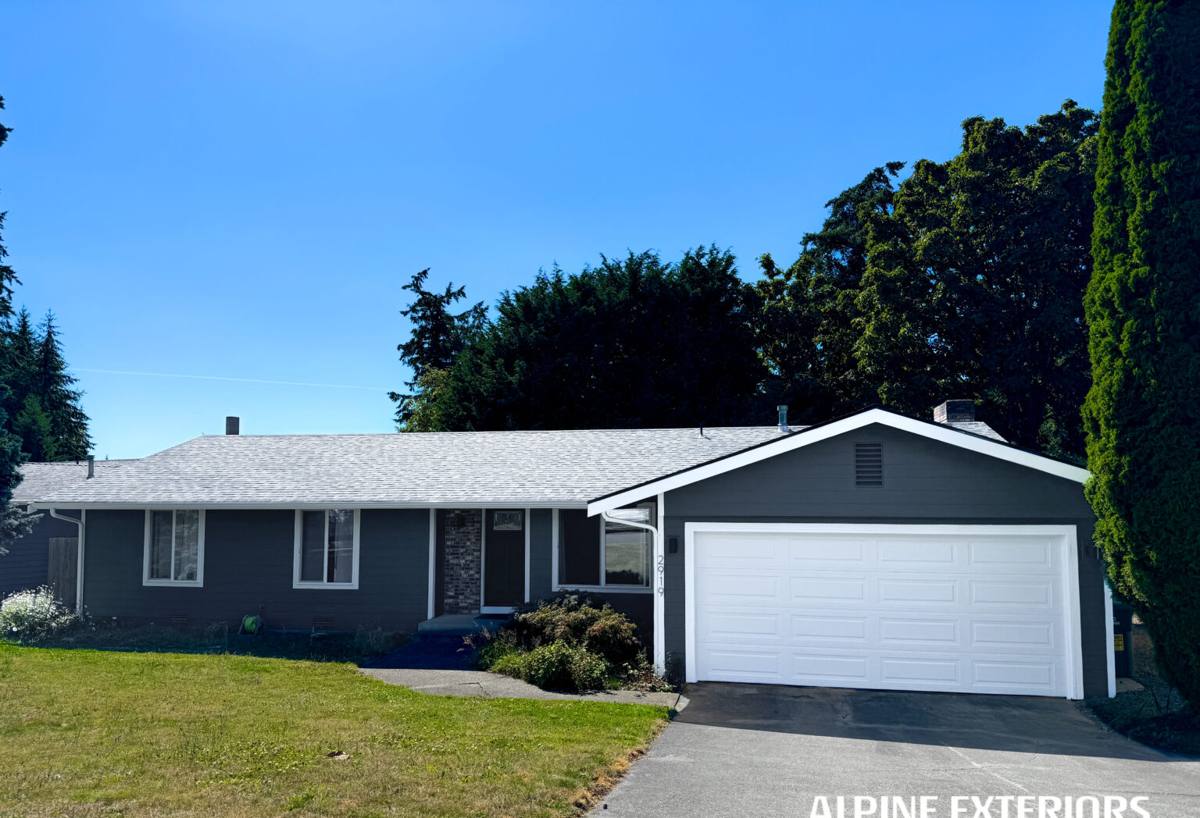
Why Fiber Cement Handles This Better Than Alternatives
Fiber cement is a mix of cellulose fiber, sand, and portland cement pressed and cured into a rigid board. Unlike wood-based products, it doesn't have organic wood fiber sitting exposed at the surface for moss and algae to colonize, and it doesn't swell and split the way solid wood trim does when it takes on repeated moisture cycles. Unlike vinyl, it isn't a thin plastic shell that can warp, crack in a cold snap, or fade unevenly after years of UV exposure near the water.
That doesn't mean fiber cement is magic. It still needs to be installed correctly — primed and sealed cut edges, proper flashing, correct fastener placement — or it will fail just like anything else. The difference is that when it's installed to spec, it gives a Nooksack-area home a much wider margin for error against the rain and humidity than the alternatives do.
Why We Only Install James Hardie
We install James Hardie fiber cement exclusively — not LP SmartSide, not vinyl, not Cemplank, not Allura, not primed spruce or cedar. Hardie's HZ5 product line is engineered specifically for climates like ours: freeze-thaw cycling, sustained moisture, and long stretches without direct sun. The factory-applied ColorPlus finish is baked on under controlled conditions, which holds color and resists the chalking and fading that field-applied paint struggles with here. That combination, backed by a real transferable warranty, is why we standardized on one product instead of offering a menu of materials with different failure points.
What a Correct Installation Looks Like Here
A lot of siding problems we get called out to inspect trace back to installation shortcuts, not the material itself. In a climate that stays wet as long as ours does, those shortcuts show up faster than they would somewhere dry.
Water Management Comes First
Before a single board goes up, the wall needs a proper water-resistive barrier, correctly lapped and taped, with flashing at every window, door, and horizontal transition. Fiber cement is durable, but it's still a rain-screen system component, not a waterproof membrane by itself. If the layer behind it is wrong, moisture gets behind the siding regardless of what's on the outside.
Gaps, Clearances, and Fastening
James Hardie's installation instructions specify exact clearances from grade, roof lines, and decks, along with gap and caulking requirements at butt joints and trim. Skipping these — nailing too tight, closing gaps that should stay open, or letting siding sit too close to the ground — is one of the fastest ways to trap moisture against the board and undercut the whole point of using fiber cement.
Cut Edges and Field Cuts
Every field cut exposes raw material that needs to be sealed before installation. This is a step that's easy to rush on a job and impossible to catch later without pulling boards. It's one of the details we build into our sequencing rather than treating as an afterthought.
Our Process, Start to Finish
We run the same disciplined process on every Nooksack-area job, adjusted for the specific house and exposure.
- On-site assessment — we walk the exterior, check existing siding and sheathing condition, and note problem areas like north-facing walls, deck ledger connections, and low-clearance sections that tend to hold moisture.
- Tear-off and substrate check — old siding comes off and we inspect the sheathing underneath for rot or water damage before covering anything back up. This is the point where hidden problems get caught, not hidden.
- Water-resistive barrier and flashing — house wrap or building paper installed correctly, with flashing integrated at every penetration and horizontal surface.
- Hardie board installation — installed to manufacturer clearances and fastening schedules, with cut edges sealed as we go.
- Trim, caulking, and final detailing — corners, window and door trim, and joints finished to shed water rather than trap it.
- Walkthrough — we go over the finished job with the homeowner before calling it done.
Siding Material Comparison for This Climate
| Material | Moisture Behavior Here | Moss/Algae Resistance | Finish Longevity |
|---|---|---|---|
| James Hardie Fiber Cement | Rigid, dimensionally stable; performs well when flashed and gapped correctly | No organic wood surface for growth to root into | Factory ColorPlus finish, backed by transferable warranty |
| Vinyl | Can warp or gap with temperature swings, letting moisture behind panels | Smooth surface resists some growth, but seams collect debris | Field color only; fades and chalks over time, not repaintable easily |
| LP SmartSide / Engineered Wood | Wood-strand core is more moisture-sensitive at cut edges and seams | Organic content more susceptible to moss/algae if finish fails | Depends on maintaining factory coating; edge sealing critical |
| Primed Cedar/Spruce | Solid wood swells and moves with moisture cycling | Most susceptible; requires regular treatment to resist growth | Requires repainting on a recurring cycle |
This isn't a knock on every other product on this list — vinyl and engineered wood both have legitimate use cases elsewhere. It's why, for the moisture pattern we see in Nooksack and the rest of Whatcom County, we've standardized on one material instead of stocking several.
What It Costs and What Drives the Number
Fiber cement siding pricing depends on a handful of factors more than a flat per-square-foot number can capture. Broadly, expect the total to land in a wide range depending on the home's size, complexity, and current condition — a simple single-story re-side costs meaningfully less than a two-story home with lots of dormers, trim detail, or extensive rot repair underneath the old siding.
| Factor | Why It Matters |
|---|---|
| Home size and stories | More square footage and taller walls mean more material, staging, and labor |
| Wall complexity | Dormers, gables, and cutouts around windows/doors add labor time beyond flat wall runs |
| Substrate condition | Rotted sheathing found during tear-off requires repair before new siding goes on |
| Siding profile and trim | Lap width, shingle-style panels, and trim detail affect both material and install time |
| Access and site conditions | Tight lots, landscaping, or multi-story access can add staging requirements |
We give a firm, itemized number after the on-site assessment — not a phone estimate — because so much of the cost depends on what we find once the old siding comes off.
Signs Your Current Siding Is Already Losing the Battle
- Persistent moss or algae streaking that comes back within a season of cleaning
- Soft or spongy spots when you press on siding, especially near the bottom courses
- Paint that's peeling, bubbling, or chalking heavily rather than just fading evenly
- Visible gaps, warping, or separation at seams and corners
- Staining or discoloration at window and door trim that suggests water is tracking behind the siding
- A noticeable musty smell near exterior walls inside the home
Any one of these on its own isn't necessarily an emergency, but a few together usually means moisture has already found a way behind the siding — worth having looked at before it turns into a sheathing repair.
Why a Crew That Already Works Nooksack Matters
Installing fiber cement correctly isn't complicated in theory, but it's unforgiving of shortcuts, and a crew that's used to working in this specific climate makes fewer of them. We know which wall orientations in this area tend to stay wet longest, how to sequence a job around Whatcom County's rain patterns so water-resistive barrier isn't left exposed longer than it should be, and what clearance and flashing details matter most given the moss and moisture pattern here. That local pattern-recognition is the difference between a siding job that looks right on install day and one that's still performing correctly a decade later.
If you're in Nooksack or anywhere around Lynden and want a straight answer about your siding — whether it needs full replacement, targeted repair, or just a maintenance check — we're happy to come take a look. The estimate is free, there's no pressure, and you'll get an honest assessment either way.