 Lynden Siding
 Custom Windows Built for Kendall's Weather, Not Just Its Openings
Kendall sits in the part of Whatcom County where marine air off the Salish Sea meets the foothills, and that combination is hard on window openings that weren't built to shed water fast. Homes out here deal with long stretches of driving rain, salt-tinged air that migrates inland on winter storms, and a moss season that can run from late fall well into spring. None of that is dramatic on its own, but stacked up year after year, it's exactly the kind of slow, steady exposure that finds every weak point in a window opening — the caulk line that was never quite right, the flashing that was skipped to save an hour, the frame that was never actually square to begin with.
"Custom windows" doesn't just mean a fancier product. It means the window is built and installed to match the actual opening, the actual wall assembly, and the actual weather this specific property sees — instead of forcing a stock size into a rough opening and caulking over the gaps. For a lot of older Kendall homes, and for additions or remodels where openings were never standard sizes to begin with, that distinction matters more than which brand name ends up on the sticker.
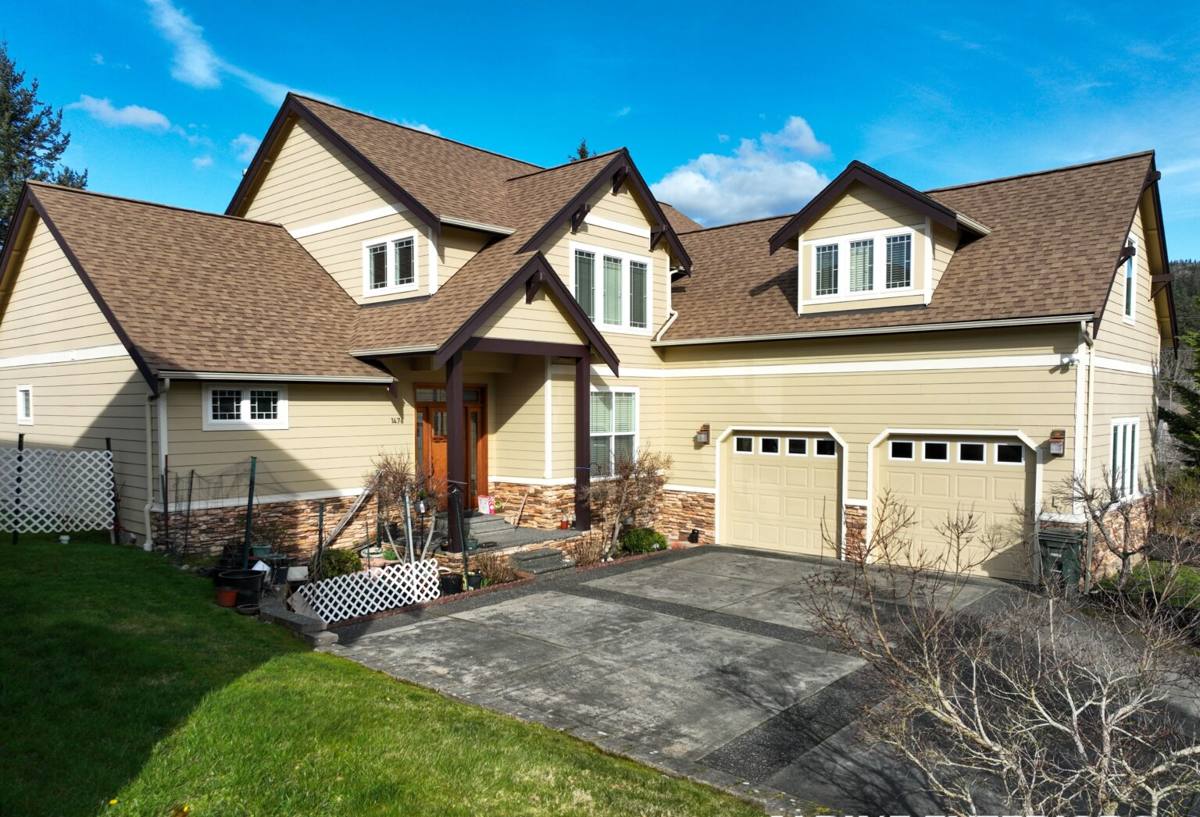
What Driving Rain, Salt Air, and Moss Actually Do to a Window Opening
Driving Rain
Wind-driven rain doesn't just hit a window head-on — it gets pushed sideways and upward under sills and around trim. A window opening that relies on caulk alone, with no proper flashing or drainage path behind it, will eventually let water track behind the siding. You often don't see it until there's staining, soft trim, or a musty smell inside near the window — by which point the sheathing behind it has usually been wet for a while.
Marine and Salt-Tinged Air
Whatcom County's proximity to the Strait of Georgia and Puget Sound means the air carries more moisture and mineral content than you'd get further inland. Over years, that accelerates corrosion on unprotected hardware, fasteners, and lower-grade metal components — locks that stick, hinges that pit, screens that discolor. It's not a dramatic failure, just a steady one, and it's worse on windows facing prevailing weather.
Moss Season
Shaded sills, horizontal trim, and anywhere water sits instead of draining are prime moss and algae territory for much of the year here. Moss holds moisture against wood and paint far longer than open air would, which speeds up rot in trim and sills that are already marginal. A window detail that doesn't shed water cleanly is a moss farm waiting to happen.
Individually, each of these is manageable. Combined, and repeated every year, they're why a window that was installed a little bit wrong in year one is often showing real problems by year eight or ten.
What "Custom" Means in Practice
Custom windows come into play more often than people expect — not just on architectural statement pieces, but on:
- Older homes where original openings are slightly out of standard dimensions
- Additions or remodels where the rough opening was framed to fit the design, not a catalog size
- Replacing multiple smaller windows with one larger unit, or mulling several units together
- Odd shapes — arched tops, angled gables, transoms — that stock sizing can't cover
- Matching sightlines and sash proportions to the rest of the house instead of settling for "close enough"
The trade-off with custom sizing is that it takes more time up front — accurate measuring, correct ordering, and a manufacturer lead time — and it costs more than an off-the-shelf unit. What you get in return is a window that actually fits the opening instead of an opening that gets modified (or padded out with extra trim and shims) to fit the window. That difference shows up in how well the unit performs in weather, not just in how it looks.
What a Correct Installation Actually Involves
The window itself is often the easy part. Most of the long-term performance — and most of the failures we get called out to fix on other people's work — comes down to the details around the opening.
- Remove old unit and inspect the rough opening and sheathing for hidden rot or prior water damage before anything new goes in
- Install (or repair) a proper sloped sill pan so any water that gets past the window drains back out, not into the wall
- Flash the opening in the correct shingle-lap sequence — sill, jambs, then head — so water is always directed outward and down
- Use flexible flashing tape at corners and transitions, where most leaks actually originate
- Set the window level, plumb, and square, then shim and fasten per the manufacturer's specification, not by feel
- Insulate the gap between frame and rough opening — properly, not overpacked, which can bow the frame
- Seal the interior air barrier separately from the exterior water barrier — these are two different jobs with two different purposes
- Finish exterior trim and caulk joints that are designed to be maintained, not ones that trap water behind them
Skip or rush any one of these steps and the window can look fine for years while the wall behind it quietly deteriorates. This is also where "custom" and "correct installation" overlap — a custom-sized unit installed with shortcuts on flashing is still going to leak eventually, and a stock window installed with every one of these steps done right will usually outperform it.
Choosing Frame Material and Glass for This Climate
There's no single "best" window material — it depends on budget, maintenance appetite, and how exposed the window is to weather. Here's how the common options compare for a Whatcom County property:
| Material | Moisture Performance | Maintenance | Typical Lifespan |
|---|---|---|---|
| Vinyl | Won't rot; performs well if installed with correct drainage | Low — occasional cleaning | 20–30+ years |
| Fiberglass | Very stable in temperature swings, low expansion/contraction | Low | 30–40+ years |
| Wood (interior) / clad exterior | Good if cladding and flashing are correct; interior wood needs protection from any moisture intrusion | Moderate — finish upkeep on interior wood | 20–40 years depending on care |
| Aluminum | Durable but conducts cold and can condense in our damp winters without a thermal break | Low | 20–30+ years |
On glass, a double-pane unit with a low-E coating and argon fill is the practical baseline for this area — it manages both our wet winters and the condensation that comes with big indoor-outdoor temperature swings. Triple-pane adds performance but also cost and weight; it's worth it for north-facing rooms or homes with higher heating bills, less necessary on a sheltered south wall. We'll walk through what makes sense for each specific opening rather than push one glass package across the whole house.
Our Process for a Kendall Window Project
- On-site assessment — we look at every opening individually, check for existing water damage or rot, and measure for true custom fit rather than assuming standard sizes
- Product selection — we go over frame material, glass package, and style options based on the home's exposure, budget, and how the window is used
- Ordering and lead time — custom units take longer to manufacture than stock sizes; we give a realistic timeline up front, not an optimistic one
- Installation — full removal, opening inspection and repair as needed, correct flashing and sealing sequence, and careful interior and exterior finish work
- Walkthrough — we check operation, sealing, and cleanup with you before we consider the job done
Signs a Kendall Home May Need New or Custom Windows
- Visible gaps, drafts, or cold spots around the frame in windy or rainy weather
- Condensation forming between panes — a sign the seal has failed on a double- or triple-pane unit
- Wood trim or sills that feel soft, discolored, or are collecting moss year-round
- Windows that are hard to open, close, or lock, especially older aluminum or lower-grade vinyl units
- Visible staining on interior walls or ceilings below or beside a window
- A recent remodel or addition where the openings never quite matched available stock sizes
Why Hire a Crew That Already Works in Kendall
A window installer who mainly works in a different climate zone, or mostly does new-construction tract work, doesn't always think about sloped sill pans, moss-prone trim details, or how driving rain hits a wall from a specific direction here. Working regularly in and around Lynden and Whatcom County means we've seen how local wall assemblies were actually built — including the shortcuts some of them were built with — and we know which install details matter most for this specific weather pattern, not a generic one. We also know what permitting and inspection expectations look like locally, which keeps a custom window project moving instead of stalling on paperwork.
If you're weighing custom windows for a Kendall property — whether it's one problem opening or a full-home replacement — we're happy to take a look and give you a straightforward, no-pressure estimate. Use the form below to get started.