 Lynden Siding
 Why Laurel Homes Need Siding Built for This Climate
Laurel sits in a stretch of Whatcom County that takes weather seriously. Homes here deal with a combination that's harder on siding than most parts of the state: damp marine air carrying salt off the Sound, long stretches of driving rain that comes in sideways more often than straight down, and a moss and algae season that can run eight or nine months out of the year in shaded, north-facing spots. Add in the freeze-thaw swings that show up most winters, and you've got a climate that finds every weakness in a wall system over time.
Most siding failures we see on Laurel-area homes aren't dramatic. They're slow: caulk joints that give up, seams that wick moisture, paint that chalks and fades faster than it should, or panels that swell and soften at the bottom courses where splashback and standing moisture do their work year after year. James Hardie fiber cement siding was engineered specifically to resist that kind of slow attrition, which is why it's the only product we install.
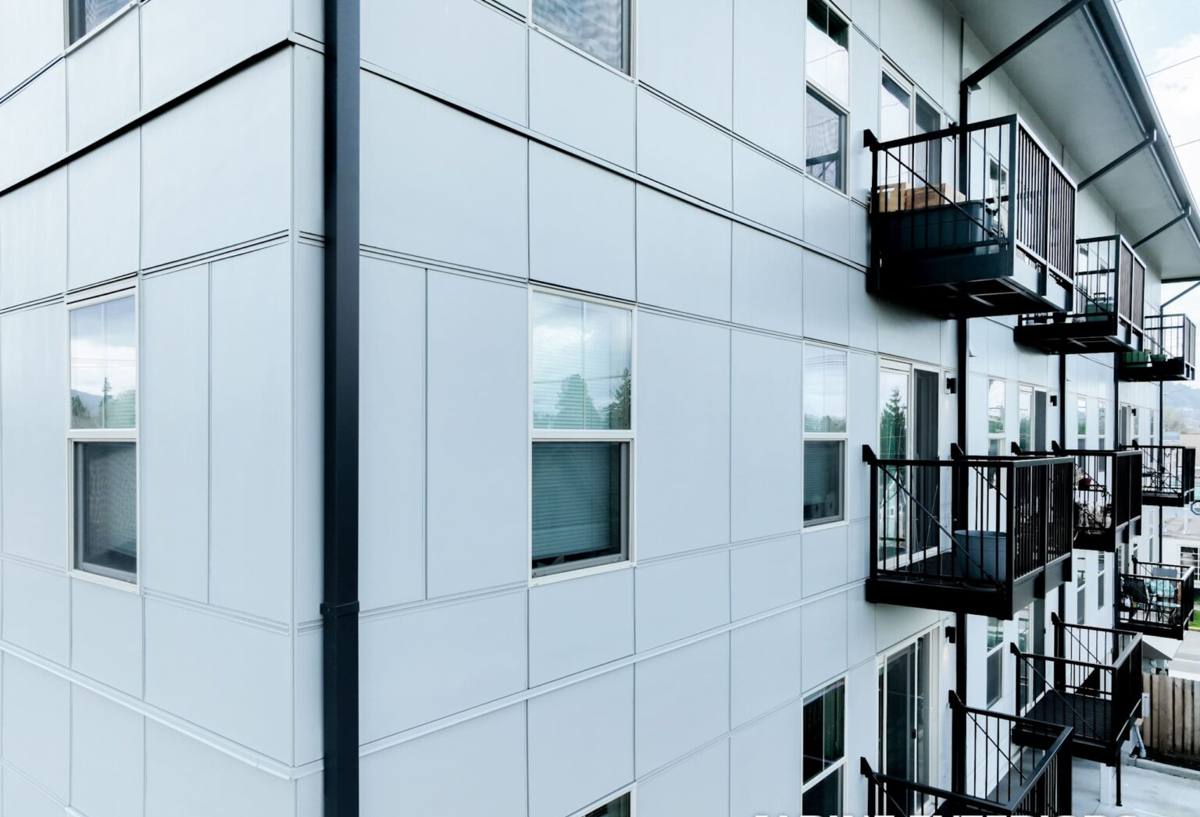
What "Correct" Actually Means for a Hardie Installation Here
James Hardie makes a good product, but the product alone doesn't guarantee a good result. A huge share of the siding problems we get called out to inspect on existing homes trace back to installation shortcuts, not the material itself. In a climate like ours, those shortcuts show up faster than they would in a dry inland state.
The details that matter most in Whatcom County conditions
- Proper water-resistive barrier and flashing sequencing — every window, door, and penetration has to be flashed so water sheds outward, not behind the cladding, before a single piece of siding goes up.
- Correct clearances — Hardie specifies minimum gaps at grade, roof lines, decks, and horizontal trim so panels never sit in standing water or trapped moisture.
- Fastener pattern and depth — over- or under-driven nails, or the wrong fastener type for our wind and moisture exposure, are one of the most common causes of premature panel movement and cracking.
- Factory-cut and sealed edges — field cuts need to be sealed per Hardie's guidelines; unsealed cut edges are a direct path for moisture intrusion.
- Caulking discipline — the right sealant, in the right joints, applied correctly — not as a substitute for proper flashing, but as a genuine second line of defense.
None of this is exotic. It's disciplined, unglamorous work that has to be done the same way on every wall, every time. That's the whole job.
Salt Air, Rain, and Moss: What They Actually Do to a Wall
Salt-laden marine air
Homes closer to the water — and Laurel is close enough to feel it — deal with airborne salt that accelerates corrosion on fasteners, flashing, and any exposed metal trim. It also holds moisture against surfaces longer than dry air would. Fiber cement doesn't corrode, but the fasteners and flashing details around it absolutely can if the wrong materials are used.
Driving, wind-blown rain
Whatcom County storms rarely come straight down. Wind-driven rain gets forced into joints, laps, and trim intersections that a calmer climate would never test. This is exactly why lap and joint detailing — not just the siding panel itself — determines whether a wall stays dry for 30 years or starts failing in five.
Moss, algae, and prolonged dampness
Shaded north walls, tree-lined lots, and covered porches in and around Laurel hold moisture longer through fall, winter, and spring. Organic growth doesn't just look bad — sustained dampness against a wall surface degrades paint film and, on the wrong substrate, the material underneath. Hardie's factory-applied ColorPlus finish is baked on and formulated to resist this kind of moisture and UV cycling far better than field-applied paint on wood-based products.
Why We Only Install James Hardie
We get asked regularly why we don't offer vinyl, LP SmartSide, cedar, or other fiber-cement alternatives. The honest answer is that we standardized on one product because we got tired of doing callbacks on the others in this exact climate.
| Material | How it holds up in Laurel's climate |
|---|---|
| Vinyl siding | Lightweight and inexpensive, but it expands/contracts significantly with temperature swings, can warp or crack in wind, and offers no real fire resistance. Seams and laps are more vulnerable to wind-driven rain. |
| LP SmartSide (engineered wood) | A wood-strand product with a resin coating; performs reasonably when kept dry, but any coating breach exposes the wood substrate to swelling and rot — a real risk given our rain and moss exposure. |
| Cedar / primed spruce | Attractive but demands ongoing maintenance — re-staining or repainting on a cycle, plus vigilance against moisture and insects. Our damp, moss-prone conditions shorten that maintenance interval considerably. |
| James Hardie fiber cement | Non-combustible, dimensionally stable in wet/dry cycling, factory-baked ColorPlus finish resists fading and moisture, and it's engineered in climate-specific HZ product lines. This is what we put on homes. |
Hardie isn't perfect for every budget, and we say that plainly — it costs more up front than vinyl. But for a homeowner planning to stay in a Laurel-area home for the long haul, the reduced maintenance and proven durability against exactly this kind of weather is why it's the only product we stand behind.
Our Process for Laurel-Area Homes
1. On-site assessment
We walk the exterior with you, looking at existing siding condition, moisture staining, trim and flashing details, and problem zones — shaded walls, low clearances at grade, deck ledger connections — that are common trouble spots in this area.
2. Substrate and moisture check
Before any new siding goes up, we check sheathing condition behind the existing cladding wherever accessible. Installing new siding over a compromised water-resistive barrier just hides a problem instead of solving it.
3. Product and color selection
We help you choose the right Hardie panel or lap profile and HZ10 formulation, along with a ColorPlus finish that suits the home and holds up to our UV and moisture cycling without a repaint down the road.
4. Installation to manufacturer spec
Flashing, clearances, fastening, and sealed joints — done to Hardie's published installation requirements, not shortcuts. This is also what keeps the manufacturer's warranty intact; installation errors are the most common reason siding warranty claims get denied.
5. Final walkthrough
We go over the finished job with you directly, including care and maintenance basics specific to a moss-prone, high-rainfall property.
Why Hiring a Crew That Already Works This Area Matters
Siding installation isn't one-size-fits-all across Washington. A crew used to drier east-side conditions will make different (and sometimes wrong) assumptions about clearances, drainage planes, and moss-prone shading than a crew that works Whatcom County walls regularly. Familiarity with how water actually moves across a Laurel-area home in a February storm is the difference between a wall system that performs for decades and one that needs attention in year six.
We also know which details in this specific area tend to get overlooked: clearance at grade on sloped lots, flashing at deck and porch intersections that see near-constant shade, and trim choices that resist moss buildup rather than inviting it. That's local knowledge you don't get from a general installation manual.
A Quick Homeowner Checklist Before You Hire Anyone
- Ask for the specific Hardie HZ product line they plan to use for our climate zone — there is a correct answer, and "whatever we have" isn't it.
- Confirm they follow Hardie's published fastening and clearance specifications, not a generic industry standard.
- Ask how they handle flashing at windows, doors, and deck intersections — this is where most water intrusion actually starts.
- Check whether the installer is a factory-recognized or credentialed Hardie installer, which affects warranty coverage.
- Ask what happens to the substrate and water-resistive barrier if it's found to be compromised during tear-off.
What This Costs and What Drives the Number
Every home is different, and we won't quote a number without seeing the walls, but a few factors consistently move the price on Laurel-area projects: the amount of existing siding removal and disposal, how much repair the sheathing needs once it's exposed, the complexity of trim and flashing details around windows and rooflines, and which Hardie profile and finish you choose. Homes with more cutting-in around dormers, porches, or multiple roof planes take longer and cost more than a simple rectangular elevation.
If you're weighing a full re-side against patch repairs, it's worth knowing that partial repairs on an aging wall system in this climate often just delay a larger job — and can complicate matching factory ColorPlus finishes down the road.
If you're considering new siding for a home in or near Laurel, we're glad to come out, take an honest look at your walls, and give you a straightforward estimate — no pressure, no upsell to a product we don't stand behind. Fill out the form below to get started.