 Lynden Siding
 Why Ferndale Roofs Wear Out Differently
Ferndale sits close enough to Bellingham Bay and the Nooksack lowlands that its roofs deal with a mix most inland towns don't see all at once: salt-tinged air moving in off the water, long stretches of driving rain, and a moss season that can run eight months or more out of the year. None of these alone is unusual for Whatcom County. Together, on the same roof, year after year, they shorten the life of materials and fasteners that would last longer somewhere drier or further from the coast.
Salt air accelerates corrosion on exposed metal — flashing, fasteners, drip edge, vent stacks — faster than most homeowners expect. Driving rain, especially when it comes in sideways during a windstorm, tests every lap and seal in a roofing system, not just the field of the shingles. And moss doesn't just look bad; it holds moisture against the roof surface, works its way under shingle tabs, and lifts material over time. A roof replacement in Ferndale has to account for all three, not just swap old shingles for new ones.
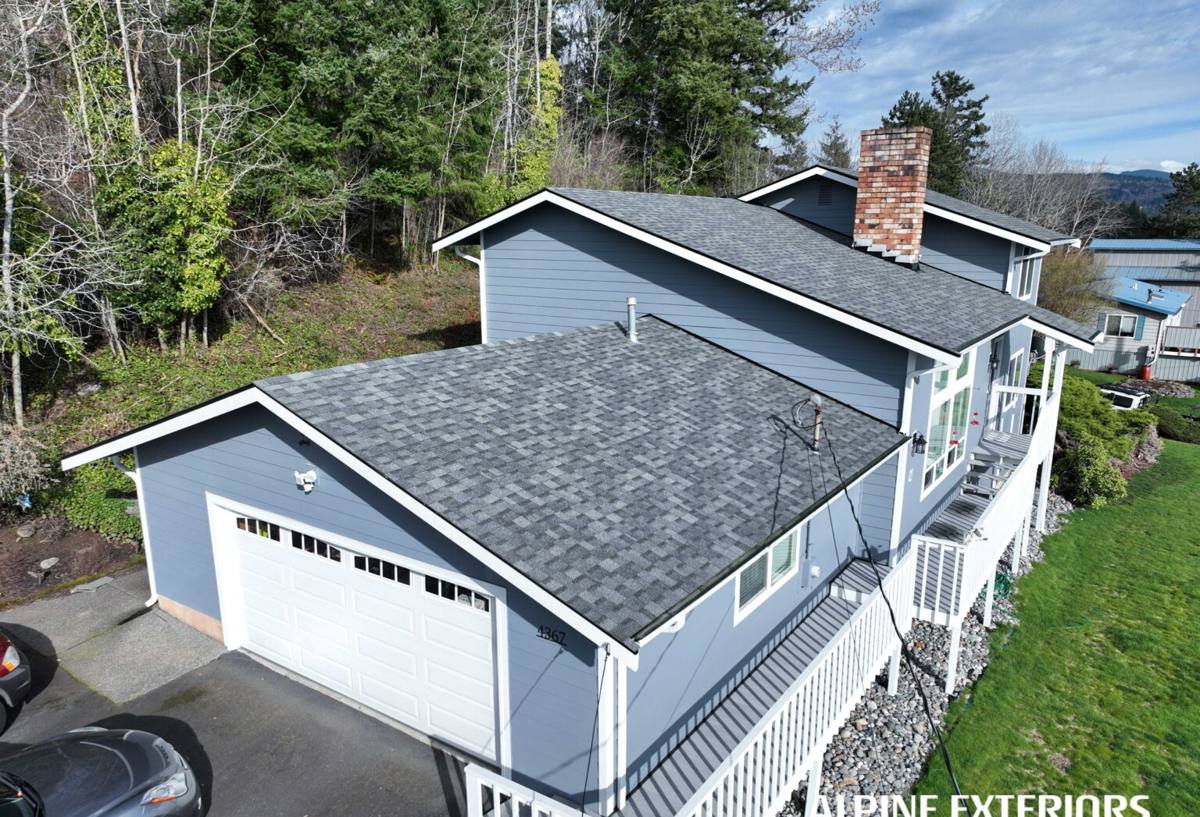
Signs It's Time to Replace, Not Just Repair
Most roofs give warning signs well before they fail outright. The trick is knowing which ones point to a patch job and which ones mean the whole system is past its useful life.
- Granules collecting in gutters or at downspout outlets in noticeable amounts, not just a few
- Shingles that are curling, cupping, or cracking across multiple areas of the roof, not one isolated spot
- Moss or dark streaking that returns within months of cleaning, especially on north-facing slopes
- Soft spots or sagging when walked (a sign the decking underneath may be compromised)
- Daylight visible through the attic roof boards, or damp insulation after a hard rain
- A roof older than its expected lifespan that's already had two or more repair visits in recent years
- Flashing around chimneys, skylights, or vent stacks that's rusted, lifted, or was sealed with visible caulk patches rather than proper metalwork
One or two of these on a younger roof usually means a targeted repair makes sense. Several at once, or any of them on a roof already past 20-25 years, generally means repair spending stops making financial sense and full replacement becomes the honest recommendation.
What a Correct Roof Replacement Actually Involves
A roof replacement done right is a system, not a single product. Skipping steps to save time is where most premature failures start, especially in a climate like Ferndale's.
Tear-Off and Deck Inspection
We remove the old roofing down to the decking so we can actually see what's underneath — not layer over it. This is the point where hidden rot, soft plywood, or old water damage gets found and fixed before anything new goes down. Covering over a compromised deck is one of the most common shortcuts in the trade, and it's one we don't take.
Underlayment
Given how much driving rain this area gets, underlayment isn't a formality here — it's a second line of defense. We use synthetic or ice-and-water underlayment in the areas most exposed to wind-driven rain: eaves, valleys, and low-slope transitions, where wind can push water uphill under the shingle laps.
Flashing and Metalwork
Every roof leak we've traced back to a cause almost always leads to flashing, not the shingles themselves. New flashing at chimneys, skylights, sidewalls, and vent penetrations is standard on our replacements, not an upsell — with attention to metal type given the salt air's effect on corrosion over time.
Ventilation
Proper intake and exhaust ventilation keeps the attic space dry and temperature-balanced, which slows moss growth on the roof surface and prevents moisture from condensing against the deck from below. We check existing ventilation on every replacement and correct it when it's undersized or blocked.
Choosing Roofing Materials for This Climate
There's no single "best" roofing material — there's a best fit for a given home, budget, and exposure. Here's how the common options stack up for a Ferndale property dealing with salt air, rain, and moss:
| Material | Moss Resistance | Salt Air Durability | Typical Lifespan | Maintenance Burden |
|---|---|---|---|---|
| Architectural asphalt shingle | Moderate (better with algae-resistant granules) | Good with corrosion-resistant flashing/fasteners | 25-30 years | Low to moderate |
| Standing seam metal | Very good — sheds moisture, little for moss to grip | Good with proper coated/coastal-rated panels | 40-60 years | Low |
| Wood/cedar shake | Poor without diligent upkeep | Fair — needs regular treatment near salt air | 20-30 years with maintenance | High |
| Synthetic/composite shingle | Good | Good | 40-50 years | Low |
We don't install cedar shake as a general practice on homes in this exposure. It's not that the material is a bad product in the right setting — it's that in a climate with this much sustained moisture and moss pressure, shake demands a maintenance schedule most homeowners aren't set up to keep, and the failure mode (moisture retention, rot at the deck) is expensive to catch late. Asphalt architectural shingles with algae-resistant granules, or metal roofing where the home and budget support it, give better long-term value for the trade-offs this area presents.
Our Replacement Process, Step by Step
- Roof assessment: We inspect the current roof, decking condition (where accessible), attic ventilation, and flashing points, and talk through what we find in plain terms.
- Written estimate: A clear scope and price — what's included, what materials, and why — before any work starts.
- Material selection: We walk through the honest trade-offs for the home's specific exposure, not just a catalog handoff.
- Scheduling around weather: Given how much of the year sees rain here, we plan tear-off and dry-in around forecast windows so the deck isn't left exposed longer than necessary.
- Tear-off, deck repair, and dry-in: Old roofing removed, deck inspected and repaired as needed, underlayment installed the same day where possible.
- Installation: New roofing, flashing, and ventilation components installed to manufacturer specification.
- Final walkthrough: We review the finished roof with the homeowner and cover care and warranty details before we consider the job done.
Cost Factors Worth Understanding
Roof replacement pricing varies enough by home that broad numbers can be misleading, but the variables that actually move the price are consistent:
| Factor | Why It Matters |
|---|---|
| Roof size and number of planes | More squares and more complex geometry mean more material and labor time |
| Roof pitch and access | Steeper or harder-to-access roofs require more safety setup and slower work |
| Decking condition | Rotted or soft plywood found during tear-off adds material and labor to replace it properly |
| Material choice | Asphalt, metal, and synthetic options carry different upfront costs and lifespans |
| Flashing and penetrations | Chimneys, skylights, and multiple vent stacks each add detail work |
| Ventilation upgrades | Correcting undersized or blocked ventilation adds a modest cost but pays off in roof life |
We'd rather walk a homeowner through where their money is actually going than throw out a number that doesn't hold up once we're on the roof. That's what the in-person estimate is for.
What to Ask Before Hiring Anyone for This Job
- Do they inspect and repair decking as part of the job, or just roof over what's there?
- Is new flashing included, or only reused where possible?
- Do they check and correct attic ventilation, or only the visible roofing surface?
- What underlayment do they use at eaves and valleys, and why?
- Are they licensed, bonded, and insured in Washington, and can they show it without hesitation?
- Do they have experience with homes in this specific area, dealing with this specific mix of weather?
- Is the estimate written and itemized, or a verbal number that could shift later?
Why It Matters That We Already Work in Ferndale
A roofing crew that mainly works elsewhere and takes the occasional Whatcom County job doesn't build the same instinct for what fails first in this climate. We see the same moss patterns, the same wind-driven rain damage, and the same corrosion points on flashing repeatedly across homes in this area — that repetition is what lets us catch problems during an estimate walk that a less locally-experienced crew might miss until they're already mid-tear-off. It also means we're not guessing at weather windows for scheduling; we plan around what this stretch of Whatcom County actually does in a given season.
If your roof is showing wear, past its expected lifespan, or you're just not sure whether it needs a repair or a full replacement, we're glad to take a look. We offer a free, no-pressure estimate — no obligation, just an honest read on where your roof stands and what your options are. The form below is the easiest way to get that started.