 Lynden Siding
 Building a Deck That Actually Holds Up in Acme
Acme sits in one of the wetter, more heavily wooded pockets of Whatcom County, and that changes what a deck needs to survive out here compared to a deck built in a dry climate or an open subdivision. Between the long stretch of fall-through-spring rain, the tree canopy that keeps a lot of yards shaded most of the day, and the moss that finds its way onto every horizontal surface that doesn't dry out fast, a deck built with generic assumptions tends to show problems within a few seasons — soft spots, black staining, slick boards, and fasteners that back out or rust before their time.
We build custom decks for homeowners in and around Lynden, and Acme jobs get treated differently from the start. Drainage, board spacing, hardware grade, and even where we recommend siting the deck relative to tree cover all get adjusted for what actually happens to wood and composite out here over a full Whatcom County winter, not just what looks good on install day.
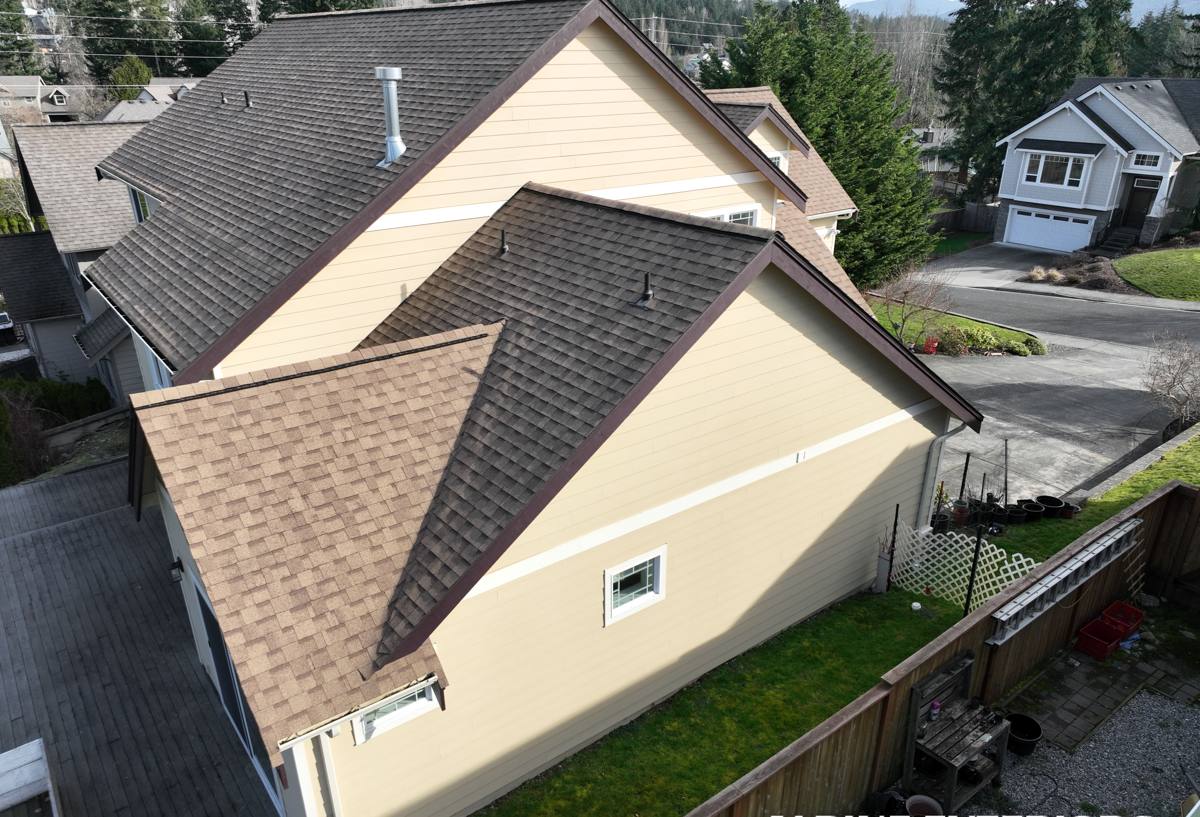
What the Acme Climate Does to a Deck Over Time
Driving Rain and Standing Moisture
Whatcom County doesn't just get rain — it gets sustained, wind-driven rain that finds gaps and gets pushed sideways into joints, fastener holes, and ledger connections. On a deck, the failure points are predictable: the ledger board where the deck meets the house, end grain on cut boards that wasn't sealed, and any spot where water can pool instead of running off.
Shade, Tree Cover, and Moss
Acme's wooded lots are a mixed blessing. The tree cover is part of why people like living out there, but it also means less direct sun to dry a deck surface between rain events. Moss and algae take hold fastest in shaded, damp spots, and once established they hold moisture against the decking material and make the surface genuinely slippery — a real safety issue on stairs and landings, not just a cosmetic one.
Salt Air's Smaller but Real Role
Salt air is more of a factor for Whatcom County homes closer to the water, and Acme's inland, tree-sheltered setting sees less of it than a waterfront property would. It's still worth accounting for in hardware choices, since even reduced salt exposure combined with constant damp air accelerates corrosion on lower-grade fasteners and connectors over the years.
Decking Material Options, Compared for This Climate
There's no single "best" decking material — there's a best material for a given budget, sun exposure, and maintenance appetite. Here's how the common options actually perform in a shaded, wet Whatcom County lot like a typical Acme property.
| Material | Moisture/Moss Behavior | Maintenance | Typical Lifespan |
|---|---|---|---|
| Pressure-treated wood | Absorbs water, needs a dry season to shed it; moss grows readily in shaded areas | Annual cleaning and re-sealing recommended | 10–15 years with upkeep |
| Cedar | Naturally moisture- and rot-resistant, but surface still supports moss in deep shade | Periodic cleaning, occasional sealing to hold color | 15–20 years with upkeep |
| Composite decking | Doesn't absorb water into the board core, but moss and algae can still grow on the surface film | Occasional wash-down; no sealing or staining | 25–30 year manufacturer warranties are common |
| PVC/capped composite | Fully sealed surface, best resistance to staining and moisture wicking | Lowest maintenance of the group | Similar to or longer than composite |
For a heavily shaded Acme lot, we lean toward steering clients away from uncapped wood in the deepest-shade zones, not because wood is a bad product, but because it needs sun and airflow to dry out between rains — and that's exactly what those spots don't get. That's a maintenance and moisture-management call, not a knock on wood as a material.
Structural Details That Matter More Here Than Elsewhere
- Ledger board flashing: the connection to the house needs proper flashing and a moisture barrier — this is the single most common point of hidden rot on older decks we get called to inspect or replace.
- Joist protection: joist tape or a comparable moisture barrier on top of the framing keeps standing water from soaking into end grain and fastener holes over years of PNW winters.
- Fastener and hardware grade: stainless or high-grade coated fasteners and structural connectors hold up better against the combination of damp air and, in some Whatcom locations, trace salt exposure.
- Footing depth and drainage: footings need to be set below frost depth and away from spots where surface water collects, which matters on sloped or low-lying sections of a wooded lot.
- Board spacing: slightly wider gapping between boards helps water drain through instead of sitting on the surface, which cuts down on moss buildup and speeds up drying.
Design Choices for a Wooded, Shaded Lot
Deck design in Acme benefits from a site-specific look at sun and airflow before anything gets drawn up. A few adjustments we regularly make on wooded lots:
Orientation and Clearance
Where the lot allows it, we look at whether the deck footprint can be positioned or trimmed back from the densest tree canopy to pick up a bit more afternoon sun and airflow — even a modest gain in exposure noticeably slows moss growth.
Railing and Stair Material
Stairs and railings see more hand and foot contact than open deck surface, so we often recommend a lower-maintenance capped material there even when the main deck field is a different product, since slick painted or bare wood on stair treads is a real fall hazard in a wet climate.
Under-Deck Drainage
On elevated decks, an under-deck drainage system keeps the space below usable and dry instead of turning into a permanently damp, moss-prone crawl area — worth discussing at the design stage if you want that space for storage or a covered patio.
Our Process for a Custom Deck Build
- On-site assessment: we walk the property, check sun exposure, drainage patterns, and how the deck ties into the existing structure.
- Design and material selection: we go over decking, railing, and structural options against your budget and how much upkeep you want to take on long-term.
- Permitting: we handle the permit process with Whatcom County or the applicable local jurisdiction so the structure is built and inspected to code.
- Framing and structural work: footings, ledger attachment, joists, and moisture barriers go in first — this is the part of the job that determines how the deck ages, even though it's invisible once finished.
- Decking, railing, and finish work: surface material, railings, and any stairs or lighting get installed and finished.
- Walkthrough: we go over the finished deck with you, including what maintenance (if any) the material you chose actually needs.
Keeping a Deck Moss-Free and Sound
Whatever material a deck is built from, a little seasonal attention goes a long way in this climate:
- Sweep leaves and debris off the surface regularly, especially in fall — trapped organic matter holds moisture and feeds moss and algae growth.
- Rinse or wash the deck surface at least once or twice a year to clear early moss and grime before it gets established.
- Check that gaps between boards haven't filled in with debris, which blocks drainage.
- Inspect the ledger board area and any flashing once a year for signs of staining or soft wood.
- Re-seal or re-stain wood decking on the manufacturer's or installer's recommended schedule rather than waiting until it looks weathered.
- Trim back overhanging branches where practical to let in more light and airflow.
Why Hire a Crew That Already Works in Acme
A deck built to a generic spec sheet can look fine on the day it's finished and still be the wrong build for a shaded, wet Whatcom County lot five years later. A crew that already works this area knows which parts of a property tend to hold moisture, which material choices actually reduce moss and maintenance rather than just claiming to, and how local permitting works for this kind of structure. That local knowledge shows up in the details — flashing, fastener grade, board spacing, and where the deck sits relative to tree cover — that separate a deck that ages well from one that needs early repair.
If you're planning a new deck or replacing one that's showing its age, we're happy to walk your Acme property, talk through material and design options honestly, and put together a straightforward estimate. There's no pressure and no obligation — just fill out the form below to get started.