 Lynden Siding
 Why Birch Bay Roofs Wear Differently Than Roofs Just a Few Miles Inland
A house in Birch Bay sits in a different weather pattern than a similar house closer to town in Lynden. Being this close to open water means more wind-driven rain, more salt in the air, and shorter windows of dry weather to get roofing work done right. None of that is a problem on its own — but it does mean a roof here needs to be built and maintained a little differently than one on a dry, sheltered lot further inland.
Add in the tree cover common on many Whatcom County properties, and you get the third factor: a long moss season that runs from fall through spring most years. Salt air, driving rain, and moss don't destroy a roof overnight. They work slowly, in the details most people never think to check — until a soft spot shows up on the ceiling.
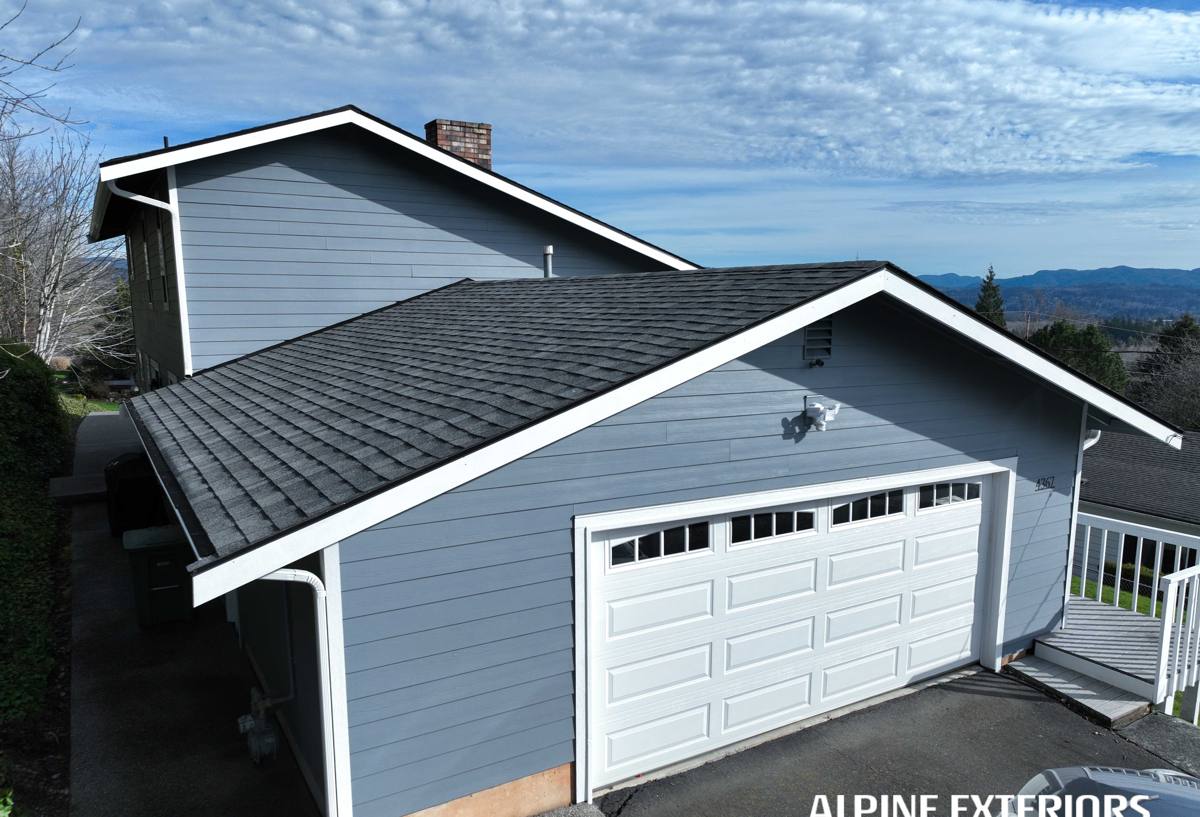
What Salt Air and Coastal Wind Actually Do to a Shingle Roof
Salt-laden air is corrosive to exposed metal. Roofing nails, flashing, and drip edge that aren't rated for coastal exposure can start to rust years before they would inland. Once a fastener corrodes, it loses grip, and a shingle that should stay locked down through a windstorm starts to work loose instead.
Wind off the water also carries fine grit that accelerates granule loss on shingles, especially along exposed eaves and ridgelines. Granules are what protect the asphalt mat underneath from UV breakdown, so once they thin out in a section, that patch of roof ages faster than the rest.
Then there's wind uplift. Gusts coming off open water tend to hit a roof at a steeper, more sustained angle than typical inland wind. If shingles were nailed a little high, a little off-pattern, or with the wrong nail count, that's exactly the kind of stress that finds the weak spot first.
Driving Rain Changes the Math on Water Barriers
Rain that comes in sideways behaves differently than rain that falls straight down. It can push up under shingle laps, work its way along flashing edges, and find gaps that would never leak in calmer weather. This is why the underlayment and flashing details matter more here than they would in a drier part of the state — they're not just backup protection, they're doing real work every storm season.
Moss: The Damage You Don't See Until It's Expensive
Moss doesn't just look bad — it holds moisture directly against the shingle surface, which keeps that section of roof damp long after the rest has dried out. Over time, moss works its rootlike structures under shingle edges and tabs, gradually lifting them just enough to let water in during the next heavy rain.
Shaded, tree-covered lots — common throughout this part of Whatcom County — hold onto moisture longer after a storm, which is exactly the condition moss needs to take hold. North-facing slopes and areas under overhanging branches are usually the first places it shows up.
The other issue is how moss gets removed. Pressure washing strips granules right along with the moss, which shortens the life of the shingle more than the moss itself would have. Moss needs to come off gently, and the growth conditions — usually shade and standing moisture — need to be addressed, or it just comes back.
What a Correctly Installed Asphalt Shingle Roof Actually Includes
The shingles themselves get most of the attention, but they're the last layer of a system. In a climate like this, the layers underneath them matter just as much.
Underlayment and Water Barriers
A synthetic underlayment across the full deck is the baseline. In the areas most exposed to driving rain and ice — eaves, valleys, and around penetrations like chimneys and skylights — a self-adhering ice-and-water membrane belongs underneath the shingles, not instead of them. This is the layer that keeps a roof dry even if wind-driven rain gets past the shingle surface.
Ventilation Matters As Much As the Shingles
A roof that can't breathe traps moisture in the attic, which shortens the life of the decking and the shingles from underneath. Balanced intake at the eaves and exhaust at the ridge keeps warm, moist air moving out instead of condensing against the roof deck — a slower but just as damaging problem as any leak from outside.
Flashing and Fastening Standards
Corrosion-resistant flashing and fasteners aren't optional this close to the water. Step flashing at walls, counter-flashing at chimneys, and proper valley metal all need to be installed in the right sequence with the underlayment — layered so water is always directed down and out, never trapped behind a seam. Nailing pattern and nail count should follow the manufacturer's spec for the local wind exposure, not just the minimum code requirement.
Choosing a Shingle for a Coastal, Moss-Prone Climate
Not every asphalt shingle is built with the same priorities. For a Birch Bay property, wind rating and algae resistance matter more than they would on a sheltered inland lot, and it's worth understanding what you're actually paying for at each tier.
| Shingle Type | Typical Lifespan | Wind Rating | Algae/Moss Resistance | Relative Cost |
|---|---|---|---|---|
| 3-Tab Asphalt | 15–20 years | Lower (often 60–70 mph rated) | Standard granules only | Lowest |
| Architectural (Laminate) | 25–30 years | Higher (110–130 mph rated, varies by line) | Available with algae-resistant granules | Mid-range |
| Premium / Impact-Rated | 30+ years | Highest available in asphalt | Algae-resistant standard on most premium lines | Highest |
For most Birch Bay homes, an architectural shingle with algae-resistant granules is the practical middle ground — better wind performance and moss resistance than a 3-tab, without paying premium-tier pricing for a straightforward residential roof. Where a roof is heavily shaded or has struggled with moss in the past, the algae-resistant granules earn their keep over the life of the roof.
Our Process for a Birch Bay Roofing Project
- Inspection first. We look at the current shingles, flashing, decking, and attic ventilation before recommending anything — a re-roof isn't always the right answer if the deck and flashing are still sound.
- A clear, written quote. Scope, materials, and price laid out before any work starts, so there's nothing to guess at partway through.
- Tear-off and deck check. Old material comes off down to the deck, and we check for soft spots or water damage that need to be addressed before new shingles go down — covering a bad deck just hides the problem.
- Installation to manufacturer spec. Underlayment, ice-and-water membrane at the vulnerable areas, flashing, and shingles installed in the sequence and fastening pattern the manufacturer requires for this wind exposure.
- Cleanup and magnetic sweep. Old material and stray fasteners cleared from the property, not left for you to find later.
- Walkthrough and warranty paperwork. We go over what was done and make sure the manufacturer and workmanship warranty documentation is in your hands.
Maintenance Homeowners Can Do Between Roof Checks
A well-installed roof still benefits from basic upkeep, especially in a climate that stays damp for months at a time. None of this requires climbing on the roof yourself — most of it can be done from the ground or with a stable ladder.
- Clear gutters and downspouts each fall before the heavy rains set in, so water has somewhere to go
- Knock moss off with a soft brush or low-pressure rinse — never a pressure washer, which strips granules along with the moss
- Trim back tree limbs that keep sections of the roof shaded and slow to dry
- Check the attic once a year for musty smells, daylight gaps, or damp insulation
- Look over flashing around chimneys, vents, and skylights after any major windstorm
- Get a roof looked at before it's out of warranty, not after a stain shows up on the ceiling
Why Hiring a Crew That Already Works in Birch Bay Matters
A roofing crew that regularly works this stretch of Whatcom County isn't guessing at how to handle salt exposure, wind-driven rain, or a heavy moss season — it's just part of how every job here gets planned and installed. That familiarity shows up in small decisions: which fasteners to spec, where ice-and-water membrane needs to extend further than the code minimum, and which slopes on a given lot are going to fight moss no matter what shingle goes on them.
It also matters after the job is done. A local crew is easy to reach if a question comes up during the first hard storm of the season, and isn't starting from scratch on your property's history if something needs a look down the road.
If you're weighing a repair, a full replacement, or just want an honest read on how much life is left in your current roof, we're happy to take a look. Use the form below to request a free, no-pressure estimate — no obligation, just a straight answer about what your roof actually needs.