 Lynden Siding
 Metal Roofing in Deming: Built for a Long Wet Season
Deming sits east of Lynden along the Nooksack River, in the wooded foothill country that leads up toward Mount Baker. It's quieter and greener than the more built-up parts of Whatcom County, with a lot of homes set back under fir and cedar cover on larger rural lots. That tree cover is part of what makes the area appealing to live in, and it's also exactly what makes roofing here harder than it looks. Shaded roof planes stay damp for days after a storm, moss gets a long growing season, and the same wind-driven rain that moves up the valley from the Sound finds every weak seam and flashing detail a roof has.
Lynden Siding Contractors works exteriors across this part of the county, and metal roofing is one of the few products we install with real confidence in a climate like this. It's not the right fit for every budget or every roof, but for homeowners in Deming who are tired of re-treating moss every couple of years or replacing shingles on a shortened cycle, it's worth understanding what metal actually offers and what a correct installation requires.
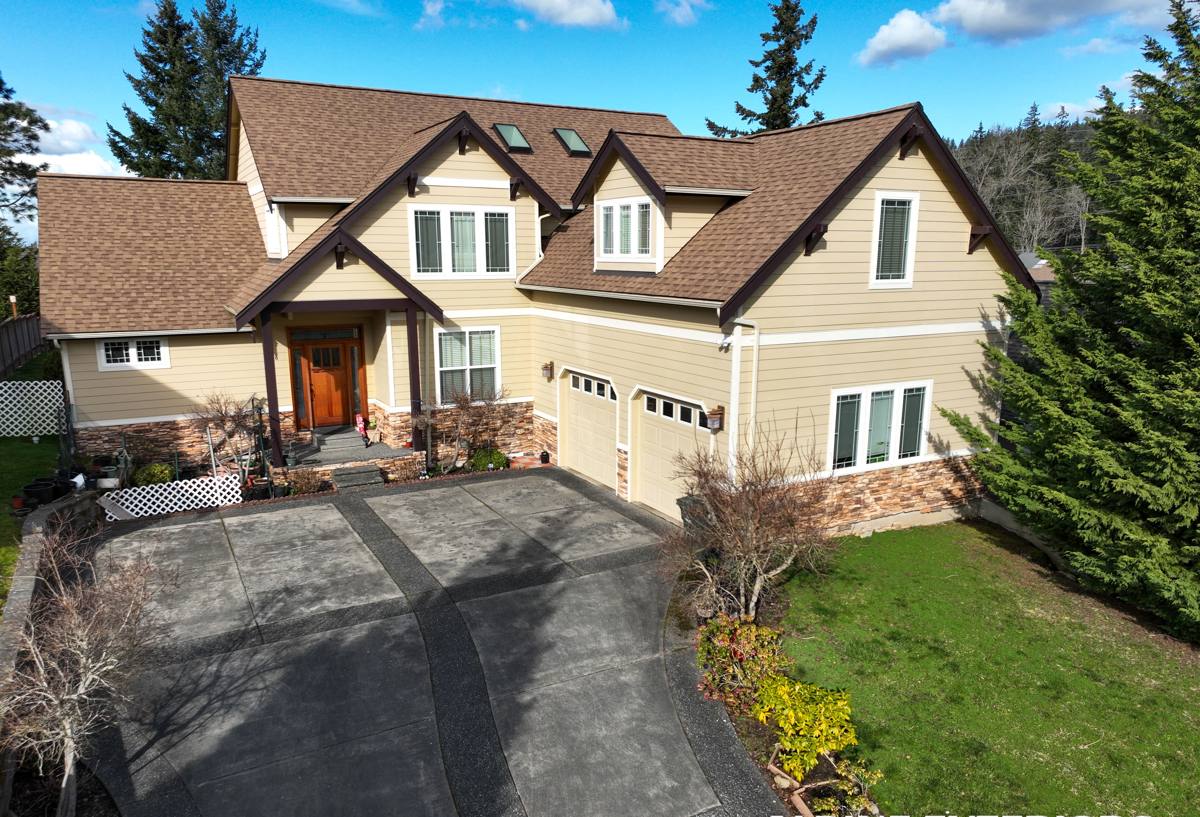
What This Climate Does to a Deming Roof
A Long Moss Season
Under a canopy of conifers, roof surfaces can stay shaded and damp long after the rest of the neighborhood has dried out. Moss doesn't just sit on top of a roof — it holds moisture against the surface, works into shingle laps and granule layers, and over a few seasons can lift material and shorten the roof's working life. On a shingle roof in a heavily wooded Deming lot, moss control can turn into a recurring maintenance chore rather than a once-a-decade task.
Driving, Wind-Pushed Rain
Rain moving up the Nooksack valley doesn't fall straight down. It gets pushed sideways by wind, driving into valleys, around chimneys, and under any flashing that isn't lapped and sealed correctly. That's a heavier, more directional load than an average rainfall number suggests, and it's where poorly detailed roofs — metal or otherwise — start leaking first.
Marine-Influenced, Salt-Tinged Air
Whatcom County sits inside a marine weather system, and that moist, faintly salt-tinged air reaches well inland, not just the immediate waterfront. Even in a river-valley community like Deming, that humidity matters for anything metal on the roof — fasteners, flashing, and panel edges included. It's a slower, less obvious threat than a leak, but corrosion-resistant materials and coatings matter here in a way they wouldn't in a dry inland climate.
Shade, Elevation, and Temperature Swings
Deming sits at slightly higher elevation and closer to the foothills than the lowland parts of the county, which means a bit more temperature swing and occasionally heavier wet snow in a hard winter. Combined with heavy tree shade, that's a roof that rarely gets a full, fast dry-out between storms — which is exactly the condition moss and slow-moving moisture damage need to take hold.
Why Metal Roofing Fits Homes Here
Metal roofing doesn't solve every problem, but it directly answers the two biggest issues Deming roofs face: moss and sustained moisture. A smooth metal panel gives moss very little to grip onto compared to a textured shingle surface, and it sheds water fast enough that roof planes dry out sooner after a storm. It also handles the freeze-thaw and wet-snow cycles common at slightly higher elevation without the granule loss and cupping that eventually wears down asphalt shingles.
It's also a long-term decision. A correctly installed metal roof can outlast two or three shingle roofs, which matters for homeowners planning to stay in a heavily wooded property for decades rather than re-roofing every 20-25 years under a canopy that keeps the roof damp longer than average.
Panel Types and Finishes: What Actually Holds Up
"Metal roofing" covers more than one product, and the right choice depends on the roof's pitch, the home's style, and the budget. Here's how the common options compare for a climate like Deming's:
| Panel Type | Moss & Moisture Behavior | Typical Maintenance | Realistic Lifespan Here |
|---|---|---|---|
| Standing seam (concealed fastener) | Best water-shedding of the group; smooth face resists moss buildup | Very low; occasional sealant and seam checks | 40-60 years |
| Exposed-fastener panel | Sheds water and moss well, but fastener washers are a maintenance point | Moderate; fastener and washer inspection every few years | 30-45 years |
| Stone-coated steel or metal shingle | Good moss resistance; textured surface holds slightly more debris than smooth panel | Low; periodic debris clearing under shade | 40-50 years |
| Standard architectural asphalt shingle (for comparison) | More moss-prone under shade; needs treatment or removal over time | Higher, especially on shaded slopes | 20-30 years |
Steel and aluminum are both common substrates. Steel with a quality corrosion-resistant coating is the standard choice for most roofs; aluminum is worth considering on a home closer to the water or in situations where corrosion resistance is the top priority, since it doesn't rust the way steel can if a coating is ever compromised. We'll walk through which substrate and panel profile actually fits your roof rather than defaulting to whichever is easiest to install.
What a Correct Metal Roof Installation Involves
Underlayment and Deck Prep
Metal roofing is only as good as what's underneath it. That means starting with a sound, dry roof deck and a high-temperature synthetic or self-adhered underlayment rated for the panel system being installed — not a minimum-code product. On shaded, slow-drying roofs like many in Deming, this layer is what protects the deck if any moisture ever does get past the panel seams.
Flashing, Valleys, and Penetrations
Most metal roof failures that do happen trace back to flashing, not the panels themselves. Every valley, chimney, vent pipe, and wall transition needs flashing detailed and sealed for wind-driven rain specifically, not just a straight-down rain assumption. This is the step that separates a roof that holds up for decades from one that develops a slow leak in year six.
Fastener and Panel Corrosion Resistance
Given the marine-influenced moisture in this area, fastener and flashing material matters more than it would in a dry climate. We match fasteners, flashing, and trim metals to the panel system so dissimilar metals aren't corroding against each other, and we use coatings and hardware rated for sustained damp exposure rather than a generic option.
Ventilation
A metal roof still needs the attic and roof deck below it to breathe. Proper intake and exhaust ventilation keeps moisture from condensing on the underside of the deck, which matters even more under a shaded Deming roof that never gets much direct sun to help dry things out.
Our Process, Start to Finish
Inspection and Estimate
We start by looking at the existing roof — deck condition, current moss and moisture damage, tree exposure, and pitch — and walk through what a metal roofing system would realistically involve on your specific house. The estimate reflects your roof, not a generic square-footage number.
Installation
Once a job is scheduled, we handle deck prep, underlayment, flashing, and panel installation as a full system, coordinating around weather windows so panels and underlayment aren't going down in the middle of a storm. Site protection and cleanup are part of the job, not an afterthought.
After the Job
We walk the finished roof with you, explain what maintenance (if any) it actually needs, and stand behind the workmanship. A well-installed metal roof shouldn't need much from you beyond keeping gutters clear and trimming back branches that overhang the roofline.
Signs a Deming Roof Is a Good Candidate for Metal
Metal roofing isn't the right call for every home or every budget, but it's worth a serious look if several of these apply to your property:
- Your current roof is under heavy tree shade and moss keeps coming back within a year or two of cleaning
- You've replaced or repaired shingles more than once in the last several years
- You're planning to stay in the home long-term and want to stop re-roofing on a 20-25 year cycle
- You want lower ongoing maintenance than a shingle roof requires under shaded, damp conditions
- You're already re-siding or doing other exterior work and want to plan the roof as part of the same project
- You're interested in a roofing material with better fire performance for a wooded, forest-adjacent property
If none of those describe your situation, that's a fair reason to stick with a well-installed shingle roof instead — we'll tell you honestly if metal isn't worth the added upfront cost for your specific home.
Repair, Recover, or Full Replacement?
Not every roof problem means starting over. If your existing roof is sound but showing isolated moss, minor leaks, or aging flashing, a repair may be the right call. In some cases, a metal roof can be installed over an existing roof deck without a full tear-off, which can reduce both cost and disruption — but only when the deck underneath is dry and structurally sound. If there's already moisture damage to the deck or framing, that needs to be addressed before any new roofing goes down, metal or otherwise. We'll tell you which situation you're in and why, rather than defaulting to whichever option is more work for us.
Why a Crew That Already Works Deming Matters
A contractor who works roofs and siding across this stretch of Whatcom County — not just the denser parts of Lynden or Bellingham — understands how differently a shaded, wooded, river-valley lot in Deming behaves compared to an open, sun-exposed roof closer to town. That shows up in real decisions: how much moss pressure a given tree canopy actually creates, how much ventilation a shaded deck really needs, and which flashing details are worth the extra time because the rain here doesn't fall straight down. It also means someone who won't apply a one-size-fits-all install to a property with its own microclimate.
Metal Roofing Alongside Siding and the Rest of the Exterior
Roofing and siding face the same climate problems on a Deming home — sustained moisture, shade, and driving rain — and they meet at the same vulnerable points: eaves, wall-to-roof transitions, and trim. As a siding-first contractor that also handles roofing, we look at both together rather than treating them as separate jobs by separate crews who never talk to each other. If a roofing project uncovers moisture damage at the wall line, or a siding job turns up roof-edge issues, we can address it as one conversation instead of sending you to find a second contractor.
If you're weighing a metal roof for a home in Deming, we're happy to take a look and give you a straight answer about whether it's the right fit — no pressure, no upsell. Use the form below to request a free estimate.