 Lynden Siding
 Bellingham Roofs Deal With a Different Kind of Wear
A roof in Bellingham doesn't age the same way a roof does forty miles inland. Sitting close to Bellingham Bay means homes here take on salt-laden air that speeds up corrosion on fasteners, flashing, and any exposed metal. Add Whatcom County's long, wet stretch of fall-through-spring weather, and you've got a roof that's rarely given a real chance to dry out between storms. Then there's moss — with our mild, damp winters and heavy tree cover in and around Bellingham, moss doesn't just grow on north-facing slopes, it works its way under shingle tabs and lifts them over time.
None of that means a Bellingham roof is doomed to constant problems. It means the repair work has to account for those three things — salt air, driving rain, and moss — instead of treating every leak like it's the same job you'd do anywhere else in the state.
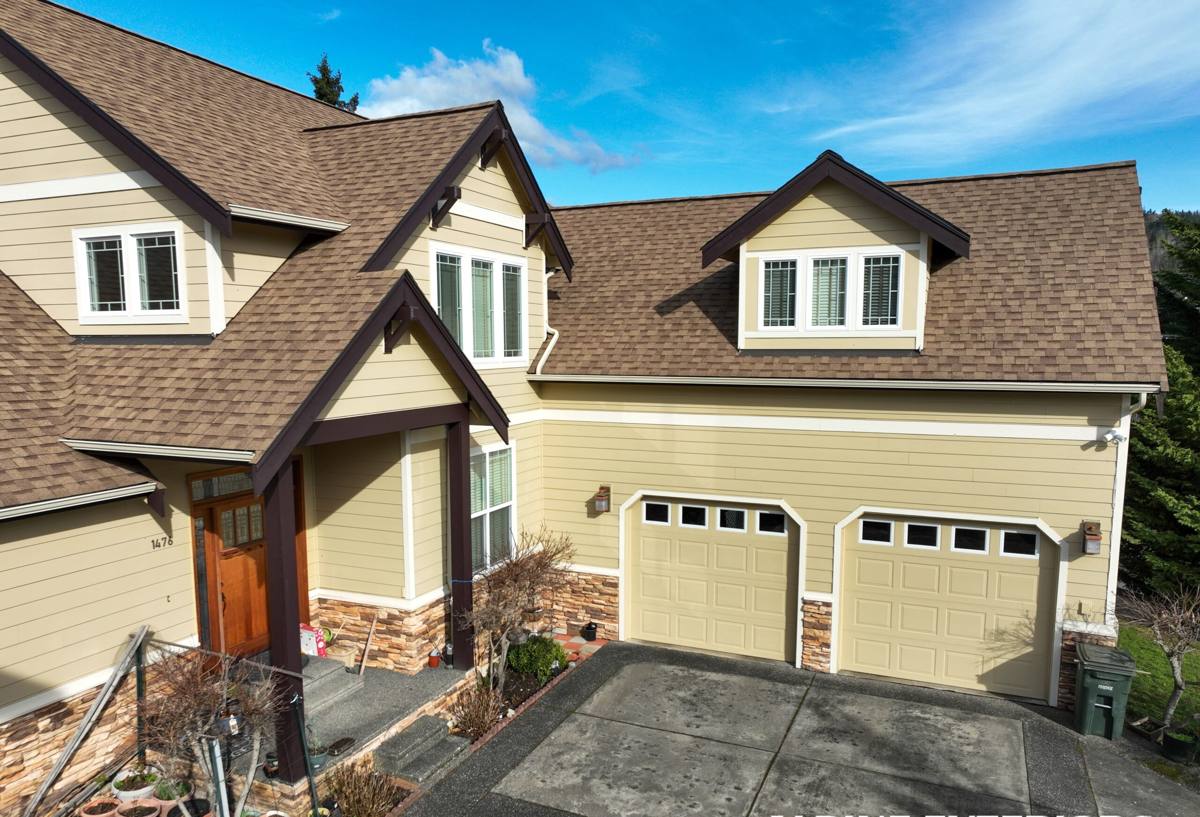
Signs a Repair Is Overdue
Most roof damage doesn't announce itself with a dramatic leak on day one. It shows up as small, easy-to-miss signs first:
- Dark streaking or thick moss growth concentrated on shaded or north-facing sections
- Granules collecting in gutters or at the base of downspouts
- Soft spots or slight sagging when walked on (or visible from the ground with binoculars)
- Water stains on interior ceilings, especially near chimneys, skylights, or where two roof planes meet
- Curling, cracked, or lifted shingle edges, particularly on slopes that catch the most wind-driven rain
- Rust streaks below metal flashing or vent boots
- Daylight visible through the attic decking
Catching any of these early is almost always the difference between a repair that costs a few hundred dollars and one that turns into decking replacement or an interior repair on top of the roof work.
Why Small Leaks Get Big Fast Here
In a drier climate, a small flashing leak might sit for a season without causing much harm. In Bellingham's climate, that same gap is getting tested by rain far more often, and the moisture rarely has a long dry window to fully evaporate before the next system rolls through. Wood framing and decking that stay damp longer are more prone to rot, and rot spreads outward from the original leak point — which is why we always check several feet beyond where a stain shows up, not just the spot directly above it.
What a Correct Roof Repair Actually Involves
A roof repair done right isn't just patching the spot where water is showing up inside the house. It starts with finding the actual entry point, which is sometimes several feet away from the interior stain because water travels along the decking or rafters before it drips down.
Our Diagnostic Steps
- Interior inspection — attic, ceiling, and any visible framing to trace the water path
- Exterior inspection of the suspected area and everything upslope of it, since water always comes from higher on the roof
- Check flashing points first — chimneys, vent pipes, skylights, and roof-to-wall junctions cause a large share of leaks
- Check for moss intrusion under shingle tabs, especially on shaded slopes
- Assess decking condition once the covering is pulled back — soft or delaminated plywood needs to be cut out and replaced, not covered over
Skipping any of those steps is how a "repaired" roof leaks again in the next big storm. A patch over rotten decking, or new shingles laid without replacing failed underlayment underneath, buys you a season at best.
Common Roof Repair Causes We See Around Bellingham
| Cause | Why It Happens Here | Typical Fix |
|---|---|---|
| Moss lifting shingles | Mild, wet winters and shade from mature trees keep moss active nearly year-round | Careful moss removal, treatment, and replacement of lifted or damaged shingles |
| Flashing failure | Salt air accelerates corrosion on metal flashing and fasteners | Re-flash with corrosion-resistant materials, properly lapped and sealed |
| Valley leaks | Driving rain concentrates volume in valleys faster than it can shed | Rebuild valley with correct underlayment and metal, not just caulk |
| Nail pops / fastener corrosion | Coastal salt exposure works on exposed metal over years | Replace corroded fasteners, reseal or replace affected shingles |
| Rotten decking | Prolonged moisture from slow-draining or long-standing leaks | Cut out and replace decking before covering, not patch over it |
Repair vs. Replacement: How We Help You Decide
Not every roof problem calls for a full replacement, and not every leak can be permanently solved with a patch. We look at a few honest factors before recommending either direction:
| Factor | Leans Toward Repair | Leans Toward Replacement |
|---|---|---|
| Roof age | Under roughly 12-15 years, isolated damage | Nearing or past the material's expected service life |
| Extent of damage | One or two localized problem areas | Widespread granule loss, curling, or moss across most slopes |
| Decking condition | Solid decking found once covering is pulled back | Multiple sections of soft or delaminated decking |
| Leak history | First occurrence, clear single cause | Recurring leaks in different spots over recent years |
| Cost relative to full re-roof | Repair cost is a small fraction of replacement | Repairs are starting to add up close to replacement cost |
We'll walk the roof, explain what we find, and give you a straight answer on which side of that line your situation falls on — not a sales pitch toward the bigger job.
How We Approach a Repair Job
1. On-Site Assessment
We inspect the roof in person before quoting anything. Photos and drone views help, but flashing failures and soft decking are things you generally have to feel and check up close.
2. Clear, Written Scope
You get a written explanation of what's actually failing, what we're going to do about it, and what it costs — no vague line items.
3. Weather-Aware Scheduling
Given how much of the year sees rain here, we plan repair work around dry windows whenever the job requires open decking or underlayment work, so exposed areas aren't sitting open overnight.
4. Matching Materials Correctly
Repairs are done with materials and fastener types suited to coastal exposure, and we match shingle type, color, and exposure as closely as possible so the repair doesn't stand out like a patch.
5. Cleanup and Walkthrough
We clear debris, magnet-sweep for stray nails, and walk you through exactly what was done before we call the job finished.
Moss and Debris: The Maintenance Side of Roof Longevity
A lot of repair calls we get could have been prevented, or at least delayed, with basic seasonal upkeep. This isn't about upselling a maintenance contract — it's genuinely the cheapest way to avoid repair costs down the line.
- Keep gutters and downspouts clear so water isn't backing up under the roof edge
- Trim back overhanging branches to cut down shade and debris buildup, both of which feed moss growth
- Have moss treated before it visibly lifts shingles, not after
- Walk the attic after major storms and check for new staining or light penetration
- Have flashing points checked every few years, since that's where most leaks originate
- Avoid pressure washing shingles yourself — it drives water and grit under the tabs and can strip protective granules
A Note on Pressure Washing and Roof Cleaning
We're often asked why we don't recommend pressure washing as a moss removal method. High-pressure water forces moisture up under shingle edges and can strip the granules that protect shingles from UV and weather — it trades a short-term clean look for real long-term wear. Our standard is low-pressure application with proper moss treatment, followed by manual removal where it's already established, which gets the same result without shortening the roof's life.
Why a Local Lynden Crew Matters for Bellingham Work
Roofing companies that don't work this specific area regularly tend to treat every job with a generic approach — same materials, same methods, regardless of whether the house is three blocks from salt water or thirty miles inland. Working Bellingham and the surrounding Whatcom County area on a routine basis means we already know which failure patterns show up here: which flashing details tend to corrode first near the water, which slopes hold moss the longest, and which valley configurations take the worst of the driving rain in a winter storm.
Being based in Lynden also means we're a short drive away if a repair needs a follow-up check or if weather delays push a schedule around — we're not coordinating a crew from out of the area for a one-time visit.
What to Expect on Cost
Roof repair pricing depends heavily on what's actually found once we're up there — a straightforward flashing reseal is a very different job from replacing rotten decking under a failed valley. Rather than throw out a number that doesn't match your situation, we provide a firm, written quote after the on-site inspection so you know exactly what you're paying for and why.
Ready for a Straight Answer on Your Roof?
If you're dealing with a leak, moss buildup, or damage from a recent storm, we're happy to come take a look and tell you honestly what it needs — repair, monitoring, or something more. Reach out for a free, no-pressure estimate using the form below.