 Lynden Siding
 Why Window Choice Matters More in Abbotsford
Abbotsford sits in the Fraser Valley, close enough to the water and the mountains that homes here take a real beating from the weather. Salt-laden air corrodes hardware and finishes faster than it does further inland. Driving rain — the kind that comes in sideways during a fall or winter storm — finds every gap in a window's seal, not just the glass itself. And the long stretch of damp, low-light months each year means moss and mildew get a foothold anywhere moisture lingers, including on and around window frames. Windows here aren't just about comfort and energy bills; they're a front line against water intrusion that can rot framing and drywall if the install was done wrong the first time.
We work this area regularly, and the patterns repeat: single-pane or early double-pane windows from the 80s and 90s that have fogged, seals that failed years ago, and vinyl frames that have gone brittle and drafty. Replacing them with genuinely energy-efficient units, installed correctly for this climate, fixes both the comfort problem and the moisture risk at the same time.
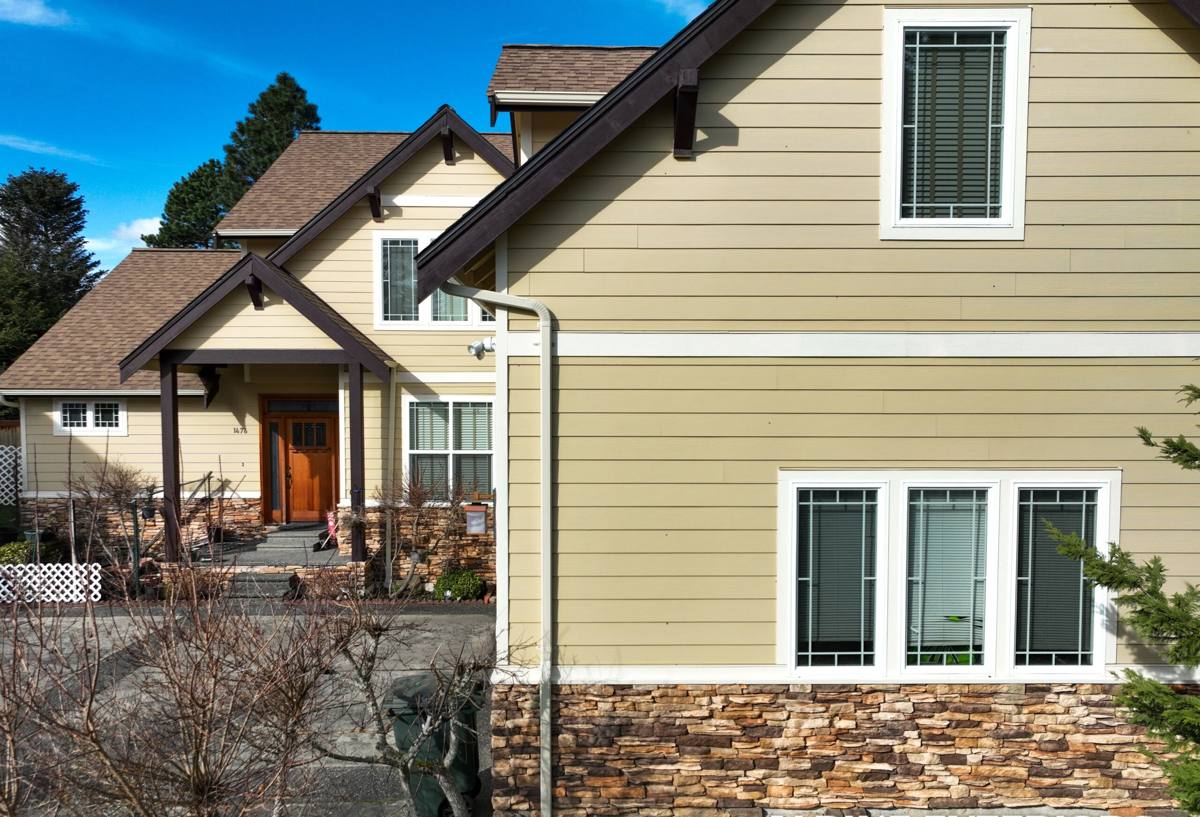
Signs Your Current Windows Are Costing You
- Fogging or a cloudy haze between panes — the seal has failed and the gas fill (or insulating air gap) is gone
- Visible condensation on the inside of the glass during cold snaps
- A noticeable draft when you hold your hand near the frame on a windy day
- Rooms near windows that feel colder than the rest of the house
- Difficulty opening, closing, or locking — often a sign the frame has swollen or warped from moisture
- Soft or discolored trim/drywall below or beside the window — a red flag for water getting past the seal
Any one of these is worth a look. Several together usually means it's cheaper long-term to replace than to keep patching.
What "Energy-Efficient" Actually Means
Glass Package
Most efficient replacement windows today use double-pane or triple-pane insulated glass units (IGUs) with a low-emissivity (Low-E) coating and an inert gas fill, usually argon. The Low-E coating reflects heat back into the room in winter and blocks solar heat gain in summer, without noticeably changing how clear the glass looks. For a marine climate like ours, we generally lean toward glass packages balanced for heat retention rather than aggressive solar blocking — Abbotsford doesn't get the brutal summer heat that some inland climates do, so the priority is keeping heat in during the long wet season.
Frame Material and Construction
The frame matters as much as the glass. A great glass package in a poorly sealed or low-quality frame still leaks air and, worse, can let water track behind the siding. Look for multi-chambered frame construction (more air pockets inside the frame profile improve insulation), reinforced corners, and hardware rated for coastal or high-humidity conditions.
Energy Ratings to Ask About
| Rating | What It Tells You | What to Look For |
|---|---|---|
| U-Factor | How well the window resists heat loss | Lower is better — this is the main number for our climate |
| Solar Heat Gain Coefficient (SHGC) | How much solar heat passes through | Moderate; extreme blocking isn't usually necessary here |
| Air Leakage | How much air passes through the assembly | Lower is better — directly affects drafts |
| ENERGY STAR / NRCan Zone Rating | Whether the window meets Canadian climate zone standards | Confirm it's rated for our specific climate zone, not just a national average |
Comparing Frame Materials for This Climate
| Material | Strengths Here | Trade-Offs |
|---|---|---|
| Vinyl | Good insulation, low maintenance, resists salt-air corrosion since there's no metal to pit | Can expand/contract with temperature swings; quality varies a lot between manufacturers |
| Fiberglass | Very stable dimensionally, holds paint well, strong long-term performance in wet climates | Higher upfront cost than vinyl |
| Wood-clad | Classic look, good insulation value | Requires more diligence on finish maintenance — the cladding protects the wood, but any breach lets moisture in, and our damp season doesn't forgive neglect |
| Aluminum | Strong and slim sightlines | Poor insulator on its own and prone to corrosion in salt-influenced air unless it's a thermally broken, coastal-rated product — we're selective about where we recommend it |
For most Abbotsford homes, we steer people toward vinyl or fiberglass because they hold up best against the combination of moisture, temperature swings, and salt air without demanding constant upkeep. Wood-clad is a fine choice for homeowners who want the look and are committed to the maintenance schedule.
How We Handle a Replacement
1. Assessment
We start by checking the existing window openings — not just the glass, but the sheathing, sill, and flashing behind the trim. If there's hidden water damage from a prior bad install, that needs to be addressed before a new window goes in, or you're just sealing a problem behind new glass.
2. Product Selection
We talk through frame material, glass package, and grille style based on your home's exposure — a window on the weather-facing side of the house dealing with driving rain has different priorities than one on a sheltered wall.
3. Removal and Prep
Old units come out carefully to avoid damaging the surrounding siding and trim more than necessary. We inspect the rough opening for rot or soft framing at this stage, since it's the only time it's fully exposed.
4. Flashing and Air Sealing
This is the step that determines whether a window lasts 20+ years or starts leaking in five. Proper flashing tape, a sloped sill pan to direct any incidental water back outside, and correctly sequenced house wrap integration are what actually keep driving rain out — the window unit itself is only part of the system.
5. Installation and Insulation
The window is set level, plumb, and square, shimmed correctly, and the gap around the frame is insulated (not overpacked, which can bow the frame) before trim goes back on.
6. Final Seal and Walkthrough
Exterior caulking, interior finish work, and a walkthrough so you know how to operate and maintain the new hardware.
Moisture and Moss: Ongoing Care
Once new windows are in, a little seasonal attention keeps them performing:
- Check exterior caulking annually, especially after a hard winter — caulk is the first thing to fail and the cheapest thing to fix
- Clear debris and moss buildup from sills and drip caps so water has a clean path to drain
- Wipe down hardware periodically if you're close enough to salt-influenced air to notice tarnishing
- Keep gutters and downspouts clear above window areas — overflow during heavy rain is a common source of window-adjacent leaks that has nothing to do with the window itself
- Watch for condensation patterns that change over time; a sudden increase can signal a failing seal even on a newer window
What Drives Cost
| Factor | Why It Matters |
|---|---|
| Number and size of windows | Straightforward — more glass, more cost |
| Frame material | Vinyl is typically the most budget-friendly; fiberglass and wood-clad cost more upfront |
| Glass package | Triple-pane and specialty coatings add cost but pay back over time in comfort and energy savings |
| Condition of existing openings | Hidden rot or damaged sheathing found during removal adds repair work before the new window can go in |
| Access and second-story work | Harder-to-reach windows take more labor time and equipment |
| Full-frame vs. insert replacement | Full-frame (tear-out to the studs) costs more but is often the right call when flashing or framing needs attention |
We give honest ranges during the estimate rather than a number over the phone, because the condition behind the trim genuinely changes the scope on a lot of Abbotsford homes with older windows.
Questions to Ask Any Contractor Before Hiring
- Do you install a sloped sill pan and proper flashing tape, or just caulk around the frame?
- What warranty covers the installation labor, separate from the manufacturer's product warranty?
- Will you inspect the rough opening for hidden damage before installing the new window?
- Can you show me examples of the frame materials you're recommending, in person?
- How do you handle a callback if a window leaks or performs poorly after installation?
Why Local Experience in Abbotsford Matters
Whatcom County and the Fraser Valley share a climate, but not identical building conventions, so a crew that regularly works both sides of the border knows what to expect from the housing stock on either side — common window sizes, typical siding types, and where older homes tend to have flashing shortcuts that need correcting during replacement. We've seen how driving rain finds its way into a poorly flashed opening, how fast moss builds up on a north-facing sill during our long wet stretch, and how salt-influenced air treats hardware over a few winters. That's the kind of thing you only learn by doing the work here, not by reading a spec sheet.
If your windows are drafty, fogged, or just old enough that you're wondering whether they're still doing their job, we're happy to take a look and walk you through what we're seeing — no pressure, no sales script. Reach out for a free estimate using the form below.