 Lynden Siding
 Wiser Lake sits in a quieter, more wooded pocket of the Lynden area, and homes here deal with a different set of conditions than a house on an open, sun-exposed lot in town. Mature tree cover, low-lying ground near the water, and Whatcom County's marine-influenced weather all combine to keep siding wetter, longer, than most homeowners realize. Add in the driving rain that comes through on winter storm systems and the salt-carrying air that pushes inland off the Salish Sea, and you've got a climate that is genuinely harder on exterior materials than the regional average. Siding installed here has to be chosen and installed with that specific combination in mind — not just picked off a sample board.
Wiser Lake's Siding Climate: What Homes Are Up Against
Three things define the exposure around Wiser Lake, and they compound each other. First, the tree canopy that makes the area attractive also blocks direct sun from large sections of most homes' exteriors, which means walls stay damp for hours or days after rain instead of drying out quickly. Second, low-lying, near-water sites tend to hold humidity and morning fog longer than higher, open ground. Third, Whatcom County's proximity to the Salish Sea means the driving rain that rolls through on winter fronts often carries salt-laden marine air with it — and that combination of salt, moisture, and shade is exactly what accelerates decay, coating failure, and moss growth on the wrong siding material.
None of this is unique to Wiser Lake in isolation — Lynden and the surrounding Nooksack valley deal with the same regional weather. But the shade and low ground around the lake make the effects show up faster and more visibly than they would on an equivalent home a few miles away in more open terrain.
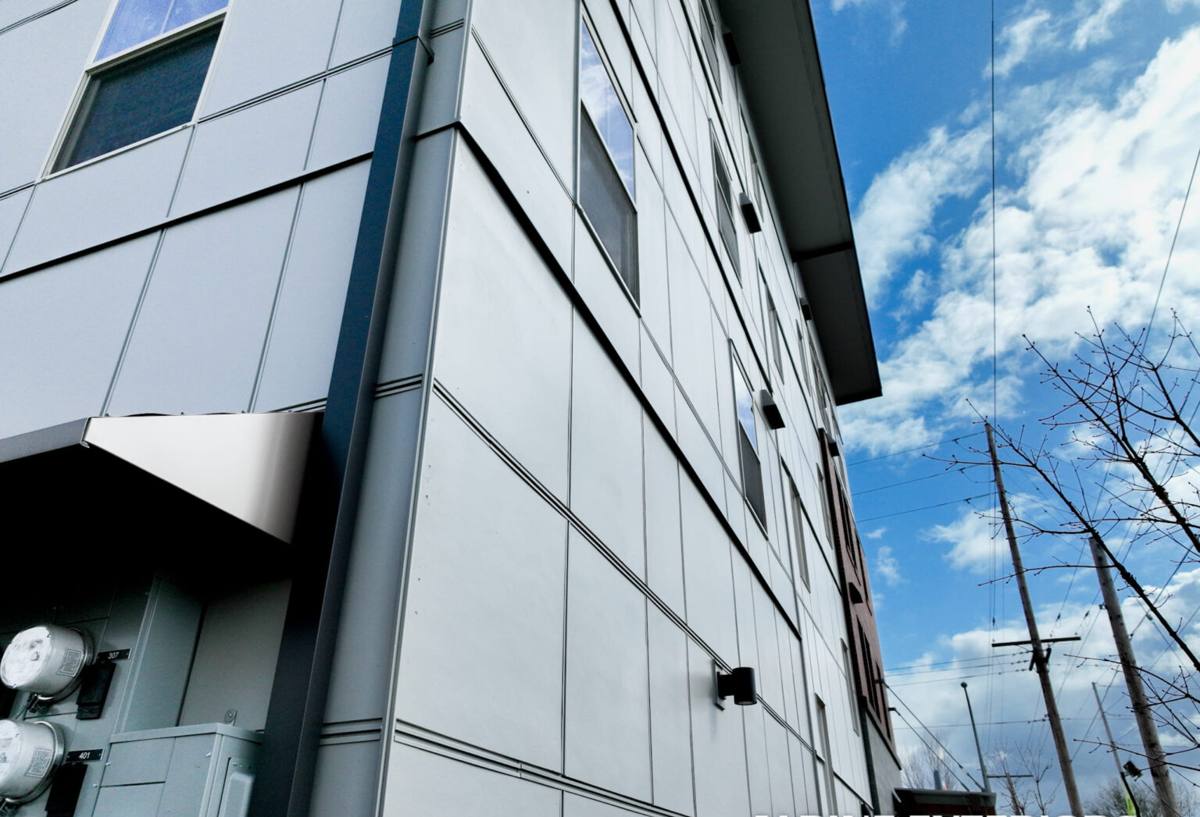
Shade, Moisture, and the Moss Problem Around Wiser Lake
Moss doesn't grow because siding is old — it grows because a surface stays damp long enough, in low enough light, for spores to establish. North- and east-facing walls under tree cover near the lake are prime territory. Once moss and algae take hold on a porous or absorbent siding surface, they hold moisture directly against the material, which is worse than the rain itself. On wood-based products, that sustained dampness leads to swelling, rot at seams and butt joints, and eventual paint failure. On some engineered wood products, edge and surface moisture intrusion is a known weak point if the factory coating is ever compromised.
This is the core reason siding choice matters more at Wiser Lake than it would on a dry, open, south-facing lot. A material that shrugs off a few damp days in full sun can still struggle when it's shaded and humid for a third of the year.
Why We Only Install James Hardie Fiber Cement
We install James Hardie fiber cement siding exclusively — no vinyl, no LP SmartSide, no Cemplank, no Allura, no primed spruce or cedar. That's not a marketing preference; it's a standard we hold because of exactly the conditions described above.
Fiber cement is non-combustible and dimensionally stable, meaning it doesn't swell, warp, or absorb water the way wood-based or engineered-wood siding can. James Hardie's ColorPlus finish is a factory-applied, baked-on coating that resists fading and holds up to sustained moisture exposure far better than field-applied paint, which matters enormously on shaded walls that take longer to dry. Hardie also engineers its HZ product lines by climate zone — the HZ5 formulation used in our region is built specifically for freeze-thaw cycling and prolonged damp exposure, which describes a shaded lot near Wiser Lake almost exactly. The manufacturer backs the product with a strong, transferable limited warranty, which only holds real value when the installation itself is done to spec — flashing, clearances, and fastening all matter as much as the material.
We're not going to tell a homeowner that vinyl or engineered wood siding is garbage — plenty of it is manufactured well and performs fine in the right setting. But we've made a professional call not to install products whose moisture behavior, maintenance burden, or coating durability puts them at a disadvantage in this specific climate, and we'd rather stand behind one system we trust completely than offer several we have reservations about.
What a Correct Siding Installation Actually Involves
Fiber cement performs well, but only when it's installed correctly. In a moisture-heavy, shaded setting like Wiser Lake, the installation details matter more than they would in a drier climate — mistakes that might go unnoticed for years elsewhere show up faster here.
Weather-Resistive Barrier and Flashing
A continuous, properly lapped weather-resistive barrier goes on before any siding, with flashing integrated at every window, door, deck ledger, and penetration so water is directed out and away from the sheathing — never trapped behind the cladding. This is the single most important layer of the whole system, and it's invisible once the job is done, which is exactly why it needs to be done right the first time.
Clearances and Fastening
James Hardie specifies minimum clearances from grade, roofing, and decks, along with fastener spacing and placement. Skipping these clearances is one of the most common ways fiber cement siding fails prematurely — wicking moisture up from the bottom edge, especially on lower walls near landscaping or ground moisture, which is a real consideration on the flatter ground surrounding the lake.
Caulking and Trim Details
Joints, corners, and trim need the right sealant used correctly — not overused as a substitute for proper flashing, but applied where the manufacturer specifies to keep water out of seams. Poor caulking is cosmetic on day one and a moisture entry point within a few seasons.
Our Installation Process for Wiser Lake Homes
We walk every property before quoting anything, because a shaded, tree-lined lot near the water gets assessed differently than an open one. That includes checking existing siding and sheathing for hidden moisture damage, noting which walls get the least sun and drainage, and looking at grade and drainage patterns close to the foundation.
- On-site assessment of exposure, shade, existing moisture damage, and drainage around the home
- Removal of old siding and inspection of the sheathing underneath for rot or hidden damage before anything new goes up
- Repair of any compromised sheathing or framing — never siding installed over a damaged substrate
- Installation of a continuous weather-resistive barrier with properly integrated flashing at every opening and penetration
- James Hardie fiber cement installation to manufacturer clearance, fastening, and joint specifications
- Final walk-through covering trim, caulking, and touch-up before the job is called complete
Comparing Siding Materials in a Shaded, Moisture-Prone Setting
| Material | Moisture/Moss Resistance | Coating Durability in Shade | Long-Term Maintenance |
|---|---|---|---|
| James Hardie fiber cement | Dimensionally stable, does not swell or absorb water like wood-based products | Factory ColorPlus finish holds up well under prolonged damp/shade conditions | Occasional cleaning; no repainting cycle in most cases |
| Engineered wood (e.g. LP SmartSide) | Vulnerable at cut edges and seams if the protective coating is ever compromised | Field or factory coatings can be more sensitive to sustained moisture | Edge sealing and coating upkeep matter more in wet, shaded zones |
| Vinyl | Doesn't absorb water, but seams and low points can trap moisture behind panels | Can fade or become brittle over time; not repaintable | Low upkeep but limited repair options if damaged |
| Cedar / primed wood | Naturally moisture-sensitive; performs worst in prolonged shade and dampness | Paint/stain failure accelerates in shaded, humid conditions | Highest ongoing maintenance — repainting, sealing, moss treatment |
Signs Your Wiser Lake Home's Siding Needs Attention
- Moss or dark green/black staining that returns quickly after cleaning, especially on shaded walls
- Soft spots, bubbling, or visible swelling near seams, corners, or the bottom courses of siding
- Paint or coating that's peeling, chalking, or fading unevenly compared to sunnier sides of the house
- Gaps or separation at caulked joints, trim, and window/door flashing
- A musty smell or visible staining on interior walls that back onto exterior siding
- Siding that feels consistently damp to the touch even after a few dry days
Any one of these on its own might just need cleaning or a repair. Several at once, especially on the shaded or lake-facing side of a home, usually points to a moisture problem that's already working its way into the wall assembly.
What It Costs and What Affects the Price
Every quote depends on the home, but a few factors consistently move the price up or down for properties in the Wiser Lake area specifically:
| Cost Factor | Why It Matters Here |
|---|---|
| Existing moisture or rot damage | Shaded, low-lying walls are more likely to have hidden sheathing damage that needs repair before new siding goes on |
| Tree cover and site access | Dense landscaping and mature trees around lake lots can slow removal, staging, and cleanup |
| Trim and architectural detail | Homes with more corners, windows, and roof intersections need more flashing and cutting work |
| Home size and wall area | Straightforward square footage — larger homes need more material and labor |
| Full tear-off vs. removal only where needed | A full assessment sometimes shows only certain walls need full replacement, which affects total cost |
Why Hire a Crew That Already Works Wiser Lake
A siding crew that hasn't worked around Wiser Lake before is guessing at exposure — treating a shaded, low-lying lot the same as an open one across town. That's how you end up with a technically fine installation that still struggles with moss and moisture within a few years, because the details that matter most in this microclimate — drainage, clearances, and which walls need the most attention — weren't weighted correctly. A crew that already knows the area knows which sides of a house typically stay wet longest, how tree cover changes drying time, and what the ground and drainage tend to look like on lots near the lake, before ever pulling out a tape measure.
If you're weighing a siding replacement or repair on a home near Wiser Lake, we're happy to take a look and give you a straightforward, no-pressure estimate — what we'd recommend, what it would involve, and why. There's no obligation, and no pressure to sign anything on the spot.