 Lynden Siding
 Why Board & Batten Fits Homes Around Wiser Lake
The board and batten look — wide vertical panels with narrow battens covering each seam — shows up a lot on the farmhouses, barns, and newer builds scattered around Wiser Lake and the surrounding countryside outside Lynden. It reads as clean, tall, and a little more distinctive than standard horizontal lap siding, which is probably why we get asked about it more in this part of Whatcom County than in some of the tighter in-town neighborhoods. It's a good look for the area. But vertical siding is also less forgiving than lap siding when it's installed casually, and the wet, shaded, lake-adjacent conditions out here are exactly the kind of environment that finds those installation shortcuts within a few years.
This page is specifically about board and batten siding for homes in and around Wiser Lake — what the local conditions demand from it, what a correct installation actually involves, and why we install only James Hardie fiber cement for this application rather than the wood or vinyl versions of the same look.
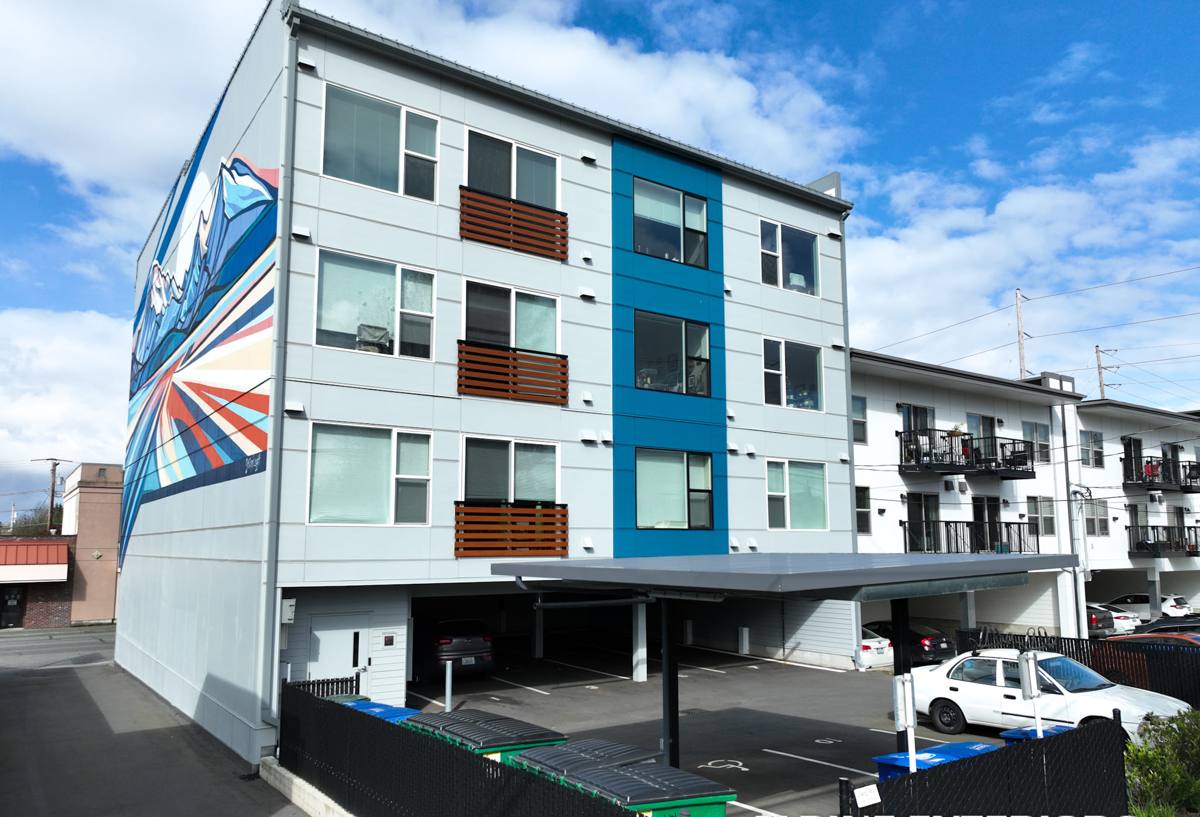
What the Local Climate Does to Vertical Siding
Whatcom County's marine climate doesn't hit every material the same way, and board and batten has a few specific vulnerabilities that flat lap siding doesn't.
Salt-laden air
Wind off the Salish Sea carries salt-laden moisture well inland across Whatcom County, and homes around Wiser Lake aren't exempt from it. Salt air accelerates corrosion on fasteners, flashing, and any exposed metal trim, and it also degrades cheap or unstable paint finishes faster than a dry-climate coating schedule would predict. On board and batten, where you've got a batten strip fastened over every seam, the fastener count per square foot is higher than lap siding — which means more places for corrosion to start if the wrong fasteners were used.
Driving rain
Pacific storm systems bring rain that doesn't just fall straight down — wind-driven rain gets pushed sideways into vertical joints and battens, which is precisely the geometry vertical siding presents to the weather. A vertical seam that isn't backed by a proper drainage gap is an invitation for water to track behind the siding instead of shedding off the face of it.
A long moss season
Tree cover and standing moisture around lake properties mean board and batten around Wiser Lake sees a longer moss and algae season than siding on an open, sunny lot in town. Moss holds moisture against the siding face far longer than the same amount of rain would on its own, which matters most on the horizontal ledges battens can create if they aren't installed with the right reveal and slight outward lean.
Where Board & Batten Installations Go Wrong
Most of the board and batten problems we get called out to inspect trace back to a handful of repeatable mistakes, not bad luck or a "bad batch" of material:
- No rainscreen gap. Vertical siding installed flat against the weather-resistive barrier with no furring strips behind it has nowhere for incidental moisture to drain or dry. This is the single biggest difference-maker in a climate like ours.
- Battens fastened through panel seams incorrectly. Battens need to be fastened in a way that doesn't pin the panel rigidly against seasonal movement, and every fastener needs to land in framing or blocking — not just into the panel.
- Wrong gap and caulk strategy at seams. Some seams should be gapped and caulked, others shouldn't be caulked at all and need to be left to drain — mixing this up traps water instead of shedding it.
- Bottom edge too close to grade or a horizontal surface. Board and batten that terminates too low, especially near a lake lot's often-damp ground, wicks moisture up into the panel over time.
- Field-cut edges left unsealed. Any cut edge on fiber cement needs sealant on the cut face before it goes up — this gets skipped constantly on rush jobs.
The James Hardie System We Install
We install James Hardie fiber cement exclusively, and for board and batten that means a specific product combination rather than a single panel.
HardiePanel Vertical Siding and Hardie Trim Battens
The system pairs HardiePanel vertical siding with Hardie Trim boards used as the battens, fastened over a proper rainscreen assembly. Because it's an engineered fiber cement system rather than a solid wood board, the panel and the battens move together predictably with moisture and temperature — they don't cup, twist, or split the way a real wood board and batten installation eventually will, especially in a climate that keeps wood damp for long stretches at a time.
HZ5 Engineering and ColorPlus Finish
James Hardie engineers its siding by climate zone, and Western Washington falls into the HZ5 category — formulated for cold, wet, high-moisture conditions rather than the hot-humid or freeze-heavy zones the company also builds for. On top of that, we spec ColorPlus factory-applied finish wherever possible, which is baked on and warranted separately from the substrate, instead of a job-site paint coat that will need refreshing years before the panel itself is due for attention.
Our Installation Process
A correct board and batten job is mostly about sequence and details that don't show up in a quick walk-around after the fact. Here's what we actually do on every board and batten project:
- Inspect and repair the sheathing and weather-resistive barrier before any siding goes up — vertical siding hides problems behind it just as easily as it hides good work
- Install vertical furring strips to create a true rainscreen drainage gap behind the panels
- Flash all windows, doors, and penetrations before the first panel goes on, not after
- Fasten panels and battens per James Hardie's published fastening schedule for our wind and exposure conditions, into solid framing or blocking
- Seal every field-cut panel edge before installation
- Set the correct gap at seams and terminations, and only caulk where the manufacturer's details call for it
- Hold the bottom edge to the proper clearance above grade, decks, and roof lines
- Final inspection against James Hardie's installation instructions, since installer error — not the product — is what typically voids a warranty claim
Board & Batten Material Comparison
| Material | How it handles wet, mossy conditions | Long-term maintenance |
|---|---|---|
| James Hardie fiber cement | Non-combustible, dimensionally stable, doesn't rot or swell with repeated wetting | Occasional wash; factory finish holds color for years |
| Real wood board and batten | Absorbs moisture, prone to cupping and splitting in a wet climate; moss anchors readily to raw wood grain | Regular repainting/staining and rot inspection needed |
| Vinyl board and batten | Won't rot, but panels can warp or bow with temperature swings and don't stay tight against furring long-term | Low upkeep but limited repair options once faded or cracked |
| Engineered wood (LP SmartSide style) | Better moisture resistance than raw wood, but the substrate is still wood-based and edge-sealing is critical | Depends heavily on caulking and paint being kept current |
Cost Factors for a Wiser Lake Board & Batten Project
Board and batten typically costs more than lap siding on the same wall, mainly because of labor and material factors specific to the profile:
| Factor | Why it affects cost |
|---|---|
| Rainscreen furring | Adds a labor and material step that flat-installed lap siding doesn't require, but it's the step that keeps the wall dry |
| Batten count | More linear feet of trim and more fasteners per square foot than lap siding |
| Wall height and complexity | Gable ends, dormers, and tall vertical runs common on lake-area homes take more cutting and staging |
| Existing siding removal | Tear-off, sheathing repair, and disposal on an older home add to the scope before new siding starts |
| Trim and corner detailing | Board and batten shows corner and window trim more prominently than lap siding, so those details take more time to get right |
Why a Crew That Already Works Wiser Lake Matters
Siding installation quality depends a lot on whether the crew already understands the conditions on your specific lot before the first panel goes up. A crew that regularly works the Wiser Lake area already knows to expect more shade and standing moisture on tree-lined lots, to plan for a longer moss season when picking fastener and coating specs, and to budget the schedule around the wetter stretches of the Whatcom County calendar rather than getting caught mid-project by a system rolling in off the water. That local pattern recognition doesn't replace following the manufacturer's installation manual — it just means fewer surprises and fewer callbacks once the siding's up.
It also matters for permitting and inspection familiarity. Working within Whatcom County's permitting process regularly, rather than occasionally, means fewer delays getting a project scheduled and inspected correctly the first time.
Maintenance and What to Expect Long-Term
A correctly installed James Hardie board and batten system is genuinely low-maintenance, but "low" isn't "none," especially this close to a lake:
- Rinse the siding periodically to keep moss and algae from establishing, particularly on shaded, north-facing walls
- Keep gutters and downspouts clear so roof runoff isn't dumping extra water directly onto a wall section
- Trim back vegetation and tree cover that's keeping a wall face damp and shaded most of the day
- Inspect caulked joints periodically and have any cracked or missing sealant replaced before it becomes a water entry point
- Keep an eye on the bottom edge clearance if landscaping, mulch, or grade has crept up over the years
Done right, this system is built to hold up through decades of Whatcom County winters without the repainting cycle wood siding demands or the fading and warping issues that show up on vinyl over time.
If you're weighing board and batten for a home near Wiser Lake, we're happy to walk the property, look at what's there now, and put together a straightforward, no-pressure estimate — just fill out the form below.