 Lynden Siding
 Window Replacement in Acme: Built for This Corner of Whatcom County
Acme sits east of Lynden in the more wooded, foothill side of Whatcom County, where tree cover runs heavier and homes tend to sit on larger, shadier lots than the open farmland closer to town. That setting changes how windows age here. The same marine weather system that soaks the whole county still reaches Acme — driving rain, humid air, and a mild climate that never really dries out for long — but tree cover and shade mean moisture lingers longer on north- and east-facing walls, and moss gets a head start on any surface that doesn't see much direct sun. A window that would dry out in an afternoon on an open lot near Lynden can stay damp for days on a shaded sill in Acme.
Lynden Siding Contractors installs and replaces windows across this part of Whatcom County, and we also handle siding, roofing, and decks, because a window is never really its own isolated system. It's built into the wall, tied to the flashing and trim around it, and a mistake at the window is one of the most common ways water gets into a wall assembly undetected. In Acme specifically, that means designing every replacement around sustained shade, driving rain, and a moss season that runs longer here than it does on more open, sun-exposed properties closer to town.
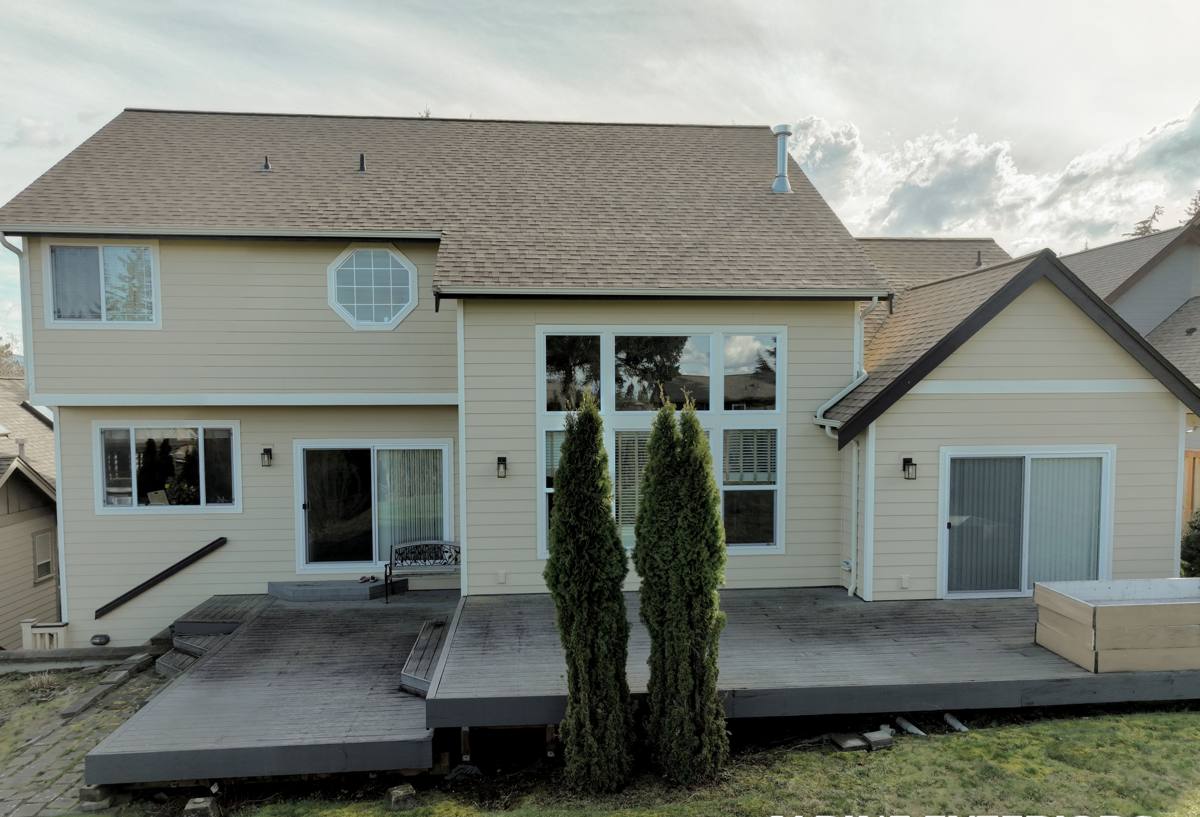
What This Climate Does to Windows in Acme
Wind-Driven Rain and Sill Drainage
Rain in this region rarely falls straight down. Wind pushes it sideways into window flashing, head trim, and the sill beneath the frame, which is a much harder test of the installation than of the window itself. A window with a poorly pitched sill pan or gapped head flashing will eventually leak no matter how good the glass and frame are. Correct sill pitch and properly lapped flashing are what actually keep water out, and they matter more on a shaded, slower-drying wall than on one that gets regular sun.
Shade, Standing Moisture, and a Longer Moss Season
Heavier tree cover around many Acme properties means less direct sun reaching the walls, and less sun means surfaces stay wet longer after every rain. That extends the window for moss and mildew growth on sills, trim, and any siding immediately around the frame, and it gives slow rot more time to work at wood sills and trim where drainage isn't clean. It's a gradual problem — most homeowners don't notice until paint starts failing, a sill feels soft, or moss has visibly taken hold on a north-facing frame.
Marine Air, Even This Far From the Water
Acme is well inland, but the same marine-influenced air mass that carries moisture across the rest of Whatcom County still reaches here. Over years that contributes to corrosion on window hardware, screen frames, and lower-grade fasteners, particularly on windows facing the prevailing weather. It's a slower effect than what a waterfront property sees, but it's real enough that hardware and finish choices shouldn't assume a dry, sheltered climate just because a property sits away from the water.
Full-Frame Replacement vs. Insert Replacement
One of the first decisions on any window job is whether to do a full-frame replacement, which removes the old window down to the rough opening and rebuilds the flashing from scratch, or an insert replacement, which fits a new window into the existing frame. The right choice depends on the condition of what's already there, not on which option is faster to sell.
| Approach | What It Involves | Best Fit | Trade-Offs |
|---|---|---|---|
| Insert (pocket) replacement | New window fits into the existing, sound frame; less disruption to siding and trim | Frame and flashing are still structurally sound and dry | Faster and less costly, but won't fix existing flashing problems |
| Full-frame replacement | Old frame removed to the rough opening; flashing and sill pan rebuilt | Existing moisture damage at sill or jambs, or flashing that was never done correctly | Costs more and takes longer, but addresses the underlying problem instead of sealing it behind new glass |
On a shaded Acme property where a frame has been sitting damp for years, insert replacement can end up being the more expensive choice in the long run if it leaves compromised flashing hidden behind a new window. We'll tell you honestly which situation you're in after opening things up, rather than defaulting to whichever option is cheaper to quote.
Signs an Acme Home's Windows Need Attention
- Fogging or condensation trapped between panes, usually meaning a failed seal on a double- or triple-pane unit
- Noticeable drafts or a cold spot near a closed window
- Soft, discolored, or spongy sill and trim material, especially on shaded, north- or east-facing walls
- Moss or dark staining on the sill or surrounding trim that returns quickly after cleaning
- A window that's become hard to open, close, or latch
- Peeling paint or bubbling finish on wood-framed windows
- Visible gaps or cracked caulk around the frame, or daylight showing through from inside
- Water staining on the interior wall or ceiling near a window
Any one of these is worth a professional look. Caught early, most point to a repair or resealing job rather than full replacement. Left through another wet season on a shaded wall, several of them point to rot or water damage already working in the framing behind the window.
What Correct Installation Requires
Most window failures in this climate trace back to shortcuts in flashing and sealing, not to a bad product. On every installation, that means:
- A sill pan pitched to shed water outward instead of letting it pool under the frame
- Head flashing integrated with the housewrap or building paper above the window, lapped correctly so water sheds down and out
- Jamb flashing tied into the surrounding wall assembly rather than relying on caulk alone to do the work
- Weep holes and drainage paths left clear, not sealed shut during installation
- Corrosion-resistant fasteners and hardware suited to a consistently damp, marine-influenced climate
- Insulation and air sealing around the frame that doesn't trap moisture against the framing
None of that adds meaningfully to the cost of a job relative to the window itself. Skipping it is what turns a window that should last decades into one that's leaking behind the wall within a few winters, and on a shaded Acme lot, a hidden leak has more time to do real damage before anyone notices it from inside.
Choosing a Frame Material for This Setting
There's no single right answer for every home — sun exposure, budget, and how long you plan to stay in the house all factor in. Vinyl and fiberglass frames hold up well against sustained moisture with low maintenance, which suits shaded properties where surfaces stay damp longer. Wood and wood-clad frames offer a look some homeowners want, but they demand more diligent upkeep on a shaded wall, where a missed paint cycle gives moisture more time to work at joints and sills before anyone catches it. Aluminum frames conduct cold and can be more prone to corrosion over time in this region's air. We'll walk through which material actually fits your home's exposure and budget rather than steering toward whatever's easiest to sell.
How the Process Works, Start to Finish
- A free, no-pressure walkthrough where we look at each window's condition, the surrounding trim and siding, and how sun and shade hit different sides of the house
- An honest recommendation on repair, insert replacement, or full-frame replacement for each window, explained in plain terms
- A written estimate that breaks out material, labor, and any expected sheathing or trim repair, so there are no surprises once work starts
- Careful removal of the old window, with the opening checked for hidden rot or moisture damage before anything new goes in
- Installation with a correctly pitched sill pan, integrated flashing, and sealing details built for this climate, not just for a dry-weather spec sheet
- A final walkthrough and cleanup, with the operation and seal of every window checked before we consider the job done
What Affects Window Replacement Cost in Acme
| Factor | Why It Matters Here |
|---|---|
| Insert vs. full-frame replacement | Full-frame costs more but is often necessary where shade and moisture have already damaged the original flashing or sill |
| Frame material | Vinyl and fiberglass typically cost less up front than wood or wood-clad; maintenance demands differ over the window's life |
| Number and size of windows | Larger openings and specialty shapes take more time and material than standard sizes |
| Existing rot or hidden damage | Shaded sills and frames that have stayed damp for years sometimes need sheathing or framing repair once opened up |
| Access and site conditions | Tree-lined driveways, longer setbacks, or upper-story windows can affect labor time on rural Acme lots |
Every estimate is specific to the house. We walk through these factors on site rather than handing over a number with no explanation behind it.
Why a Crew That Already Works in Acme Matters
A crew that installs windows across this part of Whatcom County through every season learns things a spec sheet can't tell you — which wall orientations on a shaded, tree-lined lot stay wet the longest, how much extra attention a north-facing sill needs compared to one that gets afternoon sun, and which flashing details are worth the extra time on install day so a homeowner isn't dealing with a leak two winters later. It also means understanding that Acme's mostly rural, wooded lots don't behave like the open farmland closer to Lynden, and not applying the same assumptions to both. When a warranty question or maintenance issue comes up years down the road, it's a call to a crew still working in the same area, not one that's moved on.
If your Acme home's windows are drafty, fogging, showing moss or soft trim, or you're just not sure whether it's time for repair or replacement, we're glad to take a look. Reach out using the form below for a free, no-pressure estimate.