 Lynden Siding
 Why Bellingham Homes Wear Out Siding Faster Than the Brochure Suggests
Bellingham sits close enough to the water and the foothills that its houses take a beating most siding products were never designed to handle. You've got salt-laden air rolling in off Bellingham Bay, long stretches of driving rain that push moisture sideways into seams and laps, and a moss season that can run eight or nine months out of the year on north-facing walls and anything shaded by mature trees. Add in the freeze-thaw swings that Whatcom County gets in winter, and you have a climate that actively hunts for weak points in an exterior wall system.
Most siding failures we get called out to inspect in the Bellingham area aren't dramatic. They're slow: a soft spot behind a downspout, a paint film that's chalked and peeling on the weather side of the house, moss holding moisture against a wall for months at a time. By the time a homeowner notices, the damage is usually already into the sheathing. Siding replacement done right in this area isn't just a cosmetic upgrade — it's a chance to fix the moisture path that caused the problem in the first place.
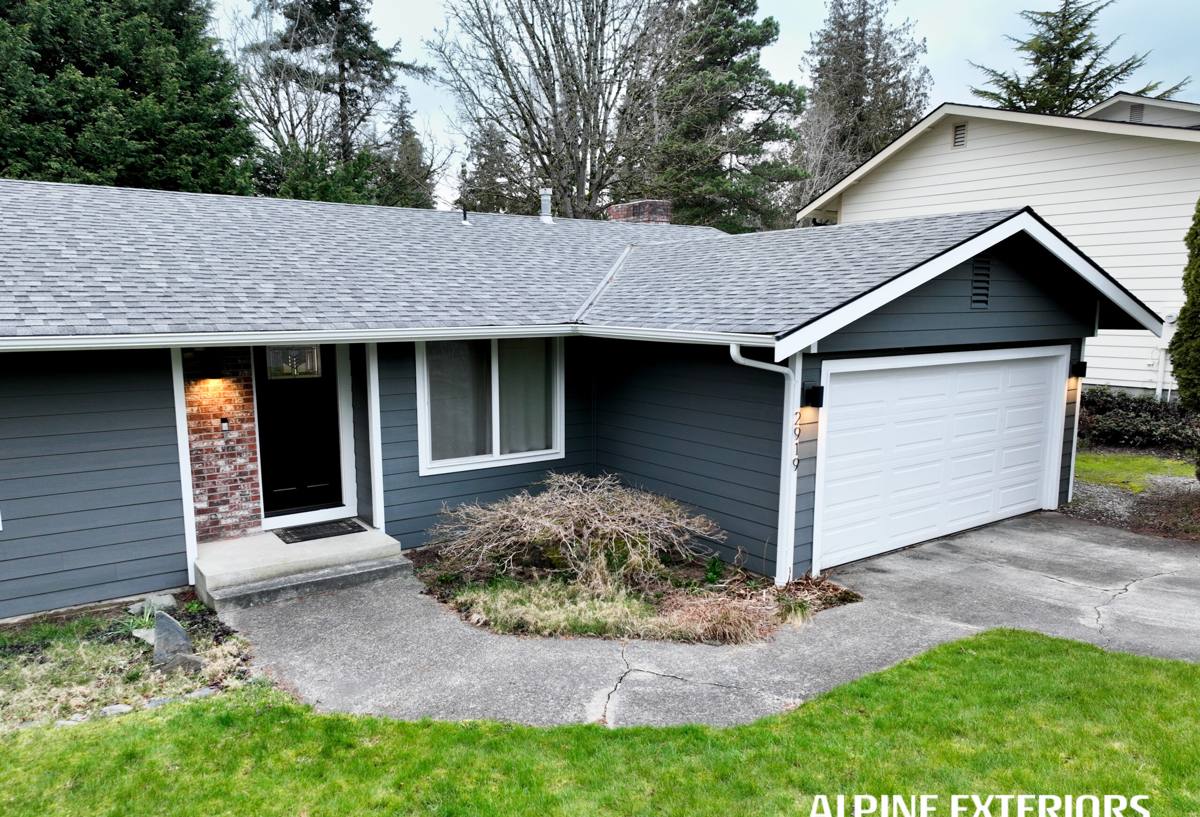
What Bellingham's Climate Actually Does to a Wall System
Salt Air and Coastal Moisture
Homes closer to the bay deal with airborne salt that accelerates corrosion on fasteners, flashing, and any exposed metal trim. It also keeps humidity elevated at the wall surface longer after a rain event, which matters more than the rain itself — materials that dry out quickly hold up far better than materials that stay damp.
Driving Rain
Bellingham's rain rarely falls straight down. Wind off the water pushes it laterally into siding laps, window trim, and butt joints. A wall system that relies on caulk and paint film alone to keep water out will eventually let it in — the wall needs a real drainage plane and correctly lapped siding to shed water instead of trapping it.
Moss and Shade
Wooded lots and cloudy winters mean moss and algae get a long runway to establish themselves on north and east-facing walls. Beyond the appearance issue, moss holds water against the siding surface, which is exactly the condition that rots wood-based products and degrades paint film fastest.
What a Correct Siding Replacement Involves
A siding replacement is not just stripping off the old material and nailing up new panels. Done correctly, it's a sequence of steps where each one protects the next:
- Full removal of old siding and a real inspection of the sheathing underneath — not a visual glance, but checking for soft spots, delamination, and water staining
- Repair or replacement of any damaged sheathing and framing before anything new goes back on
- Installation of a code-compliant weather-resistive barrier, lapped correctly from the bottom up
- Correct flashing at every window, door, and penetration — this is where most failures actually originate
- Proper fastening pattern and spacing per the manufacturer's installation instructions, not a generalized "close enough" approach
- Correct siding overlap and gapping to allow for expansion without trapping water
- Factory-finished color and trim details that don't rely on field-applied paint for their primary protection
Skip any one of these steps and you've got a house that looks new for a year or two before the same problems resurface underneath the new material.
Why We Install Only James Hardie Fiber Cement
We standardized on James Hardie fiber cement siding for every job we take on, including Bellingham siding replacements, and we don't install vinyl, LP SmartSide, cedar, primed spruce, or other fiber cement brands. That's not a marketing position — it's a decision based on what actually holds up against this specific climate.
Wood-based and wood-composite products depend on an intact paint or factory coating to keep moisture out. Once that coating is compromised — by moss, by UV exposure, by a fastener that wasn't set quite right — the substrate underneath is vulnerable to swelling and rot, and Bellingham's rain and shade give that process plenty of time to work. Vinyl siding handles moisture fine on its own but is dimensionally unstable in temperature swings, can warp or crack in wind-driven weather, and doesn't offer the same fire-resistance profile.
James Hardie fiber cement is non-combustible, doesn't support the kind of moisture-driven decay that wood products face, and holds its factory-applied ColorPlus finish far longer than field-applied paint on other materials. Hardie also engineers specific product lines for different climate zones — the HZ5 line is built for regions that see real moisture and temperature cycling, which describes Whatcom County well. We're not saying every other product is worthless; we're saying that for what this climate does to a house, this is the system we're willing to put our name behind.
Comparing Siding Options for a Bellingham Climate
| Factor | James Hardie Fiber Cement | Vinyl | Wood / Wood Composite |
|---|---|---|---|
| Moisture resistance | Does not absorb or rot; factory finish sheds water | Doesn't absorb water, but seams and laps can let it behind the panel | Absorbs moisture; prone to swelling and rot if coating fails |
| Performance in driving rain | Rigid, lays flat, holds tight laps | Can flex or gap in wind-driven rain | Depends heavily on paint film integrity |
| Moss and algae resistance | Factory finish resists staining better than field paint | Resists moss growth but can chalk and fade | Moss holds moisture against wood; repaint cycles required |
| Fire resistance | Non-combustible | Combustible, can melt or deform | Combustible |
| Finish longevity | Factory ColorPlus finish, long warranty period | Color molded in, but can fade and chalk | Field-applied paint, shorter recoat cycle |
Signs a Bellingham Home Needs Siding Replacement Now
Not every siding problem needs a full replacement, but certain signs mean the wall assembly is already compromised and repairs are just delaying the inevitable:
- Soft or spongy spots when you press on the siding, especially near the bottom courses or under windows
- Persistent moss or algae growth that comes back within weeks of cleaning
- Paint that's peeling, bubbling, or chalking heavily on the weather-facing walls
- Visible gaps, warping, or buckling in panels
- Water stains or discoloration on interior walls near exterior corners
- Rising energy bills that suggest the wall assembly is no longer performing as insulation and air barrier
How Our Process Works
We start with an on-site inspection, not a drive-by estimate. That means getting close to the walls, checking problem areas like north-facing sides and anywhere trees keep the siding shaded, and where possible looking at what's happening underneath the current siding, not just its surface condition. From there we walk the homeowner through what we're seeing, what it means, and what a correct fix looks like — including whether the sheathing needs repair before new siding goes on.
Once we're on-site for the work, the sequence is consistent: full tear-off, sheathing inspection and repair, correct weather barrier and flashing installation, then the Hardie siding installed to the manufacturer's fastening and clearance specifications. We don't shortcut flashing details to save time, because that's the detail that determines whether the wall stays dry for the next thirty years or the next three.
Why Local Experience in Bellingham Matters
A crew that already works this area knows which walls take the worst of the driving rain, which lots hold shade long enough to grow moss year-round, and how the salt air closer to the water changes what fasteners and flashing details need extra attention. That's not something you get from a national installer parachuting in for one job — it comes from doing this work repeatedly in Whatcom County's specific conditions.
What Affects the Cost of a Siding Replacement
| Cost Factor | Why It Matters |
|---|---|
| Sheathing condition | Hidden rot found during tear-off adds repair scope before new siding can go on |
| Home size and wall complexity | More corners, dormers, and trim details mean more labor and flashing work |
| Siding profile and trim selection | Lap width, trim boards, and accent details affect material cost |
| Color and finish | Factory ColorPlus finishes vary in price by color selection |
| Access and site conditions | Steep lots, tight setbacks, or mature landscaping can slow the job |
Every home is different, and the only way to get an accurate number is a real on-site look at the walls and sheathing — broad national averages don't account for what a specific Bellingham lot and house actually need.
Getting Started
If your siding is showing moss you can't keep ahead of, soft spots you're not sure how serious they are, or you're just planning ahead before the next wet season sets in, it's worth having a professional take a real look. We offer free, no-pressure estimates for Bellingham homeowners — walk us through what you're seeing, and we'll tell you honestly what we find and what we'd recommend. There's a form below to get that scheduled.