 Lynden Siding
 Windows Built for Maple Falls Conditions
Maple Falls sits up against the foothills east of Lynden, in a part of Whatcom County that sees more shade, more standing moisture, and a longer wet season than the lowland towns closer to the water. Heavy tree cover keeps siding and window trim damp longer after a storm, and the moss that thrives in that shade doesn't stop at the roofline — it works into window sills, trim joints, and anywhere water is allowed to sit. Add in the driving rain that comes through this part of the county in fall and winter, and you have a climate that is genuinely hard on window openings if they aren't built and flashed correctly the first time.
This page is about one thing: installing windows correctly in Maple Falls homes, given what this specific area does to a building envelope over time. It's not a general overview of window brands or a sales pitch — it's what we look at, what we do differently here than we would on a dry, open lot, and what a homeowner should expect from a crew that actually knows this ground.
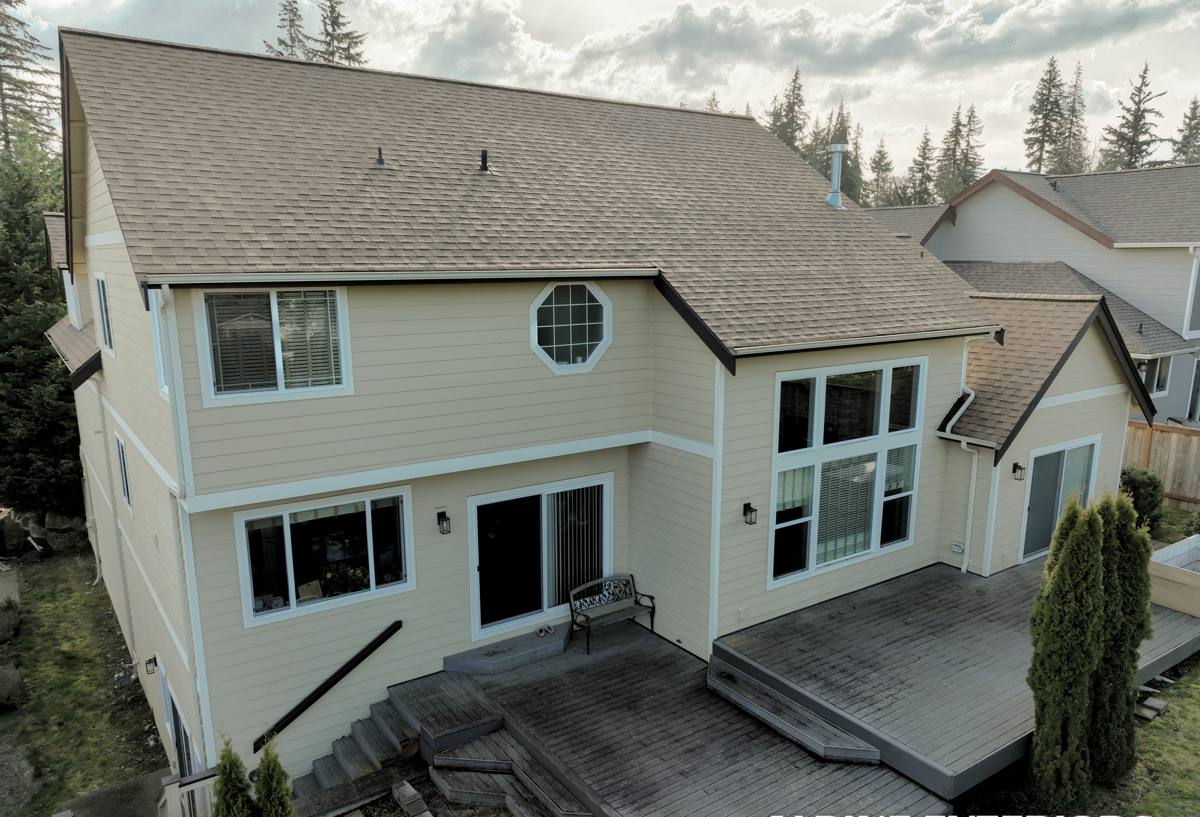
What the Local Climate Does to a Window Opening
Every window installation fails the same basic way eventually: water gets behind the frame, into the wall cavity, and the wood around the opening starts to soften before anyone notices from the inside. In Maple Falls, a few local factors speed that process up compared to more exposed, sunnier parts of Whatcom County:
- Shade and slow drying: Tree cover common around Maple Falls properties means less direct sun and wind on the wall, so any moisture that does get past a seal sits longer instead of evaporating off.
- Moss and organic buildup: Moss and algae hold moisture against sills, trim, and cladding, and can trap water right at the joints where a window meets the siding — exactly where a seal needs to stay intact.
- Sustained driving rain: Wind-driven rain doesn't just wet a surface, it pushes water sideways and upward into gaps that a light shower would never reach, which is why flashing details matter more here than in calmer weather.
- Regional humidity: Whatcom County's damp season runs long, and homes closer to the coast and Puget Sound also deal with salt-laden air that accelerates corrosion on hardware and fasteners over the years.
None of this means Maple Falls is a bad place to own a house — it just means the margin for error in a window install is smaller than it is in a dry climate, and cutting corners shows up sooner.
What a Correct Window Installation Actually Involves
It's Not Just the Window
A window unit itself — vinyl, fiberglass, or wood-clad — is usually the easy part. What separates a window that lasts twenty-plus years from one that leaks in five is almost entirely in the opening prep and flashing, not the glass. That work includes:
- Removing the old unit without tearing out more of the surrounding wall than necessary, and inspecting what's underneath for hidden rot before anything new goes in.
- Correcting any soft or water-damaged framing found in the opening — this is common on older homes and on openings that have been shaded and damp for years.
- Installing a sill pan so any water that does get past the window has somewhere to drain instead of soaking into the framing.
- Layering flashing tape and building paper in the correct shingle-style order — top layer always over the one below it — so water sheds outward, not into the wall.
- Setting the window level, plumb, and square, then insulating the gap around it without overfilling, which can bow the frame.
- Sealing the exterior trim and siding tie-in with a bead of sealant rated for the movement and moisture this climate produces.
Skip any one of these steps and the window can look perfect for a year or two while the framing behind it is already taking on water. That's the part of the job that doesn't show up in a walkthrough — only in what's found when the wall is eventually opened up.
Full Replacement vs. Insert Windows
Homeowners often ask whether a full-frame replacement or a simpler insert (pocket) replacement is the right call. The honest answer depends on the condition of the existing frame, not on price alone.
| Factor | Insert Replacement | Full-Frame Replacement |
|---|---|---|
| When it's appropriate | Existing frame is square, dry, and structurally sound | Frame shows rot, is out of square, or flashing needs to be redone |
| Access to hidden damage | Limited — old frame stays in place | Full access to check and repair framing and flashing |
| Disruption to siding/trim | Minimal | Trim and some siding are removed and reinstalled |
| Best fit for damp, shaded lots | Only if a moisture inspection confirms the frame is sound | Generally the safer call in high-moisture, heavily shaded settings |
Given how much moisture and shade some Maple Falls lots deal with, we don't recommend an insert replacement without actually checking the condition of the existing frame first. Covering up hidden rot with a new window on top of it just delays the problem and makes it more expensive later.
Our Process for a Maple Falls Install
Before We Start
We walk the exterior and take a real look at each opening — not just the window itself, but the trim, the siding around it, and any signs of moss or staining that point to a drainage problem. If there's evidence of past leaks, we'll say so plainly and explain what we'd expect to find once the old unit comes out.
During the Install
We work one opening at a time so the house isn't exposed to weather any longer than it has to be, which matters in a climate where rain can move in without much warning. Flashing and sill pan work is done to the standard described above on every unit, not just the ones that look like they need it.
After the Install
We clean up the work area, walk the finished openings with the homeowner, and explain anything we found during the process — including any framing repairs that were made along the way. If we found something worth watching, like moss growth on adjacent siding or trim that's due for maintenance, we'll tell you rather than leave it for you to discover later.
Why Local Experience Matters More Than It Sounds
Window installation isn't unique to Whatcom County — the fundamentals are the same everywhere. What changes is how much margin for error the local climate gives you. A crew that mostly works drier, sunnier areas can do a technically fine install and still miss the details that matter in a shaded, moss-prone, high-rainfall setting like Maple Falls — because those details rarely come up where they usually work.
A crew that regularly works this part of the county already knows to check for moss-related moisture at trim joints, already carries flashing details suited to sustained driving rain, and already has a sense of which openings on older homes are likely to have hidden framing damage before the siding even comes off. That's not a marketing claim — it's just what repetition in a specific climate teaches a crew over time.
Signs Your Current Windows Need Attention
Before deciding between a repair and a full replacement, it's worth knowing what to look for. Use this as a general checklist when walking your own exterior:
- Soft, spongy, or discolored trim or sill wood around the window frame
- Moss or algae growth directly on or immediately around the window trim
- Visible gaps, cracked caulk, or separated trim joints at the corners
- Fogging or moisture between panes on double- or triple-glazed units
- Difficulty opening, closing, or locking a window that used to operate smoothly
- Drafts or noticeable temperature difference near the window when it's closed
- Staining on interior drywall or trim below or beside a window
One or two of these on their own might just mean routine maintenance. Several together, especially soft wood combined with staining, usually mean water has already been getting in for a while.
Maintenance That Extends the Life of a New Install
A correctly installed window in this climate still benefits from basic upkeep, especially on shaded lots:
- Clear moss or debris off sills and trim before it has a chance to hold moisture against the surface.
- Check exterior caulk lines once a year, ideally before the wet season sets in, and reseal any spots that have cracked or pulled away.
- Keep gutters and downspouts clear so water isn't sheeting down the wall and pooling near window heads.
- Trim back branches or foliage that keep a window area in constant shade and slow drying after rain.
None of this is complicated, but it's the kind of small, regular attention that keeps a well-installed window performing for decades instead of just years.
If you're weighing a repair against a full replacement, or just want an honest read on what your current windows are dealing with, we're happy to take a look. Reach out for a free, no-pressure estimate using the form below.